Zobacz w skali 1:1
 Wyślij
 Udostępnij
 Szczegóły
 Przewodnik

 Pobierz plik obrazu
 Podobne obiekty
 RTG
RTG Pokaz slajdów
 Statystyki
Ściana Księżyca

 Czytaj więcej
Dzieło sztuki prezentowane na tej stronie podlega ochronie prawem autorskim, co oznacza, że nie mamy prawa do tworzenia ani sprzedaży jego identycznej reprodukcji. Ochrona ta jest egzekwowana na mocy umów międzynarodowych, takich jak Konwencja berneńska oraz przez przepisy prawa krajowego, w tym te określone w Prawo autorskie USA – Tytuł 17.
Jako pełną szacunku i legalną alternatywę oferujemy personalizowane, malowane ręcznie dzieła sztuki inspirowane oryginałem. Nasi wykwalifikowani i profesjonalni artyści starannie analizują styl, nastrój oraz artystyczną esencję pierwowzoru, aby stworzyć nowe, unikalne dzieło, które przywołuje te same emocje – pozostając jednocześnie w pełni oryginalną kreacją.
Metoda ta jest w pełni zgodna z przepisami prawa autorskiego, ponieważ nie polega na kopiowaniu ani powielaniu chronionego dzieła. Stanowi ona kreatywną reinterpretację – nowy obraz, który czerpie inspirację z oryginału, ale nie jest z nim tożsamy.
Ręcznie malowana reprodukcja olejowa
Ręcznie malowany obraz olejny na płótnie, wykonany na zamówienie przez naszych artystów w wybranym przez Ciebie wymiarze i oprawie. ( Przełącz na wersję drukowaną Przełącz na wersję cyfrową)




P118B zł10

P118H zł10

P118W zł10

P438Z zł10

P508JH zł12

P508YH zł12

P805H zł10

P805Z zł10

P919BZ zł10

P919G zł10

P919XJ zł10

P959ZH zł10

P968JZ zł12

W106C zł8

W218G zł10

W218JH zł8

W218Y zł10

W307PJ zł10

W316G zł10

W316PJ zł8

W316Y zł10

W398PJ zł8

W4111J zł10

W500HY zł15

W500JH zł15

W692G zł12

W849H zł8

W940BG zł15

W953PJ zł8




Wybierz spośród naszych standardowych rozmiarów, które zachowują oryginalne proporcje dzieła sztuki.

Wpisz wymaganą szerokość i wysokość, aby obraz pasował do Twojej ramy lub ściany. Ponieważ jest to dzieło malowane ręcznie, w przypadku rozmiaru o innym proporcji artysta może domalować nieco więcej wokół obrazu lub przyciąć fragmenty — wybór należy do Ciebie. Przed rozpoczęciem pracy prześlemy Ci cyfrową wizualizację do zatwierdzenia. Obraz widoczny na tej stronie nie przedstawia rzeczywistego efektu — jedynie wizualizacja oddaje realny rezultat.
Po złożeniu zamówienia zespół OriginalUniqueArt.com skontaktuje się z klientem drogą mailową w celu uzyskania instrukcji i prześle wizualizację projektu
Dostawa na całym świecie () w ciągu 3–4 tygodni zamiast standardowych 5 tygodni. (23 Październik). Bez kompromisów w kwestii jakości.

Bezpłatna ekspresowa wysyłka na cały świat

Wysokiej jakości płótno lniane

Pełne ubezpieczenie transportowe

Gwarancja zwrotu należności celnych i podatków importowych

Gwarancja idealnego odwzorowania barw

100-dniowy okres na zwrot dzieła w przypadku wykrycia wad produkcyjnych

Gwarancja 100% zwrotu pieniędzy

Oferta przy zakupie wielu sztuk
 Opcja ze szkłem jest dostępna wyłącznie w rozmiarach poniżej 110 cm

Ściana Księżyca
Technika wykonania
Rozmiar reprodukcji
-


Suma do zapłaty
zł 1155
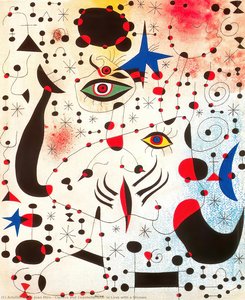
Joan Miró i Ferrà: El muro de la luna – Un viaje al universo interior
Joan Miró i Ferrà, nacido en Barcelona en 1893, ocupa un lugar destacado entre los artistas del siglo XX, trascendiendo simplemente las tendencias estilísticas para embarcarse en una exploración profunda de mundos internos. Su trayectoria no fue una mera sucesión de estilos sino una indagación constante hacia lo intangible: emociones, sensaciones y corrientes subconscientes que yacen bajo la superficie de la realidad. Desde humildes comienzos marcados por enfermedad y reservas iniciales de sus padres sobre su vocación artística, Miró perseveró impulsado por una necesidad innata de expresar lo inexplicable – un deseo de traducir sueños, recuerdos y la identidad catalana en lienzo con un lenguaje visual único y poético. Sus primeros años estuvieron impregnados de las tradiciones barcelonesas, una ciudad vibrante gracias a Antoni Gaudí cuyo arte orgánico influiría sutilmente en sus posteriores abstracciones. La profesión de joyero de su padre inculcó una apreciación por la meticulosa artesanía, mientras que el paisaje agreste catalán se convirtió en un motivo recurrente y fuente constante de inspiración.- Estilo: Miró desarrolló un estilo propio caracterizado por la abstracción geométrica y orgánica combinada con elementos surrealistas. Sus obras evocan paisajes oníricos y símbolos universales, alejándose de la representación realista para acceder a una dimensión emocional más profunda.
- Técnica: Predominantemente óleo sobre lienzo, Miró empleaba técnicas innovadoras que buscaban capturar la esencia del movimiento y la luz de manera expresiva. Experimentó con diferentes materiales y colores para crear efectos visuales sorprendentes y transmitir sentimientos complejos.
- Contexto Histórico: Miró vivió en un período clave del siglo XX marcado por cambios sociales, políticos y culturales radicales. Influenciado por el pensamiento surrealista liderado por André Breton, exploró las posibilidades de la imaginación libre como herramienta para expresar la condición humana y cuestionar las normas establecidas.
- Simbolismo: Sus pinturas están cargadas de símbolos que reflejan temas centrales como la infancia, el deseo sexual, la muerte y el nacimiento. Estos elementos representan aspectos fundamentales de la experiencia humana y ofrecen múltiples interpretaciones según la sensibilidad del espectador. Entre ellos destacan figuras humanas estilizadas, animales fantásticos y formas geométricas abstractas que evocan estados emocionales y procesos mentales.
- Impacto Emocional: El muro de la luna captura una sensación de calma y misterio, invitando al contemplador a reflexionar sobre la belleza del universo interior y la fuerza de los sueños. Los colores cálidos y brillantes crean una atmósfera acogedora y evocadora que transmite sentimientos de esperanza y libertad.
El cuadro en detalle: Análisis visual y composición
La pintura presenta un hombre sobre bicicleta como sujeto principal, situado frente a una pared amarilla con acentos rojos. Una figura emplumada flota arriba del ciclista, añadiendo movimiento y simbolismo al conjunto. Los colores utilizados son diversos – azul, rojo, amarillo y negro – dispuestos en formas geométricas que generan interés visual y profundidad espacial. Además de la bicicleta y el pájaro principales, se observan otras figuras más pequeñas que enriquecen la composición, como una persona montando bicicleta a izquierda y otra estancada en segundo plano. Esta distribución equilibrada crea una experiencia estética compleja para el ojo del espectador, invitándolo a explorar las múltiples capas de significado presentes en la obra. La pared amarilla actúa como un punto focal que guía la mirada hacia el centro de la composición, mientras que los colores brillantes resaltan elementos clave y refuerzan el carácter emocional del cuadro.Una obra maestra para interiores y coleccionistas
Una reproducción meticulosa de El muro de la luna puede aportar una dosis de inspiración artística y tranquilidad a cualquier espacio interior. Gracias a las tecnologías avanzadas de impresión digital, ahora se ofrecen reproducciones de alta calidad que reproducen fielmente los colores originales y los detalles más complejos del cuadro. Esta opción permite disfrutar de la belleza de Miró en casa sin compromisos financieros ni limitaciones físicas. Además, adquirir una obra de arte como esta es una inversión tanto estética como emocional que puede enriquecer la vida cotidiana y estimular la creatividad.Pytania i odpowiedzi
Czy „Ściana Księżyca” autorstwa Joan Miró to dzieło o jasnej czy ciemnej kolorystyce?
Zarejestrowane wartości dla „Ściana Księżyca” autorstwa Joan Miró to: jasność cień, luminancja Miękki cień.
Czy "Ściana Księżyca" jest typowe dla tego, co zazwyczaj tworzył Joan Miró?
Wśród utrwalonych w twórczości Joan Miró motywów – organic forms & surrealism, catalan identity expression, symbolic imagery & dreams, iconic miro composition, exploring inner consciousness – dzieło „Ściana Księżyca” wprowadza własne skupienie na geometric shapes, chromatic abstraction, cycling figure, yellow wall, bird symbolism, catalan landscape, dreamlike imagery, minimalist composition.
Jaką nasycenie i intensywność prezentuje „Ściana Księżyca” autorstwa Joan Miró?
Kolory dzieła „Ściana Księżyca” autorstwa Joan Miró wykazują Zrównoważona łagodność nasycenie przy Zrównoważony intensywności.
Biografia artysty
A Catalan Visionary: The Life and Art of Joan Miró
Joan Miró i Ferrà, born in Barcelona in 1893, stands as one of the most significant figures in 20th-century art. His journey was not merely a progression through styles but an exploration of inner worlds, translating dreams, memories, and Catalan identity onto canvas with a uniquely poetic visual language. From humble beginnings marked by illness and initial parental reservations about his artistic pursuits, Miró persevered, driven by an innate need to express the intangible—the emotions, sensations, and subconscious currents that lie beneath the surface of reality. His early life was steeped in the traditions of Barcelona, a city brimming with architectural marvels thanks to Antoni Gaudí, whose organic forms would subtly influence Miró’s later abstractions. The goldsmithing profession of his father instilled an appreciation for meticulous craftsmanship, while the rugged Catalan landscape became a recurring motif and source of inspiration throughout his career.Early Influences and the Path to Surrealism
Miró's formal artistic training began at La Llotja in Barcelona, where he honed his skills in traditional techniques. However, it was exposure to the avant-garde movements sweeping through Paris that truly ignited his creative evolution. The vibrant colors of Fauvism and the fragmented forms of Cubism resonated deeply, prompting him to move to Paris in 1920. This period proved pivotal as he encountered artists like Pablo Picasso and began experimenting with increasingly abstract compositions. Yet, Miró didn’t simply adopt these styles; he synthesized them, forging a path toward his own distinctive aesthetic. He sought to distill forms to their essence, stripping away representational details in favor of symbolic shapes and evocative colors. This exploration led him to the Surrealist group in 1924, aligning him with artists such as Max Ernst and Salvador Dalí. While embracing the Surrealist interest in the subconscious, Miró maintained a unique sensibility—his work was less about shocking imagery or Freudian symbolism than it was about creating a world of playful forms and poetic suggestion. He famously recounted that he returned to his Parisian studio at Rue Blomet without dinner and began sketching in his notebook, stating: “Those shapes appeared to me on the ceiling.”The Language of Symbols: Key Works and Artistic Innovations
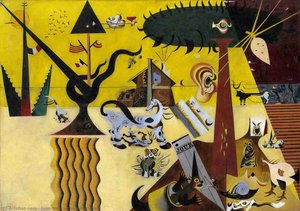
Throughout the 1920s and 30s, Miró developed his signature visual vocabulary—a universe populated by biomorphic shapes, floating forms, and vibrant colors. The Farm (1922) exemplifies this transition. It’s not merely a depiction of rural life but an evocation of Catalan identity and a symbolic representation of the natural world. His collaborative spirit led to innovative techniques like *grattage*, pioneered with Max Ernst in 1926 for designs intended for Sergei Diaghilev's ballet, where textures were revealed by scraping paint across canvas. The Dutch Interiors (1928) series demonstrated his ability to reinterpret the Old Masters through a distinctly modern lens, transforming domestic scenes into dreamlike abstractions. Painting (1933) encapsulates Miró’s exploration of the subconscious and his rejection of conventional artistic boundaries—bold colors and simplified forms conveying a profound emotional resonance. Beyond painting, Miró fearlessly experimented with sculpture, ceramics, and printmaking, expanding his creative horizons and demonstrating a remarkable versatility.Legacy and Enduring Influence
Joan Miró's impact on 20th-century art is undeniable. He wasn’t simply a painter; he was a visionary who challenged the very definition of artistic expression. His work paved the way for abstract expressionism and continues to inspire artists across disciplines. He established two foundations—the Fundació Joan Miró in Barcelona (1975) and the Fundació Pilar i Joan Miró in Palma de Mallorca (1981)—ensuring that his legacy would endure, providing spaces for artistic exploration and education. Throughout his long career, he remained committed to pushing boundaries, questioning conventions, and exploring the depths of human imagination. Miró’s art is a testament to the power of abstraction, symbolism, and poetic expression—a vibrant celebration of life, dreams, and the enduring spirit of Catalan culture. His work continues to resonate with audiences worldwide, inviting us to enter a world where anything is possible and the boundaries between reality and fantasy blur into a captivating dance of color and form.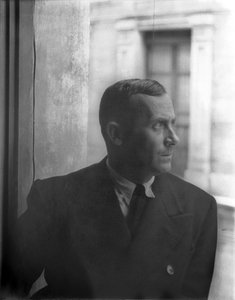
Joan Miró
1893 - 1983 , Hiszpania
Najważniejsze informacje
- Artistic Movement Or Style: Surrealizm
- Artists Who Influenced This Artist:
- Pablo Picasso
- Wasilij Kandinskij
- Date Of Birth: 20 kwietnia 1893
- Date Of Death: 25 grudnia 1983
- Full Name: Joan Miró i Ferrà
- Nationality: Hiszpanka
- Notable Artworks:
- Farm
- Dutch Interiors
- Painting
- Place Of Birth: Barcelona, Hiszpania
Zobacz także powiązane artykuły
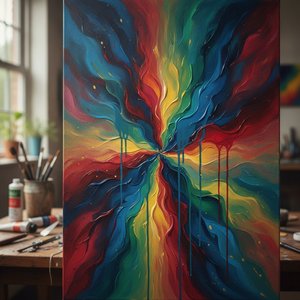
Lyrical Abstraction: The Emotional Power of Color and Form in Modern Art History
Explore the profound emotional depth of Lyrical Abstraction. Discover how masters like Raymond Parker used color and form to bridge Impressionism and Abstract Expressionism. Learn about this pivotal movement through our expert-led art history guide.

25 Arcydzieł Kandinskiego: Kolor, Duchowość i Abstrakcja w Twoim Domu | OriginalUniqueArt.com
Odkryj 25 arcydzieł Wassily Kandinskiego – pioniera abstrakcji i ekspresjonizmu! Poznaj historie, techniki i emocje kryjące się za jego kolorowymi kompozycjami. Reprodukcje obrazów najwyższej jakości na OriginalUniqueArt.com. Eksploruj pełną kolekcję online!

Top 10 arcydzieł ekspresjonizmu abstrakcyjnego – inspiracje dla Twojego wnętrza | OriginalUniqueArt.com
Odkryj 10 arcydzieł ekspresjonizmu abstrakcyjnego – Pollock, Rothko, de Kooning i inni. Poznaj historie artystów, techniki i inspiracje dla Twojego wnętrza. Reprodukcje najwyższej jakości na OriginalUniqueArt.com!
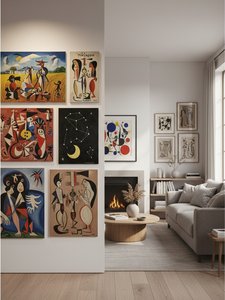
Joan Miró: 25 Najlepszych Dzieł Genialnego Katalońskiego Artysty | OriginalUniqueArt.com
Odkryj 25 arcydzieł Joan Miró – katalońskiego mistrza surrealizmu! Poznaj historie, techniki i inspiracje za jego kolorowymi, abstrakcyjnymi obrazami. Reprodukcje najwyższej jakości na OriginalUniqueArt.com. Eksploruj pełną kolekcję online!
The Soul of Color: A Journey into the Emotional Resonance of Lyrical Abstraction
Embark on a cultural journey through Lyrical Abstraction. Explore how masters like Kandinsky used color and motion to translate emotion into visual poetry. Discover the profound beauty of abstract expressionism and learn to curate emotional resonance in your own art collection.