Abstract Surrealism · 1925
Siesta (Joan Miró, 1925)
Joan Miró (1893–1983) stworzył Siesta. Dzieło pochodzi z 1925. Należy do nurtu Abstract Surrealism. Wykonano w technice Obraz olejny na płótnie. Wymiary to 113 × 144 cm.
- 1925
- Obraz olejny na płótnie
- 113 × 144 cm

 Podgląd w skali 1:1

 Ręcznie malowany obraz olejny
 Wyślij jako kartkę
 Udostępnij
 Karta informacyjna


 Pobierz obraz
 Podobne obiekty
 RTG
 Pokaz slajdów
 Pytania i odpowiedzi

 Statystyki
Siesta w skrócie
Co przedstawia Siesta?
Siesta – A Dreamscape by Joan Miró
Joan Miró’s “Siesta,” painted in 1925, isn't merely a depiction of a scene; it’s an invitation into the artist’s subconscious, a shimmering portal to a world where logic yields to intuition and reality dissolves into dream. This captivating work exemplifies Miró’s signature style – a masterful blend of organic forms and geometric precision, creating a composition that pulsates with both mystery and harmonious balance. It's a piece that speaks directly to the soul, evoking feelings of tranquility, curiosity, and perhaps even a touch of wistful longing for an escape into the realm of imagination. The painting’s ethereal quality stems from Miró’s deliberate use of light and color, creating a sense of depth and atmosphere that draws the viewer in.A Surrealist Symphony: Form and Color
“Siesta” is fundamentally an abstract surrealist composition, yet it transcends simple categorization. Against a backdrop of delicate, sky blue – subtly layered with gradients to suggest atmospheric depth – Miró constructs a landscape populated by forms that seem both familiar and utterly alien. The central element, a large, white shape reminiscent of either a bird or a cloud, dominates the canvas, radiating an almost luminous quality. Surrounding it are smaller, interconnected shapes: delicate lines, leaf-like forms in dark blue, and a striking yellow arrow pointing towards an indeterminate point. These elements aren’t arranged randomly; instead, they engage in a dynamic interplay, suggesting movement, flow, and a hidden narrative. Miró's technique is characterized by a masterful control of brushwork – visible strokes create texture and depth, while finer lines connect the forms, establishing a visual rhythm that guides the eye through the composition. The use of acrylic or oil paints on canvas lends a richness to the colors and textures, enhancing the painting’s tactile quality.Decoding the Symbols: A Journey into Miró's Inner World
The beauty of “Siesta” lies in its open-ended symbolism, inviting viewers to project their own interpretations onto the scene. The large white form could represent a bird – a symbol of freedom and aspiration – or perhaps a cloud, evoking notions of dreams and the infinite. The dark blue leaf-like shapes might symbolize nature, growth, or even the subconscious itself. The prominent yellow arrow is particularly intriguing; it suggests direction, movement, and perhaps a quest for meaning. The dotted circle in the upper right corner could be interpreted as a target, a focal point, or simply an element of playful abstraction. Miró himself often described his work as a reflection of his inner world, a visual diary filled with personal symbols and memories. This painting is no exception – it’s a rich tapestry of imagery that rewards careful observation and contemplation.Historical Context: Miró's Avant-Garde Vision
“Siesta” was created during a pivotal period in Miró’s career, as he was actively engaged with the Surrealist movement. This artistic current, spearheaded by André Breton, sought to liberate art from the constraints of reason and logic, embracing the power of dreams, the unconscious, and automatic techniques. Miró's early exposure to the Catalan landscape – particularly the rugged beauty of his native region – profoundly influenced his work, imbuing it with a sense of rootedness and authenticity. He also drew inspiration from the organic forms of Gaudí’s architecture in Barcelona, which instilled in him an appreciation for fluidity and dynamism. “Siesta” stands as a testament to Miró's ability to synthesize these diverse influences into a uniquely personal and visionary style.Emotional Resonance: A Painting for the Soul
Ultimately, “Siesta” is more than just a visually striking artwork; it’s an experience—a journey into the depths of the imagination. The painting evokes a sense of disorientation, mystery, and perhaps even a touch of anxiety, mirroring the unsettling yet captivating nature of dreams. Yet, there's also a profound feeling of tranquility and openness within its ethereal landscape. It invites us to slow down, to contemplate, and to reconnect with our own inner worlds. Whether you’re an art collector seeking a statement piece for your home or simply someone who appreciates the beauty of abstract expressionism, “Siesta” offers a captivating glimpse into the mind of one of the 20th century's most innovative artists.Zdjęcia w wysokiej rozdzielczości dzieła Siesta

Chronione prawem autorskim: pliki te służą wyłącznie do osobistego wglądu i nie stanowią licencji na ich powielanie.
Joan Miró, Siesta (1925).
Odpowiedzi na pytania dotyczące Siesta
W którym roku powstało dzieło „Siesta” – Joan Miró?
W jakiej technice wykonano „Siesta” – Joan Miró?
Jakie są rzeczywiste wymiary dzieła „Siesta” – Joan Miró?
Co przedstawia "Siesta"?
Tematyka dzieła "Siesta" to abstract forms, dreamlike scene, symbolic shapes, organic lines, blue palette, geometric elements, mystery.
Czy obraz „Siesta” – Joan Miró można swobodnie reprodukować?
Kto jest autorem dzieła "Siesta"?
Do jakiego nurtu należy "Siesta"?
„Siesta” to dzieło należące do nurtu Abstract Surrealism. Nurt ten określa tradycję artystyczną, w której osadzone jest dzieło.
Do którego okresu twórczości Joan Miró należy dzieło "Siesta"?
O artyście: Joan Miró
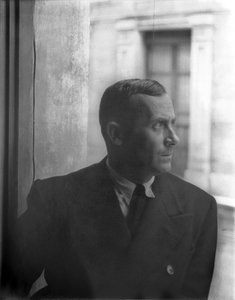
1893–1983, Hiszpania
Joan Miró
Życie i sztuka Joan Miró Barcelona, 20 kwietnia 1893 roku. Joan Miró i Ferrà wchodzi w świat precyzji i trybików, urodzony w rodzinie zegarmistrzów. To wczesne otoczenie stanowi tło dla niezwykłego rzemiosła, które towarzyszy mu przez całą ewolucję jako malarza, rzeźbiarza i ceramika. Przez kolejne dekady porusza się nie według wytyczonych schematów, lecz poprzez nieustanne zmiany punktów ciężkości, stając się ostatecznie centralną postacią w rozwoju surrealizmu i sztuki abstrakcyjnej.
Inne prace Joan Miró
 La Masia1922
 Harlequinowa Karnawał1925
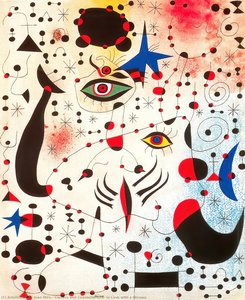 Szyfry i konstelacje, zakochane w kobiecie1941
 Joan Miró - Kataloński Krajobraz (Łowca)1924
Eseje o Siesta
 25 Masterpieces by Joan Miró: The Ultimate Guide to the Surrealist VisionaryJourney through the surrealist dreamscapes of Joan Miró. Explore 25 iconic masterpieces, from biomorphic shapes to vibrant abstractions. Fi…
 10 Masterpieces That Capture the Pure Joy of PlayRediscover joy through 10 iconic artworks that masterfully capture playful emotions. From vibrant Impressionist strokes to whimsical modern…
 Spanish artworks of the 1920sSpanish Surrealism and Cubism in the 1920s come alive through the works of Salvador Dalí, Joan Miró, and Pablo Picasso. View the collection…