
 Podgląd w skali 1:1
 Wyślij jako kartkę
 Udostępnij
 Szczegóły dzieła
 Przewodnik

 Pobierz obraz
 Podobne obiekty
 RTG
RTG Pokaz slajdów
 Pytania i odpowiedzi
 Statystyki
LE MENDIANT


 Rozwiń treść
Otrzymaj plik gotowy do druku, którego jakość znacznie przewyższa podgląd internetowy. Każdy sprzedawany przez nas obraz cyfrowy pochodzi z wysokorozdzielczego pliku wzorcowego w naszej bazie — zazwyczaj o szerokości od 5 000 do 15 000 pikseli — dzięki czemu możesz drukować w dużym formacie, mocno kadrować lub z pełnym przekonaniem odwzorowywać najdrobniejsze detale.
Żaden plik nie opuszcza naszego studia bez odpowiedniej obróbki. Ekspert ds. cyfrowej edycji sprawdza zgodność kolorów z oryginałem i w razie potrzeby je koryguje, a następnie za pomocą profesjonalnych narzędzi do retuszu poprawia ostrość oraz szczegółowość — zawsze zachowując wierność pociągnięciom pędzla i stylowi artysty. Rezultatem jest obraz, który wygląda jak prawdziwe dzieło, a nie jak przefiltrowany skan.
Zatwierdzasz przed finalizacją zamówienia: nasz ekspert prześle obraz drogą mailową w ciągu 72 godzin do Twojego wglądu. Nie jesteś zadowolony? Poproś o poprawki lub korektę, bądź o zwrot kosztów, jeśli jakość nie spełnia oczekiwań.
To jakość, na której polegają wydawcy, studia projektowe, galerie oraz drukarnie.
Obraz cyfrowy
Pobierz plik o wysokiej rozdzielczości do osobistego użytku, druku oraz projektów kreatywnych. ( Przełącz na wydania drukowane Zamów ręcznie malowaną reprodukcję)
W każdym zamówieniu na obraz cyfrowy znajduje się
Profesjonalna dostawa cyfrowa z gwarancją
Wybierając OriginalUniqueArt.com, nie otrzymujesz jedynie obrazu – otrzymujesz profesjonalnie udoskonalone cyfrowe dzieło sztuki, stworzone z najwyższą precyzją i objęte gwarancją satysfakcji. Oto wszystko, co automatycznie dołączane jest do Twojego zamówienia:

Błyskawiczna wysyłka e-mailowa
Plik z obrazem cyfrowym w wysokiej rozdzielczości zostanie przesłany na Twój adres e-mail w ciągu 72 godzin od złożenia zamówienia – gotowy do natychmiastowego użycia.

Plik cyfrowy wzbogacony przez AI
Twoja grafika została profesjonalnie zoptymalizowana przy użyciu zaawansowanych narzędzi AI oraz ręcznej edycji, co zapewnia maksymalną szczegółowość, klarowność i wierność kolorów.

Darmowe ponowne przesyłki dożywotnio
Przypadkowo usunąłeś lub zgubiłeś swój plik? Bez obaw – prześlemy go Tobie ponownie w dowolnym momencie, bez żadnych opłat.

Bez opłat importowych – zawsze
Ciesz się swoją sztuką natychmiast, bez żadnych opłat celnych, należności ani kosztów dostawy – pliki cyfrowe są zawsze wolne od podatku.

Gwarancja wierności kolorów
Dzięki zastosowaniu profesjonalnych narzędzi i procesów zarządzania barwą zapewniamy, że Twoje cyfrowe zdjęcie odzwierciedla oryginalne kolory tak wiernie, jak to tylko możliwe.

Gwarancja satysfakcji przez 100 dni
Jeśli nie będziesz zadowolony ze swojego cyfrowego obrazu, dokonamy jego poprawki lub zwrócimy 100% kosztów w ciągu 100 dni – bez zbędnych pytań.

100% Gwarancja zwrotu pieniędzy
Nie jesteś zadowolony? Otrzymaj pełny zwrot kosztów w ciągu 100 dni od otrzymania pliku cyfrowego – bez zbędnych pytań.

Rabaty przy zamówieniach hurtowych
Kup 3 obrazy, oszczędź 10% - Kup 5, oszczędź 15% - Kup 10+, oszczędź 20%. Idealne do projektów kreatywnych, galerii i agencji.
Jan Miel’s “Le Mendiant”: A Window Into Baroque Dignity Amidst Poverty
The artwork "Le Mendiant," attributed to Jan Miel (1599 – 1663), stands as a poignant testament to the artistic spirit of the Dutch Golden Age and its engagement with broader humanist concerns. Painted circa 1630, this genre scene—a hallmark of Miel’s oeuvre during his formative years in Rome—captures a moment of quiet contemplation within a bustling tavern interior, offering viewers an arresting glimpse into both social realities and artistic sophistication.Composition and Style: Baroque Restraint Within Classical Framework
Miel's stylistic approach skillfully blends influences from Flemish masters like Anthony van Dyck with the burgeoning grandeur of Italian Baroque aesthetics. The horizontal orientation of the canvas immediately establishes a sense of stability, mirroring the formal balance characteristic of Baroque compositions. However, unlike the opulent theatricality often associated with Rome at the time, Miel employs subtle tonal gradations and muted colors—primarily grayscale—to convey an atmosphere of understated dignity. This deliberate restraint serves to heighten the emotional impact of the depicted scene: a beggar humbly requesting alms amidst a group of patrons engaged in conversation. The artist’s meticulous attention to detail—evident in the rendering of textures, particularly on the tavern table and the livestock visible in the background—underscores Miel's commitment to realism while simultaneously grounding the image within a broader artistic tradition.Detailed Examination: Technique and Materials
The painting utilizes oil paint on canvas with considerable skill. Brushstrokes are perceptible but carefully blended, creating a smooth surface that enhances the illusion of depth and luminosity despite the absence of vibrant hues. Layers of tonal variation—a technique favored by Miel—are skillfully applied to sculpt form and delineate contours, capturing the nuances of light and shadow within the tavern setting. The artist’s meticulous observation of natural forms—reflected in the depiction of the cows and sheep—demonstrates a profound understanding of classical principles of perspective and anatomical accuracy.Historical Context: Rome and Beyond – Miel's Artistic Journey
Jan Miel’s artistic development unfolded primarily in Rome during the 1630s, where he honed his craft under the patronage of Charles Emanuel II, Duke of Savoy—a connection that cemented his reputation as a court artist. This period witnessed a significant shift towards classicizing tendencies within Miel's oeuvre, mirroring the broader cultural revival occurring across Europe. The artwork’s subject matter – depicting poverty alongside social interaction – speaks to the humanist ideals prevalent during the Baroque era, reflecting an interest in portraying human experience with compassion and intellectual rigor.Symbolism: Dignity Amidst Adversity
“Le Mendiant” transcends mere visual representation; it embodies a deeper symbolic resonance. The beggar’s posture—characterized by humility and supplication—serves as a poignant reminder of the vulnerability inherent within the human condition. Simultaneously, the gathering of people around the table symbolizes communal life and social responsibility. The inclusion of livestock reinforces the artwork's connection to rural existence and underscores its engagement with themes of moral contemplation. Ultimately, Miel’s masterpiece invites viewers to consider not only the aesthetic beauty of the scene but also its profound ethical implications—a testament to the enduring power of art to illuminate both the grandeur and fragility of human experience.- Artist: Jan Miel
- Birth Year: 1599
- Death Year: 1663
- Birth City: Beveren
- Birth Country: Belgium
Additional Resources:
LE MENDIANT – Louvre site des collections 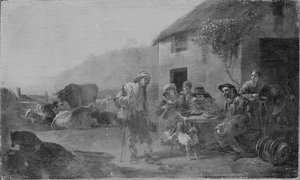
jan josef horemans the elder – Belgian painter (1682-1759) known for detailed interiors & anatomical precision.
jan le ducq – Explore the captivating landscapes & animal paintings of Jan Le Ducq, a Dutch master known for his dog portraits.
Jan Miel – Cavaliere della Vita, (Anvers, 1599 - Turin, 1663) Court artist to Charles Emanuel II, Duke of Savoy.
Louvre, Paris, France – INV 1447 and MR 816 ( )
)

File:Jan Miel - The beggar.JPG – Wikimedia Commons 
Louvre Cartel – Foucart, Jacques, Catalogue des peintures flamandes et hollandaises du musée du Louvre, Gallimard / Louvre éditions, 2009, p. 182, ill. n&bCatalogue des peintures flamandes et hollandaises
Pytania i odpowiedzi
W jaki sposób styl dzieła "LE MENDIANT" odnosi się do epoki jego twórcy?
„LE MENDIANT” – Jan Miel reprezentuje nurt Dutch Golden Age Painting, powstały w epoce – Wczesna nowożytność swojego twórcy.
Z czego wynika obecny status praw autorskich dzieła "LE MENDIANT"?
Status praw autorskich do dzieła „LE MENDIANT” – należy do domeny publicznej – autorskie prawa majątkowe wygasły – wynika z faktu, że artysta zmarł w 1663.
Czy kolory w „LE MENDIANT” – Jan Miel są nasycone, czy stonowane?
Dzieło „LE MENDIANT” – Jan Miel charakteryzuje się nasyceniem na poziomie Muted oraz intensywnością Monochromatic.
Biografia artysty
Jan Miel: Pomost między niderlandzkim realizmem a barokowym przepychem
Jan Miel (1599–1663) jawi się jako postać kluczowa dla artystycznego krajobrazu siedemnastego wieku, stanowiąc fascynujące ucieleśnienie zbieżności flamandzkiej tradycji i włoskiej innowacji. Urodzony w Beveren w Belgii — choć Antwerpia i ’s-Hertogenbosch pozostają równie prawdopodobnymi miejscami jego narodzin — Miel spędził wczesne lata w relatywnym niebycie, co sprawia, że szczegóły biograficzne są niezwykle skąpe. Niemniej jednak, to, co wyłania się z badań naukowych, to zdumiewająca podróż artystyczna, naznaczona ewolucją stylistyczną i wspólnymi przedsięwzięciami, które ugruntowały jego pozycję w tętniącym życiem środowisku kulturalnym Rzymu i Turynu.
Lata formacyjne artysta spędził głównie w Antwerpii, gdzie chłonął wpływy wybitnych flamandzkich mistrzów, takich jak Anthony van Dyck. Choć dokładny zakres jego szkolenia pozostaje nieuchwytny, bez wątpienia zaszczepił w nim on podziw dla skrupulatnej obserwacji i wyrafinowanej techniki — cech, które miały charakteryzować znaczną część jego późniejszego dorobku. To fundamentalne przygotowanie w zakresie klasycznego rysunku i portretu dostarczyło mu niezbędnych narzędzi do kariery, która ostatecznie przekroczyła granice regionalne.
Rzymska transformacja i duch Bamboccianti
Przybycie Miela do Rzymu około 1636 roku zwiastowało przełomowy moment w jego artystycznej trajektorrii. Szybko dołączył on do Bentvueghels, wpływowego stowarzyszenia holenderskich i flamandzkich artystów mieszkających w Wiecznym Mieście. W ramach tego braterstwa przyjął on niezapomniany przydomek „bieco”, który odzwierciedlał jego charakterystyczne, lekko zezowate spojrzenie — cechę, która stała się synonimem jego artystycznej persony. Ta przynależność sprzyjała nawiązywaniu głębokich relacji w szerszej społeczności artystycznej, znajdującej się pod silnym wpływem stylu Bamboccianti autorstwa Pietera van Laera.
Ruch ten poświęcony był przedstawianiu scen z codziennego życia niższych warstw społecznych w Rzymie i jego okolicach, odrzucając idealizowany przepych sztuki dojrzałego renesansu na rzecz czegoś znacznie bardziej zmysłowego i bezpośredniego. Miel przyjął ten trend z całego serca, tworząc urzekające malarstwo rodzajowe, które z niezwykłym realizmem i wrażliwością chwytało ducha miejskiej egzystencji. Jego dzieła często zawierały:
- Tętniące życiem sceny uliczne zamieszkane przez podróżnych, kupców i robotników.
- Mistrzowskie wykorzystanie światła, przywołujące zakurzoną, skąpaną w słońcu atmosferę rzymskich zaułków.
- Subtelną grę ludzkich emocji w tłocznych, chaotycznych sceneriach.
- Skrupulatną uwagę poświęconą teksturze tkanin, kamienia i ziemi.
Ewolucja ku klasycyzmowi i dworskiemu majestatowi
W miarę postępów w karierze, wizja artystyczna Miela przeszła znaczącą metamorfozę. Choć pozostał mistrzem scen rodzajowych, zaczął odchodzić od surowego realizmu Bamboccianti w stronę bardziej klasyzujących obrazów historycznych. Ta zmiana odzwierciedlała szerszy trend w sztuce europejskiej, gdzie pierwotna energia baroku była coraz częściej łagodzona przez pragnienie ładu, szlachetności i klasycznej alegorii.
Ta ewolucja doprowadziła go ostatecznie do prestiżowych nominacji, a w szczególności do służby jako artysta dworski u Karola Emmanuela II, księcia Sabaudii. W służbie na dworze w Turynie, twórczość Miela nabrała bardziej formalnego i wspaniałego charakteru. Intymność jego wcześniejszych rzymskich scen ustąpiła miejsca kompozycjom o większej skali i złożoności, zaprojektowanym tak, by odzwierciedlać potęgę i prestiżd królewskiego patrona. Okres ten stanowi szczyt jego zawodowych osiągnięć, w którym jego flamandzkie korzenie w detalach spotkały się z wielkimi, rozległymi narracjami pożądanymi przez europejską arystokrację.
Historyczne znaczenie Jana Miela tkwi w jego zdolności do poruszania się między tymi odmiennymi światami. Był artystą, który potrafił odnaleźć piękno w pokornych zmaganiach rzymskiego ulicznego żebraka oraz godność w epickich opowieściach antyku. Łącząc przepaść między skrupulatnym realizmem Północy a dramatycznym klasycyzmem Południa, Miel pozostawił niezatarte piętno w kanonie siedemnastego wieku, zapewniając sobie dziedzictwo prawdziwego kosmopolity ery baroku.
Jan Miel
1599 - 1663 , Belgia
Krótka nota
- Artistic Movement Or Style: Bamboccianti, Klasycyzujący
- Artists Or Movements Influenced By This Artist: ['Pieter van Laer']
- Artists Who Influenced This Artist: ['Anthony van Dyck']
- Date Of Birth: 1599 Beveren Belgia
- Date Of Death: 1663
- Full Name: Jan Miel
- Nationality: Flamandzki
- Notable Artworks:
- Krajobraz z walką dwóch baranów
- Rzymski wapiennik z chłopami grającymi w kości
- Place Of Birth: Beveren Belgia