Menu
DARMOWA KONSULTACJA ARTYSTYCZNA
Podgląd w skaliPodgląd w skali Zobacz w ARZobacz w AR Przełącz na wydruk Przełącz na wydrukPrzełącz na obraz Przełącz na obraz WyślijWyślij
SzczegółySzczegóły Dodaj do ulubionych Dodaj do ulubionych Pobierz plik obrazuPobierz plik obrazu Podobne obiektyPodobne obiekty RTGRTG Pokaz slajdówPokaz slajdów

LE MENDIANT

Experience the muted dignity of Jan Miel's Baroque genre scene, Le Mendiant, capturing 17th-century life with subtle tonal mastery; discover this masterpiece today.

Jan Miel (1599-1664) was a Flemish painter active in Italy, known for his 'bamboccianti' genre scenes of Roman life & later classicizing history paintings. Court artist to Charles Emanuel II, Duke of Savoy.

Ręcznie malowana reprodukcja olejowa

Ręcznie malowany obraz olejny na płótnie, wykonany na zamówienie przez naszych artystów w wybranym przez Ciebie wymiarze i oprawie. (Przełącz na wydruk Przełącz na wydrukPrzełącz na obraz Przełącz na obraz)

P118B $10
P118H $10
P118W $10
P438Z $10
P508JH $12
P508YH $12
P805H $10
P805Z $10
P919BZ $10
P919G $10
P919XJ $10
P959ZH $10
P968JZ $12
W106C $8
W218G $10
W218JH $8
W218Y $10
W307PJ $10
W316G $10
W316PJ $8
W316Y $10
W398PJ $8
W4111J $10
W500HY $15
W500JH $15
W692G $12
W849H $8
W940BG $15
W953PJ $8

Standard
custom
CM
INCH

Wybierz spośród naszych standardowych rozmiarów, które zachowują oryginalne proporcje dzieła sztuki.

szerokość
wysokość

Możesz wprowadzić własne wymiary, aby dopasować obraz do konkretnej ramy lub przestrzeni. Jeśli wybrany rozmiar nie będzie odpowiadał proporcjom oryginału, przytniecie dzieło sztuki lub rozszerzymy je o dodatkowe elementy, ręcznie domalowane przez artystę. Przed rozpoczęciem produkcji wyślemy projekt cyfrowy do Twojej akceptacji.
Należy pamiętać, że podgląd na ekranie nie odzwierciedla rzeczywistego przycinania ani rozszerzania obrazu. Tylko projekt dokładnie pokaże ostateczną kompozycję.
Choć oferujemy możliwość zamówienia niestandardowych rozmiarów, zalecamy wybór wymiaru z gotowej listy, aby zachować oryginalne proporcje dzieła.

Przykłady możliwych zmian: Zamień twarz na zdjęcie klienta; Dodaj zwierzę domowe (np. zamień kota na psa); Ukryj wiadomość w tle; Zmień krajobraz lub elementy tła.
Po złożeniu zamówienia zespół OriginalUniqueArt.com skontaktuje się z klientem drogą mailową w celu uzyskania instrukcji i prześle wizualizację projektu

Dostawa na całym świecie () w ciągu 3–4 tygodni zamiast standardowych 5 tygodni. (6 Sierpień). Bez kompromisów w kwestii jakości.

why_choose_icon
Bezpłatna ekspresowa wysyłka na cały świat
why_choose_icon
Wysokiej jakości płótno lniane
why_choose_icon
Pełne ubezpieczenie transportowe
why_choose_icon
Gwarancja zwrotu należności celnych i podatków importowych
why_choose_icon
Gwarancja pełnego odwzorowania kolorów
why_choose_icon
Polityka 60-dniowego zwrotu (tylko w przypadku wad)
why_choose_icon
Gwarancja 100% zwrotu pieniędzy
why_choose_icon
Oferta rabatowa przy większych zamówieniach

Cena całkowita

$ 450

reproduction

LE MENDIANT

Technika wykonania

Rozmiar reprodukcji

-

Suma do zapłaty

$ 450

Kluczowe informacje

  • Artistic style: Genre painting
  • Dimensions: 15U174728
  • Medium: Oil on metal
  • Movement: Dutch Golden Age
  • Location: Louvre, Paris
  • Influences: Anthony van Dyck
  • Title: Le Mendiant

Quiz wiedzy o sztuce

Do każdego pytania dotyczy tylko jedna poprawna odpowiedź.

Pytanie 1:
What artistic period is the painting 'Le Mendiant' associated with?
Pytanie 2:
Which city heavily influenced Jan Miel's style, leading to the blend of Flemish and Italian aesthetics?
Pytanie 3:
What is a key characteristic of the color palette used in 'Le Mendiant' that contributes to its mood?
Pytanie 4:
The genre of painting depicted in 'Le Mendiant' is best described as:
Pytanie 5:
What technique did Jan Miel favor to sculpt form and delineate contours in this work?

Opis dzieła

Jan Miel’s “Le Mendiant”: A Window Into Baroque Dignity Amidst Poverty

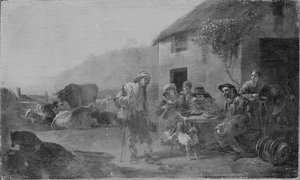
The artwork "Le Mendiant," attributed to Jan Miel (1599 – 1663), stands as a poignant testament to the artistic spirit of the Dutch Golden Age and its engagement with broader humanist concerns. Painted circa 1630, this genre scene—a hallmark of Miel’s oeuvre during his formative years in Rome—captures a moment of quiet contemplation within a bustling tavern interior, offering viewers an arresting glimpse into both social realities and artistic sophistication.

Composition and Style: Baroque Restraint Within Classical Framework

Miel's stylistic approach skillfully blends influences from Flemish masters like Anthony van Dyck with the burgeoning grandeur of Italian Baroque aesthetics. The horizontal orientation of the canvas immediately establishes a sense of stability, mirroring the formal balance characteristic of Baroque compositions. However, unlike the opulent theatricality often associated with Rome at the time, Miel employs subtle tonal gradations and muted colors—primarily grayscale—to convey an atmosphere of understated dignity. This deliberate restraint serves to heighten the emotional impact of the depicted scene: a beggar humbly requesting alms amidst a group of patrons engaged in conversation. The artist’s meticulous attention to detail—evident in the rendering of textures, particularly on the tavern table and the livestock visible in the background—underscores Miel's commitment to realism while simultaneously grounding the image within a broader artistic tradition.

Detailed Examination: Technique and Materials

The painting utilizes oil paint on canvas with considerable skill. Brushstrokes are perceptible but carefully blended, creating a smooth surface that enhances the illusion of depth and luminosity despite the absence of vibrant hues. Layers of tonal variation—a technique favored by Miel—are skillfully applied to sculpt form and delineate contours, capturing the nuances of light and shadow within the tavern setting. The artist’s meticulous observation of natural forms—reflected in the depiction of the cows and sheep—demonstrates a profound understanding of classical principles of perspective and anatomical accuracy.

Historical Context: Rome and Beyond – Miel's Artistic Journey

Jan Miel’s artistic development unfolded primarily in Rome during the 1630s, where he honed his craft under the patronage of Charles Emanuel II, Duke of Savoy—a connection that cemented his reputation as a court artist. This period witnessed a significant shift towards classicizing tendencies within Miel's oeuvre, mirroring the broader cultural revival occurring across Europe. The artwork’s subject matter – depicting poverty alongside social interaction – speaks to the humanist ideals prevalent during the Baroque era, reflecting an interest in portraying human experience with compassion and intellectual rigor.

Symbolism: Dignity Amidst Adversity

“Le Mendiant” transcends mere visual representation; it embodies a deeper symbolic resonance. The beggar’s posture—characterized by humility and supplication—serves as a poignant reminder of the vulnerability inherent within the human condition. Simultaneously, the gathering of people around the table symbolizes communal life and social responsibility. The inclusion of livestock reinforces the artwork's connection to rural existence and underscores its engagement with themes of moral contemplation. Ultimately, Miel’s masterpiece invites viewers to consider not only the aesthetic beauty of the scene but also its profound ethical implications—a testament to the enduring power of art to illuminate both the grandeur and fragility of human experience.
  • Artist: Jan Miel
  • Birth Year: 1599
  • Death Year: 1663
  • Birth City: Beveren
  • Birth Country: Belgium

Additional Resources:

LE MENDIANT – Louvre site des collections LE MENDIANT
jan josef horemans the elder – Belgian painter (1682-1759) known for detailed interiors & anatomical precision.jan josef horemans the elder
jan le ducq – Explore the captivating landscapes & animal paintings of Jan Le Ducq, a Dutch master known for his dog portraits.jan le ducq

Jan Miel – Cavaliere della Vita, (Anvers, 1599 - Turin, 1663) Court artist to Charles Emanuel II, Duke of Savoy.Jan Miel

Louvre, Paris, France – INV 1447 and MR 816 (Department of Paintings)Louvre Cartel

File:Jan Miel - The beggar.JPG – Wikimedia Commons File:Jan Miel - The beggar.JPG

Louvre Cartel – Foucart, Jacques, Catalogue des peintures flamandes et hollandaises du musée du Louvre, Gallimard / Louvre éditions, 2009, p. 182, ill. n&bCatalogue des peintures flamandes et hollandaises


Biografia artysty

Jan Miel: Bridging Dutch Realism and Baroque Grandeur

Jan Miel (1599–1663) stands as a pivotal figure in the artistic landscape of the seventeenth century, embodying the fascinating confluence of Flemish tradition and Italian innovation. Born in Beveren, Belgium—though Antwerp and ‘s-Hertogenbosch remain contenders for his birthplace—Miel’s early life remains shrouded in relative obscurity, leaving biographical details sparse. However, what emerges from scholarly research is a remarkable artistic journey marked by stylistic evolution and collaborative endeavors that cemented his place within the vibrant cultural milieu of Rome and Turin.

His formative years were spent honing his craft primarily in Antwerp, where he absorbed the influences of prominent Flemish masters like Anthony van Dyck. While the precise scope of his training remains elusive, it undoubtedly instilled within him an appreciation for meticulous observation and refined technique—qualities that would characterize much of his subsequent oeuvre. This foundational grounding in classical draughtsmanship and portraiture provided the essential toolkit for a career that would eventually transcend regional boundaries.

The Roman Transformation and the Bamboccianti Spirit

Miel’s arrival in Rome around 1636 signaled a transformative moment in his artistic trajectory. He swiftly joined the Bentvueghels, an influential association of Dutch and Flemish artists residing in the Eternal City. Within this brotherhood, he adopted the memorable moniker ‘bieco’, a nickname reflecting his distinctive squinting gaze—a characteristic that would become synonymous with his artistic persona. This affiliation fostered deep connections within a broader artistic community deeply impacted by Pieter van Laert’s Bamboccianti style.

This movement was dedicated to depicting scenes of everyday life amongst the lower classes in Rome and its environs, eschewing the idealized grandeur of High Renaissance art for something far more visceral and immediate. Miel embraced this trend wholeheartedly, producing captivating genre paintings that captured the spirit of urban existence with remarkable realism and sensitivity. His works often featured:

  • Lively street scenes populated by travelers, merchants, and laborers.
  • A masterful use of light to evoke the dusty, sun-drenched atmosphere of Roman alleys.
  • The subtle interplay of human emotion within crowded, chaotic settings.
  • A meticulous attention to the textures of fabric, stone, and earth.

Evolution Toward Classicism and Courtly Grandeur

As his career progressed, Miel’s artistic vision underwent a significant metamorphosis. While he remained a master of the genre scene, he began to move away from the gritty realism of the Bamboccianti toward more classicizing history paintings. This shift reflected a broader trend in European art, where the raw energy of the Baroque was increasingly tempered by a desire for order, nobility, and classical allegory.

This evolution eventually led him to prestigious appointments, most notably serving as a court artist to Charles Emanuel II, Duke of Savoy. In the service of the Turin court, Miel’s work took on a more formal and magnificent character. The intimacy of his earlier Roman scenes gave way to compositions of greater scale and complexity, designed to reflect the power and prestige of his royal patron. This period represents the pinnacle of his professional achievement, where his Flemish roots in detail met the grand, sweeping narratives required by the European aristocracy.

The historical significance of Jan Miel lies in his ability to navigate these disparate worlds. He was an artist who could find beauty in the humble struggles of a Roman street urchin and dignity in the epic tales of antiquity. By bridging the gap between the meticulous realism of the North and the dramatic classicism of the South, Miel left an indelible mark on the seventeenth-century canon, ensuring his legacy as a true cosmopolitan of the Baroque era.

Jan Miel

Jan Miel

1599 - 1663 , Belgium

Najważniejsze informacje

  • Artistic Movement Or Style: Bamboccianti, Classicising
  • Artists Or Movements Influenced By This Artist: ['Pieter van Laer']
  • Artists Who Influenced This Artist: ['Anthony van Dyck']
  • Date Of Birth: 1599 Beveren Belgium
  • Date Of Death: 1663
  • Full Name: Jan Miel
  • Nationality: Flemish
  • Notable Artworks:
    • Landscape with a Battle between Two Rams
    • Roman Lime Kiln with Peasants Gambling
  • Place Of Birth: Beveren Belgium
Odkryj dzieła sztuki uporządkowane według tematów, stylów i cech charakterystycznych.




































