

 Podgląd w skali 1:1
 Wyślij jako kartkę
 Udostępnij
 Szczegóły dzieła
 Przewodnik

 Pobierz obraz
 Podobne obiekty
 RTG
RTG Pokaz slajdów
 Statystyki
Winter Landscape
 Oil On Canvas
- WallArt
- Baroque
 1670
1670- Early Modern
 42.0 x 49.0 cm
 Rijksmuseum
 Rozwiń treść
Giclée / Wydruk artystyczny
Wydruki giclée lub płótna o jakości muzealnej, szybka realizacja i szeroki wybór opcji wykończenia. ( Zamów ręcznie malowaną reprodukcję Przejdź do wersji cyfrowej)




P118B zł10

P118H zł10

P118W zł10

P438Z zł10

P508JH zł12

P508YH zł12

P805H zł10

P805Z zł10

P919BZ zł10

P919G zł10

P919XJ zł10

P959ZH zł10

P968JZ zł12

W106C zł8

W218G zł10

W218JH zł8

W218Y zł10

W307PJ zł10

W316G zł10

W316PJ zł8

W316Y zł10

W398PJ zł8

W4111J zł10

W500HY zł15

W500JH zł15

W692G zł12

W849H zł8

W940BG zł15

W953PJ zł8




Wybierz spośród naszych standardowych rozmiarów, które zachowują oryginalne proporcje dzieła sztuki.

Wpisz wymaganą szerokość i wysokość, aby dopasować grafikę do ramy lub ściany. Wydruk można jedynie przyciąć, nigdy nie powiększając go poza oryginalny obraz, dlatego format o innych proporcjach spowoduje utratę części kompozycji. Przed rozpoczęciem druku prześlemy Ci cyfrowy podgląd do zatwierdzenia. Obraz wyświetlany na tej stronie nie pokazuje rzeczywistego przycięcia — jedynie podgląd oddaje ten efekt.
Dostawa na cały świat () w ciągu 2 tygodni zamiast standardowych 4/5 tygodni. (26 Październik)

Bezpłatna ekspresowa wysyłka na cały świat

Wysokiej jakości płótno lniane

Pełne ubezpieczenie przesyłki

Gwarancja zwrotu należności celnych i podatków importowych

Gwarancja wiernego odwzorowania kolorów

100-dniowa polityka zwrotów (tylko w przypadku wad)

Gwarancja 100% zwrotu pieniędzy

Zniżka przy zakupie wielu sztuk
 Opcja ze szkłem jest dostępna wyłącznie w rozmiarach poniżej 110 cm

Winter Landscape
Giclée / Wydruk artystyczny
Wymiary reprodukcji
-


Cena całkowita
zł 307
A Symphony of Shadow and Frost
In the quiet, biting chill of the seventeenth century, Jacob Isaackszoon van Ruisdael captured a moment that transcends mere seasonal change, offering instead a profound meditation on the soul. His Winter Landscape Near Haarlem is far more than a topographical record of the Dutch countryside; it is a masterclass in atmospheric drama. As the eye wanders across the frozen expanse, one is immediately struck by the heavy, brooding sky—a vast canopy of slate gresem and charcoal clouds that seems to press down upon the earth. This interplay of light and shadow creates a palpable sense of stillness, as if the world itself has held its breath under the weight of a recent snowfall. The composition is anchored by the distant, skeletal silhouette of a church spire, a singular vertical element that pierces the horizon and serves as a beacon of spiritual permanence amidst the shifting, ephemeral textures of the winter frost.
Ruisdael’s technical prowess is nothing short of extraordinary, particularly in his ability to manipulate atmospheric perspective to evoke depth. Through a sophisticated layering of muted blues, silvery greys, and bone-whites, he guides the viewer from the textured, tactile foreground—where one can almost feel the crunch of ice beneath a boot—into the hazy, receding distance. The artist employs a meticulous brushwork that breathes life into the inanimate; the delicate, fractured branches of winter-stripped trees and the subtle undulations of the snow-covered ground are rendered with such precision that the cold becomes a physical presence. This mastery of light, often referred to as the "heroic" style in his later works, allows him to transform a bleak landscape into a stage for dramatic tension, where every glint of light on a frozen patch of ice tells a story of survival and solitude.
The Poetics of Mortality and Grace
Beyond its breathtaking aesthetic appeal, the painting serves as a profound visual metaphor, deeply rooted in the cultural and spiritual anxieties of the Dutch Golden Age. To the contemporary viewer, the desolate winter scene may evoke themes of mortality and decay—the seasonal death of nature reflecting the fleeting nature of human life. The scattered figures, small and seemingly fragile against the immense landscape, emphasize a sense of human insignificance when confronted with the overwhelming grandeur of the natural world. Yet, there is no pure despair in this vista. The presence of the church spire, rising steadfastly through the gloom, introduces a layer of divine majesty and hope. It suggests that even in the most desolate winters of the spirit, there remains an architectural and spiritual anchor to guide the weary traveler.
For the discerning collector or interior designer, this reproduction offers more than just a beautiful image; it provides a focal point of contemplative depth. The painting’s somber palette and commanding presence make it an ideal centerpiece for spaces designed for reflection, such as a private library, a study, or a sophisticated gallery-style living room. It possesses the rare ability to anchor a room with its gravity while simultaneously inviting the eye to wander through its intricate, frozen details. Owning a piece of this caliber is an invitation to engage with the legacy of the Dutch masters, bringing a sense of historical weight, quiet elegance, and timeless emotional resonance into the modern home.
Pytania i odpowiedzi
W jakiej technice wykonano "Winter Landscape" i jakie są jego wymiary?
Oryginalny utwór „Winter Landscape” – Jacob Van Ruisdael to praca wykonana w technice Oil On Canvas, o wymiarach 42 x 49 cm. Technika i rozmiar odnoszą się do obiektu oryginalnego.
Czy „Winter Landscape” – Jacob Van Ruisdael znajduje się w domenie publicznej?
Status praw autorskich dla „Winter Landscape” – Jacob Van Ruisdael: dzieło znajduje się w należy do domeny publicznej – autorskie prawa majątkowe wygasły. Określa to, czy reprodukcje obrazu mogą być sporządzane swobodnie.
Jaki rozmiar wydruku „Winter Landscape” – Jacob Van Ruisdael będzie odpowiedni do zalecanego pomieszczenia?
W pomieszczeniu typu Living Room sugerowany jest wydruk dzieła „Winter Landscape” w rozmiarze Small.
Biografia artysty
Początek życia i kariera
Jacob Isaackszoon van Ruisdael, wybitny holenderski malarz, grafik i rytownik, urodził się w 1628 roku w Haarlemie. Powszechnie uważany jest za najwybitniejszego pejzażystę Złotego Wieku Holandii – epoki charakteryzującej się ogromnym bogactwem i kulturowymi osiągnięciami. Pochodził z rodziny artystów; jego ojciec, Isaack van Ruisdael, był również malarzem, choć o mniejszej renomie. Wczesne lata Jacoba upłynęły pod wpływem warsztatu ojca, gdzie zdobywał podstawowe umiejętności techniczne i zapoznawał się z tradycją malarstwa holenderskiego. Już w młodym wieku wykazywał niezwykły talent do obserwacji natury i oddawania jej subtelnych niuansów.
Styl artystyczny i twórczość
Twórczość van Ruisdaela cechuje się wszechstronnością i bogactwem tematycznym. Malował różnorodne krajobrazy, od spokojnych wiejskich scenerii po dramatyczne panoramy górskie i morskie widoki. Od 1646 roku tworzył niezwykłe obrazy holenderskiej wsi, które z czasem nabierały bardziej heroicznego charakteru, szczególnie po podróży do Niemiec w 1650 roku. Późniejsze prace, powstałe podczas pobytu i pracy w Amsterdamie, przedstawiały panoramy miast i krajobrazy morskie, często z niebem zajmującym dwie trzecie płótna. Van Ruisdael był mistrzem światła i kompozycji, potrafił oddać atmosferę różnych pór roku i warunków pogodowych. Jego obrazy charakteryzują się niezwykłą precyzją w detalach, ale jednocześnie zachowują wrażenie naturalności i spontaniczności.
- Wodospad w skalistym i górskim krajobrazie, ukazujący jego mistrzostwo w operowaniu światłem i kompozycją.
- Widok Haarlemu z płatnami do bielenia, będący przykładem jego zdolności do uchwycenia istoty holenderskiego krajobrazu.
- Widok Damu i Damraku w Amsterdamie, podkreślający jego umiejętności w malarstwie miejskim.
Wpływy i rozwój artystyczny
Van Ruisdael nie był samoukiem, choć jego styl jest bardzo indywidualny. Początkowo inspirował się twórczością takich artystów jak Hendrick Vroom, który specjalizował się w krajobrazach morskich i widokach miast. Z czasem jednak wypracował własną unikalną wizję, odchodząc od konwencjonalnych schematów malarskich. Jego podróż do Niemiec w 1650 roku miała ogromny wpływ na jego twórczość – zaczął malować bardziej monumentalne krajobrazy górskie, nawiązujące do tradycji niemieckiego romantyzmu. W Amsterdamie, gdzie przeniósł się później, skupił się na przedstawianiu panoramy miasta i życia portowego. W późniejszych latach eksperymentował z różnymi technikami malarskimi, dążąc do uzyskania coraz bardziej realistycznego oddania natury.
Muzea i kolekcje
Twórczość van Ruisdaela znajduje się w prywatnych i instytucjonalnych kolekcjach na całym świecie. Szczególnie bogate zbiory posiadają:
- National Gallery w Londynie
- Rijksmuseum w Amsterdamie
- Hermitage Museum w Sankt Petersburgu
Znaczenie i dziedzictwo
Wpływ van Ruisdaela na tradycję malarstwa krajobrazowego jest ogromny. Jego prace inspirowały angielskich romantyków, szkołę Barbizon we Francji oraz szkołę rzeki Hudson w Stanach Zjednoczonych. Van Ruisdael wywarł wpływ na pokolenia holenderskich artystów pejzażowych. Wybitne dzieła:
- Widok Haarlemu z płatnami do bielenia
- Wodospad w skalistym i górskim krajobrazie
- Widok Damu i Damraku w Amsterdamie
Profil artysty na OriginalUniqueArt: Jacob Isaackszoon van Ruisdael

Jacob Van Ruisdael
1628 - 1682 , Holandia
Krótka nota
- Artyści Inspirujący: ['Hendrick Vroom']
- Data Urodzenia: 1628, Haarlem
- Data Śmierci: 1682, Amsterdam
- Miejsce Urodzenia: Haarlem, Holandia
- Narodowość: Holenderska
- Pełne Imię I Nazwisko: Jacob Isaackszoon van Ruisdael
- Styl Artystyczny: Złoty Wiek Malarstwa
- Wpływ Na Innych: ['Romantycy angielscy']
- Znane Dzieła:
- Widok Haarlemu
- Krajobraz z wodospadem
Powiązane artykuły
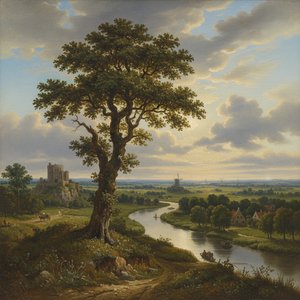
Jacob van Ruisdael: Master of Dutch Landscape & the Evocation of National Identity
Explore the life & work of Jacob van Ruisdael, the preeminent Dutch landscape painter. Discover his technical brilliance, symbolic depth, and lasting influence on art history. Learn about collecting Ruisdael's masterpieces.

Rembrandt van Rijn: 25 Najwybitniejszych Dzieł Sztuki – Reprodukcje i Inspiracje do Wnętrz
Poznaj 25 arcydzieł Rembrandta van Rijn! Odkryj fascynujące historie, techniki i wpływ holenderskiego mistrza baroku na świat sztuki. Reprodukcje obrazów najwyższej jakości – inspiracje do wnętrz na OriginalUniqueArt.com
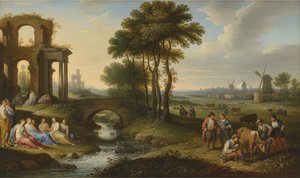
Cornelis van Poelenburch: Bridging Mannerism & the Dutch Baroque Landscape
Discover Cornelis van Poelenburch, a pivotal Dutch Baroque landscape painter bridging Mannerism & Italianate styles. Explore his life, key works, and lasting influence on 17th-century art with OriginalUniqueArt.

Jan van Goyen: Master of Dutch Landscape & Atmospheric Perspective
Discover Jan van Goyen, the master of Dutch landscape painting. Explore his subtle technique, atmospheric realism & lasting influence on art history. Learn about this 17th-century pioneer at OriginalUniqueArt.

Holenderski Barok: 10 Arcydzieł, Które Zdefiniowały Epokę | OriginalUniqueArt
Poznaj 10 arcydzieł holenderskiego baroku! Odkryj historie Rembrandta, Vermeera i innych mistrzów XVII wieku. Reprodukcje obrazów najwyższej jakości – idealne do Twojego wnętrza. OriginalUniqueArt.com


