
 Podgląd w skali 1:1
 Wyślij jako kartkę
 Udostępnij
 Szczegóły dzieła
 Przewodnik

 Pobierz obraz
 Podobne obiekty
 RTG
RTG Pokaz slajdów
 Statystyki
Mercury and Argus
 Oil On Canvas
- WallArt
- Romanticism
 1840
1840- 19th Century
 151.0 x 111.0 cm
 Narodowa Galeria Kanady
 Rozwiń treść
Giclée / Wydruk artystyczny
Wydruki giclée lub płótna o jakości muzealnej, szybka realizacja i szeroki wybór opcji wykończenia. ( Zamów ręcznie malowaną reprodukcję Przejdź do wersji cyfrowej)




P118B zł10

P118H zł10

P118W zł10

P438Z zł10

P508JH zł12

P508YH zł12

P805H zł10

P805Z zł10

P919BZ zł10

P919G zł10

P919XJ zł10

P959ZH zł10

P968JZ zł12

W106C zł8

W218G zł10

W218JH zł8

W218Y zł10

W307PJ zł10

W316G zł10

W316PJ zł8

W316Y zł10

W398PJ zł8

W4111J zł10

W500HY zł15

W500JH zł15

W692G zł12

W849H zł8

W940BG zł15

W953PJ zł8




Wybierz spośród naszych standardowych rozmiarów, które zachowują oryginalne proporcje dzieła sztuki.

Wpisz wymaganą szerokość i wysokość, aby dopasować grafikę do ramy lub ściany. Wydruk można jedynie przyciąć, nigdy nie powiększając go poza oryginalny obraz, dlatego format o innych proporcjach spowoduje utratę części kompozycji. Przed rozpoczęciem druku prześlemy Ci cyfrowy podgląd do zatwierdzenia. Obraz wyświetlany na tej stronie nie pokazuje rzeczywistego przycięcia — jedynie podgląd oddaje ten efekt.
Dostawa na cały świat () w ciągu 2 tygodni zamiast standardowych 4/5 tygodni. (26 Październik)

Bezpłatna ekspresowa wysyłka na cały świat

Wysokiej jakości płótno lniane

Pełne ubezpieczenie przesyłki

Gwarancja zwrotu należności celnych i podatków importowych

Gwarancja wiernego odwzorowania kolorów

100-dniowa polityka zwrotów (tylko w przypadku wad)

Gwarancja 100% zwrotu pieniędzy

Zniżka przy zakupie wielu sztuk
 Opcja ze szkłem jest dostępna wyłącznie w rozmiarach poniżej 110 cm

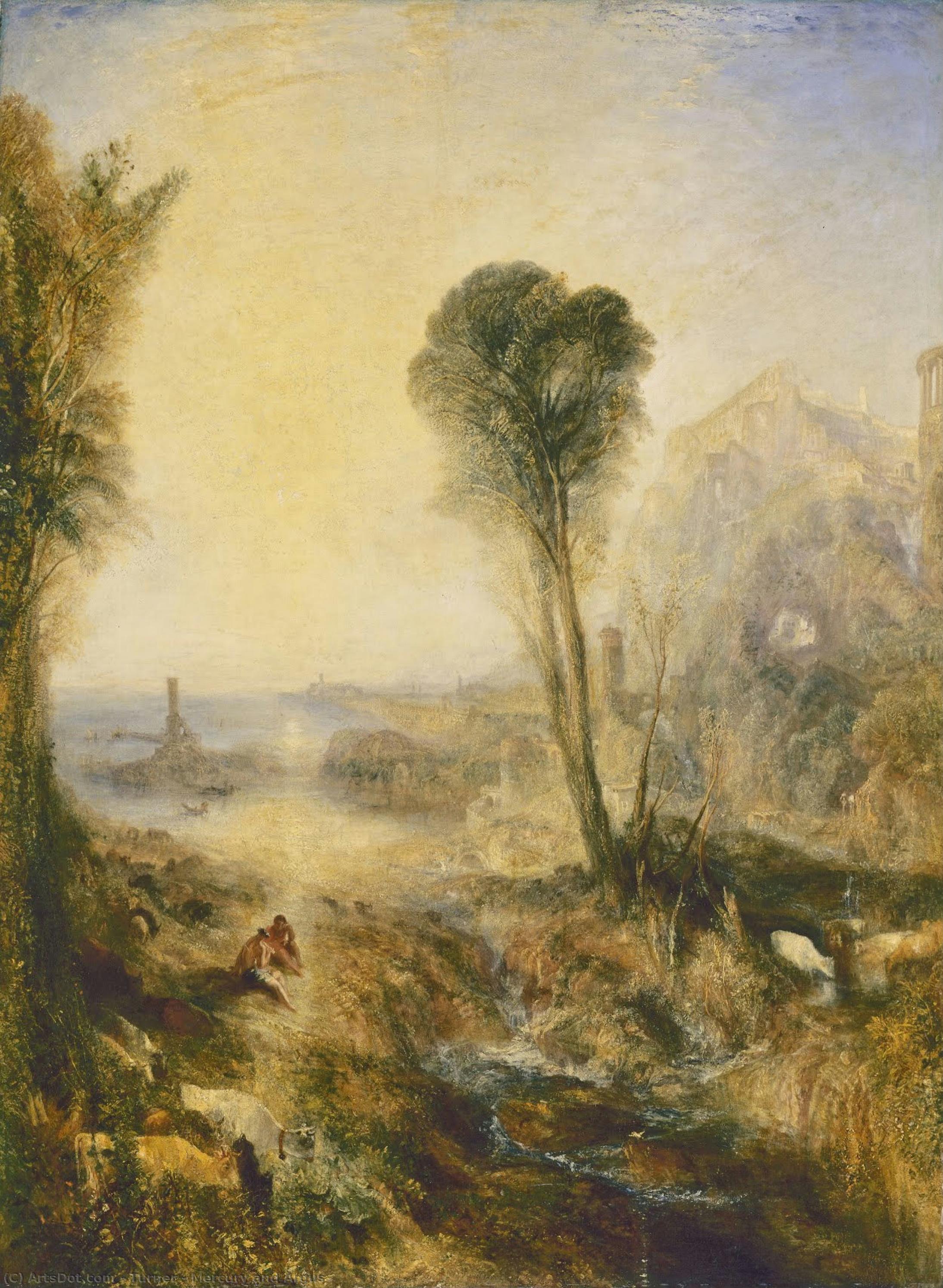
Mercury and Argus
Giclée / Wydruk artystyczny
Wymiary reprodukcji
-


Cena całkowita
zł 307
A Vision of Mythic Tranquility
The artwork presents a romantic landscape scene with figures in the foreground and a distant cityscape. A central stream or river leads the eye towards a hazy, distant city. Tall trees dominate the left side of the frame, creating a vertical emphasis and framing the scene. In the foreground on the right, a group of figures, appearing to be shepherds and their flock, occupy the space.
The composition utilizes atmospheric perspective to create depth, with distant objects rendered in paler colors and less detail. The color palette is dominated by warm earth tones, including yellows, browns, ochres, and muted greens, with subdued hints of blue and grey in the sky and distant city. Lines are soft and blurred, contributing to an atmospheric effect, while the water appears fluid and shimmering.
Technical Composition and Style
The painting is executed using oil paint on canvas. The technique involves visible brushstrokes that create a sense of roughness on the trees and ground. The lighting is diffused and soft, suggesting an overcast day or early morning/late afternoon light, with no strong directional light source.
Key visual elements include:
- Shapes: Organic and flowing forms reflecting natural landscape elements.
- Textures: A textured appearance on the trees and ground contrasted with a smooth, hazy texture in the distant cityscape.
- Perspective: Depth achieved through overlapping forms and the winding horizontal lines of the stream.
Pytania i odpowiedzi
Jaki rozmiar wydruku "Mercury and Argus" będzie odpowiedni do mojego pokoju?
Dla Living Room zalecany rozmiar wydruku dzieła „Mercury and Argus” – J.M.W. Turner to Large.
Jaką kolorystykę wykorzystuje "Mercury and Argus"?
Paleta dzieła „Mercury and Argus” – J.M.W. Turner jest opisywana jako Neutrals. Stanowi ona zwięzłe zestawienie barw użytych w pracy.
Jakie emocje budzi "Mercury and Argus"?
„Mercury and Argus” – J.M.W. Turner emanuje Nostalgic emocjonalnym nastrojem.
Biografia artysty
A Life Painted in Light: The World of J.M.W. Turner
Joseph Mallord William Turner, known to the world as J.M.W. Turner, was more than just a painter; he was a visionary who redefined landscape art and paved the way for modern abstraction. Born in Maiden Lane, Covent Garden, London, in 1775, his beginnings were humble – the son of a barber and wig maker. Yet, even as a child, a remarkable talent blossomed within him. By age fourteen, he was enrolled at the Royal Academy, exhibiting his first work just a year later. This early promise wasn’t merely technical skill; it hinted at an innate understanding of light, color, and atmosphere that would become the hallmarks of his extraordinary career. He supplemented his artistic education with practical experience as an architectural draftsman, honing his perspective and compositional abilities – skills that would prove invaluable in rendering both detailed topographical views and vast, emotive landscapes. Turner’s early life was marked by a dedication to his craft, fueled by a natural aptitude and a relentless pursuit of artistic excellence.The Romantic Tempest: Style and Influences
Turner emerged during the height of the Romantic era, but he wasn't simply a follower of its conventions. He absorbed influences from various sources – the Dutch masters like Claude Lorrain and Aelbert Cuyp for their luminous landscapes, and artists such as Richard Wilson for his poetic approach to nature. However, Turner didn’t merely imitate; he synthesized these influences into something entirely new. His work is characterized by an expressive use of color, often employing bold contrasts and vibrant hues to convey emotion and atmosphere. He was fascinated by the power and drama of nature – turbulent seascapes, fiery sunsets, and swirling storms became recurring motifs in his paintings. He wasn’t interested in simply depicting what he saw; he sought to capture the *feeling* of a place, the sublime awe inspired by the natural world. This pursuit led him to experiment with increasingly loose brushwork, dissolving forms into washes of color and light – techniques that would anticipate the Impressionist movement decades later. From 1840, his work gained significant recognition thanks to the championing of John Ruskin, who elevated landscape painting to a new level of critical acclaim.A Prolific Legacy: The Scope of Turner’s Output
The sheer volume of Turner's artistic output is astonishing. He created over 550 oil paintings, nearly 2,000 watercolors, and an astounding 30,000 works on paper. This prolificacy wasn’t simply a matter of quantity; it reflected his tireless exploration of different subjects, techniques, and styles. His paintings range from detailed topographical views of British landscapes to dramatic historical scenes and evocative maritime paintings. He was equally adept at capturing the tranquility of a pastoral scene and the terrifying power of a raging storm. Works like “Fort Vimieux” exemplify his mastery of depicting atmospheric effects – the swirling clouds, the crashing waves, and the intense light all contribute to a sense of drama and sublime beauty. Similarly, "Scene in the Campagna" showcases his ability to capture the warmth and serenity of the Italian countryside with delicate brushwork and luminous colors. Beyond painting, Turner was also a skilled printmaker, further disseminating his artistic vision through engravings and lithographs.Eccentricity and Remembrance: The Man Behind the Masterpieces
Turner’s personal life was as complex and enigmatic as his art. He remained intensely private and reclusive, often shunning social gatherings and preferring the solitude of his studio or the open road. He fathered two daughters, Evelina and Georgiana, with Sarah Danby, the wife of a fellow artist, but maintained a distant relationship with them. His later years were marked by increasing eccentricity and declining health. After his father’s death in 1829, he became increasingly morose and withdrawn, living in squalor and neglecting his appearance. He adopted the pseudonym “Mr. Booth” to avoid recognition and even rowed his boat into the Thames during a census to remain untraceable. Despite his eccentricities, or perhaps because of them, Turner remains one of Britain’s most beloved artists. His final years were spent in Chelsea where he passed away on December 19, 1851, at the age of 76. In a fitting tribute to his enduring legacy, he is buried in St Paul's Cathedral, alongside other British luminaries – a testament to his profound impact on art and culture. His work continues to inspire artists and captivate audiences worldwide, ensuring that the light of J.M.W. Turner will continue to shine for generations to come.Major Achievements
Turner’s legacy rests upon several key achievements:- Pioneering Atmospheric Effects: He mastered the depiction of light and atmosphere in a way no other artist had before, creating paintings that seem to shimmer with an inner life.
- Bridging Romanticism and Modernity: His loose brushwork, expressive color palette, and focus on subjective experience foreshadowed the Impressionist movement.
- Diverse Subject Matter: From grand historical scenes to intimate landscapes, Turner’s work encompasses a vast range of subjects and styles.
- Influence on Subsequent Artists: He inspired generations of artists with his innovative techniques and bold vision.
Historical Significance
J.M.W. Turner's paintings are not merely beautiful works of art; they are windows into the 19th century, offering insights into British society, culture, and the changing relationship between humanity and nature. His work reflects the Romantic ideals of individualism, emotion, and the sublime—values that shaped the era’s artistic and intellectual landscape. His paintings continue to be studied and admired for their technical brilliance, emotional depth, and enduring power.
J.M.W. Turner
1775 - 1851 , Wielka Brytania
Krótka nota
- Artistic Movement Or Style: Romanticizm
- Artists Or Movements Influenced By This Artist:
- Impressionizm
- Sztuka abstrakcyjna
- Artists Who Influenced This Artist:
- John Robert Cozens
- Richard Wilson
- Date Of Birth: 23 kwietnia 1775
- Date Of Death: 19 grudnia 1851
- Full Name: Joseph Mallord William Turner
- Nationality: Wielkobrytanski
- Notable Artworks:
- Fort Vimieux
- Scena w Campagnie
- Place Of Birth: Londyn, Wielka Brytania
Powiązane artykuły

Sublime i malowniczość w krajobrazie romantycznym: Emocje, natura i duchowość w sztuce XIX wieku
Odkryj fascynujący świat romantycznego krajobrazu! Poznaj filozofię Sublime, arcydzieła Friedricha i Turnera oraz wpływ tego nurtu na sztukę. Inspiracje i reprodukcje najwyższej jakości – OriginalUniqueArt.

John Constable: 25 Najlepszych Obrazów Mistrza Angielskiego Krajobrazu | OriginalUniqueArt
Odkryj 25 arcydzieł Johna Constable'a – mistrza angielskiego krajobrazu! Poznaj romantyczne pejzaże, technikę malarską i inspiracje z Dedham Vale. Reprodukcje obrazów najwyższej jakości na OriginalUniqueArt.com. Eksploruj pełną kolekcję online!

Romantyczny Krajobraz w Malarstwie: 10 Arcydzieł, Które Zdefiniowały Epokę | OriginalUniqueArt.com
Odkryj 10 arcydzieł romantyzmu w malarstwie! Poznaj historie Caspara Davida Friedricha, Turnera i innych mistrzów. Inspiracje wnętrzarskie & reprodukcje obrazów najwyższej jakości na OriginalUniqueArt.com. Eksploruj kolekcję online!
J.M.W. Turner: Light, Atmosphere & the Romantic Sublime
Explore the life & art of J.M.W. Turner, a master of Romantic landscape painting. Discover his innovative techniques, key works, and lasting influence on Impressionism. Find high-quality reproductions at OriginalUniqueArt.

Evocations of Place: A Historical Journey Through Landscape Art
Explore the rich history of landscape art with OriginalUniqueArt. Discover renowned artists, movements like Impressionism & Romanticism, and expert guidance for collecting timeless pieces. Find your perfect serene escape today!