Pop Art · 1969
White Collar (Ivan Eyre, 1969)
Ivan Eyre (1935–2022) stworzył White Collar. Dzieło pochodzi z 1969. Należy do nurtu Pop Art. Wykonano w technice Acrylic On Canvas. Przechowywane jest w McMichael Canadian Art Collection w Vaughan, Kanada. Wymiary to 157 × 157 cm.
- 1969
- Acrylic On Canvas
- 157 × 157 cm
- McMichael Canadian Art Collection, Vaughan

 Podgląd w skali 1:1

 Ręcznie malowany obraz olejny
 Wyślij jako kartkę
 Udostępnij
 Karta informacyjna


 Pobierz obraz
 Podobne obiekty
 RTG
 Pokaz slajdów
 Pytania i odpowiedzi

 Statystyki
White Collar w skrócie
- Tytuł
- White Collar
- Artysta
- Ivan Eyre (1935–2022)
- Miejsce urodzenia artysty
- Saskatchewan, Canada
- Data powstania
- 1969
- Technika wykonania
- Acrylic On Canvas
- Wymiary
- 157 × 157 cm
- Gdzie można je zobaczyć
- McMichael Canadian Art Collection, Vaughan, Kanada
- Ruch
- Pop Art
- Epoka
- Modern
- Temat
- prairie landscape, domesticity, minimalism, figure composition, geometric shapes, colour palette
Co przedstawia White Collar?
The Composition of White Collar
Created in 1969, White Collar is an acrylic painting on canvas by Ivan Eyre. The work features a stylized and somewhat surreal depiction of a man seated on the floor, flanked by two dogs. The composition is centered around the central figure, who is rendered with exaggerated features and a dominant posture. The arrangement is symmetrical, with the dogs mirroring each other on either side of the man. The background is a muted grey, providing contrast to the more saturated colors used for the figures, and includes geometric shapes that disrupt the naturalistic representation of space. A large rectangular shape is present on the left, while another appears to be emerging from the right.
Visual Elements and Style
The artwork utilizes a flattened perspective and simplified forms. The man is depicted in a dark brown suit, which contrasts with his pale skin and the lighter hues of the dogs. The floor is a deep reddish-brown. The color palette is relatively restrained, consisting of shades of grey, brown, and blue, with accents of white and beige. Lines are used to define forms rather than create realistic contours, and sharp angles contribute to the stylized aesthetic. The man’s face features exaggerated, almost cartoonish lines around the eyes and mouth. The lighting is diffused and even, with no strong highlights or shadows, contributing to the painting's flatness. The surface appears smooth, with an absence of visible brushstrokes or impasto.
W którym muzeum znajduje się White Collar?
McMichael Canadian Art Collection
Vaughan, Kanada
Sanktuarium ducha i ziemi Ukryta wśród łagodnych wzgórz i bujnych lasów Kleinburg w Ontario, kolekcja McMichael Canadian Art Collection stanowi głębokie świadectwo artystycznej duszy narodu. To znacznie więcej niż tylko skarbnica płócien; to immersyjna podróż do samego serca kanadyjskiej tożsamości, wykutej w surowym pięknie krajobrazu i odważnych wizjach jego najbardziej ikonicznych twórców. Założona w 1955 roku przez pełnych pasji kolekcjonerów, Roberta i Signe McMichael, instytucja ta narodziła się jako osobisty hołd dla poruszających dzieł Toma Thomsona oraz legendarnej Grupy Siedmiu.


Zdjęcia w wysokiej rozdzielczości dzieła White Collar

Protected by copyright: these files are for personal reference, not a licence to republish.
Ivan Eyre, White Collar (1969), McMichael Canadian Art Collection.
Odpowiedzi na pytania dotyczące White Collar
W którym muzeum znajduje się oryginał "White Collar"?
Oryginał dzieła „White Collar” – Ivan Eyre znajduje się w McMichael Canadian Art Collection, Vaughan, Kanada. Reprodukcja pozwala na eksponowanie pracy w domu.
W którym roku powstało „White Collar” – Ivan Eyre?
"White Collar" powstało w 1969 roku. Data ta pozwala umiejscowić dzieło w kontekście twórczości Ivan Eyre oraz epoki, w której powstało.
W jakiej technice wykonano „White Collar” – Ivan Eyre?
Technika wykonania dzieła „White Collar” – Ivan Eyre to Acrylic On Canvas. Reprodukcje mają na celu wierne oddanie wyglądu tej techniki.
Jakie są rzeczywiste wymiary dzieła „White Collar” – Ivan Eyre?
Oryginalne wymiary dzieła „White Collar” to 157 x 157 cm. Znajomość pierwotnej skali może być pomocna przy wyborze odpowiedniego rozmiaru reprodukcji.
Co przedstawia "White Collar"?
Tematyka dzieła "White Collar" to prairie landscape, domesticity, minimalism, figure composition, geometric shapes, colour palette, existentialism.
Czy „White Collar” – Ivan Eyre znajduje się w domenie publicznej?
Status praw autorskich dla „White Collar” – Ivan Eyre: dzieło znajduje się w nadal objęte ochroną prawa autorskiego. Określa to, czy reprodukcje obrazu mogą być sporządzane swobodnie.
Kto jest autorem dzieła "White Collar"?
„White Collar” zostało stworzone przez Ivan Eyre. Informacje na tej stronie dotyczą oryginalnego dzieła autorstwa Ivan Eyre.
Do jakiego nurtu należy "White Collar"?
„White Collar” – Ivan Eyre należy do nurtu Pop Art. Nurt ten stanowi stylistyczny kontekst dzieła.
Do którego okresu twórczości Ivan Eyre należy dzieło „White Collar”?
W dorobku artystycznym Ivan Eyre dzieło „White Collar” przypada na Mature Period. Ten etap pozwala zestawić je z innymi pracami twórcy.
O artyście: Ivan Eyre
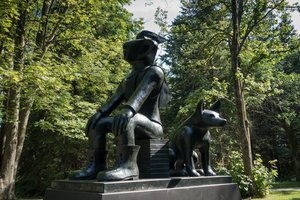
1935–2022, Canada
Ivan Eyre
A Prairie Visionary: The Life and Art of Ivan Eyre Ivan Kenneth Eyre, who passed away in November 2022 at the age of 87, was a profoundly important figure in Canadian art—a painter, sculptor, and educator whose work resonated with the vastness and subtle power of the prairie landscape. Born in the small Saskatchewan community of Tulymétik in 1935, Eyre’s artistic journey wasn't simply about depicting what he saw, but about translating a deeply felt connection to place into a visual language that explored existential themes and the complexities of human experience. His early life, marked by moves across the prairies—from Red Deer, Alberta, to Saskatoon—instilled in him an intimate understanding of the land’s character: its solitude, its ever-changing light, and its capacity for both beauty and starkness. This formative connection would become the bedrock of his artistic expression.
Inne prace Ivan Eyre
 Dragon Head1969
 White Flashing1969
 Chorus1969
 Roseate Plain1972
Eseje o White Collar
 The Collector’s Eye: A Masterclass in Curating Cohesive Abstract Art CollectionsMaster the art of curation with our expert guide on building a cohesive abstract art collection. Explore professional techniques in color t…
 Emocjonalna Transmutacja w Sztuce Wizualnej: Studium Reprezentacji Afektywnych Poprzez Kolor, Formę i TeksturęZgłębiaj subtelny język emocji w sztuce wizualnej! Analizujemy kolor, formę i teksturę w malarstwie barokowym i ekspresjonistycznym. Eksper…
 Arcydzieła XIX Wieku: 10 Obrazów Opowiadających Epokę | OriginalUniqueArtOdkryj 10 arcydzieł XIX wieku! Poznaj historię Monet, Van Gogha i Courbeta. Imesjonizm, realizm, romantyzm – obrazy pełne emocji i piękna c…