Surrealism · 1969
Dragon Head (Ivan Eyre, 1969)
Ivan Eyre (1935–2022) stworzył Dragon Head. Dzieło pochodzi z 1969. Należy do nurtu Surrealism. Wymiary to 157 × 157 cm.
- 1969
- 157 × 157 cm

 Podgląd w skali 1:1

 Ręcznie malowany obraz olejny
 Wyślij jako kartkę
 Udostępnij
 Karta informacyjna


 Pobierz obraz
 Podobne obiekty
 RTG
 Pokaz slajdów
 Pytania i odpowiedzi

 Statystyki
Dragon Head w skrócie
- Tytuł
- Dragon Head
- Artysta
- Ivan Eyre (1935–2022)
- Miejsce urodzenia artysty
- Saskatchewan, Canada
- Data powstania
- 1969
- Wymiary
- 157 × 157 cm
- Ruch
- Surrealism
Zdjęcia w wysokiej rozdzielczości dzieła Dragon Head

Protected by copyright: these files are for personal reference, not a licence to republish.
Ivan Eyre, Dragon Head (1969).
Odpowiedzi na pytania dotyczące Dragon Head
W którym roku powstało „Dragon Head” – Ivan Eyre?
"Dragon Head" powstało w 1969 roku. Data ta pozwala umiejscowić dzieło w kontekście twórczości Ivan Eyre oraz epoki, w której powstało.
Jakie są wymiary oryginalnego dzieła „Dragon Head” – Ivan Eyre?
Oryginalny utwór „Dragon Head” – Ivan Eyre ma wymiary 157 x 157 cm.
Czy „Dragon Head” – Ivan Eyre znajduje się w domenie publicznej?
Jeśli chodzi o prawa autorskie, "Dragon Head" znajduje się w nadal objęte ochroną prawa autorskiego.
Kto stworzył "Dragon Head"?
„Dragon Head” zostało stworzone przez Ivan Eyre. Informacje na tej stronie dotyczą oryginalnego dzieła autorstwa Ivan Eyre.
Do jakiego nurtu artystycznego należy „Dragon Head” – Ivan Eyre?
„Dragon Head” – Ivan Eyre należy do nurtu Surrealism. Nurt ten stanowi stylistyczny kontekst dzieła.
W jakim wieku Ivan Eyre stworzył(a) "Dragon Head"?
Gdy w 1969 roku powstało dzieło „Dragon Head”, Ivan Eyre – urodzony/a w 1935 – miał/a 34 lat.
Czy dzieło „Dragon Head” autorstwa Ivan Eyre znajduje się w domenie publicznej i dlaczego?
„Dragon Head” – Ivan Eyre jest nadal objęte ochroną prawa autorskiego. Okres ochrony praw autorskich liczony jest od śmierci artysty, która nastąpiła w 2022.
O artyście: Ivan Eyre
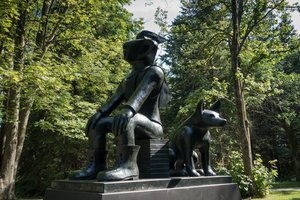
1935–2022, Canada
Ivan Eyre
A Prairie Visionary: The Life and Art of Ivan Eyre Ivan Kenneth Eyre, who passed away in November 2022 at the age of 87, was a profoundly important figure in Canadian art—a painter, sculptor, and educator whose work resonated with the vastness and subtle power of the prairie landscape. Born in the small Saskatchewan community of Tulymétik in 1935, Eyre’s artistic journey wasn't simply about depicting what he saw, but about translating a deeply felt connection to place into a visual language that explored existential themes and the complexities of human experience. His early life, marked by moves across the prairies—from Red Deer, Alberta, to Saskatoon—instilled in him an intimate understanding of the land’s character: its solitude, its ever-changing light, and its capacity for both beauty and starkness. This formative connection would become the bedrock of his artistic expression.
Inne prace Ivan Eyre
 White Collar1969
 Chorus1969
 White Flashing1969
 Touchwood Hills1972
Eseje o Dragon Head
 Max Ernst: 25 Arcydzieł Surrealizmu dla Kolekcjonerów i Miłośników Sztuki | OriginalUniqueArtOdkryj 25 najbardziej fascynujących dzieł Maxa Ernsta – pioniera surrealizmu. Poznaj historię, techniki i inspiracje tego niemieckiego arty…
 Dada vs. Surrealism: Distinguishing the Revolt from the DreamMaster the key differences between Dada and Surrealism through expert historical analysis. Discover the true meaning behind the revolt.
 Od Fotografii do Surrealistycznego Majaczenia: Sztuczna Inteligencja i Odrodzenie Estetyki DalegoOdkryj fascynujący świat surrealizmu w erze sztucznej inteligencji! Analizujemy wpływ AI na twórczość Dalego, techniki generatywne i przysz…