Menu
Text size

() ·

A painting made for you, by hand

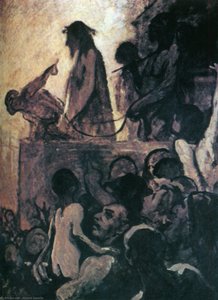
Comedy scene (scene from Molière)

Ręcznie malowana reprodukcja olejowa

Ręcznie malowany obraz olejny na płótnie, wykonany na zamówienie przez naszych artystów w wybranym przez Ciebie wymiarze i oprawie. ( Przełącz na wydania drukowane Przejdź do wersji cyfrowej)

Opis obiektu

Honore Daumier's 'Comedy Scene (Scene from Moliere)' captures a lively Parisian encounter with masterful draftsmanship and social commentary. Explore the dynamic scene of two men in a black & white painting, reflecting 19th-century French life.

Biografia artysty

Honoré Daumier (1808-1879) – francuski grafik i malarz, mistrz satury i krytyki społecznej. Jego prace to unikalne wgląd w 19-wieczną Francję.

from ·

Chapter 1

How large should it be?

Slide to change the size; the picture on the left shows the frame at its real width. The proportions of the original are kept.

Standardowy format
personalizowane
CM
INCH

Wybierz spośród naszych standardowych rozmiarów, które zachowują oryginalne proporcje dzieła sztuki.

szerokość
wysokość

Wpisz wymaganą szerokość i wysokość, aby obraz pasował do Twojej ramy lub ściany. Ponieważ jest to dzieło malowane ręcznie, w przypadku rozmiaru o innych proporcjach artysta może domalować nieco więcej wokół obrazu lub przyciąć jego fragmenty — wybór należy do Ciebie. Przed rozpoczęciem pracy prześlemy Ci cyfrową wizualizację do zatwierdzenia. Obraz widoczny na tej stronie nie przedstawia rzeczywistego efektu — jedynie wizualizacja oddaje realny rezultat.

Chapter 2

How should it arrive?

Choose the edges of the stretched canvas

Choose your frame

Corner sample of the WhiteWrap canvas edge finish, stretched on lite drewno bars
White zł1
Corner sample of the BlurSideWrap canvas edge finish, stretched on lite drewno bars
Blurside zł1
Corner sample of the ExtendedWrap canvas edge finish, stretched on lite drewno bars
Extended zł1
Corner sample of the P118B picture frame: polistyren formowany, 5 cm wide and 3 cm thick
P118B zł10
Corner sample of the P118H picture frame: polistyren formowany, 5 cm wide and 3 cm thick
P118H zł10
Corner sample of the P118W picture frame: polistyren formowany, 5 cm wide and 3 cm thick
P118W zł10
Corner sample of the P438Z picture frame: polistyren formowany, 5.5 cm wide and 3.5 cm thick
P438Z zł10
Corner sample of the P508JH picture frame: polistyren formowany, 7 cm wide and 3.5 cm thick
P508JH zł12
Corner sample of the P508YH picture frame: polistyren formowany, 7 cm wide and 3.5 cm thick
P508YH zł12
Corner sample of the P805H picture frame: polistyren formowany, 5 cm wide and 3.5 cm thick
P805H zł10
Corner sample of the P805Z picture frame: polistyren formowany, 5 cm wide and 3.5 cm thick
P805Z zł10
Corner sample of the P919BZ picture frame: polistyren formowany, 7 cm wide and 3.5 cm thick
P919BZ zł10
Corner sample of the P919G picture frame: polistyren formowany, 7 cm wide and 3.5 cm thick
P919G zł10
Corner sample of the P919XJ picture frame: polistyren formowany, 7 cm wide and 3.5 cm thick
P919XJ zł10
Corner sample of the P959ZH picture frame: polistyren formowany, 5 cm wide and 3 cm thick
P959ZH zł10
Corner sample of the P968JZ picture frame: polistyren formowany, 6 cm wide and 4 cm thick
P968JZ zł12
Corner sample of the W106C picture frame: lite drewno, 5 cm wide and 3 cm thick
W106C zł8
Corner sample of the W218G picture frame: lite drewno, 5 cm wide and 3 cm thick
W218G zł10
Corner sample of the W218JH picture frame: lite drewno, 5 cm wide and 3 cm thick
W218JH zł8
Corner sample of the W218Y picture frame: lite drewno, 5 cm wide and 3 cm thick
W218Y zł10
Corner sample of the W307PJ picture frame: lite drewno, 6 cm wide and 3 cm thick
W307PJ zł10
Corner sample of the W316G picture frame: lite drewno, 6 cm wide and 3 cm thick
W316G zł10
Corner sample of the W316PJ picture frame: lite drewno, 6 cm wide and 3 cm thick
W316PJ zł8
Corner sample of the W316Y picture frame: lite drewno, 6 cm wide and 3 cm thick
W316Y zł10
Corner sample of the W398PJ picture frame: lite drewno, 5 cm wide and 3 cm thick
W398PJ zł8
Corner sample of the W4111J picture frame: lite drewno, 6.5 cm wide and 3.5 cm thick
W4111J zł10
Corner sample of the W500HY picture frame: lite drewno, 7 cm wide and 5 cm thick
W500HY zł15
Corner sample of the W500JH picture frame: lite drewno, 7 cm wide and 5 cm thick
W500JH zł15
Corner sample of the W692G picture frame: lite drewno, 8 cm wide and 4 cm thick
W692G zł12
Corner sample of the W849H picture frame: lite drewno, 5 cm wide and 3 cm thick
W849H zł8
Corner sample of the W940BG picture frame: lite drewno, 7.5 cm wide and 4.5 cm thick
W940BG zł15
Corner sample of the W953PJ picture frame: lite drewno, 6 cm wide and 3.5 cm thick
W953PJ zł8
Corner sample of the H24-GOLD picture frame: rzeźbione drewno pokryte gipsem, 10 cm wide and 6 cm thick
H24-GOLD zł30
Corner sample of the H24-SILVER picture frame: rzeźbione drewno pokryte gipsem, 10 cm wide and 6 cm thick
H24-SILVER zł30
Corner sample of the H36-GOLD picture frame: rzeźbione drewno pokryte gipsem, 15 cm wide and 6.5 cm thick
H36-GOLD zł45
Corner sample of the H36-SILVER picture frame: rzeźbione drewno pokryte gipsem, 15 cm wide and 6.5 cm thick
H36-SILVER zł45

Moulding: . Overall size with the frame: .

Chapter 3

Who paints it, and should anything change?

Examples of what can be changed: Replace face with customer photo; Add pet (e.g., replace cat with dog); Include hidden message in background; Change background landscape or elements.
After order, OriginalUniqueArt.com team will email client for instructions and provide a mockup preview

Dostawa na całym świecie () w ciągu 3–4 tygodni zamiast standardowych 5 tygodni. (30 Październik). Bez kompromisów w kwestii jakości.

Chapter 4

The finishing touches

A nameplate, as in a museum?

Szczegóły grawerowanej brązowej tabliczki

This elegant plaque features the artist's name and the title of the artwork, finely engraved for a timeless presentation.

It is made from bronze with a refined, elegant finish. The text is precisely laser-engraved for a sharp and permanent result. Measuring 9x2 cm, the plaque is compact yet easy to read. It's built to be durable and scratch-resistant, offering a professional, museum-quality look. Mounting is simple thanks to the included adhesive backing.

Szczegóły przezroczystej tabliczki akrylowej

The plaque includes essential engraved details such as the artist's name, the title of the artwork, the date it was created, the type of media used-like oil on canvas or watercolor-a brief description of the piece, and a QR code that links to the complete artwork information.

It is crafted from clear acrylic, offering a sleek, modern appearance. The text is UV-engraved in black to ensure strong visual contrast. With a size of 10x15 cm, it ensures optimal readability. It comes equipped with two metal hooks for secure wall mounting. The plaque is designed to be weather-resistant, making it suitable for various environments, and it includes interactive features that work seamlessly with smartphone scanning.

Szczegóły czarnej tabliczki akrylowej

This elegant plaque includes engraved information such as the artist's name, the title of the artwork, the date it was created, the type of media used (like oil on canvas or watercolor), a short description of the artwork, and a QR code for quick access to more information.

The plaque itself is made from refined black acrylic with a premium finish. The text is laser-engraved in white for high contrast and readability. Its size is 10x15 cm, designed to be easy to read. It comes with two metal hooks for professional mounting. The design is sleek and fits any interior style. It is also weather-resistant and durable, with built-in digital integration for mobile compatibility.

A protective varnish?

When do you need it?

Chapter 5

Your painting, as you ordered it

Comedy scene (scene from Molière)

Technika reprodukcji

Wymiary reprodukcji

-

Wybitny mistrz artystyczny

Większa szczegółowość, finezja i dodatkowy czas na realizację

-

Opcje oprawy reprodukcji

-

-

W przypadku dzieł sztuki lub reprodukcji, których którykolwiek z boków przekracza 105 cm (około 41 cali), rama zostanie wysłana w formie zestawu do samodzielnego montażu. Metoda ta zapewnia bezpieczną dostawę i zapobiega uszkodzeniom podczas transportu.

Wymagany profesjonalny montaż – nie jest to produkt typu DIY.
Zestaw musi zostać złożony, a płótno naciągnięte przez doświadczonego profesjonalnego ramiarza, przy użyciu kleju do drewna (brak w zestawie), kleszczy do naciągania płótna oraz ścisków, które utrzymają krosna w równej pozycji podczas schnięcia kleju. Nieprawidłowy montaż lub nierównomierne napięcie płótna może trwale uszkodzić dzieło sztuki i nie podlega naszej gwarancji.

  • W zestawie znajdują się wszystkie listwy z litego drewna, precyzyjnie docięte do wymiarów.

  • Montaż odbywa się przy użyciu dołączonych wkrętów oraz kleju do drewna do łączenia narożników, którego zestaw nie zawiera i który musi zostać dostarczony przez ramiarza.

  • Wymagane są profesjonalne narzędzia, których nie ma w zestawie: kleszcze do naciągania płótna (napinacz) oraz zaciski, które pozwolą utrzymać listwy w równej pozycji podczas schnięcia kleju.

Ważne:
Do połączenia narożników niezbędny jest klej do drewna, listwy należy unieruchomić za pomocą ścisków do momentu całkowitego wyschnięcia kleju, a naciągnięcie płótna na złożoną ramę wymaga użycia kleszczy do naciągania płótna. Żaden z tych elementów nie jest dołączony do zestawu. Przed zamówieniem tego rozmiaru zalecamy konsultację z doświadczonym ramiarzem.

Etykieta obiektu

-

-

Lakier ochronny

Lakier z połyskiem (pogłębia kolory, chroni przed światłem i wilgocią)

-

Personalizacja dzieła

Przykłady możliwości personalizacji: zastąp twarz zdjęciem klienta; dodaj zwierzę domowe (np. zamień kota na psa); umieść ukrytą wiadomość w tle; zmień krajobraz lub elementy tła.

-

Ekspresowa

Dostawa na cały świat () w ciągu 3–4 tygodni zamiast standardowych 5 tygodni. (30 Październik). Bez kompromisów w kwestii jakości.

-

Przesyłka ekspresowa

Dostawa na cały świat () w ciągu 5 tygodni. (6 Listopad).

W cenie

Cena całkowita

zł 1165

Suma całkowita zł 1165

Opcja ze szkłem jest dostępna wyłącznie w rozmiarach poniżej 110 cm

Included with every order

  • Bezpłatna ekspresowa wysyłka na cały świat
  • Wysokiej jakości płótno lniane
  • Pełne ubezpieczenie przesyłki
  • Gwarancja zwrotu należności celnych i podatków importowych
  • Gwarancja wiernego odwzorowania kolorów
  • 100-dniowa polityka zwrotów (tylko w przypadku wad)
  • Gwarancja 100% zwrotu pieniędzy
  • Zniżka przy zakupie wielu sztuk

A Moment of Contention: Honoré Daumier’s “Comedy Scene (Scene from Molière)”

Honoré Daumier's 1862 painting, "Comedy Scene (Scene from Molière)," isn’t merely a depiction of a theatrical moment; it’s a vibrant snapshot of Parisian society grappling with wit, social commentary, and the very nature of performance. The work, rendered in stark black and white – a signature technique for Daumier – immediately draws the viewer into a scene brimming with unspoken tension and subtle gestures. Two men dominate the foreground: one, animatedly gesturing upwards, seemingly addressing an unseen audience; the other, slumped downwards, his gaze fixed on his companion, perhaps lost in thought or responding to the first man’s pronouncements.

Beyond these central figures lies a carefully constructed backdrop of three additional individuals, subtly positioned in the background. Their presence isn't one of active participation but rather serves as a quiet reminder of the broader social context surrounding this private exchange. They are not integrated into the immediate drama, yet their inclusion suggests that this scene unfolds within a larger, more complex world – a world ripe for observation and critique, precisely what Daumier excelled at capturing.

The Artist’s Vision: Realism and Social Satire

Daumier was a pivotal figure in the development of French realism, but his work transcends simple representation. He wasn't interested in idealized beauty or romanticized narratives; instead, he sought to expose the uncomfortable truths of everyday life – particularly the hypocrisy and social inequalities prevalent in 19th-century France. His art became a powerful tool for social commentary, often targeting the aristocracy, the clergy, and the legal system. “Comedy Scene” is no exception, offering a glimpse into a private conversation that hints at underlying tensions and judgments.

The painting’s monochrome palette – predominantly shades of gray and white – contributes significantly to its dramatic effect. This deliberate choice eliminates distractions, forcing the viewer to focus on the figures' expressions and body language. Daumier masterfully employs chiaroscuro—the contrast between light and dark—to sculpt the forms and heighten the sense of drama. The sharp delineation of shadows emphasizes the characters’ postures and gestures, conveying a palpable atmosphere of anticipation and potential conflict.

A Stage Within a Stage: Molière and Parisian Society

The painting's title explicitly references Molière, the renowned French playwright whose comedies satirized societal norms. Daumier wasn’t simply illustrating a scene from one of Molière’s plays; he was capturing the *spirit* of theatrical performance itself – the interplay between performer and audience, the delivery of witty dialogue, and the subtle judgments exchanged during a dramatic moment. The implied setting is likely a Parisian theater, though Daumier deliberately avoids providing specific details, allowing the viewer to project their own interpretations onto the scene.

Furthermore, the painting reflects the vibrant intellectual and artistic life of 19th-century Paris. The Comédie-Française, France’s national theatre, was a central hub for social and political discourse. Daumier's work engages with this dynamic environment, offering a critical perspective on the role of theater in shaping public opinion and exposing societal flaws.

Symbolism and Emotional Resonance

The posture of the two men is particularly revealing. The man gesturing upwards embodies assertiveness and perhaps even arrogance, projecting his thoughts or opinions to an unseen audience. His elevated position suggests a desire for recognition or validation. Conversely, the slumped figure conveys a sense of resignation, doubt, or perhaps quiet disapproval. His downward gaze hints at a critical assessment of the first man’s pronouncements – a subtle challenge to his authority or perspective.

“Comedy Scene” is not a straightforward narrative; it's an invitation to observe and interpret. It evokes a sense of unease, prompting viewers to consider the complexities of human interaction and the often-hidden judgments that shape our perceptions. Daumier’s masterful use of composition, light, and gesture creates a timeless image that continues to resonate with audiences today, reminding us of the enduring power of satire and the importance of critical engagement with the world around us.

Pytania i odpowiedzi

Jaki kolor dominuje w kompozycji „Comedy scene (scene from Molière)” – Honoré Daumier?

Dominującym kolorem dzieła „Comedy scene (scene from Molière)” – Honoré Daumier jest Espresso (#414a43).

Jaki nastrój emocjonalny budzi „Comedy scene (scene from Molière)” – Honoré Daumier?

„Comedy scene (scene from Molière)” – Honoré Daumier emanuje Melancholic emocjonalnym nastrojem.

Jaki jest zalecany format i orientacja druku dla "Comedy scene (scene from Molière)"?

Zalecany rozmiar wydruku dzieła „Comedy scene (scene from Molière)” – Honoré Daumier to Medium w orientacji Portrait.

More about this painting

Podgląd w skali 1:1 Podgląd AR Przełącz na wydania drukowane Przejdź do wersji cyfrowej Wyślij jako kartkę
Szczegóły dzieła Przewodnik Dodaj do ulubionych Pobierz obraz Podobne obiekty RTG Pokaz slajdów Q&A Statystyki

In numbers

  • 1862the year it was painted
  • 29frames to choose from
  • standard sizes, in its own proportions
  • 5weeks to paint and deliver it
Honoré Daumier

Honoré Daumier

1808 - 1879, Francja

Quick facts about Honoré Daumier

  • Artistic Movement Or Style: Realizm, Satyra
  • Artists Or Movements Influenced By This Artist:
    • Impressionizm
    • Nowoczesność
  • Artists Who Influenced This Artist:
    • Alexandre Lenoir
    • Jacques-Louis David
  • Date Of Birth: 26 lutego 1808
  • Date Of Death: 10 lutego 1879
  • Full Name: Honoré-Victorin Daumier
  • Nationality: Francuz
  • Notable Artworks:
    • Rue Transnonain
    • Les gens de justice
  • Place Of Birth: Marsylia, Francja

Biografia artysty

Wprowadzenie do Świata Honoré Daumiéra

Honoré-Victorin Daumier, postać niezwykle złożona i fascynująca, to artysta, którego twórczość wciąż wywołuje silne emocje i prowokuje do refleksji. Urodzony w 1808 roku w Marsylii, a zmarły w Valmondois w 1879 roku, Daumier był nie tylko malarzem, grafikiem i rzeźbiarzem, ale przede wszystkim obserwatorem ludzkiej natury – cynicznym, lecz pełnym współczucia. Jego życie, naznaczone trudami i niesprawiedliwością, stało się tłem dla jego niezwykle bogatego i różnorodnego dorobku artystycznego, który zrewolucjonizował świat grafiki i malarstwa.

Daumier, syn szklarza i poety, wyjechał do Paryża wraz z rodziną w 1814 roku. Wkrótce po przybyciu, rozpoczął naukę rysunku, a jego talent szybko stał się widoczny. Jego edukacja, choć nieformalna, była niezwykle wszechstronna – od klasycznych wpływów, przez obserwację życia ulicznego, aż po kontakty z wybitnymi artystami tamtych czasów. To właśnie ta mieszanka doświadczeń i inspiracji pozwoliła mu stworzyć unikalny styl, łączący realizm z ekspresją i satyrą.

Początki Kariery: Caricatura i Satyra

Przełom w karierze Daumiéra nastąpił wraz z rewolucją z 1830 roku. To wydarzenie otworzyło mu drogę do publikacji satyrycznych rysunków, które szybko zdobyły popularność. Zaczynając jako anonimowy ilustrator dla czasopism, szybko stał się znany dzięki swojej pracy w *Le Charivari*, gdzie pod kierownictwem Charlesa Philipona mógł swobodnie rozwijać swój talent. Rysunki Daumiéra nie były jedynie humorystycznymi portretami – to ostre i bezkompromisowe komentarze na temat francuskiego społeczeństwa, polityki i obyczajów. Jego satyra, często brutalna i prowokacyjna, dotykała najwrażliwszych tematów, od korupcji w sądzie po dekadencję arystokracji.

Jego najbardziej znane karykatury, takie jak "Robert Macaire" czy "Typy paryskie", stały się symbolem krytyki społecznej i politycznej. W 1832 roku, za szczególnie ostre rysunki, Daumier został aresztowany i osadzony w więzieniu na sześć miesięcy. Ta sytuacja, zamiast go zniechęcić, tylko wzmocniła jego determinację w dążeniu do prawdy i obnażaniu niesprawiedliwości.

Oprócz Caricatur: Malarstwo i Rzeźba

Mimo że Daumier jest najbardziej znany ze swoich grafik, nie można zapominać o jego twórczości malarskiej i rzeźbiarskiej. Jego obrazy, często przedstawiające sceny z życia codziennego paryskiego proletariatu – łazienników, kucharzy, prawników – charakteryzują się niezwykłą wrażliwością i empatią. Daumier nie malował idealizowanych portretów, lecz wiernie oddawał surowość i trudności życia, wykorzystując do tego celu dynamiczne kompozycje i dramatyczne oświetlenie.

Jego rzeźby, tworzone głównie z gliny (wiele z nich pozostaje niezakończonych), są świadectwem jego niezwykłego talentu modelarskiego. Poprzez gesty i mimikę, Daumier potrafił oddać całe bogactwo emocji i psychologicznych stanów, co czyni jego rzeźby prawdziwymi portretami duszy ludzkiej.

Wpływ i Dziedzictwo

Honoré Daumier był artystą, który zrewolucjonizował świat grafiki. Jego innowacyjne techniki litograficzne, jego bezkompromisowa satyra i jego niezwykła wrażliwość na los ludzki wywarły ogromny wpływ na kolejne pokolenia artystów. Jego twórczość zainspirowała takich mistrzów jak Gustave Courbet i Édouard Manet, a jego prace do dziś są źródłem inspiracji dla artystów i krytyków sztuki.

Daumier nie był tylko artystą – był obserwatorem, komentatorem i świadkiem swojej epoki. Jego dzieła, dostępne w wielu muzeach na całym świecie, wciąż prowokują do refleksji nad kondycją ludzką i wyzwaniami współczesnego świata. Jego legacy jest dowodem na to, że sztuka może być potężnym narzędziem zmiany społecznej i obrony prawdy.

Najważniejsze informacje

  • Subject or theme: Theater scene
  • Medium: Lithograph
  • Movement: Realism
  • Title: Comedy scene (scene from Molière)
  • Influences: Molière

Quiz o sztuce

Do każdego pytania dotyczy tylko jedna poprawna odpowiedź.

Pytanie 1:
What is the primary subject matter depicted in Honoré Daumier’s ‘Comedy scene (scene from Molière)’?
Pytanie 2:
In what year was Honoré Daumier’s ‘Comedy scene (scene from Molière)’ created?
Pytanie 3:
The painting utilizes a predominantly monochrome palette. What artistic technique is most prominently employed to achieve this effect?
Pytanie 4:
Considering Honoré Daumier’s artistic style and historical context, what is a key theme explored in this artwork?
Pytanie 5:
Based on the image description, what is the overall composition of the painting?
Odkryj dzieła sztuki uporządkowane według tematów, stylów i cech charakterystycznych.