Zobacz w skali 1:1
 Wyślij
 Udostępnij
 Szczegóły
 Przewodnik

 Pobierz plik obrazu
 Podobne obiekty
 RTG
RTG Pokaz slajdów
 Statystyki
Eternity


 Czytaj więcej
Giclée / Wydruk artystyczny
Wydruki giclée lub płótna o jakości muzealnej, szybka realizacja i szeroki wybór opcji wykończenia. ( Kup ręcznie malowany obraz Przełącz na wersję cyfrową)




P118B zł10

P118H zł10

P118W zł10

P438Z zł10

P508JH zł12

P508YH zł12

P805H zł10

P805Z zł10

P919BZ zł10

P919G zł10

P919XJ zł10

P959ZH zł10

P968JZ zł12

W106C zł8

W218G zł10

W218JH zł8

W218Y zł10

W307PJ zł10

W316G zł10

W316PJ zł8

W316Y zł10

W398PJ zł8

W4111J zł10

W500HY zł15

W500JH zł15

W692G zł12

W849H zł8

W940BG zł15

W953PJ zł8




Wybierz spośród naszych standardowych rozmiarów, które zachowują oryginalne proporcje dzieła sztuki.

Wpisz wymaganą szerokość i wysokość, aby dopasować grafikę do ramy lub ściany. Wydruk można jedynie przyciąć, nigdy nie powiększając go poza oryginalny obraz, dlatego format o innym proporcji spowoduje utratę części kompozycji. Przed rozpoczęciem druku prześlemy Ci cyfrowy podgląd do zatwierdzenia. Obraz wyświetlany na tej stronie nie pokazuje rzeczywistego przycięcia — jedynie podgląd oddaje ten efekt.
Dostawa na cały świat () w ciągu 2 tygodni zamiast standardowych 4/5 tygodni. (22 Październik)

Bezpłatna ekspresowa wysyłka na cały świat

Wysokiej jakości płótno lniane

Pełne ubezpieczenie transportowe

Gwarancja zwrotu należności celnych i podatków importowych

Gwarancja idealnego odwzorowania barw

100-dniowy okres na zwrot dzieła w przypadku wykrycia wad produkcyjnych

Gwarancja 100% zwrotu pieniędzy

Oferta przy zakupie wielu sztuk
 Opcja ze szkłem jest dostępna wyłącznie w rozmiarach poniżej 110 cm

Eternity
Giclée / Wydruk artystyczny
Rozmiar reprodukcji
-


Suma do zapłaty
zł 304
A Moment Frozen in Time: Exploring Gustave Courbet’s “Eternity”
Gustave Courbet's "Eternity," painted in 1869, isn’t merely a depiction of the rugged coastline near Etretat; it’s an audacious assertion of artistic freedom and a profound meditation on the relationship between humanity and nature. Captured during one of Courbet’s prolific periods dedicated to seascapes—following closely on his equally significant work at Trouville—the canvas embodies the spirit of Impressionism, albeit with a distinctly realist sensibility that firmly rejects Romantic sentimentality. This refusal to embellish or romanticize is precisely what distinguishes “Eternity” and elevates it beyond mere visual representation into a statement about artistic integrity.The Landscape as Witness: Composition and Technique
Courbet’s masterful technique—characterized by thick, visible brushstrokes—immediately commands attention. He eschewed the delicate blending favored by many of his contemporaries, opting instead for a textured surface that conveys the palpable energy of the wind-swept cliffs and turbulent sea. The artist employed an alla prima method, applying paint directly onto the canvas without any underpainting or preparatory sketches, ensuring that every mark contributes to the overall impression of immediacy and authenticity. Observe how Courbet meticulously captures the interplay of light and shadow—the dramatic illumination highlighting the jagged rocks and the overcast sky—creating a scene brimming with atmospheric depth. The horizontal expanse of the beach contrasts sharply with the vertical thrust of the cliffs, guiding the viewer’s eye across the composition and reinforcing the grandeur of the natural world.Echoes of Romanticism Reflected: Symbolism and Context
Despite Courbet's rejection of Romantic idealism, “Eternity” retains subtle connections to its predecessors. The solitary figures on the beach—likely contemplating the immensity of the ocean—represent humanity’s insignificance against the backdrop of geological time. This juxtaposition serves as a poignant reminder that human endeavors are fleeting compared to the enduring power of nature. Furthermore, the painting reflects the broader intellectual currents of the era, particularly Darwinian theory – Courbet's unflinching portrayal of reality aligns with the burgeoning scientific understanding of the natural world and challenges traditional artistic conventions rooted in mythological narratives and idealized beauty standards.A Legacy of Bold Vision: Impressionism’s Roots
“Eternity” stands as a cornerstone of Impressionist art, marking a decisive break from academic tradition. Courbet's unwavering commitment to portraying the observable world with uncompromising honesty paved the way for subsequent artists like Monet and Renoir, who sought to capture fleeting moments of sensory experience. More than just a beautiful seascape, “Eternity” is an emblem of artistic rebellion—a testament to Courbet’s conviction that art should serve as a conduit for truth and observation. Its enduring appeal lies in its ability to transport viewers back to the shores of 1869 France, inviting contemplation on themes of permanence, vulnerability, and the sublime beauty inherent in the natural order.Pytania i odpowiedzi
Czy „Eternity” autorstwa Gustaw Courbet to portret, pejzaż czy kompozycja kwadratowa?
Dzieło „Eternity” autorstwa Gustaw Courbet ma format Landscape. Format ten określa proporcje kompozycji.
Jaki jest ogólny nastrój dzieła „Eternity” autorstwa Gustaw Courbet?
Nastrój dzieła „Eternity” autorstwa Gustaw Courbet opisuje się jako Dramatic. Klasyfikacja ta może pomóc w dopasowaniu pracy do konkretnego wnętrza.
Jakie pochodzenie narodowe stoi za Contemporary Realism dzieła "Eternity"?
"Eternity" łączy nurt Contemporary Realism z Francja poprzez miejsce urodzenia jego twórcy.
Biografia artysty
Pędzel buntownika: Życie i dziedzictwo Gustave'a Courbeta
Urodzony w cichej wiosce Ornans we Francji w 1819 roku, Jean Désiré Gustave Courbet wyłonił się jako siła sprzeciwu wobec ustalonych norm artystycznych swoich czasów. Jego historia to nie tylko opowieść o farbie i płótnie; to narracja utkany z nici komentarza społecznego, przekonań politycznych i niezachwianego oddania przedstawianiu świata dokładnie takim, jakim go widział – nieidealizowanym, surowym i głęboko prawdziwym. Dorastając w stosunkowo zamożnej rodzinie burżuazyjnej, Courbet otrzymał od matki wsparcie w rozwijaniu swoich artystycznych skłonności, co ostatecznie stało się paliwem dla rewolucją w świecie sztuki. Jego formalne wykształcenie rozpoczęło się w École des Beaux-Arts w Paryżu w 1839 roku, lecz szybko poczuł opór wobec panujących tam akademickich konwencji i romantycznego idealizmu. Choć uznawał wpływy takich mistrzów jak Eugène Delacroix czy Théodore Géricault, Courbet wykuł własną ścieżkę – taką, która przedkładała obserwację nad wyobraźnię, a prawdę nad tradycję.Narodziny realizmu: Rzucenie wyzwania konwencjom artystycznym
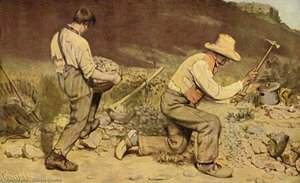
Rozwój artystyczny Courbeta charakteryzował się celowym odrzuceniem dominujących standardów estetycznych. Nie interesowały go mityczne narracje ani heroiczne alegorie; jego wzrok utkwiony był w codziennym życiu zwykłych ludzi, szczególnie tych zaangażowanych w trud pracy i wiejską egzystencję. To oddanie w ukazywaniu świata bez upiększeń – co później przeszło do historii jako realizm – początkowo spotkało się z pogardą i drwiną krytyków przyzwyczajonych do bardziej wygładzonych i idealizowanych przedstawień. Wczesne prace eksplorowały pejzaże i portrety, lecz wkrótce zwróciły się ku scenom z życia klasy robotniczej, ukazowanym w monumentalnej skali, tradycyjnie zarezerwowanej dla malarstwa historycznego lub religijnego. Ten świadomy wybór nie był jedynie zabiegiem stylistycznym; był to manifest dotyczący przyrodzonej godności i ważności tych często pomijanych tematów. Kamieniarze, ukończone w 1849 roku, lecz tragicznie zniszczone podczas II wojny światowej, stanowiły przykład tego podejścia – surowy obraz dwóch robotników ciężko pracujących, których twarze są przesłonięte przez wycieńczenie i trud. Ten obraz, wraz z innymi, takimi jak Pogrzeb w Ornans (1850), rzucił wyzwanie samej definicji tego, co uznawano za „godny” temat dla sztuki wysokiej.Główne dzieła i filozofia artystyczna
Pogrzeb w Ornans, kolosalne płótno przedstawiające prowincjonalną ceremonię pogrzebową, wywołało skandal podczas wystawy w latach 1850-5ł. Jego ogrom – zazwyczaj zarezerwowany dla wielkich obrazów historycznych – w połączeniu z nieustępliwym realizmem i brakiem emocjonalnej idealizacji, zaszokował publiczność. Courbet nie przedstawił żałobników jako szlachetnych czy pogrążonych w rozpaczy postaci; ukazał ich jako zwykłych ludzi, których twarze naznaczone były mieszanką smutku, znużenia i rezygnacji. Ta szczerość była rewolucyjna. Jego filozofia artystyczna wykraczała poza sam temat, obejmując również technikę. Preferował bezpośredni styl impastowy – nakładanie grubej warstwy farby na płótno – co podkreślało materialność samego medium. Pracownia malarza (1855), dzieło alegoryczne odzwierciedlające jego przekonania artystyczne i zaangażowanie w ówczesne problemy społeczne, jeszcze bardziej ugruntowało jego reputację jako prowokującego i niezależnego artysty. Jego udział w Salon des Refusés w 1863 roku – wystawie prac odrzuconych przez oficjalny Salon – przypieczętował jego status buntownika i obrońcy wolności artystycznej. Nawet pejzaże, takie jak Widok w lesie Fontainebleau (1855), były przesiąknięte poczuciem realizmu, chwytając naturalne piękno lasu bez jego romantyzowania.Dziedzictwo i znaczenie historyczne
Wpływ Gustave'a Courbeta na późniejsze nurty artystyczne jest niezaprzeczalny. Choć czerpał inspirację z wcześniejszych mistrzów, takich jak Caravaggio, ze względu na ich dramatyczny realizm oraz operowanie światłem i cieniem, jego oddziaływanie wykraczało daleko poza zwykłe naśladownictwo. W głęboki sposób wpłynął na impresjonistów i postimpresjonistów, uwalniając ich od ograniczeń tradycyjnego przedstawiania rzeczywistości i zachęcając do poszukiwania nowych sposobów widzenia i ukazywania świata. Jego nacisk na komentarz społeczny utorował drogę późniejszym artystom zaangażowanym społecznie, którzy wykorzystywali swoją twórczość jako platformę dla aktywizmu politycznego. Courbet nie był tylko malarzem; był głośnym rzecznikiem wolności artystycznej i zmian politycznych, aktywnie uczestnicząc w burzliwych wydarzeniach swoich czasów, w tym w Komunie Paryskiej w 1871 roku – co doprowadziło do okresu wygnania w Szwajcarii. Zmarł w 1877 roku, pozostawiając po sobie dorobek, który do dziś inspiruje i prowokuje odbiorców.- Pionier realizmu
- Rzucił wyzwanie konwencjom akademickim
- Wpłynął na impresjonizm i postimpresjonizm
- Obrońca wolności artystycznej

Gustaw Courbet
1819 - 1877 , Francja
Najważniejsze informacje
- Artistic Movement Or Style: Realizm
- Artists Or Movements Influenced By This Artist:
- Impressionizm
- Post-Impressionizm
- Artists Who Influenced This Artist:
- Eugène Delacroix
- Théodore Géricault
- Caravaggio
- Date Of Birth: 10 czerwca 1819
- Full Name: Gustave Courbet
- Nationality: Francuz
- Notable Artworks:
- Żegnaj Gustave Courbet
- Rocky Seashore
- Château du Chillon
- Place Of Birth: Ornans, Francja
Zobacz także powiązane artykuły

Gustav Klimt: 25 Arcydzieł Pełnych Złota i Symboliki | OriginalUniqueArt.com
Odkryj 25 arcydzieł Gustava Klimta – od 'Pocałunku' po 'Kobietę w złocie'. Poznaj historię, symbolikę i technikę malarstwa secesyjnego. Reprodukcje najwyższej jakości na OriginalUniqueArt.com! Eksploruj pełną kolekcję online.

Timeless Maritime Elegance: A Curated Exploration of Exquisite Nautical Masterpieces and Fine Seascape Art
Discover the profound allure of maritime art through our curated collection of exquisite nautical masterpieces. From hand-painted oil reproductions to bespoke commissions, we provide museum-quality seascapes for elite collectors and luxury hospitality design worldwide.
The Allure of the Horizon: A Comprehensive Exploration of Seascape Art Through History & Emotion
Explore the captivating world of seascape art! Discover its history, key artists & movements – from Dutch Masters to Impressionism. Expert insights for collectors and enthusiasts at OriginalUniqueArt.

Top 10 Sławnych Obrazów w Odcieniach Morskiej Zieleni – Inspiracje dla Domu | OriginalUniqueArt.com
Odkryj 10 najsłynniejszych obrazów w odcieniach morskiej zieleni! Claude Monet, Degas i inni mistrzowie. Inspiracje wnętrzarskie i reprodukcje wysokiej jakości na OriginalUniqueArt.com – sztuka dla Twojego domu.
Evoking the Horizon: A Historical & Artistic Exploration of Coastal Scenes in Painting
Explore the rich history of coastal scenes in painting! Discover Impressionist masterpieces, American realism & contemporary visions. Learn about renowned artists and find your perfect seascape at OriginalUniqueArt.