The Allure of the Coast: A Historical Foundation
Northwest Coast art is the term commonly applied to a style of art created primarily by artists from Tlingit, Haida, Heiltsuk, Nuxalk, Tsimshian, Kwakwaka'wakw, Nuu-chah-nulth and other First Nations and Native American tribes of the Northwest Coast ...
From the earliest cave paintings depicting prehistoric shorelines to the grand maritime canvases of the Renaissance, humanity has been inextricably drawn to the coast. This enduring fascination stems from a potent combination of practical necessity – the sea as a source of sustenance and trade – and profound symbolic weight. Ancient civilizations revered the ocean as both a life-giver and a formidable force, a duality reflected in their art. Early depictions often focused on mythological creatures inhabiting the depths or heroic voyages across treacherous waters. The Mediterranean world, for instance, saw the sea populated by gods like Poseidon and nymphs, embodying its untamed power and capricious nature. As exploration expanded, so too did artistic representations of coastal life, evolving from stylized narratives to more realistic portrayals of ships, harbors, and the daily lives of seafarers. The Dutch Golden Age witnessed a surge in maritime painting, fueled by the nation’s dominance in global trade; artists like Jan van Goyen meticulously documented the calm waters of their homeland, capturing not just the physical appearance but also the economic vitality tied to the sea.
Impressionism's Embrace of Coastal Light & Atmosphere
The 19th century marked a pivotal shift in how coastal scenes were rendered. The rise of Impressionism fundamentally altered artistic priorities, moving away from detailed realism towards capturing fleeting moments and the subjective experience of light and color. Artists like Eugène Boudin, often considered a precursor to the movement, dedicated themselves to portraying the ever-changing conditions of the Normandy coast. His paintings, such as “Port at Low Tide,” exemplify this focus – textured brushwork evokes the damp air, the subtle gradations of light on the water, and the serene atmosphere of a working harbor. Claude Monet’s series of seascapes, particularly those painted at Le Havre and Étretat, pushed these explorations further. He wasn't interested in depicting specific vessels or precise geographical details; instead, he sought to capture the *impression* of light reflecting off the water, the shifting hues of the sky, and the overall sensory experience of being by the sea. This emphasis on atmosphere extended beyond mere visual representation; Impressionist painters aimed to convey the emotional resonance of a coastal environment – the tranquility, the drama, or the sheer power of nature.
Beyond Impressionism: Realism, Symbolism & Maritime Traditions
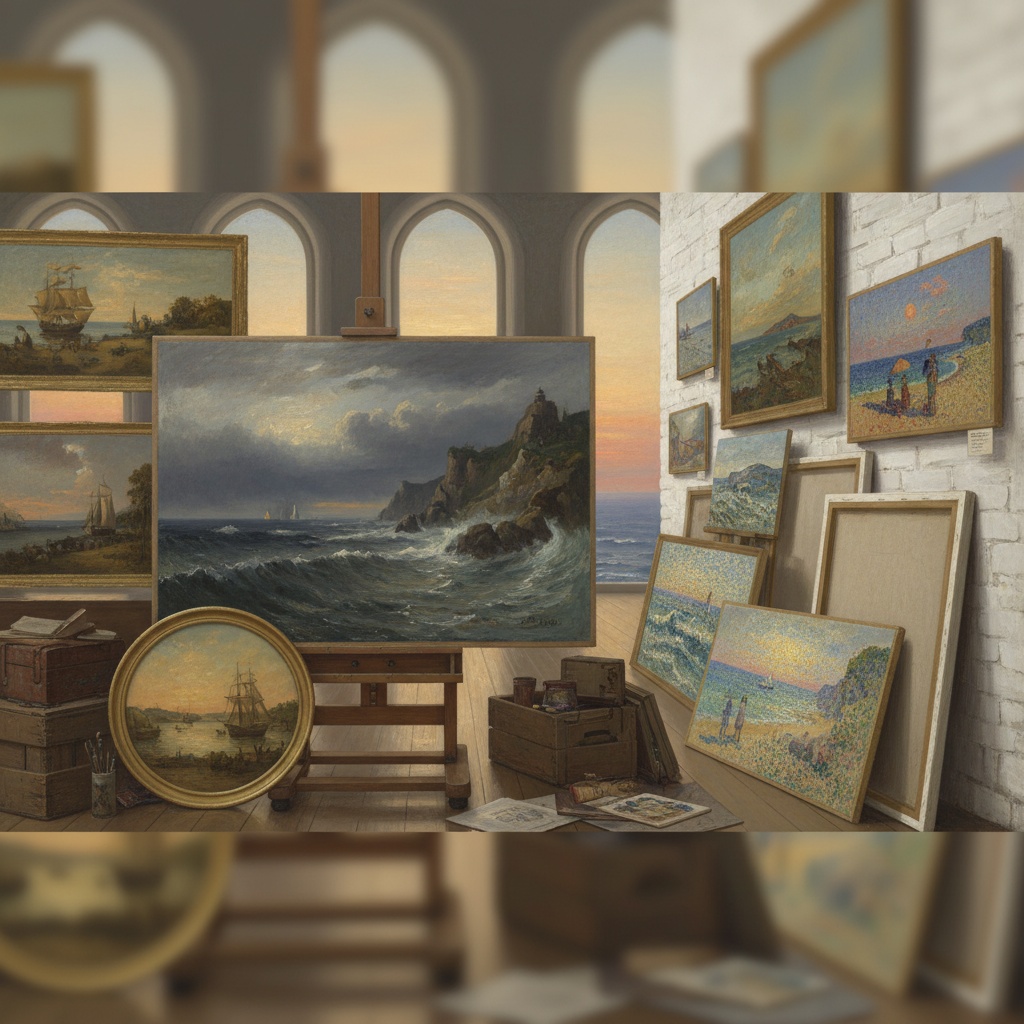
While Impressionism often dominates discussions of 19th-century coastal art, other significant movements also contributed to its rich tapestry. Realist painters like Robert Henri sought to depict the gritty realities of harbor life, focusing on the working class and the physical labor associated with seafaring. His “Nocturne” paintings, for example, capture the dark tones and atmospheric impressionism of a coastal harbor at night, conveying a sense of isolation and hardship. Symbolist artists, meanwhile, imbued coastal scenes with deeper psychological meaning. The sea became a metaphor for the subconscious, representing both danger and liberation, mystery and the unknown. Paul Signac’s “Le Corne d'Or, Le Pont” demonstrates this through its vibrant Pointillist technique; the harbor scene isn’t merely a depiction of maritime life but also an exploration of color theory and the emotional impact of light and form. Furthermore, distinct regional traditions flourished – from the dramatic depictions of the North Sea by Scandinavian artists to the romanticized visions of the British coastline.
American Visions of the Sea: Davis and the Romantic Coast
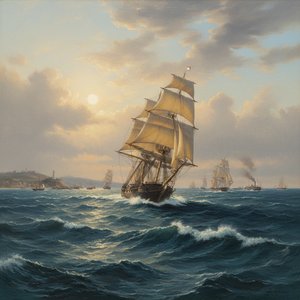
Across the Atlantic, American artists developed their own unique perspectives on coastal scenes. Frederick William Davis emerged as a pivotal figure in 19th-century American landscape art, renowned for his breathtaking depictions of coastal landscapes and ship paintings. Davis masterfully blended realism with Romanticism, capturing both the physical grandeur of the ocean and its emotional power. His works often feature dramatic skies, turbulent waters, and meticulously rendered ships battling the elements – evoking a sense of awe and respect for nature’s forces. Unlike some European artists who focused on the everyday realities of coastal life, Davis frequently portrayed moments of high drama and adventure, appealing to a growing American fascination with exploration and national identity. His paintings weren't simply records of what he saw; they were carefully constructed narratives that celebrated the courage and resilience of sailors and the beauty of the American coastline.
Contemporary Perspectives: Capturing the Essence of Modern Shores
Today, artists continue to be captivated by the coast, exploring its themes through a diverse range of styles and techniques. Contemporary painters like Derrick Smoothy offer vibrant depictions of ships, beaches, and iconic British seaside towns, capturing a nostalgic charm and celebrating the enduring appeal of coastal life. Modern approaches often incorporate abstract elements, focusing on color, texture, and form to convey the emotional essence of a seascape rather than literal representation. The environmental concerns surrounding our oceans have also become increasingly prominent in contemporary art, with artists using their work to raise awareness about pollution, climate change, and the fragility of marine ecosystems. From hyperrealistic depictions of plastic waste to abstract representations of rising sea levels, these works reflect a growing sense of responsibility towards protecting our coastal environments. The allure of the coast remains potent, evolving with each generation’s artistic vision and reflecting our changing relationship with the natural world.