Zobacz w skali 1:1
 Wyślij
 Udostępnij
 Szczegóły
 Przewodnik

 Pobierz plik obrazu
 Podobne obiekty
 RTG
RTG Pokaz slajdów
 Statystyki
The Cook
 Acrylic On Canvas
- WallArt
- Renaissance Mannerism
 1570
1570 53.0 x 41.0 cm
 Narodowe Muzeum Sztuki i Design w Szwecji
 Czytaj więcej
Giclée / Wydruk artystyczny
Wydruki giclée lub płótna o jakości muzealnej, szybka realizacja i szeroki wybór opcji wykończenia. ( Kup ręcznie malowany obraz Przełącz na wersję cyfrową)




P118B zł10

P118H zł10

P118W zł10

P438Z zł10

P508JH zł12

P508YH zł12

P805H zł10

P805Z zł10

P919BZ zł10

P919G zł10

P919XJ zł10

P959ZH zł10

P968JZ zł12

W106C zł8

W218G zł10

W218JH zł8

W218Y zł10

W307PJ zł10

W316G zł10

W316PJ zł8

W316Y zł10

W398PJ zł8

W4111J zł10

W500HY zł15

W500JH zł15

W692G zł12

W849H zł8

W940BG zł15

W953PJ zł8




Wybierz spośród naszych standardowych rozmiarów, które zachowują oryginalne proporcje dzieła sztuki.

Wpisz wymaganą szerokość i wysokość, aby dopasować grafikę do ramy lub ściany. Wydruk można jedynie przyciąć, nigdy nie powiększając go poza oryginalny obraz, dlatego format o innym proporcji spowoduje utratę części kompozycji. Przed rozpoczęciem druku prześlemy Ci cyfrowy podgląd do zatwierdzenia. Obraz wyświetlany na tej stronie nie pokazuje rzeczywistego przycięcia — jedynie podgląd oddaje ten efekt.
Dostawa na cały świat () w ciągu 2 tygodni zamiast standardowych 4/5 tygodni. (21 Październik)

Bezpłatna ekspresowa wysyłka na cały świat

Wysokiej jakości płótno lniane

Pełne ubezpieczenie transportowe

Gwarancja zwrotu należności celnych i podatków importowych

Gwarancja idealnego odwzorowania barw

100-dniowy okres na zwrot dzieła w przypadku wykrycia wad produkcyjnych

Gwarancja 100% zwrotu pieniędzy

Oferta przy zakupie wielu sztuk
 Opcja ze szkłem jest dostępna wyłącznie w rozmiarach poniżej 110 cm

The Cook
Giclée / Wydruk artystyczny
Rozmiar reprodukcji
-


Suma do zapłaty
zł 304
A Culinary Portrait: Giuseppe Arcimboldo’s “The Cook”
Giuseppe Arcimboldo's "The Cook," painted around 1570 and now residing in the Nationalmuseum of Stockholm, isn’t merely a still life; it’s an audacious visual riddle, a meticulously constructed portrait that simultaneously depicts a roasted fowl and a human face. Turning the canvas upside down unlocks this hidden image – a striking testament to Arcimboldo's mastery of trompe-l'oeil and his profound understanding of Renaissance symbolism. This work transcends simple representation, becoming a meditation on identity, transformation, and the very nature of perception.
The painting itself is dominated by an abundance of autumnal bounty: plump pears, glistening cherries, roasted meats arranged with theatrical precision, and a scattering of herbs and vegetables. Arcimboldo’s technique is remarkably detailed; each fruit and vegetable is rendered with painstaking accuracy, capturing their textures and colors with astonishing realism. The oil paint application is smooth and luminous, creating an almost tactile quality that draws the viewer into the scene. He doesn't simply arrange these objects; he orchestrates them, building a complex composition where every element contributes to the overall effect.
The Renaissance Mind: Symbolism and Allegory
Arcimboldo’s work is deeply rooted in the intellectual currents of the late 16th century. During this period, there was a renewed interest in classical philosophy, particularly Neo-Platonism, which explored the interconnectedness of all things – the idea that the visible world is merely an imitation of a higher realm. Arcimboldo’s portraits, especially those constructed from inanimate objects, can be interpreted as allegorical representations of power and status. The choice of elements—the meats, for instance—suggested abundance, wealth, and the responsibilities associated with leadership. The inverted image, when revealed, subtly hints at the duality inherent in human nature: the animalistic instincts alongside the rational intellect.
Furthermore, Arcimboldo’s work reflects a fascination with metamorphosis – the ability of things to transform into something entirely different. The “Cook” embodies this concept perfectly; it is both a literal depiction of food and a symbolic representation of a human figure. This blurring of boundaries was not uncommon in Renaissance art, where artists often sought to challenge conventional notions of reality.
A Masterpiece of Illusion
The brilliance of "The Cook" lies not only in its subject matter but also in the sheer artistry involved in creating this illusionistic masterpiece. Arcimboldo’s skill as a painter is evident in his ability to seamlessly integrate disparate elements into a cohesive whole. The composition is carefully balanced, with each object placed deliberately to contribute to the overall effect. The use of light and shadow further enhances the sense of depth and realism.
Beyond its technical virtuosity, “The Cook” possesses a captivating charm. It’s a playful invitation to engage in visual problem-solving, rewarding the viewer with a hidden image that delights and surprises. The painting speaks to our innate desire to find patterns and connections, suggesting that even the most mundane objects can hold profound meaning when viewed through the right lens.
Collecting and Displaying Arcimboldo’s Legacy
Reproductions of “The Cook” offer a beautiful way to bring this iconic artwork into your home or office. Consider framing it in a simple, elegant frame that allows the vibrant colors and intricate details of the painting to shine through. The piece would complement a variety of interior design styles, from classic to contemporary. Its intriguing subject matter makes it an excellent conversation starter, inviting viewers to contemplate the artistry and symbolism behind this remarkable creation.
Pytania i odpowiedzi
W jaki sposób nurt i epoka przenikają się w „The Cook” autorstwa Giuseppe Arcimboldo?
"The Cook" należy do nurtu Renaissance Mannerism, a jego twórca tworzył w epoce Renesans.
Do jakiego stylu należy "The Cook"?
Nurt związany z „The Cook” autorstwa Giuseppe Arcimboldo to Renaissance Mannerism. Ta klasyfikacja sytuuje dzieło wśród pokrewnych artystów i dzieł sztuki.
Czy „The Cook” autorstwa Giuseppe Arcimboldo to obraz, rysunek czy grafika?
„The Cook” autorstwa Giuseppe Arcimboldo jest klasyfikowane jako WallArt. Kategoria ta określa rodzaj dzieła, jakim jest oryginał.
Biografia artysty
Giuseppe Arcimboldo: A Master of Illusion and Symbol
Giuseppe Arcimboldo, a name synonymous with captivating visual puzzles and surreal portraits, remains one of the most singular figures in Renaissance art. Born in Milan in 1527, his life unfolded against the backdrop of a Europe brimming with intellectual curiosity, religious upheaval, and an insatiable desire to understand the natural world. Initially recognized for his skill in creating frescoes for churches and designing stained glass windows, Arcimboldo’s enduring legacy rests upon a series of extraordinary composite heads—elaborate portraits constructed entirely from meticulously arranged objects: fruits, vegetables, flowers, books, musical instruments, and even entire landscapes. These weren't mere tricks of the eye; they were complex allegories, imbued with layers of symbolism that resonated deeply within the Renaissance worldview and continue to intrigue viewers today. His father, Biagio Arcimboldo, a painter himself, provided young Giuseppe with an early artistic foundation, likely influencing his initial explorations in design and decorative arts. This foundational experience honed his technical skills and developed his keen eye for detail—qualities that would become central to the distinctive style he would later cultivate.Courtly Patronage and Artistic Evolution
Arcimboldo’s career trajectory took a dramatic turn in 1562 when he was appointed court portraitist to Ferdinand I, the Archduke of Austria, at the Habsburg court in Vienna. This appointment marked a pivotal moment, transforming him from a regional artist into a sought-after figure within the most powerful family in Europe. Over the next two decades, he served as an artistic polymath for three successive Habsburg rulers: Maximilian II and his son, Rudolf II—both known for their intellectual pursuits and extravagant tastes. This courtly environment provided Arcimboldo with unprecedented opportunities to expand his creative horizons beyond traditional portraiture. He was tasked not only with painting portraits of the emperors but also with designing elaborate costumes for festivals, decorating imperial halls, organizing vast collections of art and curiosities, and even overseeing theatrical productions. It was within this atmosphere of refined taste and intellectual stimulation that Arcimboldo’s signature style began to fully develop—a unique blend of technical mastery, symbolic complexity, and playful visual wit. The Habsburg court's demand for novelty and spectacle fueled his experimentation, pushing him beyond conventional artistic boundaries and towards the creation of his iconic composite heads.Decoding the Language of Objects: Symbolism and Allegory
Arcimboldo’s portraits are far more than simple visual illusions; they are intricate allegories laden with symbolic meaning. Each object meticulously arranged within a head—whether it's a cluster of fruits, a stack of books, or a collection of musical instruments—represents something deeper, reflecting the sitter’s character, profession, social status, or even broader philosophical concepts. For example, his portrait of Rudolf II as *Vertumnus*, the Roman god of gardens and seasons, is not merely a depiction of the emperor; it's a complex meditation on transformation, abundance, and the cyclical nature of life. The carefully chosen fruits and vegetables—pears, plums, melons, hazelnuts—each carry specific symbolic associations within Renaissance iconography, contributing to the overall message of the portrait. Similarly, his *The Librarian* is not simply a face constructed from books; it’s a subtle critique of scholarly pretension—a commentary on those who amass knowledge without truly engaging with its content. The animal tails forming the beard represent dusters, hinting at neglected volumes gathering dust on shelves. Arcimboldo's work was deeply rooted in Renaissance Neoplatonism, which emphasized the interconnectedness of all things and sought to reveal hidden harmonies within the natural world. His portraits were designed to provoke contemplation, inviting viewers to unravel layers of meaning concealed beneath the seemingly playful arrangement of objects.The Rise of Surrealism: A Precursor to a New Vision
Despite his considerable success during his lifetime, Arcimboldo’s work largely faded from public awareness in the centuries following his death in 1593. His paintings were often dismissed as curiosities—appreciated for their technical skill but lacking serious artistic merit. It wasn't until the early 20th century that a renewed appreciation for his art emerged, fueled by the rise of Surrealism. Artists like Salvador Dalí recognized in Arcimboldo a kindred spirit—a visionary who dared to challenge conventional perceptions and explore the subconscious through unexpected juxtapositions of imagery. Dalí’s own dreamlike compositions and fascination with metamorphosis and illusion owe a significant debt to Arcimboldo's pioneering work. The influence of Arcimboldo can be seen in the way both artists manipulated reality, blurring the boundaries between representation and abstraction, and creating images that defy easy interpretation. Today, Giuseppe Arcimboldo is celebrated as a pivotal figure in art history—a precursor to Surrealism whose innovative use of symbolism, playful distortion, and masterful manipulation of visual illusion continues to inspire artists and captivate audiences worldwide.Legacy and Artistic Influence
Arcimboldo’s legacy extends far beyond his individual works; he fundamentally altered the way artists approached portraiture and representation. His composite heads challenged traditional notions of identity and appearance, forcing viewers to engage with a more complex and layered understanding of the subject. His paintings are housed in prestigious museums around the world—including the Kunsthistorisches Museum in Vienna, the Louvre in Paris, and numerous galleries across Europe—ensuring that his unique vision will continue to resonate for generations to come. His influence can be seen in contemporary artists who explore themes of identity, symbolism, and the relationship between art and reality. Arcimboldo’s work serves as a powerful reminder of the enduring capacity of art to surprise, delight, and provoke profound reflection. His legacy is a testament to the boundless possibilities of artistic imagination.
Giuseppe Arcimboldo
1527 - 1593 , Włochy
Najważniejsze informacje
- Artistic Movement Or Style: Mannernismo, Surrealizm
- Artists Or Movements Influenced By This Artist: ['Salvador Dalí']
- Artists Who Influenced This Artist: ['Leonardo da Vinci']
- Date Of Birth: 5 kwietnia 1527
- Date Of Death: 11 lipca 1593
- Full Name: Giuseppe Arcimboldo
- Nationality: Włoski
- Notable Artworks:
- Portrety z owoców
- Cztery pory roku
- Place Of Birth: Mediolan, Włochy
Zobacz także powiązane artykuły
Beastly Brushstrokes: A Historical Journey Through Animal Painting & Aesthetic Movements
Explore the rich history of animal painting across cultures & movements. Discover iconic artists, symbolism, collecting trends & expert art consultation at OriginalUniqueArt.com.
Beyond the Lens: Transform Your Personal Photos into Timeless AI-Driven Anime Masterpieces with OriginalUniqueArt
Elevate your favorite photos into stunning anime masterpieces with OriginalUniqueArt's AI-driven transformation. Experience the perfect fusion of cutting-edge technology and hand-painted oil artistry to create a timeless, personalized legacy for your home.
From Selfie to Studio Masterpiece: Transform Your Photos into Stunning AI-Driven Anime Art with OriginalUniqueArt
Step into the spotlight with OriginalUniqueArt's AI-driven transformation. Turn your photos into stunning, hand-painted anime oil masterpieces. Experience the perfect fusion of cutting-edge technology and museum-grade craftsmanship to create a timeless pop-culture legacy for your home.

The Bountiful Still Life: Symbolism & Artistic Representation of Fruit Across Art History
Explore the rich history of still life painting & the symbolism of fruit across art movements. Discover masterpieces from Caravaggio to Cézanne with OriginalUniqueArt – expert guidance & museum-quality reproductions.
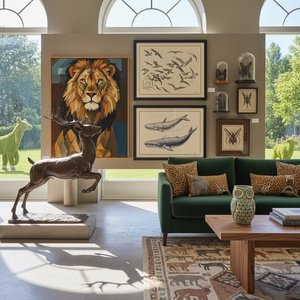
Zwierzęta w Sztuce: Wprowadzanie Życia do Twojej Przestrzeni
Odkryj fascynujący świat zwierząt w sztuce! Poznaj symbolikę, historię i współczesne interpretacje. Znajdź idealny obraz ze zwierzęciem do swojego wnętrza z .