

 Wyślij
 Udostępnij
 Szczegóły
 Przewodnik

 Pobierz plik obrazu
 Podobne obiekty
 Pokaz slajdów
 Statystyki
Camera obscura


 Czytaj więcej
Giclée / Wydruk artystyczny
Wydruki giclée lub płótna o jakości muzealnej, szybka realizacja i szeroki wybór opcji wykończenia. ( Kup ręcznie malowany obraz Przełącz na wersję cyfrową)




































Wybierz spośród naszych standardowych rozmiarów, które zachowują oryginalne proporcje dzieła sztuki.

Wpisz wymaganą szerokość i wysokość, aby dopasować grafikę do ramy lub ściany. Wydruk można jedynie przyciąć, nigdy nie powiększając go poza oryginalny obraz, dlatego format o innym proporcji spowoduje utratę części kompozycji. Przed rozpoczęciem druku prześlemy Ci cyfrowy podgląd do zatwierdzenia. Obraz wyświetlany na tej stronie nie pokazuje rzeczywistego przycięcia — jedynie podgląd oddaje ten efekt.
Dostawa na cały świat () w ciągu 2 tygodni zamiast standardowych 4/5 tygodni. (23 Październik)

Bezpłatna ekspresowa wysyłka na cały świat

Wysokiej jakości płótno lniane

Pełne ubezpieczenie transportowe

Gwarancja zwrotu należności celnych i podatków importowych

Gwarancja idealnego odwzorowania barw

100-dniowy okres na zwrot dzieła w przypadku wykrycia wad produkcyjnych

Gwarancja 100% zwrotu pieniędzy

Oferta przy zakupie wielu sztuk
 Opcja ze szkłem jest dostępna wyłącznie w rozmiarach poniżej 110 cm

Camera obscura
Giclée / Wydruk artystyczny
Rozmiar reprodukcji
-


Suma do zapłaty
zł 308
Canaletto's Intimate Glimpse: The Camera Obscura
Giovanni Antonio Canal, better known as Canaletto, was a master of observation, a chronicler of Venice and its surrounding landscapes with an unparalleled eye for detail. This remarkable painting, depicting a camera obscura – a device he himself possessed and meticulously documented – offers a rare and intimate window into the artist’s creative process and the burgeoning science of optics in the early 18th century. The image, currently housed within the Museo Correr in Venice, isn't merely a representation of a scientific instrument; it’s a testament to Canaletto’s intellectual curiosity and his pioneering approach to landscape painting.
- The Mechanics of Vision: The camera obscura, essentially a darkened room with a pinhole lens, projected an inverted image of the outside world onto its walls. Canaletto's depiction captures this phenomenon precisely – a wooden box constructed with a glass front, meticulously arranged to capture and display this ethereal projection.
- A Tool for Observation: Canaletto utilized the camera obscura not just as a scientific curiosity but as an invaluable tool for his artistic practice. It allowed him to study light, shadow, perspective, and composition before committing them to canvas, resulting in the remarkably accurate and detailed renderings that define his style.
- Historical Context: Created around 1700, this painting reflects a period of intense scientific inquiry into optics and visual perception. The camera obscura was gaining popularity among artists and scientists alike, offering a new method for understanding and replicating the natural world.
Canaletto’s Topographical Style & Artistic Technique
Canaletto's artistic style is immediately recognizable – characterized by its meticulous detail, precise perspective, and atmospheric clarity. This particular depiction of the camera obscura exemplifies his mastery of topographical painting, a genre he essentially invented. The artist employed a technique of layering thin glazes of oil paint, building up color gradually to achieve remarkable luminosity and depth. Note the subtle gradations in tone, particularly within the wooden construction of the device itself, demonstrating Canaletto’s painstaking attention to texture and form. The inverted projection is rendered with astonishing accuracy, showcasing his keen observational skills and his ability to translate three-dimensional reality onto a two-dimensional surface.
- Oil on Panel: The artwork is executed in oil paint on a wooden panel, a common medium for Canaletto’s work during this period.
- Layered Glazes: The use of numerous thin layers of translucent paint creates a rich and luminous effect, characteristic of Canaletto's style.
- Precise Perspective: The meticulous rendering of perspective demonstrates Canaletto’s mastery of linear perspective, a key element in creating the illusion of depth and realism.
Symbolism & Emotional Resonance
Beyond its technical brilliance, the painting carries symbolic weight. It represents not just a scientific instrument but also the artist's relentless pursuit of knowledge and his desire to capture the beauty and complexity of the world around him. The camera obscura itself can be interpreted as a metaphor for artistic creation – a device that transforms an external reality into an internal representation. The image evokes a sense of quiet contemplation, inviting viewers to consider the fundamental principles of vision and the creative process. Canaletto’s work consistently conveys a feeling of serene order and intellectual curiosity, reflecting his deep connection to Venice and its rich cultural heritage.
A Legacy of Observation
This reproduction offers an exceptional opportunity to own a piece of art history – a tangible link to one of the most celebrated topographical painters of all time. Whether you are an art collector seeking to expand your collection, an interior designer looking for a unique and historically significant artwork to adorn your space, or simply someone captivated by Canaletto’s genius, this painting provides a profound connection to the artist's world and his remarkable ability to capture the essence of Venice.
Pytania i odpowiedzi
Gdzie mogę zobaczyć podgląd dzieła "Camera obscura"?
Strona podglądu Podgląd dla dzieła „Camera obscura” umożliwia obejrzenie obrazu przed złożeniem zamówienia.
Czy "Camera obscura" wykazuje silne kontrasty światłocienia?
Kontrast jasności w dziele "Camera obscura" wynosi Statement. Kontrast określa stopień zróżnicowania między obszarami jasnymi a ciemnymi.
Czy kolory w „Camera obscura” autorstwa Canaletto są nasycone czy stonowane?
Kolory dzieła „Camera obscura” autorstwa Canaletto charakteryzują się Muted nasyceniem. Nasycenie określa, jak żywe lub stonowane są barwy.
Biografia artysty
early life and training
Giovanni Antonio Canal, better known as Canaletto, was born on October 18, 1697, in the heart of Venice – a city he would dedicate his entire artistic career to capturing. His early years were steeped in the world of theatrical scenery; his father, Bernardo Canal, was a skilled painter specializing in creating backdrops for Venetian opera productions. This formative environment instilled in young Giovanni an appreciation for composition, perspective, and the dramatic use of light – skills that would later become hallmarks of his distinctive style. Artemisia Barbieri, his mother, further nurtured his artistic sensibilities, providing him with a foundation in drawing and observation. Canaletto’s initial training wasn't solely focused on grand landscapes; he learned the fundamentals of painting through his father’s work, absorbing techniques for creating convincing illusions of depth and space within theatrical settings. This early exposure to stagecraft undoubtedly shaped his later approach to depicting urban environments – a meticulous attention to detail and an understanding of how to guide the viewer's eye through a complex scene.the making of a master: Rome and the Opera
In 1718, at the age of twenty-one, Canaletto embarked on a significant chapter in his artistic development by traveling to Rome. This journey marked a pivotal shift from theatrical scenery to more independent painting. He found work assisting Alessandro Scarlatti, a renowned composer, creating elaborate sets for two operas – an experience that profoundly influenced his artistic vision. Working within the demanding world of opera production honed his skills in drafting precise perspective drawings and understanding how to create convincing illusions of space on stage. The vibrant colors, dynamic compositions, and theatrical lighting he witnessed during this period undoubtedly left a lasting impression, contributing to the richness and dramatic quality characteristic of his later Venetian views. It was here that Canaletto began to develop his signature topographical style – a method of representing cities and landscapes with remarkable accuracy and detail.a venetian perspective: topographical mastery
Upon returning to Venice in 1720, Canaletto quickly established himself as one of the leading veduta painters of his time. Vedute, meaning “views” in Italian, were meticulously rendered depictions of urban landscapes – a genre that had gained popularity throughout Europe during the 18th century. Canaletto’s approach was revolutionary; he didn't simply paint what he saw but rather created detailed records of Venice, capturing its intricate network of canals, bridges, and buildings with astonishing precision. He employed a systematic method, making numerous preparatory sketches – often using a camera obscura (though the extent to which he utilized this device remains debated by art historians) – before committing his observations to canvas. His paintings weren’t merely accurate reproductions; they were carefully composed works of art, designed to evoke a sense of atmosphere and place. He skillfully used light and shadow to create depth and perspective, transforming ordinary cityscapes into captivating scenes that reveal the beauty and complexity of Venetian life.notable works and collaborations
Canaletto’s artistic output was prolific, encompassing a vast range of subjects – from grand public buildings like the Rialto Bridge and St. Mark's Square to bustling market scenes and intimate interiors. Some of his most celebrated works include “The Stonemason’s Yard” (circa 1725), a vibrant depiction of a busy workshop that showcases his early skill in capturing detail and atmosphere; “Regatta on the Grand Canal” (1730), a lively portrayal of a Venetian boat race, brimming with color and movement; and "Eton College" (1746-1756), a testament to his influence in England, where he painted several views of Cambridge. Crucially, Canaletto’s artistic journey was inextricably linked to the work of his nephew, Bernardo Bellotto. They collaborated closely for many years, sharing techniques and influencing each other's style – though it is often difficult to discern precisely who executed which elements of a shared composition. This partnership significantly expanded their collective output and cemented their place as leading veduta painters.legacy and influence
Canaletto’s work exerted a profound and lasting impact on 18th-century art, particularly in the development of the veduta genre. His meticulous attention to detail, his skillful use of perspective, and his ability to capture the atmosphere of Venice inspired countless artists – including his nephew Bernardo Bellotto and later generations of landscape painters. His paintings are now housed in prestigious museums around the world, including the National Gallery in London, where they serve as a powerful reminder of Venice’s beauty and Canaletto's extraordinary artistic legacy. His influence can still be felt today, as artists continue to draw inspiration from his masterful depictions of urban landscapes. The Palumbo-Fossati Collection in Venice offers a particularly comprehensive view of his oeuvre, allowing visitors to immerse themselves in the world of this remarkable Venetian artist. Remember to explore more about Canaletto at https://OriginalUniqueArt.com/@/giovanni-antonio-canal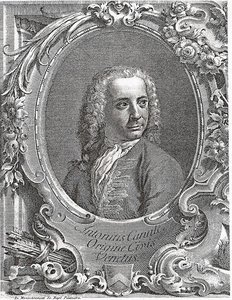
Canaletto
1697 - 1768 , Włochy
Najważniejsze informacje
- Artistic Movement Or Style: Vedute Wenecji
- Artists Or Movements Influenced By This Artist: ['Giovanni Paolo Pannini']
- Artists Who Influenced This Artist: ['Tintoretto']
- Date Of Birth: 18 paź 1697
- Date Of Death: 19 kwie 1768
- Full Name: Giovanni Antonio Canal
- Nationality: Włoski
- Notable Artworks:
- Dom kamieniarskiej
- Regata na Canale Grande
- Eton College
- Place Of Birth: Wenecja, Włochy
Zobacz także powiązane artykuły

Giovanni Antonio Canal (Canaletto): A Venetian Master of Light, Space & Societal Observation
Explore the life & art of Giovanni Antonio Canal (Canaletto), a Venetian master renowned for his breathtaking cityscapes. Discover his techniques, legacy, and captivating depictions of 18th-century Venice & London.

Dramatyczny Rozkwit Baroku: Dziedzictwo Sztuki Kontrreformacji i Mistrzowie Chiaroscuro
Odkryj dramatyczny świat baroku! Poznaj historię sztuki kontrreformacji, mistrzów chiaroscuro i weneckich arcydzieł. Reprodukcje najwyższej jakości na OriginalUniqueArt.com.

Barokowy Dramat we Wnętrzach: Sztuka Przepychu i Elegancji w Twoim Domu
Odkryj świat barokowego przepychu! Porady ekspertów jak wprowadzić elegancję i dramat do Twojego wnętrza. Inspiracje, charakterystyka stylu i praktyczne wskazówki.

Pietro Longhi's Venetian Scenes: A Study of Rococo Society & Domestic Life
Explore the captivating world of Pietro Longhi's Venetian scenes! Discover insightful analysis of his Rococo masterpieces & social commentary on 18th-century life. Learn about this 'Venetian Hogarth' and his lasting artistic legacy.
Jacopo Tintoretto: 25 Arcydzieł Pełnych Dramatyzmu i Światła | OriginalUniqueArt.com
Odkryj 25 arcydzieł Jacopo Tintoretto – weneckiego mistrza dramatyzmu i światła! Poznaj historie, techniki i inspiracje za jego najsłynniejszymi obrazami. Reprodukcje najwyższej jakości na OriginalUniqueArt.com. Eksploruj kolekcję online!


