Cubist Exploration
White Bird (Georges Braque)
Georges Braque (1882–1963) stworzył White Bird. Należy do nurtu Cubist Exploration. Wykonano w technice Lithography.
- Lithography

 Podgląd w skali 1:1

 Ręcznie malowany obraz olejny
 Wyślij jako kartkę
 Udostępnij
 Karta informacyjna


 Pobierz obraz
 Podobne obiekty
 RTG
 Pokaz slajdów
 Pytania i odpowiedzi

 Statystyki
White Bird w skrócie
- Tytuł
- White Bird
- Artysta
- Georges Braque (1882–1963)
- Miejsce urodzenia artysty
- Argenteuil, Francja
- Technika wykonania
- Lithography
- Epoka
- Modern
- Temat
- geometric form, blue circle motif, bird symbolism, black background, visual contrast, cubist composition
Co przedstawia White Bird?
A Symphony of Form: The Essence of Georges Braque’s White Bird
In the vast landscape of early twentieth-century modernism, few works possess the quiet, arresting power of Georges Braque’s “White Bird.” To gaze upon this piece is to witness a moment of profound stillness captured within the radical movement of Cubism. The composition is deceptively minimalist, centered around a striking blue circle that serves as a celestial or perhaps terrestrial window, housing a solitary white bird poised in mid-flight. As the avian figure drifts toward the upper right corner, it creates a sense of directional energy that pulls the viewer’s eye across the canvas, inviting a meditative contemplation of movement and space. The stark, dramatic contrast between the luminous blue, the pristine white of the bird, and the deep, enveloping black background creates an atmospheric tension that is both haunting and beautiful.
The brilliance of this work lies in its ability to embody the core tenets of Cubist philosophy through a simplified visual language. While Braque, alongside his collaborator Pablo Picasso, is often celebrated for the complex, fractured geometries of Analytical Cubism, “White Bird” showcases a more lyrical, essentialist approach. Here, the artist utilizes lithography—a technique prized for its ability to render velvety textures and subtle tonal gradations—to achieve a surface that feels both tactile and ethereal. The precision of the print allows the bold blue to resonate with a vibrant intensity, while the white of the bird remains sharp and clean, embodying the "fragmented harmony" that Braque sought to master during his most revolutionary years.
Historical Resonance and Symbolic Depth
To understand “White Bird,” one must look back to the fertile artistic soil of France at the turn of the century. Born in Argenteuil, Braque’s early life was steeped in the practicalities of craftsmanship, having learned much from his father’s work as a house painter and decorator. This foundational understanding of pigment, structure, and surface would later allow him to dismantle traditional perspective with such surgical precision. Created during the height of the Cubist revolution between 1908 and 1912, this piece reflects a period when artists were no longer content to merely mirror reality; they sought to interrogate it. The bird becomes more than a biological subject; it serves as a symbol of freedom, transcendence, and the fleeting nature of perception itself.
For the discerning collector or interior designer, “White Bird” offers an unparalleled opportunity to introduce a piece of art history into a contemporary space. Its graphic strength makes it a versatile anchor for modern decor, capable of commanding attention in a minimalist gallery-style room or adding a sophisticated layer of intellectual depth to a classic study. The artwork does not merely decorate a wall; it transforms the environment, offering a window into the very moment when the foundations of modern art were being rewritten. Owning a high-quality reproduction of this masterpiece allows one to live with the enduring legacy of Braque’s vision—a vision where simplicity meets profound complexity, and where a single bird in flight can encapsulate the infinite possibilities of the human gaze.
Zdjęcia w wysokiej rozdzielczości dzieła White Bird
Chronione prawem autorskim: pliki te służą wyłącznie do osobistego wglądu i nie stanowią licencji na ich powielanie.
Georges Braque, White Bird.
Odpowiedzi na pytania dotyczące White Bird
W jakiej technice wykonano „White Bird” – Georges Braque?
Georges Braque wykorzystał/a technikę Lithography w pracy „White Bird”. Technika ta definiuje materię oryginalnego dzieła.
Co przedstawia „White Bird” – Georges Braque?
„White Bird” – Georges Braque przedstawia: geometric form, blue circle motif, bird symbolism, black background, visual contrast, cubist composition, minimal aesthetic.
Czy obraz „White Bird” – Georges Braque można swobodnie reprodukować?
„White Bird” – Georges Braque znajduje się w domenie publicznej (nadal objęte ochroną prawa autorskiego). Status ten określa zasady reprodukcji obrazu tego dzieła.
Kto jest autorem dzieła "White Bird"?
Autorem dzieła „White Bird” jest Georges Braque. Praca ta figuruje w katalogu pod nazwiskiem Georges Braque.
Do jakiego nurtu należy "White Bird"?
„White Bird” to dzieło należące do nurtu Cubist Exploration. Nurt ten określa tradycję artystyczną, w której osadzone jest dzieło.
Do którego etapu twórczości Georges Braque należy dzieło „White Bird”?
"White Bird" reprezentuje Cubist Synthesis twórczości Georges Braque.
Z czego wynika obecny status praw autorskich dzieła "White Bird"?
Dzieło "White Bird" autorstwa Georges Braque znajduje się w nadal objęte ochroną prawa autorskiego. Okres ochrony praw autorskich liczony jest od daty śmierci artysty, a Georges Braque zmarł(a) w 1963.
Jakie miejsce w dorobku twórczym Georges Braque zajmuje dzieło "White Bird"?
"White Bird" dzieli z innymi dziełami Georges Braque styl właściwy dla Cubist Exploration oraz powracające motywy: deconstructionist cubist vision, exploring spatial relationships, symbolic representation nature, influenced picasso’s breakthrough, central piece artistic legacy.
W jaki sposób tematyka dzieła "White Bird" odnosi się do typowych motywów twórczości Georges Braque?
„White Bird” przedstawia geometric form, blue circle motif, bird symbolism, black background, visual contrast, cubist composition, minimal aesthetic, podczas gdy powracające motywy u Georges Braque to deconstructionist cubist vision, exploring spatial relationships, symbolic representation nature, influenced picasso’s breakthrough, central piece artistic legacy. Porównanie tych dwóch elementów ukazuje, jak dzieło nawiązuje do typowej dla tego artysty tematyki.
O artyście: Georges Braque
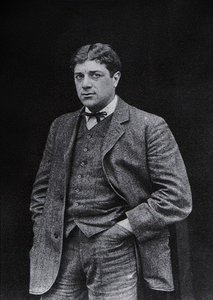
1882–1963, Francja
Georges Braque
Wczesne lata, rodzina i wykształcenie Georges Braque urodził się w 1882 roku w Argenteuil we Francji. Jego wczesne lata upłynęły w Le Havre, w domu, którego codzienność definiowały praktyczne aspekty dekoracji i koloru. Dorastając w rodzinie malarzy i dekoratorów domów, od najmłodszych lat był zanurzony w namacalnej rzeczywistości swojego rzemiosła. To wychowanie zapewniło mu fundament technicznego warsztatu, który w późniejszych latach nadał głębi jego podejściu do płótna.
Inne prace Georges Braque
 Mandolina1910
 Mężczyzna z gitarą1914
 Domki Przy Estace
 Harbor w Normandii1909
Eseje o White Bird
 Spontaneity and Matter: Distinguishing CoBrA from Art InformelMaster the differences between CoBrA and Art Informel with our expert guide. Learn to identify these post-war movements today.
 French artworks of the 1950sIconic French works by Matisse, Braque, and Dubuffet define this era. Explore the full collection online at OriginalUniqueArt.com.
 Georges Braque: 25 Arcydzieł Kubizmu i Nowoczesnej Sztuki | OriginalUniqueArt.comOdkryj 25 arcydzieł Georges'a Braque – pioniera kubizmu i malarstwa nowoczesnego. Poznaj historię, techniki i inspiracje za jego najsłynnie…