Wersja olejowa
 Wszystko o Self-Portrait







































 W przypadku dzieł sztuki lub reprodukcji, których którykolwiek z boków przekracza 105 cm (około 41 cali), rama zostanie wysłana w formie zestawu do samodzielnego montażu. Metoda ta zapewnia bezpieczną dostawę i zapobiega uszkodzeniom podczas transportu.


Identification of the Self-Portrait by George Chinnery
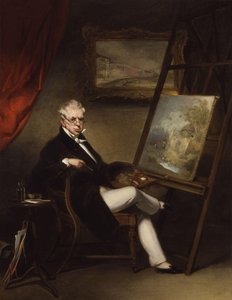
This work is a Self-Portrait by the artist George Chinnery. It represents a significant moment in his career, painted during his time in China between 1825 and 1828. Among the dozen self-portraits Chinnery produced throughout his life, this particular likeness is noted for being his most intimate and engaging. It offers a rare, personal glimpse into the character of a man known for his wit and his volatile, eccentric nature.
The piece was executed during a period of transition for the artist. Having moved to southern China due to mounting debts, Chinnery used his brush to document not only the landscapes and people of the region but also his own shifting circumstances. This specific portrait captures a sense of introspection that distinguishes it from his more formal commissions for the British community in India or the merchants of Macau.
Visual Composition and Subject Matter
The composition is centered on the subject's face and upper torso, presenting a middle-aged man in a moment of quiet introspection. He is positioned with his body turned slightly toward the viewer’s right, though his presence remains immediate and direct. A pair of spectacles rests upon his face, and a dark, textured fur collar frames his neck, adding a sense of weight and substance to his figure. His expression is serious, lending a somber quality to the encounter.
The color palette is restrained, relying heavily on a foundation of browns, ochres, and muted reds. These tones harmonize with the subject's warm brown skin tone, creating a cohesive and grounded atmosphere. Behind him, the background is intentionally blurred, suggesting the presence of a distant landscape without providing specific topographical detail. This lack of clarity in the distance pushes the figure forward, ensuring the viewer's attention remains fixed on the character of the man himself.
Technique and Artistic Style
This oil-on-canvas portrait is defined by a tactile, physical presence. The artist employs a technique characterized by loose brushwork and a heavy use of impasto, where the paint is applied thickly to build up the surface. This layered approach does more than just apply color; it creates a sense of volume and form, allowing the light to catch the ridges of the pigment. Such a method gives the work a textured, almost sculptural quality that emphasizes the physicality of the medium.
The style leans toward realism, yet it is executed through expressive brushstrokes that prioritize character over photographic precision. Rather than relying on smooth, blended transitions, the artist uses visible marks to define the contours of the face and the deep folds of the clothing. These lines work in tandem with the play of light and shadow to establish the subject's features. The result is a work that feels immediate and deeply personal, capturing a specific mood through the very texture of the paint itself.
History and Provenance of the Work
This intimate likeness was painted in China during the years 1825–28. It carries a distinguished lineage, having once belonged to Benjamin Chew Wilcox. A businessman involved in the opium trade, Wilcox was a prominent figure who also commissioned a full-length portrait of himself from the artist.
The provenance of the work connects it to the significant commercial history of the region. It is currently held within the collection of The Hong Kong and Shanghai Banking Corporation Ltd. This placement ensures the piece remains linked to the historical networks that the artist navigated throughout his residency in Asia.
Pytania i odpowiedzi
Czy Self-Portrait jest dziełem namalowanym ręcznie, czy wydrukiem?
Malowane ręcznie: wykwalifikowany artysta wykonuje olejną kopię Self-Portrait na płótnie lnianym.
Jaki rozmiar wybrać dla Self-Portrait?
Wymiary oryginału to 22 x 18 cm. Dostępne rozmiary obejmują zakres od 34.5 x 29.0 cm (zł782) do 239.9 x 201.4 cm (zł6928); tabela na tej stronie przedstawia główne warianty oraz ich ceny.
Ile trwa dostawa?
Czas dostawy wynosi od 4 do 5 tygodni, przy czym oferujemy bezpłatną ekspresową wysyłkę na cały świat; na tej stronie dostępna jest również opcja pilnej produkcji. Możesz dokonać zwrotu w ciągu 100 dni z pełnym zwrotem kosztów, bez żadnych dodatkowych warunków.
Gdzie znajduje się oryginał Self-Portrait?
Oryginał znajduje się w zbiorach Metropolitan Museum of Art w Nowy Jork.
Jakiej techniki użył/a George Chinnery w pracy Self-Portrait?
Oil On Canvas
 Podgląd w skali 1:1

 Wyślij jako kartkę
 Udostępnij
 Szczegóły dzieła
 Karta informacyjna


 Pobierz obraz
 Podobne obiekty
 RTG
 Pokaz slajdów
 Pytania i odpowiedzi

 Statystyki