Realism · 1825
Self-Portrait (George Chinnery, 1825)
George Chinnery (1774–1852) stworzył Self-Portrait. Dzieło pochodzi z 1825. Należy do nurtu Realism. Wykonano w technice Oil On Canvas. Przechowywane jest w Metropolitan Museum of Art w Nowy Jork, Stany Zjednoczone Ameryki. Wymiary to 22 × 18 cm.
- 1825
- Oil On Canvas
- 22 × 18 cm
- Metropolitan Museum of Art, Nowy Jork

 Podgląd w skali 1:1

 Ręcznie malowany obraz olejny
 Wyślij jako kartkę
 Udostępnij
 Karta informacyjna


 Pobierz obraz
 Podobne obiekty
 RTG
 Pokaz slajdów
 Pytania i odpowiedzi

 Statystyki
Self-Portrait w skrócie
- Tytuł
- Self-Portrait
- Artysta
- George Chinnery (1774–1852)
- Miejsce urodzenia artysty
- Londyn, Wielka Brytania
- Data powstania
- 1825
- Technika wykonania
- Oil On Canvas
- Wymiary
- 22 × 18 cm
- Gdzie można je zobaczyć
- Metropolitan Museum of Art, Nowy Jork, Stany Zjednoczone Ameryki
- Ruch
- Realism
- Epoka
- 19th Century
- Temat
- portrait, self-reflection, spectacles, fur collar, china, 1825
Co przedstawia Self-Portrait?
Identification of the Self-Portrait by George Chinnery
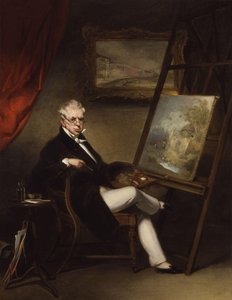
This work is a Self-Portrait by the artist George Chinnery. It represents a significant moment in his career, painted during his time in China between 1825 and 1828. Among the dozen self-portraits Chinnery produced throughout his life, this particular likeness is noted for being his most intimate and engaging. It offers a rare, personal glimpse into the character of a man known for his wit and his volatile, eccentric nature.
The piece was executed during a period of transition for the artist. Having moved to southern China due to mounting debts, Chinnery used his brush to document not only the landscapes and people of the region but also his own shifting circumstances. This specific portrait captures a sense of introspection that distinguishes it from his more formal commissions for the British community in India or the merchants of Macau.
Visual Composition and Subject Matter
The composition is centered on the subject's face and upper torso, presenting a middle-aged man in a moment of quiet introspection. He is positioned with his body turned slightly toward the viewer’s right, though his presence remains immediate and direct. A pair of spectacles rests upon his face, and a dark, textured fur collar frames his neck, adding a sense of weight and substance to his figure. His expression is serious, lending a somber quality to the encounter.
The color palette is restrained, relying heavily on a foundation of browns, ochres, and muted reds. These tones harmonize with the subject's warm brown skin tone, creating a cohesive and grounded atmosphere. Behind him, the background is intentionally blurred, suggesting the presence of a distant landscape without providing specific topographical detail. This lack of clarity in the distance pushes the figure forward, ensuring the viewer's attention remains fixed on the character of the man himself.
Technique and Artistic Style
This oil-on-canvas portrait is defined by a tactile, physical presence. The artist employs a technique characterized by loose brushwork and a heavy use of impasto, where the paint is applied thickly to build up the surface. This layered approach does more than just apply color; it creates a sense of volume and form, allowing the light to catch the ridges of the pigment. Such a method gives the work a textured, almost sculptural quality that emphasizes the physicality of the medium.
The style leans toward realism, yet it is executed through expressive brushstrokes that prioritize character over photographic precision. Rather than relying on smooth, blended transitions, the artist uses visible marks to define the contours of the face and the deep folds of the clothing. These lines work in tandem with the play of light and shadow to establish the subject's features. The result is a work that feels immediate and deeply personal, capturing a specific mood through the very texture of the paint itself.
History and Provenance of the Work
This intimate likeness was painted in China during the years 1825–28. It carries a distinguished lineage, having once belonged to Benjamin Chew Wilcox. A businessman involved in the opium trade, Wilcox was a prominent figure who also commissioned a full-length portrait of himself from the artist.
The provenance of the work connects it to the significant commercial history of the region. It is currently held within the collection of The Hong Kong and Shanghai Banking Corporation Ltd. This placement ensures the piece remains linked to the historical networks that the artist navigated throughout his residency in Asia.
W którym muzeum znajduje się Self-Portrait?
Metropolitan Museum of Art
Nowy Jork, Stany Zjednoczone Ameryki
Początki i historia Metropolitan Museum of Art Historia Metropolitan Museum of Art bierze swój początek w wizji podzielanej przez grupę przedsiębiorców, finansistów oraz czołowych artystów i myślicieli. Po oficjalnym zarejestrowaniu instytucji w 1870 roku, zaczęła ona poszukiwać stałego miejsca, które mogłoby pomieścić jej stale powiększające się zbiory. Zanim muzeum osiadło w swojej obecnej lokalizacji, przez krótki czas mieściło się w posiadłości Douglas Mansion przy West 14th Street.


Zdjęcia w wysokiej rozdzielczości dzieła Self-Portrait

Domena publiczna: artysta zmarł w 1852.
Inne rozmiary, kadrowanie i cytowanie →George Chinnery, Self-Portrait (1825), Metropolitan Museum of Art. Domena publiczna
Odpowiedzi na pytania dotyczące Self-Portrait
W którym muzeum znajduje się oryginał "Self-Portrait"?
„Self-Portrait” – George Chinnery znajduje się w zbiorach Metropolitan Museum of Art, Nowy Jork, Stany Zjednoczone Ameryki. Informacja o muzeum dotyczy oryginału, a nie reprodukcji.
W którym roku powstało dzieło „Self-Portrait” – George Chinnery?
„Self-Portrait” – George Chinnery powstało w 1825.
Z jakiej techniki wykorzystano "Self-Portrait"?
Technika wykonania dzieła „Self-Portrait” – George Chinnery to Oil On Canvas. Reprodukcje mają na celu wierne oddanie wyglądu tej techniki.
Jakie są rzeczywiste wymiary dzieła „Self-Portrait” – George Chinnery?
Wymiary dzieła „Self-Portrait” – George Chinnery to 22 x 18 cm. Reprodukcje można zamówić w innych rozmiarach, zachowując te same proporcje.
Co przedstawia „Self-Portrait” – George Chinnery?
Tematyka obecna w „Self-Portrait” – George Chinnery obejmuje portrait, self-reflection, spectacles, fur collar, china, 1825, british art, eccentric figure. Razem stanowią one podsumowanie tematyki dzieła.
Czy „Self-Portrait” – George Chinnery znajduje się w domenie publicznej?
Status praw autorskich dla „Self-Portrait” – George Chinnery: dzieło znajduje się w należy do domeny publicznej – autorskie prawa majątkowe wygasły. Określa to, czy reprodukcje obrazu mogą być sporządzane swobodnie.
Kto stworzył "Self-Portrait"?
„Self-Portrait” zostało stworzone przez George Chinnery. Informacje na tej stronie dotyczą oryginalnego dzieła autorstwa George Chinnery.
Do jakiego nurtu w sztuce należy „Self-Portrait” – George Chinnery?
„Self-Portrait” – George Chinnery należy do nurtu Realism. Nurt ten stanowi stylistyczny kontekst dzieła.
Do którego etapu twórczości George Chinnery należy dzieło „Self-Portrait”?
"Self-Portrait" reprezentuje Mature Period twórczości George Chinnery.
O artyście: George Chinnery
1774–1852, Wielka Brytania
George Chinnery
Early Life and Training (1774-1801) George Chinnery, a name synonymous with the vibrant landscapes and captivating portraits of 19th-century India and China, was born in London on January 5, 1774. His lineage held a fascinating connection to the world of communication – his father, a skilled craftsman, pioneered the Gurney system of shorthand, a revolutionary method for rapid note-taking that would profoundly influence Chinnery’s artistic practice. This early exposure to efficient record-keeping instilled in him a meticulous eye and an appreciation for capturing details with remarkable speed. He received his formal artistic education at the Royal Academy Schools in London, where he honed the foundational techniques of classical art – perspective, anatomy, and color theory – providing him with the tools necessary to translate his observations into compelling visual narratives.
Inne prace George Chinnery
 Portrait of Nathan Dunn1830
 Portrait of a Gentleman1800
 A Man Called W. C. Hunter1825
 Portrait of Harriet Low1833

Eseje o Self-Portrait
 Reflecting the Self: A History of Portraiture & Psychological InsightExplore the fascinating history of self-portraiture from Renaissance masters like Dürer & Rembrandt to modern interpretations. Discover the…
 Masterpieces of Henri Fantin-Latour: The Top 25 Essential ArtworksExplore the top 25 masterpieces of Henri Fantin-Latour. From floral studies to realism, discover the full collection on OriginalUniqueArt.c…
 German artworks of the 1910sGerman Expressionism in the 1910s features powerful works by Franz Marc, Max Beckmann, and Ernst Ludwig Kirchner. View the collection at Or…