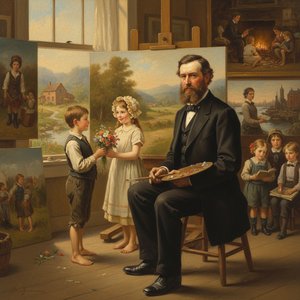
Canvassing for a Vote
Ręcznie malowana reprodukcja olejowa
Ręcznie malowany obraz olejny na płótnie, wykonany na zamówienie przez naszych artystów w wybranym przez Ciebie wymiarze i oprawie. ( Zamów wydruk
Kup obraz wysokiej rozdzielczości)
P118B $10
P118H $10
P118W $10
P438Z $10
P508JH $12
P508YH $12
P805H $10
P805Z $10
P919BZ $10
P919G $10
P919XJ $10
P959ZH $10
P968JZ $12
W106C $8
W218G $10
W218JH $8
W218Y $10
W307PJ $10
W316G $10
W316PJ $8
W316Y $10
W398PJ $8
W4111J $10
W500HY $15
W500JH $15
W692G $12
W849H $8
W940BG $15
W953PJ $8
Wybierz spośród naszych standardowych rozmiarów, które zachowują oryginalne proporcje dzieła sztuki.
Możesz wprowadzić własne wymiary, aby dopasować obraz do konkretnej ramy lub przestrzeni. Jeśli wybrany rozmiar nie będzie odpowiadał proporcjom oryginału, przytniecie dzieło sztuki lub rozszerzymy je o dodatkowe elementy, ręcznie domalowane przez artystę. Przed rozpoczęciem produkcji wyślemy projekt cyfrowy do Twojej akceptacji.
Należy pamiętać, że podgląd na ekranie nie odzwierciedla rzeczywistego przycinania ani rozszerzania obrazu. Tylko projekt dokładnie pokaże ostateczną kompozycję.
Choć oferujemy możliwość zamówienia niestandardowych rozmiarów, zalecamy wybór wymiaru z gotowej listy, aby zachować oryginalne proporcje dzieła.
Po złożeniu zamówienia zespół OriginalUniqueArt.com skontaktuje się z klientem drogą mailową w celu uzyskania instrukcji i prześle wizualizację projektu
Dostawa na całym świecie () w ciągu 3–4 tygodni zamiast standardowych 5 tygodni. (17 Sierpień). Bez kompromisów w kwestii jakości.
Bezpłatna ekspresowa wysyłka na cały świat
Wysokiej jakości płótno lniane
Pełne ubezpieczenie przesyłki
Gwarancja zwrotu należności celnych i podatków importowych
Gwarancja wiernego odwzorowania kolorów
Polityka 60-dniowego zwrotu (tylko w przypadku wad)
Gwarancja 100% zwrotu kosztów
Zniżka przy zamówieniu wielu produktów
Canvassing for a Vote
Technika reprodukcji
Wymiary reprodukcji
-
Cena całkowita
$ 300
Opis dzieła
A Snapshot of American Life: George Caleb Bingham’s *Canvassing for a Vote*
George Caleb Bingham's 1851 painting, *Canvassing for a Vote*, isn’t merely a depiction of men gathered outside a building; it’s a meticulously rendered tableau of the burgeoning democratic spirit and social dynamics of mid-19th century America. Housed within the esteemed Nelson-Atkins Museum of Art in Kansas City, this oil on canvas offers a remarkably intimate glimpse into a pivotal moment – the lead-up to an election – capturing not just the scene itself but also the palpable anticipation and community that surrounded it. Bingham’s genius lies in his ability to transform everyday observation into profound storytelling; he invites us to step back in time and witness a slice of American life, imbued with both humor and quiet contemplation.
The Artist and His Frontier Vision
Born in Virginia in 1811, George Caleb Bingham’s artistic journey was inextricably linked to the westward expansion of the United States. His family's relocation to Missouri during his childhood exposed him to a world vastly different from the established East – a frontier landscape defined by hardship, resilience, and a unique social fabric. This formative experience profoundly shaped his artistic sensibilities, leading him to focus on portraying the lives and customs of ordinary Americans, particularly those inhabiting the rural South. Bingham’s work is characterized by an unflinching realism, a keen eye for detail, and a remarkable ability to capture the nuances of human interaction. He wasn't interested in grand historical narratives or idealized portraits; instead, he sought to document the authentic experiences of his contemporaries.
Decoding the Scene: Symbolism and Social Commentary
*Canvassing for a Vote* is rich with symbolic details that elevate it beyond a simple snapshot. The group assembled outside the building isn’t just waiting; they're engaged in animated conversation, their postures suggesting both deliberation and perhaps even friendly debate. The presence of two dogs – one near the left side, another closer to the right – adds an element of casual observation, grounding the scene in everyday life. A suitcase resting on the ground hints at journeys undertaken, representing the movement and change characteristic of frontier society. The clothing worn by the men also speaks volumes about their social standing and regional identity. The painting subtly critiques the importance placed on civic engagement while simultaneously celebrating the communal spirit that underpinned American democracy.
Technique and Historical Context
Bingham’s masterful technique is evident in his meticulous rendering of textures – the rough fabric of coats, the worn leather of boots, the weathered wood of the building. He employs a muted color palette, dominated by earthy tones that evoke the landscape and the atmosphere of the scene. The composition is carefully balanced, drawing the viewer's eye across the group and anchoring it in the details of their interactions. Painted in 1851, during the heated presidential election between William Henry Harrison and Martin Van Buren, *Canvassing for a Vote* reflects the widespread political excitement and engagement that gripped the nation. It’s a powerful reminder of a time when local elections held significant weight and community participation was paramount. The painting serves as a valuable historical document, offering insights into the social customs, political climate, and daily lives of Americans during this transformative era.
High-quality reproductions of *Canvassing for a Vote* are available at OriginalUniqueArt.com, allowing you to bring this captivating piece of American art into your home or office. For further exploration of George Caleb Bingham’s life and work, we encourage you to visit the Nelson-Atkins Museum of Art website and Wikipedia.
O artyście
A Life Painted on the American Frontier
George Caleb Bingham, born in 1811 amidst the rolling landscapes of Virginia, wasn’t destined for a life steeped in artistic convention. His early years were marked by movement and adaptation, a family relocation to the burgeoning Missouri frontier shaping his perspective in profound ways. This shift from the established East to the raw energy of the West became the very bedrock of his artistic vision. The hardships faced by his family instilled within him an acute awareness of the struggles and triumphs inherent in the American experience – themes that would dominate his canvases for decades to come. A pivotal encounter at age nine with Chester Harding, a traveling portraitist passing through Franklin, Missouri, ignited a spark. This brief exposure wasn’t merely an introduction to technique; it was a revelation of art's power to capture not just likeness but the very essence of human character. Though largely self-taught initially, Bingham honed his skills through apprenticeships with cabinet makers, learning meticulous draftsmanship and an eye for detail – qualities that would become hallmarks of his mature style. By nineteen, he was already earning a living as a portrait painter, demonstrating an innate talent that quickly established him within the local community. This early success propelled him towards St. Louis, a vibrant hub where he sought to refine his skills and immerse himself in a growing artistic milieu.The Luminist Touch and American Realism
Bingham’s artistic journey wasn't confined by formal training; it was deeply interwoven with the world around him – the majestic Mississippi and Missouri Rivers, the bustling river towns teeming with life, and the diverse individuals who navigated this dynamic landscape. He became a keen observer of American society, particularly along these vital waterways that served as arteries of commerce and migration. His style gradually evolved, embracing elements of Luminism, an artistic movement characterized by its emphasis on atmospheric effects and the subtle interplay of light. This is strikingly evident in works like Order at the Border (1850), where the golden hues of the setting sun illuminate a tense negotiation between settlers and Native Americans, imbuing the scene with both beauty and underlying tension. However, Bingham wasn’t simply a Luminist painter; he infused his work with a powerful dose of realism, striving to depict American life with unflinching honesty and authenticity. Family Life on the Frontier (1845) exemplifies this approach, offering a tender yet realistic portrayal of domesticity amidst the challenges of pioneer existence. He wasn’t interested in idealizing the frontier; he sought to portray it as it was – a place of opportunity, hardship, and constant change. His paintings offer a valuable historical record, providing insights into the social customs, political attitudes, and daily lives of Americans during a pivotal period in their history. The County Election (1844) stands out as perhaps his most iconic representation of this approach – a vibrant tableau capturing the boisterous energy and democratic spirit of frontier politics. The painting isn’t merely a depiction of an event; it's a social commentary, offering insights into the values, anxieties, and aspirations of 19th-century Americans. His ability to capture the essence of American culture is also powerfully displayed in St. Louis Jockey, on the Battlefield (1862), a poignant reflection on the Civil War’s impact on everyday life, revealing the subtle scars left upon the nation's psyche.Themes of Frontier Life and Social Commentary
Throughout his career, Bingham consistently returned to themes central to the American experience: westward expansion, political participation, the rhythms of river life, and the complexities of human interaction. He wasn’t afraid to tackle difficult subjects, often embedding subtle social commentary within seemingly straightforward depictions of everyday scenes. His paintings weren't simply aesthetically pleasing; they were narratives, offering glimpses into the moral and ethical dilemmas facing a young nation grappling with its identity. Consider Raftsmen Playing Cards, or The Checker Players, both capturing moments of leisure but also hinting at the hardships and uncertainties faced by those who worked the rivers. These works demonstrate Bingham’s skill in imbuing seemingly mundane activities with a sense of depth and significance. He skillfully blended elements of portraiture, landscape, and narrative to create scenes that resonated deeply with his audience. Lighter Relieving the Steamboat Aground (1853) is a prime example, depicting a scene of rural American life while subtly commenting on the challenges faced by those living along the riverbanks. His work often served as a visual record of the era, capturing the spirit and struggles of a nation in transition.Technique and Influences
Bingham’s artistic style was shaped by a unique combination of influences. While he largely eschewed formal training, his apprenticeship with a cabinet maker instilled in him a meticulous attention to detail and an appreciation for craftsmanship. His early exposure to Chester Harding's portraiture provided him with the foundational skills necessary to capture likenesses accurately. However, it was his immersion in the frontier environment that truly informed his artistic vision. He studied the landscapes of Missouri with a keen eye, meticulously observing the way light interacted with the terrain and the subtle nuances of color. He also drew inspiration from the works of European artists, particularly those associated with the Düsseldorf school, known for their mastery of tonal painting and atmospheric effects. This influence is evident in his use of muted colors and soft brushstrokes, which create a sense of depth and realism.Rediscovery and Lasting Legacy
Despite his prominence during his lifetime, Bingham’s work experienced a period of relative obscurity following his death in 1879. It wasn't until the 1930s that a renewed interest in his art emerged, fueled by a growing appreciation for American Regionalism and Realism. This rediscovery led to a reevaluation of his contributions to American art history, recognizing him as one of the greatest American painters of the 19th century. By the time of his bicentennial in 2011, George Caleb Bingham had firmly established himself as a significant figure in American art, and his paintings continue to be celebrated for their historical accuracy, emotional depth, and artistic merit. His legacy extends beyond his individual paintings; he helped define a distinctly American artistic voice, one that celebrated the nation’s unique character and confronted its challenges with honesty and insight.- Canvassing for a Vote: A powerful depiction of political engagement on the frontier.
- Order No. 11: Illustrates the complexities of interactions between settlers and Native Americans.
- Lighter Relieving the Steamboat Aground: Captures a moment of rural American life with stunning detail.
George Caleb Bingham
1811 - 1879 , Stany Zjednoczone
Krótka nota
- Artistic Movement Or Style: Luminizm, Realizm
- Artists Or Movements Influenced By This Artist: ['Düsseldorf school']
- Artists Who Influenced This Artist: ['Chester Harding']
- Date Of Birth: 1811
- Date Of Death: 1879
- Full Name: George Caleb Bingham
- Nationality: Amerykański
- Notable Artworks:
- Order No. 11
- Raftsmen Playing Cards
- Family Life on Frontier
- Place Of Birth: Augusta County, USA


Opcja ze szkłem jest dostępna wyłącznie w rozmiarach poniżej 110 cm