

 Zobacz w skali 1:1
 Wyślij
 Udostępnij
 Szczegóły
 Przewodnik

 Pobierz plik obrazu
 Podobne obiekty
 RTG
RTG Pokaz slajdów
 Statystyki
Port Villefranche


 Czytaj więcej
Giclée / Wydruk artystyczny
Wydruki giclée lub płótna o jakości muzealnej, szybka realizacja i szeroki wybór opcji wykończenia. ( Kup ręcznie malowany obraz Przełącz na wersję cyfrową)




P118B $10

P118H $10

P118W $10

P438Z $10

P508JH $12

P508YH $12

P805H $10

P805Z $10

P919BZ $10

P919G $10

P919XJ $10

P959ZH $10

P968JZ $12

W106C $8

W218G $10

W218JH $8

W218Y $10

W307PJ $10

W316G $10

W316PJ $8

W316Y $10

W398PJ $8

W4111J $10

W500HY $15

W500JH $15

W692G $12

W849H $8

W940BG $15

W953PJ $8




Wybierz spośród naszych standardowych rozmiarów, które zachowują oryginalne proporcje dzieła sztuki.

Możesz wprowadzić własne wymiary, aby dopasować dzieło do konkretnej ramy lub przestrzeni. Jeśli wybrany rozmiar nie będzie odpowiadał proporcjom oryginalnego obrazu, przytniecie dzieło lub rozszerzymy obraz za pomocą odbicia lustrzanego lub jednolitego wypełnienia krawędzi. Przed rozpoczęciem produkcji prześlemy cyfrową wizualizację do Twojej akceptacji.
Prosimy pamiętać, że podgląd na ekranie nie odzwierciedla faktycznego przycinania ani rozszerzania. Tylko wizualizacja dokładnie pokaże końcową kompozycję.
Mimo dostępności niestandardowych rozmiarów, zalecamy wybór wymiaru z listy zdefiniowanej, aby zachować oryginalne proporcje.
Dostawa na cały świat () w ciągu 2 tygodni zamiast standardowych 4/5 tygodni. (26 Wrzesień)

Bezpłatna ekspresowa wysyłka na cały świat

Wysokiej jakości płótno lniane

Pełne ubezpieczenie transportowe

Gwarancja zwrotu należności celnych i podatków importowych

Gwarancja idealnego odwzorowania barw

100-dniowy okres na zwrot dzieła w przypadku wykrycia wad produkcyjnych

Gwarancja 100% zwrotu pieniędzy

Oferta przy zakupie wielu sztuk
 Opcja ze szkłem jest dostępna wyłącznie w rozmiarach poniżej 110 cm

Port Villefranche
Giclée / Wydruk artystyczny
Rozmiar reprodukcji
-


Suma do zapłaty
$ 80
Port Villefranche – Impressionistic Echoes of Coastal Life
Villefranche-sur-Mer, nestled along the azure shores of the French Riviera, holds a timeless allure—a fascination that Eugène Louis Boudin brilliantly captured in his 1892 painting, “Quay at Villefranche.” This artwork isn’t merely a depiction of a harbor scene; it's an embodiment of Impressionism itself, resonating with the spirit of a bygone era and continuing to inspire admiration today. Boudin, recognizing that art should strive to convey not just what is seen but how it feels—the very essence of experience—abandoned the rigid conventions of academic painting in favor of a revolutionary approach.Subject Matter and Composition: A Dance Between Light and Form
The canvas portrays a bustling harbor brimming with activity – sailboats gliding across the calm waters, fishermen hauling their nets ashore, and figures strolling along the quay, bathed in the golden glow of afternoon sunlight. Boudin’s compositional genius lies in his masterful use of diagonal lines. A prominent road snakes from the lower left corner upwards towards the center, guiding the viewer's gaze past the bustling harbor activity and anchoring the scene with buildings rising vertically on the right side. This deliberate arrangement isn’t accidental; it serves to heighten the sense of depth and perspective—a hallmark of Impressionistic technique. The artist skillfully utilizes these elements to create a dynamic interplay between form and light, inviting contemplation about the fleeting beauty of the coastal landscape.Impressionistic Technique: Visible Brushstrokes as Vessels of Emotion
Boudin’s distinctive style is defined by his unwavering commitment to capturing the immediacy of sensory perception. Unlike traditional painters who meticulously blended colors on their palettes to achieve smooth surfaces, Boudin embraced visible brushstrokes—bold, expressive marks that reveal the artist's hand and contribute significantly to the painting's textural richness. The loose application of pigment creates a shimmering surface that mimics the dappled light filtering through foliage or reflecting off water—a technique crucial for conveying the atmosphere of Villefranche. Color is employed with daring vibrancy – yellows and oranges dominate, capturing the warmth of the sun, while muted blues evoke the coolness of the sea. Boudin’s masterful use of oil paints ensures that every brushstroke retains its character, preserving the artist's vision and enhancing the painting's emotional impact.Historical Context: Boudin and the Dawn of Modern Art
Boudin stands as a pivotal figure in the artistic landscape of his time—a pioneer who championed Impressionism alongside Claude Monet and Camille Pissarro. The movement emerged in France during the late 1860s and early 1870s, rejecting academic conventions and prioritizing subjective experience over objective representation. Artists like Boudin sought to depict scenes as they appeared to the eye at a particular moment—influenced by atmospheric conditions and illuminated by fleeting sunlight. This artistic rebellion reflected broader societal changes—a growing interest in scientific observation alongside an appreciation for beauty and emotion—marking a decisive break from the artistic traditions of previous generations.Symbolism and Emotional Resonance: Capturing the Soul of Place
“Quay at Villefranche” transcends mere visual description; it communicates a profound sense of nostalgia and tranquility. The painting evokes memories of summer days spent by the sea, capturing the spirit of carefree leisure and appreciation for the natural world. Boudin’s masterful rendering of light—particularly its ability to transform surfaces and imbue them with warmth—underscores this emotional core. More than just portraying a harbor scene, he conveys an intangible feeling—a connection to place and time—that resonates deeply within the viewer's imagination. It is precisely this emotive power that secures Boudin’s legacy as one of the most influential Impressionist painters of his era.Biografia artysty
Early Life and Artistic Beginnings
Eugène Louis Boudin, born in the coastal town of Honfleur, France, in 1824, possessed a destiny inextricably linked to the sea. His father, a harbor pilot, instilled within him an early appreciation for the ever-changing moods and captivating beauty of the maritime world. This formative influence would become the cornerstone of Boudin’s artistic vision. Rather than pursuing a traditional academic path, young Eugène began his working life aboard a steamboat traversing between Le Havre and Honfleur at the tender age of ten. It was during these voyages that he first felt compelled to capture the fleeting impressions of light and water with sketches in the margins of his books—the nascent stirrings of a lifelong passion. The family’s subsequent move to Le Havre, where his father established a shop for stationery and picture frames, further immersed Boudin in an artistic environment. He worked alongside his father, eventually opening his own small shop, which brought him into contact with local artists like Constant Troyon and Jean-François Millet, who encouraged his burgeoning talent. These early encounters proved pivotal, steering him away from commerce and towards a dedicated life of painting.Developing a Unique Style: Plein Air Painting and Influences
Boudin’s artistic development was profoundly shaped by several key influences. A crucial turning point came with his introduction to Johan Jongkind, a Dutch painter who championed the practice of en plein air—painting outdoors directly from nature. This revolutionary approach allowed Boudin to capture the ephemeral qualities of light and atmosphere with unprecedented immediacy. He embraced this technique wholeheartedly, becoming adept at rendering the subtle nuances of sky and sea. His style also drew inspiration from the 17th-century Dutch masters, whose meticulous attention to detail and atmospheric perspective resonated deeply with his own artistic sensibilities. Boudin’s pastels, characterized by their summary yet evocative brushwork, quickly garnered recognition. Critics like Charles Baudelaire lauded his ability to convey the essence of a scene with remarkable economy, while Camille Corot affectionately dubbed him “the king of the skies,” acknowledging his mastery of atmospheric effects. He was also influenced by the Barbizon School, known for its focus on landscape painting and direct observation of nature.Impressionism and Lasting Legacy
Though often categorized alongside the Impressionists, Boudin’s relationship with the movement was nuanced. He participated in the first Impressionist exhibition of 1874, showcasing his work alongside Claude Monet and other avant-garde artists. However, he never fully identified as an “Impressionist,” maintaining a more traditional approach to composition and technique. Nevertheless, his influence on the development of Impressionism was undeniable. Most notably, Boudin served as a mentor to a young Claude Monet, instilling in him a love for painting outdoors and encouraging him to abandon academic conventions in favor of capturing fleeting impressions of light and color. Monet himself credited Boudin with fundamentally shaping his artistic vision, stating that Boudin had “torn the veil from my eyes” and revealed the true potential of landscape painting. Throughout his career, Boudin received numerous accolades, including a third-place medal at the Paris Salon in 1881 and a gold medal at the 1889 Exposition Universelle. In 1892, he was knighted into the Légion d’honneur—a testament to his enduring contribution to French art.Major Works and Artistic Themes
Boudin's oeuvre is characterized by a deep connection to the sea and coastal landscapes of Normandy. Still Life with Lobster on a White Tablecloth, now housed at the High Museum of Art in Atlanta, exemplifies his somber yet noble approach to still life painting, imbued with a sense of quiet contemplation. His beach scenes, populated with figures enjoying leisurely pursuits, capture the vibrancy and vitality of seaside life. Honfleur, the Saint Catherine Market Place showcases his skill at depicting bustling urban environments bathed in natural light. Throughout his work, Boudin consistently explored themes of transience, atmosphere, and the interplay between humanity and nature. He possessed an exceptional ability to convey the subtle shifts in weather and light, creating paintings that evoke a powerful sense of place and mood. His dedication to capturing these fleeting moments solidified his reputation as a master of atmospheric perspective and a pioneer of plein air painting.Final Years and Enduring Influence
In his later years, Boudin continued to travel extensively, seeking inspiration in Belgium, the Netherlands, and southern France. He also made several visits to Venice, captivated by its unique light and architectural beauty. Despite facing health challenges, he remained remarkably productive, consistently exhibiting his work and mentoring younger artists. Eugène Louis Boudin passed away in 1898 at Deauville, overlooking the English Channel that had so profoundly shaped his life and art. His legacy extends far beyond his own paintings; the Eugène Boudin Prize, awarded by the Société Nationale des Beaux-Arts, stands as a lasting tribute to his enduring influence on generations of artists. Today, his works are celebrated in museums worldwide, including the Musée d’Orsay in Paris, which houses several of his most iconic paintings, such as Landscape with Sunset. Boudin's remarkable career serves as a testament to the power of observation, the beauty of nature, and the enduring allure of the sea.
Eugène Boudin
1824 - 1898 , Francja
Najważniejsze informacje
- Artistic Movement Or Style: Impresjonizm
- Artists Or Movements Influenced By This Artist:
- Claude Monet
- Impresjonizm
- Artists Who Influenced This Artist:
- Johan Jongkind
- Mistrzowie holenderscy
- Date Of Birth: 12 lipca 1824
- Date Of Death: 8 sierpnia 1898
- Full Name: Eugène Louis Boudin
- Nationality: Francuz
- Notable Artworks:
- Krajobraz z zachodem
- Portret małej dziewczynki
- Lobster na białej serwance
- Place Of Birth: Honfleur, Francja
Zobacz także powiązane artykuły
The Enduring Legacy of French Art: Movements, Masters & Cultural Impact
Explore the rich history of French art, from the Salon to Impressionism & beyond. Discover iconic masters, key movements, and expert guidance for collecting timeless masterpieces. OriginalUniqueArt.

Impressionizm w Obrazach: 10 Arcydzieł Pełnych Światła i Koloru | OriginalUniqueArt
Odkryj 10 arcydzieł impresjonizmu! Poznaj historie Claude Moneta, Degasa i Van Gogha. Reprodukcje obrazów najwyższej jakości – pejzaże pełne światła i koloru do Twojego wnętrza. OriginalUniqueArt.
The Allure of the Horizon: A Comprehensive Exploration of Seascape Art Through History & Emotion
Explore the captivating world of seascape art! Discover its history, key artists & movements – from Dutch Masters to Impressionism. Expert insights for collectors and enthusiasts at OriginalUniqueArt.
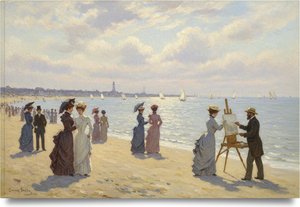
Eugène Boudin: Capturing Fleeting Moments – A Study of Light, Atmosphere & the Birth of Impressionism
Explore the life & art of Eugène Boudin, a pioneer of plein air painting and key influence on Impressionism. Discover his masterful light studies & atmospheric seascapes – a foundational figure in modern art history.
Evoking the Horizon: A Historical & Artistic Exploration of Coastal Scenes in Painting
Explore the rich history of coastal scenes in painting! Discover Impressionist masterpieces, American realism & contemporary visions. Learn about renowned artists and find your perfect seascape at OriginalUniqueArt.


