

 Podgląd w skali 1:1
 Wyślij jako kartkę
 Udostępnij
 Szczegóły dzieła
 Przewodnik

 Pobierz obraz
 Podobne obiekty
 RTG
RTG Pokaz slajdów
 Statystyki
Old Church in Delft
 Oil On Canvas
- WallArt
- Dutch Baroque
 1642
1642- Early Modern
 95.0 x 82.0 cm
 Muzeum Ermitażu
 Rozwiń treść
Giclée / Wydruk artystyczny
Wydruki giclée lub płótna o jakości muzealnej, szybka realizacja i szeroki wybór opcji wykończenia. ( Zamów ręcznie malowaną reprodukcję Przejdź do wersji cyfrowej)




P118B zł10

P118H zł10

P118W zł10

P438Z zł10

P508JH zł12

P508YH zł12

P805H zł10

P805Z zł10

P919BZ zł10

P919G zł10

P919XJ zł10

P959ZH zł10

P968JZ zł12

W106C zł8

W218G zł10

W218JH zł8

W218Y zł10

W307PJ zł10

W316G zł10

W316PJ zł8

W316Y zł10

W398PJ zł8

W4111J zł10

W500HY zł15

W500JH zł15

W692G zł12

W849H zł8

W940BG zł15

W953PJ zł8




Wybierz spośród naszych standardowych rozmiarów, które zachowują oryginalne proporcje dzieła sztuki.

Wpisz wymaganą szerokość i wysokość, aby dopasować grafikę do ramy lub ściany. Wydruk można jedynie przyciąć, nigdy nie powiększając go poza oryginalny obraz, dlatego format o innych proporcjach spowoduje utratę części kompozycji. Przed rozpoczęciem druku prześlemy Ci cyfrowy podgląd do zatwierdzenia. Obraz wyświetlany na tej stronie nie pokazuje rzeczywistego przycięcia — jedynie podgląd oddaje ten efekt.
Dostawa na cały świat () w ciągu 2 tygodni zamiast standardowych 4/5 tygodni. (26 Październik)

Bezpłatna ekspresowa wysyłka na cały świat

Wysokiej jakości płótno lniane

Pełne ubezpieczenie przesyłki

Gwarancja zwrotu należności celnych i podatków importowych

Gwarancja wiernego odwzorowania kolorów

100-dniowa polityka zwrotów (tylko w przypadku wad)

Gwarancja 100% zwrotu pieniędzy

Zniżka przy zakupie wielu sztuk
 Opcja ze szkłem jest dostępna wyłącznie w rozmiarach poniżej 110 cm

Old Church in Delft
Giclée / Wydruk artystyczny
Wymiary reprodukcji
-


Cena całkowita
zł 307
A Breathless Reverie: The Luminous Soul of Delft
In the quiet corners of the Dutch Golden Age, where light performs its most delicate dances, Emanuel de Witte captured something far more profound than mere architecture. His masterpiece, Old Church in Delft, is not simply a record of stone and mortar; it is an invitation into a sacred stillness. While his contemporaries like Pieter Saenredam sought the rigorous precision of architectural truth, De Wiente embarked on a different journey—one of atmosphere and emotion. To stand before this canvas is to enter a world where the boundaries between the physical structure of the Oude Kerk and the spiritual essence of prayer begin to dissolve. The painting breathes with a palpable sense of peace, inviting the viewer to lose themselves in the soft, filtered light that spills through the Gothic windows, illuminating the dust motes of history.
The composition serves as a masterclass in the art of illusionism, a hallmark of De Witte’s unparalleled skill. Through the masterful application of chiaroscuro, he sculpts the vast interior space using nothing but the interplay of deep shadow and brilliant highlights. The eye is drawn through the expansive nave, guided by the rhythmic placement of light that catches the edges of white pillars and the subtle textures of the floor. De Witte does not merely depict a room; he constructs a three-dimensional experience. His brushwork, though remarkably subtle, possesses a decisive strength that lends a profound realism to the scene, making the heavy weight of the Gothic arches feel as tangible as the air itself.
The Human Element and the Drama of Light
Within this grand architectural stage, De Witte introduces a delicate human narrative. Scattered throughout the vastness of the church are small, carefully placed figures—individuals caught in moments of quiet contemplation or casual movement. These figures are not mere decorations; they provide the essential scale necessary to grasp the monumental height of the cathedral's tower and the soaring reaches of its ceiling. Their presence imbues the scene with a sense of lived history, suggesting that these hallowed halls have been the silent witnesses to generations of human hope, grief, and devotion. The way the light falls upon their forms—sometimes highlighting a shoulder, sometimes leaving a face in soft shadow—adds a layer of narrative mystery that keeps the viewer’s gaze wandering through the composition.
For the discerning collector or interior designer, Old Church in Delft offers much more than aesthetic beauty; it offers an atmosphere of timelessness. The painting’s palette, dominated by muted tones, whites, and deep, resonant shadows, provides a sophisticated anchor for any high-end interior. It possesses a unique ability to command attention through its quietude rather than through loud colors. Whether placed in a sunlit gallery or a moody, library-style study, this work brings with it an aura of intellectual depth and spiritual grace. Owning a reproduction of such a piece is an opportunity to curate a space that celebrates the enduring power of light, history, and the sublime beauty of the Dutch Baroque tradition.
Pytania i odpowiedzi
Co przedstawia i jaką atmosferę oddaje „Old Church in Delft” – Emanuel De Witte?
„Old Church in Delft” – Emanuel De Witte przedstawia church interior, dutch art, religious painting, baroque light, architectural detail, delft cathedral, 17th century, wprowadzając Calm nastrój. Tematyka i atmosfera wspólnie definiują to dzieło.
Jaką kolorystykę wykorzystuje "Old Church in Delft"?
Kolory dzieła "Old Church in Delft" tworzą Earthy paletę barw. Klasyfikacja ta opisuje dominujące rodziny kolorystyczne.
Czy obraz „Old Church in Delft” – Emanuel De Witte można swobodnie reprodukować?
„Old Church in Delft” – Emanuel De Witte znajduje się w domenie publicznej (należy do domeny publicznej – autorskie prawa majątkowe wygasły). Status ten określa zasady reprodukcji obrazu tego dzieła.
Biografia artysty
A Life in Perspective: The World of Emanuel de Witte
Emanuel de Witte, a name perhaps less instantly recognizable than some of his Dutch Golden Age contemporaries, nevertheless occupies a significant and fascinating niche within the pantheon of 17th-century masters. Born in Alkmaar in 1617, De Witte’s artistic journey was one marked by both remarkable talent and considerable personal turmoil – a duality that seems to subtly infuse itself into the very atmosphere of his paintings. He wasn't driven by meticulous architectural documentation like Pieter Saenredam; instead, he sought to capture the *feeling* of space, the quality of light, and the subtle drama unfolding within sacred interiors. His canvases aren’t merely representations of churches; they are immersive experiences, inviting viewers into a world of quiet contemplation and spiritual resonance.From Delft Training to Amsterdam's Embrace
De Witte’s early life provided a solid foundation for his artistic pursuits. His father, a schoolmaster, instilled in him an appreciation for learning and intellectual curiosity – qualities that would later manifest in his careful observation of perspective and light. He formally entered the art world by joining the Guild of St Luke in Alkmaar in 1636, but it was his subsequent apprenticeship with Evert van Aelst in Delft that proved particularly formative. Van Aelst, a renowned still-life painter, imparted to De Witte a keen eye for detail and a masterful command of light and shadow – skills that would become hallmarks of his mature style. Initially, De Witte explored various genres—portraits, mythological scenes, religious narratives—but it was upon relocating to Amsterdam in 1651 that he truly found his calling. The city’s wealth of magnificent churches provided an inexhaustible source of inspiration, and he began to specialize in depicting their awe-inspiring interiors. He didn't simply replicate existing church spaces; rather, he skillfully synthesized elements from different buildings, creating idealized interiors that felt both familiar and subtly otherworldly.Master of Atmosphere and Imaginary Spaces
Amsterdam proved pivotal for De Witte's artistic development. He didn’t just paint what he saw; he painted *how* it felt to be in those spaces. The Oude Kerk in Amsterdam became a frequent subject, appearing repeatedly on his canvases from various vantage points. But these weren’t straightforward depictions. De Witte manipulated perspective, played with light and shadow, and populated the spaces with carefully arranged figures – often anonymous worshippers – to evoke a specific mood or atmosphere. As Walter Liedtke noted, his primary interest lay not in the architecture itself but in “the space itself – its light, color, sheer extent, and mood.” This emphasis on atmospheric effect distinguishes him from more rigidly topographical painters of the era. He wasn’t concerned with precise accuracy; he was interested in creating a *feeling* of grandeur, reverence, and spiritual depth. His paintings are filled with a sense of quiet solemnity, as if one were stepping into a sacred space themselves.The Influence of Light and Perspective
De Witte's technique was deceptively simple yet profoundly effective. He often employed a limited palette – predominantly browns, grays, and ochres – to create a sense of muted depth and atmosphere. He meticulously studied the effects of light filtering through stained glass windows, casting dramatic shadows and highlighting architectural details. His use of perspective wasn't always mathematically precise; he sometimes exaggerated certain elements to heighten the emotional impact of the scene. He frequently used *chiaroscuro* – the contrast between light and dark – to draw the viewer’s eye to key figures or focal points within the composition. This masterful manipulation of light and perspective is what truly sets his work apart, transforming ordinary churches into extraordinary realms of spiritual contemplation.A Life Marked by Shadows
Despite his artistic success, De Witte's personal life was plagued by hardship. The death of his first wife brought profound grief, and subsequent legal troubles involving his second wife and daughter cast a long shadow over his later years. Financial difficulties led him to the humiliating position of indentured servitude to an art dealer, Joris de Wijs, a situation he ultimately breached, leading to further complications. Contemporary accounts paint a picture of a volatile temperament – a man prone to shouting at clients and engaging in disputes. This inner turmoil perhaps contributed to the unevenness of his later work, but it also adds another layer of complexity to our understanding of the artist and his creations. Tragically, De Witte’s life came to a devastating end in 1692 when he reportedly attempted suicide by hanging himself from a canal bridge; the rope broke, and he drowned. It was a grim finale for a man who had dedicated his life to capturing the beauty and serenity of sacred spaces.Legacy and Enduring Influence
Emanuel de Witte stands as an important figure in the last phase of architectural painting in the Netherlands, bridging the gap between meticulous documentation and atmospheric interpretation. His innovative use of light and perspective influenced subsequent generations of artists, and his paintings continue to offer valuable insights into 17th-century Dutch religious life and social customs. Today, works by De Witte are held in prestigious collections worldwide – at the Metropolitan Museum of Art, the National Gallery of Art, and the Rijksmuseum, among others—testifying to his enduring legacy as a master of perspective, atmosphere, and emotional resonance. He reminds us that art is not merely about what we see but how we *feel* when we look.
Emanuel De Witte
1617 - 1692 , Holandia
Krótka nota
- Artistic Movement Or Style: Barok
- Artists Or Movements Influenced By This Artist: ['Późniejsi artyści']
- Artists Who Influenced This Artist: ['Evert van Aelst']
- Date Of Birth: 1617
- Date Of Death: 1692
- Full Name: Emanuel de Witte
- Nationality: Holenderski
- Notable Artworks:
- Oude Kerk Amsterdam
- Wnętrze kościoła
- Place Of Birth: Alkmaar, Holandia
Powiązane artykuły

Holenderski Barok: 10 Arcydzieł, Które Zdefiniowały Epokę | OriginalUniqueArt
Poznaj 10 arcydzieł holenderskiego baroku! Odkryj historie Rembrandta, Vermeera i innych mistrzów XVII wieku. Reprodukcje obrazów najwyższej jakości – idealne do Twojego wnętrza. OriginalUniqueArt.com

Francisco Goya: 25 Arcydzieł Genialnego Malarza Hiszpańskiego | OriginalUniqueArt.pl
Odkryj 25 arcydzieł Francisco Goyi – od portretów królewskich po dramatyczne 'Czarne Malowidła'. Poznaj historię, technikę i emocje hiszpańskiego mistrza. Reprodukcje obrazów najwyższej jakości na OriginalUniqueArt.com! Eksploruj kolekcję online.

Barokowy Dramat we Wnętrzach: Sztuka Przepychu i Elegancji w Twoim Domu
Odkryj świat barokowego przepychu! Porady ekspertów jak wprowadzić elegancję i dramat do Twojego wnętrza. Inspiracje, charakterystyka stylu i praktyczne wskazówki.
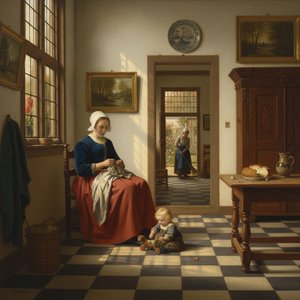
Pieter de Hooch: Illuminating Dutch Domestic Life & Golden Age Charm
Explore the captivating world of Pieter de Hooch, a master of Dutch Golden Age painting. Discover his innovative use of light, intimate domestic scenes, and lasting influence on art history. Learn more at OriginalUniqueArt.

Złoty Wiek Niderlandów: Światło, Realizm i Kulturowe Innowacje w Malarstwie Barokowym
Odkryj fascynujący świat malarstwa holenderskiego Złotego Wieku! Poznaj arcydzieła Rembrandta, Vermeera i innych mistrzów. Analiza technik, gatunków i wpływu na sztukę europejską.