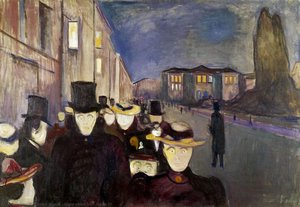
Wersja olejowa
 Wszystko o Comfort







































 W przypadku dzieł sztuki lub reprodukcji, których którykolwiek z boków przekracza 105 cm (około 41 cali), rama zostanie wysłana w formie zestawu do samodzielnego montażu. Metoda ta zapewnia bezpieczną dostawę i zapobiega uszkodzeniom podczas transportu.


Comfort: A Portrait of Vulnerability and Shared Sorrow
Edvard Munch’s *Comfort* stands as a poignant emblem of Symbolism, capturing the profound depths of human emotion with remarkable precision. Painted in 1907 during Munch's formative years as an Expressionist artist, this oil on canvas masterpiece transcends mere representation; it delves into the realm of psychological introspection and communicates a palpable sense of intimacy—a characteristic found also in his celebrated works like *The Scream* and *The Sick Child*. Munch’s distinctive style, honed through relentless experimentation with color and brushstroke, continues to resonate powerfully with audiences globally.
- Subject Matter: The painting depicts two figures seated close together—a woman on the left and a man on the right—engaged in an act of solace. Their postures convey tenderness and concern, reflecting a desire for mutual support amidst unspoken anxieties.
- Style & Technique: Munch’s approach aligns squarely with Symbolism's core tenets: prioritizing emotional truth over literal depiction. Bold colors – predominantly muted reds and yellows – dominate the palette, creating an atmosphere of subdued intensity. Loose, expressive brushstrokes contribute to a textural surface that embodies movement and conveys the palpable weight of emotion.
- Historical Context: Created during a period marked by significant artistic upheaval—the burgeoning Expressionist movement—*Comfort* reflects the broader preoccupation with psychological realism prevalent in European art at the time. Munch’s work responded directly to anxieties surrounding illness, mortality, and the fragility of human relationships – themes that mirrored the societal concerns of his era.
Symbolism's Language: Beyond Surface Appearance
Munch’s Symbolist vision eschews conventional realism in favor of conveying universal truths through symbolic imagery. The woman’s gaze directs towards the man, symbolizing a yearning for reassurance and connection—a visual representation of vulnerability and shared sorrow. The muted color scheme isn't merely decorative; it underscores the subdued emotional landscape depicted, mirroring the internal struggles experienced by both figures.
Consider Munch’s broader artistic influences: Expressionism championed subjective experience as paramount, prioritizing emotion over objective observation. Artists like Ernst Ludwig Kirchner and Emil Nolde similarly explored psychological states through distorted forms and jarring color combinations—a stylistic lineage that cemented Munch's legacy as a pioneer of emotional art.
A Legacy Enduring Inspiration
*Comfort*’s enduring appeal stems from its ability to tap into fundamental human emotions – compassion, empathy, and the desire for connection. It resides within the Thielska Galleriet in Sweden, showcasing Munch's artistic evolution and cementing his place as one of Norway’s most influential artists. His exploration of psychological themes continues to inspire contemporary creatives, demonstrating the timeless relevance of Symbolism’s expressive power.
For exquisite handmade oil painting reproductions of Edvard Munch’s *Comfort*, please visit OriginalUniqueArt.com.
Pytania i odpowiedzi
Czy Comfort jest dziełem namalowanym ręcznie, czy wydrukiem?
Malowane ręcznie: wykwalifikowany artysta wykonuje olejną kopię Comfort na płótnie lnianym.
Jaki rozmiar wybrać dla Comfort?
Dostępne rozmiary obejmują zakres od 28.4 x 35.3 cm (zł782) do 197.1 x 245.2 cm (zł6928); tabela na tej stronie przedstawia główne warianty oraz ich ceny.
Ile trwa dostawa?
Czas dostawy wynosi od 4 do 5 tygodni, przy czym oferujemy bezpłatną ekspresową wysyłkę na cały świat; na tej stronie dostępna jest również opcja pilnej produkcji. Możesz dokonać zwrotu w ciągu 100 dni z pełnym zwrotem kosztów, bez żadnych dodatkowych warunków.
Gdzie znajduje się oryginał Comfort?
Oryginał znajduje się w zbiorach Munch Museum w Oslo.
Jakiej techniki użył/a Edvard Munch w pracy Comfort?
Acrylic On Canvas
 Podgląd w skali 1:1

 Wyślij jako kartkę
 Udostępnij
 Szczegóły dzieła
 Karta informacyjna


 Pobierz obraz
 Podobne obiekty
 RTG
 Pokaz slajdów
 Pytania i odpowiedzi

 Statystyki