Wersja olejowa
 Wszystko o Kupid i Psyche







































 W przypadku dzieł sztuki lub reprodukcji, których którykolwiek z boków przekracza 105 cm (około 41 cali), rama zostanie wysłana w formie zestawu do samodzielnego montażu. Metoda ta zapewnia bezpieczną dostawę i zapobiega uszkodzeniom podczas transportu.


Introduction to Cupid and Psyche
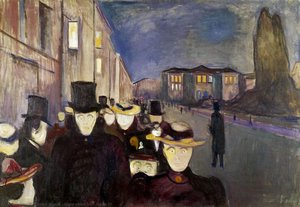
Edvard Munch’s “Cupid and Psyche” stands as a cornerstone of Expressionism, capturing the turbulent emotional landscape of its time with breathtaking immediacy. Painted in 1907 during Munch's Berlin period, this oil on canvas transcends mere depiction; it embodies a profound exploration of psychological states—love, fear, vulnerability—rendered through Munch’s signature style characterized by bold colors and agitated brushstrokes. The artwork delves into the mythic tale of Cupid and Psyche, recounting the arduous journey of love overcoming obstacles and achieving ultimate union. Munch's masterful use of color – predominantly reds and yellows – amplifies the emotional intensity, mirroring the passionate fervor and underlying anxieties that permeate the scene.- Style: Expressionism
- Medium: Oil on Canvas
- Dimensions: Unknown
- Date: 1907
About Edvard Munch
Edvard Munch (1863-1944) was a Norwegian painter and printmaker whose artistic vision profoundly influenced the Expressionist movement. Haunted by personal tragedies—the early deaths of his mother and sister from tuberculosis—Munch wrestled with themes of mortality, illness, and psychological torment throughout his life. This preoccupation fueled his relentless pursuit of capturing inner experience on canvas, rejecting Impressionistic objectivity in favor of subjective emotion. His iconic “The Scream,” arguably the most recognizable image of modern art, solidified Munch’s reputation as a pioneer of psychological realism and cemented his legacy as one of the foremost artists of the 20th century. Munch's distinctive technique—characterized by swirling lines and distorted forms—served as an inspiration for countless subsequent artists.Analysis of Cupid and Psyche
Munch’s “Cupid and Psyche” isn’t simply a retelling of a classical myth; it’s a visceral portrayal of the emotional complexities inherent in romantic love. The composition is deliberately unsettling, prioritizing expressive gesture over precise representation. Two figures dominate the canvas—Psyche, bathed in warm yellow light, leans against Cupid, whose crimson cloak signifies passion and desire. Munch employs a technique that prioritizes texture and color to convey emotion rather than visual accuracy. Thick impasto strokes create a palpable sense of movement and instability, mirroring Psyche’s apprehension as she awaits her beloved. The stark contrast between the luminous Psyche and the shadowed Cupid underscores the vulnerability of love amidst fear and uncertainty.- Color Palette: Dominantly Reds and Yellows
- Technique: Impasto (Thick Paint Application)
- Composition: Dynamic Arrangement Emphasizing Emotion
Where to Buy Hand-Made Oil Paintings Reproductions
If you’re captivated by Munch's evocative vision of Cupid and Psyche, consider adorning your home with a stunning hand-painted reproduction. OriginalUniqueArt.com offers exceptional quality reproductions crafted by skilled artists who meticulously recreate Munch’s masterful technique and vibrant color palette. Explore the expressive power of Expressionism through our curated collection—a testament to Munch's enduring influence on art history. You can also discover other captivating artworks from Expressionist masters like Saeki Yūzō at OriginalUniqueArt.com.Pytania i odpowiedzi
Czy Kupid i Psyche jest dziełem namalowanym ręcznie, czy wydrukiem?
Malowane ręcznie: wykwalifikowany artysta wykonuje olejną kopię Kupid i Psyche na płótnie lnianym.
Jaki rozmiar wybrać dla Kupid i Psyche?
Dostępne rozmiary obejmują zakres od 35.4 x 28.2 cm (zł782) do 246.4 x 196.2 cm (zł6928); tabela na tej stronie przedstawia główne warianty oraz ich ceny.
Ile trwa dostawa?
Czas dostawy wynosi od 4 do 5 tygodni, przy czym oferujemy bezpłatną ekspresową wysyłkę na cały świat; na tej stronie dostępna jest również opcja pilnej produkcji. Możesz dokonać zwrotu w ciągu 100 dni z pełnym zwrotem kosztów, bez żadnych dodatkowych warunków.
Jakiej techniki użył/a Edvard Munch w pracy Kupid i Psyche?
Akryl na płótnie
 Podgląd w skali 1:1

 Wyślij jako kartkę
 Udostępnij
 Szczegóły dzieła
 Karta informacyjna


 Pobierz obraz
 Podobne obiekty
 RTG
 Pokaz slajdów
 Pytania i odpowiedzi

 Statystyki