
 Podgląd w skali 1:1
 Wyślij jako kartkę
 Udostępnij
 Szczegóły dzieła
 Przewodnik

 Pobierz obraz
 Podobne obiekty
 RTG
RTG Pokaz slajdów
 Q&A
Q&A Statystyki
Portrait of Anthony de Wale

- 71.0 x 60.0 cm


 Rozwiń treść
Giclée / Wydruk artystyczny
Wydruki giclée lub płótna o jakości muzealnej, szybka realizacja i szeroki wybór opcji wykończenia. ( Zamów ręcznie malowaną reprodukcję Przejdź do wersji cyfrowej)




P118B zł10

P118H zł10

P118W zł10

P438Z zł10

P508JH zł12

P508YH zł12

P805H zł10

P805Z zł10

P919BZ zł10

P919G zł10

P919XJ zł10

P959ZH zł10

P968JZ zł12

W106C zł8

W218G zł10

W218JH zł8

W218Y zł10

W307PJ zł10

W316G zł10

W316PJ zł8

W316Y zł10

W398PJ zł8

W4111J zł10

W500HY zł15

W500JH zł15

W692G zł12

W849H zł8

W940BG zł15

W953PJ zł8




Wybierz spośród naszych standardowych rozmiarów, które zachowują oryginalne proporcje dzieła sztuki.

Wpisz wymaganą szerokość i wysokość, aby dopasować grafikę do ramy lub ściany. Wydruk można jedynie przyciąć, nigdy nie powiększając go poza oryginalny obraz, dlatego format o innych proporcjach spowoduje utratę części kompozycji. Przed rozpoczęciem druku prześlemy Ci cyfrowy podgląd do zatwierdzenia. Obraz wyświetlany na tej stronie nie pokazuje rzeczywistego przycięcia — jedynie podgląd oddaje ten efekt.
Dostawa na cały świat () w ciągu 2 tygodni zamiast standardowych 4/5 tygodni. (31 Październik)

Bezpłatna ekspresowa wysyłka na cały świat

Wysokiej jakości płótno lniane

Pełne ubezpieczenie przesyłki

Gwarancja zwrotu należności celnych i podatków importowych

Gwarancja wiernego odwzorowania kolorów

100-dniowa polityka zwrotów (tylko w przypadku wad)

Gwarancja 100% zwrotu pieniędzy

Zniżka przy zakupie wielu sztuk
 Opcja ze szkłem jest dostępna wyłącznie w rozmiarach poniżej 110 cm

Portrait of Anthony de Wale
Giclée / Wydruk artystyczny
Wymiary reprodukcji
-


Cena całkowita
zł 311
A Window into 17th Century Dutch Society: The Portrait of Anthony de Wale
David Bailly’s “Portrait of Anthony de Wale,” painted in 1636, is more than just a likeness; it's a meticulously crafted window into the world of 17th-century Holland. Housed within the esteemed Rijksmuseum in Amsterdam, this oil painting on panel offers a profound glimpse into the life and aspirations of a prominent figure – Anthony de Wale, a theologian at Leiden University. Bailly’s skill isn’t merely technical; it's evident in his ability to imbue the subject with an aura of quiet contemplation, inviting the viewer into a private moment of reflection.
(Image: Portrait of Anthony de Wale by David Bailly)
The Baroque Embrace: Light, Shadow, and Symbolism
Bailly’s masterful command of the Baroque technique is immediately apparent. The painting utilizes a dramatic chiaroscuro – a stark contrast between light and shadow – to create a palpable sense of depth and three-dimensionality. This isn't simply about depicting form; it’s about evoking emotion. Notice how the soft illumination focuses on de Wale’s face, highlighting his serious expression and drawing our attention to his gaze, directed squarely at the viewer. This direct engagement fosters a feeling of intimacy, as if he is sharing a private thought.
Beyond the technical brilliance, the painting is rich in symbolism. De Wale's holding of a small book or manuscript – a clear reference to scholarly pursuits – speaks volumes about his status and intellectual standing within society. The choice of black robe with a white collar further emphasizes his position of authority and respectability. The inclusion of elements like the subtle suggestion of a skull (often found in vanitas paintings, though not overtly present here) hints at the fleeting nature of earthly existence – a common theme explored by Bailly during this period.
David Bailly: A Master of Detail and Dutch Golden Age Portraiture
David Bailly was a pivotal figure in the Dutch Golden Age art scene. Born in Leiden in 1584, his artistic journey began under the tutelage of his father, a calligrapher and fencing master, and later with skilled craftsmen like Jacques de Gheyn II and Cornelius van der Voort. His travels to Italy during the winter of 1608 – a ‘Grand Tour’ that exposed him to the innovations of the Roman artistic tradition – profoundly shaped his style. Bailly's portraits are characterized by their remarkable detail, capturing not just physical appearance but also personality and social standing. He was particularly renowned for his vanitas paintings, exploring themes of mortality and the transience of life with a poignant sensitivity.
Bringing Bailly’s Vision Home: High-Quality Reproductions
OriginalUniqueArt offers exquisite, hand-painted reproductions of “Portrait of Anthony de Wale,” allowing you to experience the artistry and historical significance of this masterpiece in your own home. Each reproduction meticulously recreates Bailly's use of light, shadow, and symbolic detail, ensuring an authentic representation of the original painting. To explore more about David Bailly’s life and work, we encourage you to visit Wikipedia (https://en.wikipedia.org/wiki/David_Bailly) or delve deeper into the Rijksmuseum's collection at /art/list/?Filter=A@D3BLAV-The-Rijksmuseum-Amsterdam-Netherlands. And for a closer look, you can view the painting on Google Arts & Culture: https://artsandculture.google.com/asset/portrait-of-anthony-de-wale-1573-1639-bailly-david/igFvXK0N0j51rw?hl=en.
Pytania i odpowiedzi
Jaką kolorystykę wykorzystuje "Portrait of Anthony de Wale"?
Kolory dzieła "Portrait of Anthony de Wale" tworzą Earthy paletę barw. Klasyfikacja ta opisuje dominujące rodziny kolorystyczne.
Jaki kolor dominuje w kompozycji „Portrait of Anthony de Wale” – David Bailly?
Dominującym kolorem dzieła „Portrait of Anthony de Wale” – David Bailly jest Phthalo Green (#302c25).
W którym roku powstało dzieło "Portrait of Anthony de Wale"?
Powstanie „Portrait of Anthony de Wale” – David Bailly datuje się na 1636.
Biografia artysty
David Bailly: A Life in Dutch Golden Age Art
Early Life and Training (1584-1608)
- Birth and Family: David Bailly was born in Leiden, Netherlands, in 1584. His father, Peter Bailly, was a Flemish immigrant who worked as a calligrapher and fencing master.
- Early Artistic Education: He initially received drawing instruction from his father and the copper engraver Jacques de Gheyn. This foundational training instilled in him a strong draftsmanship.
- Apprenticeships: Bailly further honed his skills through apprenticeships with Adriaan Verburg, a surgeon-painter in Leiden, and Cornelius van der Voort, a portrait painter in Amsterdam. These experiences exposed him to different artistic techniques and subject matter.
The Grand Tour and Early Career (1608-1613)
- Continental Travels: In the winter of 1608, Bailly embarked on a ‘Grand Tour,’ traveling through Frankfurt, Nuremberg, Augsburg, Hamburg, Tyrol, and Venice before reaching Rome. This journey was crucial for his artistic development.
- Italian Influence: He spent five months in Venice working as a journeyman, absorbing the influences of Italian Renaissance and Venetian art. His return voyage included commissions from German princes, including the Duke of Brunswick.
Artistic Development and Style (1613-1657)
- Diverse Subject Matter: Upon returning to the Netherlands in 1613, Bailly began painting a variety of subjects, including still lifes and portraits. He became known for his self-portraits and depictions of students and professors at the University of Leiden.
- Vanitas Paintings: A significant portion of his oeuvre consists of *vanitas* paintings – symbolic works that reflect on the transience of life, often featuring flowers, candles, and other ephemeral objects. These paintings demonstrate a philosophical depth alongside artistic skill.
- Portraiture Style: His portrait style is characterized by realism and attention to detail, capturing the likenesses and personalities of his sitters with sensitivity.
Major Achievements and Guild Membership
- Guild Leadership: In 1648, Bailly was elected headman of the Leiden Guild of St. Luke, a testament to his standing within the artistic community.
- Teaching Legacy: He served as a teacher and mentor to his nephews, Harmen and Pieter Steenwijck, passing on his knowledge and skills to the next generation.
Influences and Historical Significance
- Artistic Influences: Bailly was influenced by the Italian masters he encountered during his Grand Tour, as well as by Dutch predecessors in portraiture and still life painting.
- Impact on Dutch Art: He contributed to the flourishing of art during the Dutch Golden Age, particularly through his insightful *vanitas* paintings that reflected the era’s preoccupation with mortality and spirituality.
- Legacy: While not as widely recognized today as some of his contemporaries, David Bailly remains an important figure in the history of Dutch art, representing a blend of technical skill, intellectual depth, and artistic innovation.

David Bailly
1584 - 1657 , Netherlands
Krótka nota
- Name: David Bailly
- Movement: Dutch Golden Age painting
- Birth Date: 1584
- Death Date: 1657
- Influenced:
- Harmen Steenwijck
- Pieter Steenwijck
- Birth Place: Leiden, Netherlands
- Nationality: Dutch
- Date Of Birth: 1584
- Date Of Death: 1657
- Influenced By:
- Adriaan Verburg
- Cornelius van der Voort
- Jacques de Gheyn
- Notable Works:
- Self-Portrait with Vanitas Symbols
- Portrait of Anthony de Wale
- Place Of Birth: Leiden, Netherlands
Powiązane artykuły

O nas
Odkryj naszą historię! Wprowadzamy światowej klasy sztukę do Twojego życia dzięki starannie dobranym dziełom, personalizowanym kreacjom i bezpłatnym podglądom. Cenione przez osoby prywatne i firmy od 2000 roku.

Francisco Goya: 25 Arcydzieł Genialnego Malarza Hiszpańskiego | OriginalUniqueArt.pl
Odkryj 25 arcydzieł Francisco Goyi – od portretów królewskich po dramatyczne 'Czarne Malowidła'. Poznaj historię, technikę i emocje hiszpańskiego mistrza. Reprodukcje obrazów najwyższej jakości na OriginalUniqueArt.com! Eksploruj kolekcję online.

Złoty Wiek Niderlandów: Światło, Realizm i Kulturowe Innowacje w Malarstwie Barokowym
Odkryj fascynujący świat malarstwa holenderskiego Złotego Wieku! Poznaj arcydzieła Rembrandta, Vermeera i innych mistrzów. Analiza technik, gatunków i wpływu na sztukę europejską.
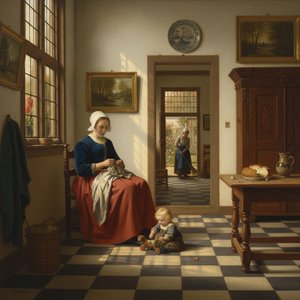
Pieter de Hooch: Illuminating Dutch Domestic Life & Golden Age Charm
Explore the captivating world of Pieter de Hooch, a master of Dutch Golden Age painting. Discover his innovative use of light, intimate domestic scenes, and lasting influence on art history. Learn more at OriginalUniqueArt.

Holenderski Barok: 10 Arcydzieł, Które Zdefiniowały Epokę | OriginalUniqueArt
Poznaj 10 arcydzieł holenderskiego baroku! Odkryj historie Rembrandta, Vermeera i innych mistrzów XVII wieku. Reprodukcje obrazów najwyższej jakości – idealne do Twojego wnętrza. OriginalUniqueArt.com