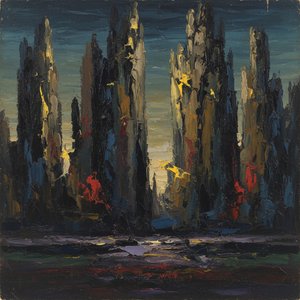
Wersja olejowa
 Wszystko o PH-4







































 W przypadku dzieł sztuki lub reprodukcji, których którykolwiek z boków przekracza 105 cm (około 41 cali), rama zostanie wysłana w formie zestawu do samodzielnego montażu. Metoda ta zapewnia bezpieczną dostawę i zapobiega uszkodzeniom podczas transportu.


A Vision of Architectural Grandeur
In the evocative painting PH-4, created in 1952, we are transported to a scene of profound structural presence and historical weight. At first glance, the eye is immediately drawn to the central protagonist of the composition: a magnificent red building crowned by a soaring tower. This architectural marvel, rendered with a sense of permanence, appears forged from rugged brick and stone, suggesting a legacy that has weathered the passage of time. The artist employs a masterful use of depth, allowing the central tower to pierce the sky, creating a vertical tension that commands the viewer's attention. As the gaze wanders beyond this primary structure, smaller buildings emerge in the background, their similar textures and earthy tones providing a vital sense of scale and communal context. This is not merely a depiction of a single monument, but a window into a larger, breathing landscape where architecture and atmosphere intertwines.
The technique employed in PH-4 reflects a meticulous attention to detail that elevates the work from simple representation to a visceral experience. The interplay of light and shadow across the textured surfaces of the masonry creates a palpable sense of three-dimensionality, making the stone feel heavy and the brickwork feel tactile. Through subtle gradations of color, the artist captures the way light interacts with the rugged facades, lending a luminous quality to the scene. This careful application of pigment ensures that every crevice and edge contributes to the overall structural integrity of the painting. For the discerning collector or interior designer, this piece offers a sophisticated balance of texture and tone, making it an ideal centerpiece for spaces that value classical strength paired with modern aesthetic depth.
The Spirit of Abstract Expressionism and Form
While the subject matter of PH-4 presents a recognizable architectural scene, it is deeply informed by the broader artistic movements of its era. Created during the height of the mid-century period, the work carries the DNA of Clyfford Still’s revolutionary approach to form and space. Although the painting possesses a figurative element through its buildings, the way the shapes are organized suggests a profound interest in the monumental and the elemental. The composition avoids traditional perspective in favor of a more layered, almost sculptural arrangement of masses. This creates an emotional impact that is both grounding and awe-inspiring; the viewer does not just look at the building, but feels the weight and the silent dignity of its existence.
For those looking to integrate fine art into a curated interior, PH-4 serves as a bridge between the historical and the contemporary. Its palette of deep reds, earthy browns, and atmospheric sky tones provides a warm yet commanding presence that can anchor a room. Whether placed in a minimalist gallery setting or a richly textured study, the painting invites contemplation on themes of stability, endurance, and the human impulse to build upward toward the infinite. It is a piece that does not merely decorate a wall but enriches the very soul of the environment it inhabits.
Pytania i odpowiedzi
Czy PH-4 jest dziełem namalowanym ręcznie, czy wydrukiem?
Malowane ręcznie: wykwalifikowany artysta wykonuje olejną kopię PH-4 na płótnie lnianym.
Jaki rozmiar wybrać dla PH-4?
Dostępne rozmiary obejmują zakres od 35.7 x 28.0 cm (zł784) do 247.9 x 194.9 cm (zł6942); tabela na tej stronie przedstawia główne warianty oraz ich ceny.
Ile trwa dostawa?
Czas dostawy wynosi od 4 do 5 tygodni, przy czym oferujemy bezpłatną ekspresową wysyłkę na cały świat; na tej stronie dostępna jest również opcja pilnej produkcji. Możesz dokonać zwrotu w ciągu 100 dni z pełnym zwrotem kosztów, bez żadnych dodatkowych warunków.
Jakiej techniki użył/a Clyfford Still w pracy PH-4?
Oil On Canvas
 Podgląd w skali 1:1

 Wyślij jako kartkę
 Udostępnij
 Szczegóły dzieła
 Karta informacyjna


 Pobierz obraz
 Podobne obiekty
 RTG
 Pokaz slajdów
 Pytania i odpowiedzi

 Statystyki