1952
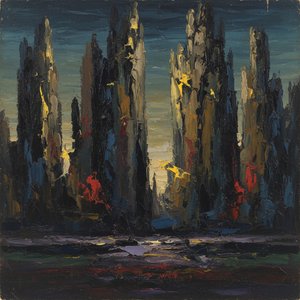
PH-4 (Clyfford Still, 1952)
Clyfford Still (1904–1980) stworzył PH-4. Dzieło pochodzi z 1952. Wykonano w technice Oil On Canvas.
- 1952
- Oil On Canvas

 Podgląd w skali 1:1

 Ręcznie malowany obraz olejny
 Wyślij jako kartkę
 Udostępnij
 Karta informacyjna


 Pobierz obraz
 Podobne obiekty
 RTG
 Pokaz slajdów
 Pytania i odpowiedzi

 Statystyki
PH-4 w skrócie
- Tytuł
- PH-4
- Artysta
- Clyfford Still (1904–1980)
- Miejsce urodzenia artysty
- Grandin, Stany Zjednoczone
- Data powstania
- 1952
- Technika wykonania
- Oil On Canvas
- Epoka
- Modern
Co przedstawia PH-4?
A Vision of Architectural Grandeur
In the evocative painting PH-4, created in 1952, we are transported to a scene of profound structural presence and historical weight. At first glance, the eye is immediately drawn to the central protagonist of the composition: a magnificent red building crowned by a soaring tower. This architectural marvel, rendered with a sense of permanence, appears forged from rugged brick and stone, suggesting a legacy that has weathered the passage of time. The artist employs a masterful use of depth, allowing the central tower to pierce the sky, creating a vertical tension that commands the viewer's attention. As the gaze wanders beyond this primary structure, smaller buildings emerge in the background, their similar textures and earthy tones providing a vital sense of scale and communal context. This is not merely a depiction of a single monument, but a window into a larger, breathing landscape where architecture and atmosphere intertwines.
The technique employed in PH-4 reflects a meticulous attention to detail that elevates the work from simple representation to a visceral experience. The interplay of light and shadow across the textured surfaces of the masonry creates a palpable sense of three-dimensionality, making the stone feel heavy and the brickwork feel tactile. Through subtle gradations of color, the artist captures the way light interacts with the rugged facades, lending a luminous quality to the scene. This careful application of pigment ensures that every crevice and edge contributes to the overall structural integrity of the painting. For the discerning collector or interior designer, this piece offers a sophisticated balance of texture and tone, making it an ideal centerpiece for spaces that value classical strength paired with modern aesthetic depth.
The Spirit of Abstract Expressionism and Form
While the subject matter of PH-4 presents a recognizable architectural scene, it is deeply informed by the broader artistic movements of its era. Created during the height of the mid-century period, the work carries the DNA of Clyfford Still’s revolutionary approach to form and space. Although the painting possesses a figurative element through its buildings, the way the shapes are organized suggests a profound interest in the monumental and the elemental. The composition avoids traditional perspective in favor of a more layered, almost sculptural arrangement of masses. This creates an emotional impact that is both grounding and awe-inspiring; the viewer does not just look at the building, but feels the weight and the silent dignity of its existence.
For those looking to integrate fine art into a curated interior, PH-4 serves as a bridge between the historical and the contemporary. Its palette of deep reds, earthy browns, and atmospheric sky tones provides a warm yet commanding presence that can anchor a room. Whether placed in a minimalist gallery setting or a richly textured study, the painting invites contemplation on themes of stability, endurance, and the human impulse to build upward toward the infinite. It is a piece that does not merely decorate a wall but enriches the very soul of the environment it inhabits.
Zdjęcia w wysokiej rozdzielczości dzieła PH-4

Chronione prawem autorskim: pliki te służą wyłącznie do osobistego wglądu i nie stanowią licencji na ich powielanie.
Clyfford Still, PH-4 (1952).
Odpowiedzi na pytania dotyczące PH-4
W którym roku powstało dzieło "PH-4"?
"PH-4" powstało w 1952 roku. Data ta pozwala umiejscowić dzieło w kontekście twórczości Clyfford Still oraz epoki, w której powstało.
Z jakiej techniki wykorzystano "PH-4"?
Clyfford Still wykorzystał/a technikę Oil On Canvas w pracy „PH-4”. Technika ta definiuje materię oryginalnego dzieła.
Czy obraz „PH-4” – Clyfford Still można swobodnie reprodukować?
Jeśli chodzi o prawa autorskie, "PH-4" znajduje się w nadal objęte ochroną prawa autorskiego.
Któremu artyście przypisuje się "PH-4"?
Autorem dzieła „PH-4” jest Clyfford Still. Praca ta figuruje w katalogu pod nazwiskiem Clyfford Still.
Ile lat miał Clyfford Still, gdy powstało dzieło „PH-4”?
Clyfford Still stworzył/a "PH-4" w wieku 48 lat. Artysta urodził/a się w 1904, a datowanie dzieła to 1952.
Co wyjaśnia sytuację prawną dotyczącą praw autorskich do „PH-4” – Clyfford Still?
Dzieło "PH-4" autorstwa Clyfford Still znajduje się w nadal objęte ochroną prawa autorskiego. Okres ochrony praw autorskich liczony jest od daty śmierci artysty, a Clyfford Still zmarł(a) w 1980.
O artyście: Clyfford Still

1904–1980, Stany Zjednoczone
Clyfford Still
A Pioneer of Abstract Expressionism: The Life and Art of Clyfford Still Clyfford Still, born in 1904 amidst the vast landscapes of Grandin, North Dakota, stands as a pivotal figure in the evolution of American art. His journey, marked by an unwavering commitment to artistic integrity and a relentless exploration of form and color, positioned him among the leading lights of Abstract Expressionism. Though often overshadowed by contemporaries like Jackson Pollock and Mark Rothko, Still’s contribution was foundational; he ventured into non-figurative painting earlier than many of his peers, forging a path toward a new visual language that would profoundly influence modern art. His early life, spent moving between North Dakota, Washington, and Alberta, Canada, instilled in him a deep connection to the natural world – a resonance that would echo throughout his artistic career.
Inne prace Clyfford Still
 PH-2471951
 PH-10071976
 Untitled1946
 1948 C1948
Eseje o PH-4
 Figurative Expressionism: Integrating Raw Emotion and the Human Form into High-End Hospitality DesignElevate hospitality interiors with Figurative Expressionism. Discover how hand-painted oil reproductions of emotive human forms create prof…
 Abstract Expressionism vs. Pop Art: A Comparison of Two American MovementsCompare the visceral brushstrokes of Abstract Expressionism with the bold irony of Pop Art. Master the history of these two iconic movement…
 Clyfford Still's Abstract Expressionism: A Study of Color, Form & the Existential LandscapeExplore the profound world of Clyfford Still's Abstract Expressionism with OriginalUniqueArt. Discover his unique style, existential themes…