
 Podgląd w skali 1:1
 Wyślij jako kartkę
 Udostępnij
 Szczegóły dzieła
 Przewodnik

 Pobierz obraz
 Podobne obiekty
 RTG
RTG Pokaz slajdów
 Statystyki
Winter
 Oil On Canvas
- WallArt
- Dutch Golden Age
 1646
1646- Early Modern
 97.0 x 81.0 cm
 Rijksmuseum
 Rozwiń treść
Kup wysokiej rozdzielczości, ulepszony obraz cyfrowy o jakości znacznie przewyższającej podgląd online.
Każdy plik jest starannie przygotowywany przez naszych specjalistów przy użyciu zaawansowanych narzędzi oraz profesjonalnej, ręcznej retuszy. Dbamy o to, aby każdy obraz cechował się wyjątkową ostrością, precyzyjnym odwzorowaniem kolorów i subtelnymi detalami.
Ostateczny plik dostarczany jest drogą mailową w ciągu 72 godzin, zoptymalizowany do natychmiastowego wykorzystania w profesjonalnych zastosowaniach redakcyjnych i poligraficznych. To ta sama jakość, której ufają czołowe studia projektowe, wydawnictwa oraz galerie sztuki.
Obraz cyfrowy
Pobierz plik o wysokiej rozdzielczości do osobistego użytku, druku oraz projektów kreatywnych. ( Przełącz na wydania drukowane Zamów ręcznie malowaną reprodukcję)
W każdym zamówieniu na obraz cyfrowy znajduje się
Profesjonalna dostawa cyfrowa z gwarancją
Wybierając OriginalUniqueArt.com, nie otrzymujesz jedynie obrazu – otrzymujesz profesjonalnie udoskonalone cyfrowe dzieło sztuki, stworzone z najwyższą precyzją i objęte gwarancją satysfakcji. Oto wszystko, co automatycznie dołączane jest do Twojego zamówienia:

Błyskawiczna wysyłka e-mailowa
Plik z obrazem cyfrowym w wysokiej rozdzielczości zostanie przesłany na Twój adres e-mail w ciągu 72 godzin od złożenia zamówienia – gotowy do natychmiastowego użycia.

Plik cyfrowy wzbogacony przez AI
Twoja grafika została profesjonalnie zoptymalizowana przy użyciu zaawansowanych narzędzi AI oraz ręcznej edycji, co zapewnia maksymalną szczegółowość, klarowność i wierność kolorów.

Darmowe ponowne przesyłki dożywotnio
Przypadkowo usunąłeś lub zgubiłeś swój plik? Bez obaw – prześlemy go Tobie ponownie w dowolnym momencie, bez żadnych opłat.

Bez opłat importowych – zawsze
Ciesz się swoją sztuką natychmiast, bez żadnych opłat celnych, należności ani kosztów dostawy – pliki cyfrowe są zawsze wolne od podatku.

Gwarancja wierności kolorów
Dzięki zastosowaniu profesjonalnych narzędzi i procesów zarządzania barwą zapewniamy, że Twoje cyfrowe zdjęcie odzwierciedla oryginalne kolory tak wiernie, jak to tylko możliwe.

Gwarancja satysfakcji przez 100 dni
Jeśli nie będziesz zadowolony ze swojego cyfrowego obrazu, dokonamy jego poprawki lub zwrócimy 100% kosztów w ciągu 100 dni – bez zbędnych pytań.

100% Gwarancja zwrotu pieniędzy
Nie jesteś zadowolony? Otrzymaj pełny zwrot kosztów w ciągu 100 dni od otrzymania pliku cyfrowego – bez zbędnych pytań.

Rabaty przy zamówieniach hurtowych
Kup 3 obrazy, oszczędź 10% - Kup 5, oszczędź 15% - Kup 10+, oszczędź 20%. Idealne do projektów kreatywnych, galerii i agencji.
A Whisper of Winter's Stillness
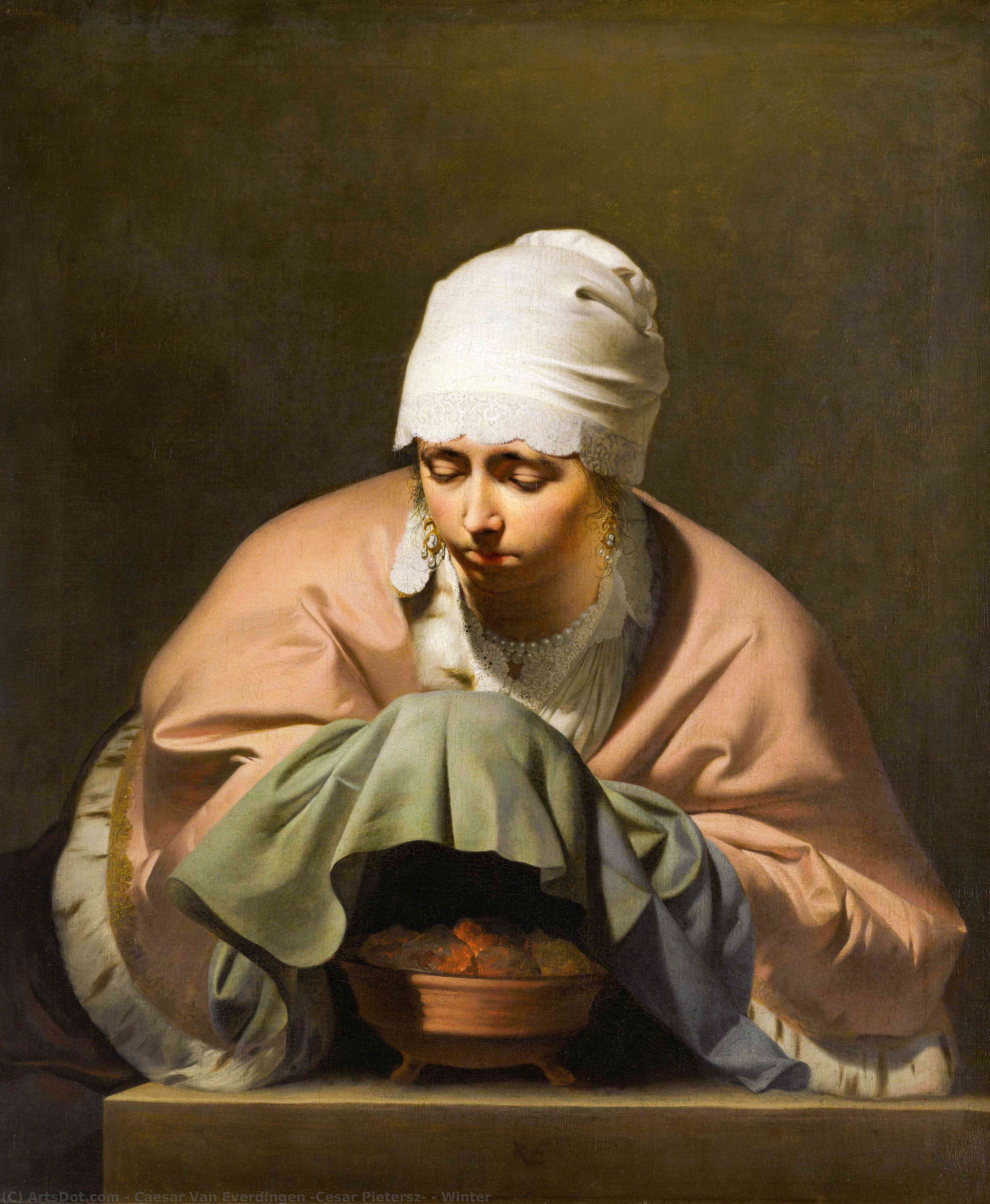
To gaze upon Caesar Van Everdingen’s Winter is to step directly into the hushed, contemplative atmosphere of the Dutch Golden Age. This painting, executed in 1646, transcends a mere depiction of a season; it captures an ephemeral moment—a pause in the rhythm of daily life under the soft dominion of winter's breath. The composition immediately draws the eye to the central figure: a young woman whose presence is both delicate and profound. Clad in attire that speaks of quiet dignity, she holds forth a bowl, suggesting sustenance or perhaps a symbolic offering. The entire scene is imbued with a sense of gentle melancholy, inviting the viewer to slow their own hurried pace and simply observe.
Mastery of Light and Domestic Intimacy
Technically, the work showcases Van Everdingen’s remarkable skill in handling oil on canvas. While the subject matter hints at elements of still life—the bowl, the table setting—the narrative weight is carried by the human element. Notice how the artist employs light not just to illuminate, but to sculpt. The background recedes into a rich, dark depth, allowing the illuminated figures and objects in the foreground to emerge with startling clarity. This dramatic interplay of chiaroscuro, so characteristic of the period, gives the painting an almost three-dimensional presence. It is a masterclass in rendering texture—from the soft drape of the white veil to the implied smoothness of the table cloth.
Symbolism Woven into the Scene
The symbolism within Winter is rich and layered, inviting endless scholarly contemplation. The season itself often represents dormancy, reflection, or a necessary period of rest before renewal. Paired with the domestic setting and the offering in the bowl, one might interpret this as a meditation on provision, endurance, or perhaps even the passage of time itself. The young woman acts as a conduit for these deeper themes; her quiet demeanor suggests an inner life unfolding against the backdrop of seasonal change. For the collector or decorator, this depth means the piece offers more than mere decoration—it offers conversation.
Echoes of Dutch Golden Age Grandeur
Caesar Pietersz van Everdingen was a painter deeply rooted in the traditions and advancements of his time. His ability to blend historical narrative with intimate genre scenes marks him as a significant figure. Owning a reproduction of Winter allows one to bring the sophisticated aesthetic of 17th-century Dutch art into a contemporary space. It speaks to an appreciation for meticulous detail, skilled craftsmanship, and the profound humanism that defined the Golden Age. Whether placed in a formal drawing-room or a thoughtfully curated study, this artwork promises an immediate elevation of ambiance, wrapping any room in a cloak of timeless, artistic elegance.
Pytania i odpowiedzi
Do jakiego nurtu artystycznego należy „Winter” – Cezar Van Everdingen?
„Winter” – Cezar Van Everdingen należy do nurtu Dutch Golden Age. Nurt ten stanowi stylistyczny kontekst dzieła.
W jakim wieku Cezar Van Everdingen stworzył(a) "Winter"?
Cezar Van Everdingen stworzył/a "Winter" w wieku 30 lat. Artysta urodził/a się w 1616, a datowanie dzieła to 1646.
W którym roku i w ramach jakiego nurtu powstało dzieło "Winter"?
"Winter" powstało w 1646 roku jako dzieło należące do nurtu Dutch Golden Age. Data powstania oraz przynależność do tego kierunku osadzają dzieło w kontekście historii sztuki.
Biografia artysty
Dziedzictwo światła i linii: Życie Caesara van Everdingena
W złotej erze malarstwa holenderskiego, gdy gra światła i cienia definiowała wizualną tożsamość narodu, Caesar van Everdingen wyłonił się jako mistrz subtelnych emocji i atmosferycznej głębi. Urodzony około 1616 roku w historycznym mieście Alkmaar w Holandii, jego artystyczna droga była głęboko spleciona z prestiżową linią rodową jego rodziny. Choć często omawia się go w kontekście jego sławnych braci, Allarta i Jana, Caesar wypracował dla siebie odrębne miejsce wewnątrz Złotego Wieku Holandii. Jego wczesne szkolenie pod okiem szanowanego Jana Gerritsza van Bronckhorsta w Utrechcie zapewniło mu rygorystyczne podstawy klasycznej estetyki, zaszczepiając w nim precyzję, która pozwoliła mu później wykroczyć poza czystą biegłość techniczną i osiągnąć prawdziwą wizję artystyczną.
Jego zawodowy wzrost nabrał tempa w 1632 roku, kiedy oficjalnie dołączył do cechu w Alkmaar. W tych formacyjnych latach jego repertuar charakteryzował się skrupulatnymi portretami i sugestywnymi scenami rodzajowymi – dziełami wymagającymi intensywnej obserwacji ludzkiej kondycji. Jednak wraz z dojrzewaniem talentu, rosły również jego ambicje. Wyszedł poza ramy dosłownej reprezentacji, rozwijając unikalną zdolność manipulowania pociągnięciami pędzla, aby uchwycić ulotne niuanse światła i ciężar atmosfery. Ta ewolucja wyznaczyła jego przejście od sprawnego rzemieślnika do wizjonerskiego malarza, zdolnego tchnąć życie w płótno.
Lata w Haarlem i wielkie ambicje
Kluczowy rozdział w życiu Van Everdingena otworzył się w 1648 roku, kiedy przeniósł się do tętniącego życiem, bogatego kulturowo miasta Haarlem. Ta przeprowadzka była czymś więcej niż tylko zmianą scenerii; było to zanurzenie się w samym sercu holenderskiego świata sztuki. Dzięki przystąpieniu do prestiżowego cechu św. Łukasza w Haarlem oraz aktywności w schutterij (straży obywatelskiej), Caesar wpisał się w samą tkankę społecznej i politycznej elity miasta. Te powiązania okazały się kluczowe w pozyskiwaniu zleceń, które miały zdefiniować jego historyczne znaczenie.
Być może najbardziej zapierającym dech w piersiach osiągnięciem jego kariery był udział w dekoracji Oranje Zaal (Sali Pomarańczowej) w pałacu Huis ten Bosch. To monumentalne przedsięciem wymagało mistrzostwa w malarstwie historycznym o dużej skali – gatunku wymagającym zarówno narracyjnej złożoności, jak i ogromnego rozmachu. W tym kontekście Caesar zaprezentował swoją biegłość w komponowaniu epickich scen, łącząc historyczną powagę z delikatnym dotykiem. Jego praca w tym okresie ukazała rozwijającą się zdolność do operowania skomplikowanymi kompozycjami, co sprawiło, że jego nazwisko zostało wyryte w architektonicznej historii Holandii.
Dojrzałość artystyczna i trwały wpływ
W późniejszych latach Caesar powrócił do swoich korzeni w Alkmaar, zakładając pracownię, która stała się sanktuarium nauki artystycznej. Ten okres jego życia charakteryzował się głębokim oddaniem doskonaleniu rzemiosła oraz mentorowaniem nowego pokolenia malarzy. Jego późne dzieła odzwierciedlają całe życie zgromadzonej mądrości, przejawiającej się w powracającej fascynacji tematami niebiańskimi i eterycznymi. Stał się szczególnie znany ze swoich przedstawień uskrzydlonych postaci – aniołów i istot boskich – oddanych z miękkością, która sugerowała obecność sacrum.
Znaczenie Caesara van Everdingena tkwi nie tylko w jego indywidualnych arcydziełach, ale także w jego roli jako pomostu między rygorystycznymi tradycjami wczesnego XVII wieku a bardziej emocjonalnymi, atmosferycznymi stylami, które nastąpiły później. Jego zdolność do połączenia precyzji holenderskiego portretu z wielkością narracji historycznej pozostaje świadectwem jego wszechstronności. Dziś jego prace służą jako żywe okna do duszy Holenderskiego Złotego Wieku, przypominając nam o czasach, gdy każde pociągnięcie pędzla było próbą uchwycenia wieczności w tym, co ulotne.

Cezar Van Everdingen
1616 - 1678
Krótka nota
- Artistic Movement Or Style: Portret i historia
- Artists Who Influenced This Artist: ['Jan Gerritsz van Bronckhorst']
- Date Of Birth: 1616/17
- Date Of Death: 1678
- Full Name: Cesar Pietersz van Everdingen
- Nationality: Holender
- Notable Artworks:
- Vertumnus i Pomona
- Młoda kobieta ogrzewająca dłonie
- Place Of Birth: Alkmaar, Holandia