Abstraction-Création
Three Forms (Barbara Hepworth)
Barbara Hepworth (1903–1975) stworzył Three Forms. Należy do nurtu Abstraction-Création. Wykonano w technice Stone. Przechowywane jest w Tate Britain w Londyn, Wielka Brytania. Wymiary to 34 × 53 cm.
- Stone
- 34 × 53 cm
- Tate Britain, Londyn

 Ręcznie malowany obraz olejny
 Wyślij jako kartkę
 Udostępnij
 Karta informacyjna


 Pobierz obraz
 Podobne obiekty
 Pokaz slajdów
 Pytania i odpowiedzi

 Statystyki
Three Forms w skrócie
- Tytuł
- Three Forms
- Artysta
- Barbara Hepworth (1903–1975)
- Miejsce urodzenia artysty
- Wakefield, Wielka Brytania
- Technika wykonania
- Stone
- Wymiary
- 34 × 53 cm
- Gdzie można je zobaczyć
- Tate Britain, Londyn, Wielka Brytania
- Epoka
- Modern
- Temat
- sculpture, abstraction, form, marble, geometric, minimalism
Co przedstawia Three Forms?
The Essence of Form: A Study in Modernist Serenity
In the quiet, monochromatic realm of Barbara Hepworth’s Three Forms, we encounter a profound dialogue between matter and void. Captured in a striking black-and-white composition, this work serves as a masterclass in the minimalist aesthetic that defined much of the twentieth-century sculptural revolution. The photograph presents three abstract sculptures, each a testament to Hepworth's ability to breathe life into stone. Arranged with meticulous balance upon a rectangular platform, these organic shapes emerge from a deep, velvety black background, creating an atmosphere of intense focus and meditative stillness. There is no distraction here—only the pure, unadulated interplay of light and shadow that defines the very soul of modernism.
The visual journey through this piece is one of tactile discovery. As the eye wanders across the smooth, rounded contours of the sculptures, one can almost feel the polished surface of the marble or alabaster from which they were birthed. Hepworth’s technique involves a delicate dance with geometry; while the sculptures themselves possess soft, flowing lines reminiscent of weathered river stones or celestial bodies, they are anchored by the sharp, decisive edge of the platform. This juxtaposition of organic fluidity and geometric stability creates a rhythmic tension, inviting the viewer to contemplate the relationship between the natural world and human intervention.
A Legacy of Abstraction and Light
To understand Three Forms is to understand the historical weight of the Unit One movement. As a pioneer who sought to bridge the gap between Surrealism and pure Abstraction, Hepworth utilized light as a sculptural tool. In this particular rendering, the directional lighting acts as an invisible chisel, carving out bright highlights that define the sculptures' three-dimensional presence and casting deep, dramatic shadows that suggest hidden depths within the stone. This interplay of luminance does more than just illuminate; it imbues the inanimate objects with a sense of movement and breath, making the static forms feel vibrantly alive.
For the discerning collector or interior designer, this work offers an unparalleled opportunity to introduce a sense of timeless sophistication into a space. The monochromatic palette ensures that the piece remains versatile, acting as a focal point that complements both contemporary minimalist interiors and more classical, opulent settings. It is not merely a photograph of sculpture, but an evocative window into the heart of British Modernism—a piece that promises to bring a sense of structural harmony, intellectual depth, and quiet elegance to any curated collection.
W którym muzeum znajduje się Three Forms?
Tate Britain
Londyn, Wielka Brytania
Początki i historia Tate Britain Fundamenty Tate Britain zostały położone przez sir Henry'ego Tate, którego wizja pozwoliła stworzyć dedykowaną przestrzeń dla artystycznych dokonań narodu. Instytucja otworzyła swoje podwoje 21 lipca 1897 roku, funkcjonując początkowo pod nazwą National Gallery of British Art. Ten wczesny okres koncentrował się na zapewnieniu stałego domu dla wizualnej historii kraju, budując kolekcję, która miała rozwijać się wraz ze zmieniającym się krajobrazem brytyjskiej kreatywności.


Zdjęcia w wysokiej rozdzielczości dzieła Three Forms

Chronione prawem autorskim: pliki te służą wyłącznie do osobistego wglądu i nie stanowią licencji na ich powielanie.
Barbara Hepworth, Three Forms, Tate Britain.
Odpowiedzi na pytania dotyczące Three Forms
Gdzie można zobaczyć oryginał „Three Forms” – Barbara Hepworth?
Oryginał dzieła „Three Forms” można zobaczyć w Tate Britain, Londyn, Wielka Brytania.
W jakiej technice wykonano „Three Forms” – Barbara Hepworth?
Barbara Hepworth wykorzystał/a technikę Stone w pracy „Three Forms”. Technika ta definiuje materię oryginalnego dzieła.
Jakie są rzeczywiste wymiary dzieła „Three Forms” – Barbara Hepworth?
Wymiary dzieła „Three Forms” – Barbara Hepworth to 53 x 34 cm. Reprodukcje można zamówić w innych rozmiarach, zachowując te same proporcje.
Co przedstawia „Three Forms” – Barbara Hepworth?
Tematyka obecna w „Three Forms” – Barbara Hepworth obejmuje sculpture, abstraction, form, marble, geometric, minimalism, spatial. Razem stanowią one podsumowanie tematyki dzieła.
Czy „Three Forms” – Barbara Hepworth znajduje się w domenie publicznej?
Jeśli chodzi o prawa autorskie, "Three Forms" znajduje się w nadal objęte ochroną prawa autorskiego.
Kto stworzył "Three Forms"?
Autorem dzieła „Three Forms” jest Barbara Hepworth. Praca ta figuruje w katalogu pod nazwiskiem Barbara Hepworth.
Do jakiego nurtu w sztuce należy „Three Forms” – Barbara Hepworth?
„Three Forms” – Barbara Hepworth należy do nurtu Abstraction-Création. Nurt ten stanowi stylistyczny kontekst dzieła.
Do którego okresu twórczości Barbara Hepworth należy dzieło „Three Forms”?
„Three Forms” pochodzi z okresu Mid-Century Modern w twórczości Barbara Hepworth. Klasyfikacja ta wiąże dzieło z rozwojem artysty.
Z czego wynika obecny status praw autorskich dzieła "Three Forms"?
Status praw autorskich do dzieła „Three Forms” – nadal objęte ochroną prawa autorskiego – wynika z faktu, że artysta zmarł w 1975.
O artyście: Barbara Hepworth

1903–1975, Wielka Brytania
Barbara Hepworth
Wczesne lata, rodzina i edukacja Barbara Hepworth przyszła na świat 10 stycznia 1903 roku w Wakefield, w hrabstwie West Riding w Anglii. Jako najstarsze dziecko Gertrude i Herberta Hepworth, dorastała w atmosferze, która w sposób szczególny ukształtowała jej przyszłą wrażliwość. Jej ojciec, pracujący jako inżynier budownictwa dla West Riding County Council, zapewnił jej wychowanie zakorzenione w praktycznym, strukturalnym podejściu do świata. To właśnie surowe, a zarazem zachwycające piękno krajobrazu Yorkshire stało się fundamentem jej wczesnej świadomości przestrzennej, która lata później miała zdefiniować jej unikalne podejście do formy trójwymiarowej.
Inne prace Barbara Hepworth
 Barbara Hepworth with the plaster of Figure for Landscape and a bronze cast of Figure (Archaean), November 1964.1964
 Spring (Arts Council Collection)1966
 Pusta Forma z Białym Wnętrzem1963
 Prototype for Mrs A.R.T. Richards (Quita)1924
Eseje o Three Forms
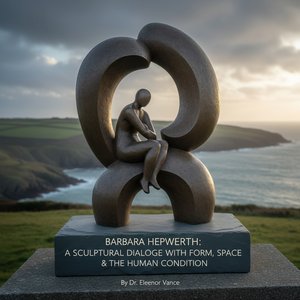 Barbara Hepworth: A Sculptural Dialogue with Form, Space & the Human ConditionExplore the profound world of Barbara Hepworth's sculpture. Discover her artistic evolution, iconic forms, and lasting influence on modern …
 Geometry with Purpose: Distinguishing Suprematism from ConstructivismMaster the differences between Suprematism and Constructivism with our expert guide. Discover the soul of the Russian avant-garde now.
 Sculpture Unveiled: A Definitive Guide to the Mastery of Three-Dimensional Art and FormExplore the profound history of sculpture, from classical realism to modern abstraction. Discover the mastery of form, texture, and medium …