Przełącz na wydania drukowane
 Rozwiń treść







































 W przypadku dzieł sztuki lub reprodukcji, których którykolwiek z boków przekracza 105 cm (około 41 cali), rama zostanie wysłana w formie zestawu do samodzielnego montażu. Metoda ta zapewnia bezpieczną dostawę i zapobiega uszkodzeniom podczas transportu.


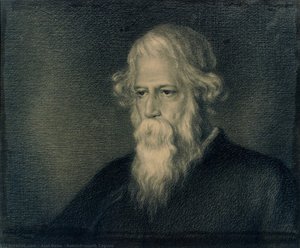
Rabindranath Tagore: A Portrait of Wisdom and Reflection
The painting “Rabindranath Tagore” by Atul Basu is more than just an image; it’s a distillation of intellect, serenity, and the enduring spirit of Bengali culture. Executed in 1944 during a pivotal moment in India's independence struggle, this artwork captures Tagore—a titan of literature and music—with remarkable sensitivity. Basu skillfully employs oil paints on plywood to convey not merely physical likeness but also an inner state of profound contemplation.- Style: The painting leans heavily into the stylistic influences of Impressionism and Symbolism, mirroring Tagore’s own philosophical leanings. Basu avoids harsh realism, opting instead for soft tonal gradations that bathe Tagore's face in a gentle luminescence—a deliberate choice to illuminate his contemplative gaze.
- Technique: Basu’s meticulous brushwork contributes significantly to the painting’s atmosphere. Notice the subtle layering of colors and textures; these techniques create depth and dimensionality, mirroring Tagore’s multifaceted personality and intellectual pursuits. The artist's attention to detail—particularly in capturing the nuances of Tagore’s facial expression—demonstrates a profound understanding of portraiture as an art form.
- Historical Context: Created amidst the burgeoning nationalist fervor of post-war India, “Rabindranath Tagore” speaks to a broader cultural dialogue about identity and artistic expression. Basu's decision to depict Tagore in repose reflects the poet’s belief in inner peace and spiritual contemplation as pathways to social reform—values that resonated deeply with intellectuals and artists alike during this era.
- Symbolism: The artist utilizes visual cues to imbue the portrait with symbolic resonance. Tagore’s gaze directs upwards, suggesting an aspiration towards enlightenment and a connection to universal truths. Furthermore, the framing of the painting itself—a simple wooden frame—represents stability and tradition amidst turbulent times—themes central to Tagore's worldview.
- Emotional Impact: Viewing “Rabindranath Tagore” evokes feelings of calm introspection and intellectual curiosity. Basu’s masterful rendering captures not just a likeness but also an essence—the quiet dignity and unwavering conviction that defined Tagore’s life and work. It serves as a poignant reminder of the power of art to convey profound human experience.
Pytania i odpowiedzi
Jakie inne pseudonimy lub nazwy stosuje Atul Basu?
Atul Basu występuje również pod innymi nazwiskami: Atul Bose.
Skąd pochodzą odwiedzający „Rabindranath Tagore” – Atul Basu?
Dla dzieła „Rabindranath Tagore” dostępna jest strona Statystyki wyświetleń. Przedstawia ona miesięczną liczbę odwiedzin tego dzieła oraz innych prac artysty, z podziałem na kraje i języki.
Do jakiego nurtu w sztuce należy „Rabindranath Tagore” – Atul Basu?
„Rabindranath Tagore” to dzieło należące do nurtu Graphic art. Nurt ten określa tradycję artystyczną, w której osadzone jest dzieło.
 Podgląd w skali 1:1
 Wyślij jako kartkę
 Udostępnij
 Szczegóły dzieła
 Przewodnik

 Pobierz obraz
 Podobne obiekty
 RTG
RTG Pokaz slajdów
 Pytania i odpowiedzi
 Statystyki