Arts and Crafts
Comus 11 (Arthur Rackham)
Arthur Rackham (1866–1939) stworzył Comus 11. Należy do nurtu Arts and Crafts.

 Podgląd w skali 1:1

 Ręcznie malowany obraz olejny
 Wyślij jako kartkę
 Udostępnij
 Karta informacyjna


 Pobierz obraz
 Podobne obiekty
 RTG
 Pokaz slajdów
 Pytania i odpowiedzi

 Statystyki
Comus 11 w skrócie
- Tytuł
- Comus 11
- Artysta
- Arthur Rackham (1866–1939)
- Miejsce urodzenia artysty
- Peszt, Węgry
- Ruch
- Arts and Crafts
- Temat
- mythology, fantasy, allegory, darkness, temptation, illustration
Co przedstawia Comus 11?
Arthur Rackham's "Comus 11": A Glimpse into Myth and Shadow
- Artwork Title: Comus 11
- Artist: Arthur Rackham (1867-1939)
- Date: Unknown (Part of the 1921 "Comus" Illustration Series)
- Medium: Pen and Ink on Paper
Subject Matter & Narrative Context
“Comus 11” is a captivating illustration drawn from Arthur Rackham’s series depicting John Milton's masque, “Comus.” The artwork plunges the viewer into a fantastical realm steeped in allegory. "Comus," originally presented in 1634, explores themes of chastity, temptation, and virtue through a narrative involving a princess and her brothers encountering the spirit Comus, who embodies sensual indulgence. Rackham’s illustration captures a pivotal moment—a sense of impending danger as a smaller figure flees from a towering, antlered creature that dominates the right side of the composition. The blurred background hints at an enchanted forest, further enhancing the otherworldly atmosphere.
Style and Technique: A Masterclass in Line Work
Rackham’s signature style is immediately recognizable—a blend of meticulous detail, expressive linework, and a touch of whimsical fantasy. This piece exemplifies his mastery of pen and ink techniques. He employs a combination of fine lines to define delicate details and cross-hatching to create texture and depth. Notice the strong outlines that delineate the figures, contrasting with the softer, more atmospheric rendering of the background foliage. The use of varied line weight adds dynamism and visual interest, guiding the viewer's eye across the composition. Rackham’s work aligns strongly with the Arts and Crafts movement, emphasizing craftsmanship and a return to traditional artistic methods.
Symbolism & Emotional Impact
The artwork is rich in symbolic meaning. The central figure, with its antlers intertwined with branches, likely represents Comus himself—a personification of temptation or darkness. His imposing size and unsettling gaze convey a sense of threat. The fleeing figure embodies innocence or virtue, desperately attempting to escape the encroaching shadows. The muted color palette – primarily beige, brown, grey, and off-white – contributes to the overall mood of mystery and unease. The diffused lighting, with deep shadows obscuring parts of Comus’s face, amplifies the sense of foreboding. "Comus 11" evokes feelings of vulnerability, fear, and suspense, drawing the viewer into a world where virtue is challenged by seductive forces.
Historical Context & Rackham's Legacy
Arthur Rackham was a leading figure in the British Golden Age of Illustration (roughly 1890-1930). His illustrations for classic literature—including "Peter Pan," "Gulliver’s Travels,” and “Alice’s Adventures in Wonderland”—brought these stories to life for generations. His work helped shape the visual landscape of children's literature, influencing countless artists who followed. The 1921 edition of "Comus" is considered one of Rackham’s finest achievements, showcasing his ability to translate complex allegorical themes into visually compelling and emotionally resonant imagery. Owning a reproduction of “Comus 11” offers a tangible connection to this rich artistic heritage.
Zdjęcia w wysokiej rozdzielczości dzieła Comus 11
Domena publiczna: artysta zmarł w 1939.
Arthur Rackham, Comus 11.
Arthur Rackham (1866–1939), Comus 11. Domena publiczna Źródło obrazu: OriginalUniqueArt.com.
Odpowiedzi na pytania dotyczące Comus 11
Co przedstawia „Comus 11” – Arthur Rackham?
Tematyka dzieła "Comus 11" to mythology, fantasy, allegory, darkness, temptation, illustration, rackham, comus.
Czy obraz „Comus 11” – Arthur Rackham można swobodnie reprodukować?
Status praw autorskich dla „Comus 11” – Arthur Rackham: dzieło znajduje się w należy do domeny publicznej – autorskie prawa majątkowe wygasły. Określa to, czy reprodukcje obrazu mogą być sporządzane swobodnie.
Kto stworzył "Comus 11"?
Autorstwo dzieła "Comus 11" przypisuje się Arthur Rackham.
Do jakiego nurtu w sztuce należy „Comus 11” – Arthur Rackham?
„Comus 11” – Arthur Rackham należy do nurtu Arts and Crafts. Nurt ten stanowi stylistyczny kontekst dzieła.
Do którego etapu twórczości Arthur Rackham należy dzieło „Comus 11”?
W dorobku artystycznym Arthur Rackham dzieło „Comus 11” przypada na Mature Period. Ten etap pozwala zestawić je z innymi pracami twórcy.
Co wyjaśnia sytuację prawną dotyczącą praw autorskich do „Comus 11” – Arthur Rackham?
„Comus 11” – Arthur Rackham jest należy do domeny publicznej – autorskie prawa majątkowe wygasły. Okres ochrony praw autorskich liczony jest od śmierci artysty, która nastąpiła w 1939.
Jakie miejsce w dorobku twórczym Arthur Rackham zajmuje dzieło "Comus 11"?
"Comus 11" dzieli z innymi dziełami Arthur Rackham styl właściwy dla Arts and Crafts oraz powracające motywy: arts & crafts movement, late 19th/early 20th illustration, detailed linework tradition, mythological allegory, good vs. evil narrative, themes of temptation and virtue, illustrating classic literature, representative of rackham's fantasy style.
Czy "Comus 11" wpisuje się w typową tematykę twórczości Arthur Rackham?
Wśród motywów charakterystycznych dla twórczości Arthur Rackham – takich jak arts & crafts movement, late 19th/early 20th illustration, detailed linework tradition, mythological allegory, good vs. evil narrative, themes of temptation and virtue, illustrating classic literature, representative of rackham's fantasy style – dzieło „Comus 11” wprowadza własne skupienie na mythology, fantasy, allegory, darkness, temptation, illustration, rackham, comus.
O artyście: Arthur Rackham

1866–1939, Węgry
Arthur Rackham
A Luminary of the Golden Age: The Life and Art of Arthur Rackham Arthur Rackham, a name inextricably linked to the enchanting world of British book illustration, emerged during a period often lauded as its “Golden Age.” Born in 1867 in Lewisham, Kent, amidst a bustling family of twelve children, his early life offered subtle hints at the artistic path that lay ahead. A journey to Australia at seventeen, undertaken for health reasons alongside two aunts, proved to be a formative experience, sparking an exploration that would ultimately define his career and establish him as one of the most beloved illustrators of all time. Initially destined for a more conventional profession – clerking at the Westminster Fire Office – Rackham’s unwavering passion for art led him to evening studies at the Lambeth School of Art, a pivotal decision that irrevocably set him on course toward his artistic destiny. His beginnings were modest, initially contributing illustrations and reporting for the *Westminster Budget*, but it was through relentless dedication and a commitment to honing his craft that he distinguished himself and gained recognition.
Inne prace Arthur Rackham
 Fairy z parasolem
 Jack the Giant-Killer 4
 There is almost nothing that has such a keen sense of fun as a fallen leaf (also known as Joy of a Fallen Leaf)1906
 Hansel picked up the glittering white pebbles and filled his pockets with them.
Eseje o Comus 11
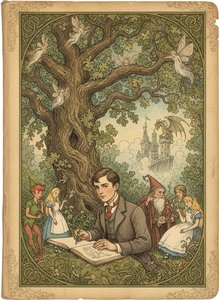 Arthur Rackham: A Master of British Illustration & the Enchanted Realm of Fairy TalesExplore the enchanting world of Arthur Rackham (1867-1939), a leading figure in British Golden Age illustration. Discover his iconic fairy …
 Spontaneity and Matter: Distinguishing CoBrA from Art InformelJean Dubuffet mixed sand, tar, and gravel into his 1947 works to create sculptural surfaces. Why did post-war artists reject traditional or…
 25 Masterpieces by Rogier van der Weyden: The Pinnacle of Emotional ArtBorn around 1400, Van der Weyden used his training as a goldsmith to transform the rigid medieval style into a visceral language of human p…