

 Zobacz w skali 1:1
 Wyślij
 Udostępnij
 Szczegóły
 Przewodnik

 Pobierz plik obrazu
 Podobne obiekty
 RTG
RTG Pokaz slajdów
 Statystyki
The isle of the dead (Version 3)
 Oil On Panel
- WallArt
- Symbolist Movement
 1883
1883- 19th Century
 80.0 x 150.0 cm
 Alte Nationalgalerie
 Czytaj więcej
Giclée / Wydruk artystyczny
Wydruki giclée lub płótna o jakości muzealnej, szybka realizacja i szeroki wybór opcji wykończenia. ( Kup ręcznie malowany obraz Przełącz na wersję cyfrową)




P118B zł10

P118H zł10

P118W zł10

P438Z zł10

P508JH zł12

P508YH zł12

P805H zł10

P805Z zł10

P919BZ zł10

P919G zł10

P919XJ zł10

P959ZH zł10

P968JZ zł12

W106C zł8

W218G zł10

W218JH zł8

W218Y zł10

W307PJ zł10

W316G zł10

W316PJ zł8

W316Y zł10

W398PJ zł8

W4111J zł10

W500HY zł15

W500JH zł15

W692G zł12

W849H zł8

W940BG zł15

W953PJ zł8




Wybierz spośród naszych standardowych rozmiarów, które zachowują oryginalne proporcje dzieła sztuki.

Możesz wprowadzić własne wymiary, aby dopasować dzieło do konkretnej ramy lub przestrzeni. Jeśli wybrany rozmiar nie będzie odpowiadał proporcjom oryginalnego obrazu, przytniecie dzieło lub rozszerzymy obraz za pomocą odbicia lustrzanego lub jednolitego wypełnienia krawędzi. Przed rozpoczęciem produkcji prześlemy cyfrową wizualizację do Twojej akceptacji.
Prosimy pamiętać, że podgląd na ekranie nie odzwierciedla faktycznego przycinania ani rozszerzania. Tylko wizualizacja dokładnie pokaże końcową kompozycję.
Mimo dostępności niestandardowych rozmiarów, zalecamy wybór wymiaru z listy zdefiniowanej, aby zachować oryginalne proporcje.
Dostawa na cały świat () w ciągu 2 tygodni zamiast standardowych 4/5 tygodni. (5 Październik)

Bezpłatna ekspresowa wysyłka na cały świat

Wysokiej jakości płótno lniane

Pełne ubezpieczenie transportowe

Gwarancja zwrotu należności celnych i podatków importowych

Gwarancja idealnego odwzorowania barw

100-dniowy okres na zwrot dzieła w przypadku wykrycia wad produkcyjnych

Gwarancja 100% zwrotu pieniędzy

Oferta przy zakupie wielu sztuk
 Opcja ze szkłem jest dostępna wyłącznie w rozmiarach poniżej 110 cm

The isle of the dead (Version 3)
Giclée / Wydruk artystyczny
Rozmiar reprodukcji
-


Suma do zapłaty
zł 297
A Journey into the Silent Realm
In the quietude of the late nineteenth century, few images captured the collective psyche of Europe as profoundly as Arnold Böcklin’s The Isle of the Dead. This particular version, a haunting masterpiece from 1883, serves as more than a mere landscape; it is a portal into the subconscious. As the viewer's eye meets the dark, mirror-like waters, there is an immediate sense of profound stillness, a hush that commands reverence. The composition centers on a desolate, rocky island, rising abruptly from the depths like a monument to the forgotten. Towering cypress trees, draped in shadows, stand as sentinels over a landscape where time seems to have ceased its forward march. This is not a place of movement, but of eternal repose, inviting anyone who gazes upon it to confront the beautiful, unsettling mystery of what lies beyond the veil of life.
The technical mastery displayed in this oil on panel work is nothing short of hypnotic. Böcklin utilizes chiaroscuro with surgical precision, orchestrating a dramatic interplay between light and shadow that breathes life into the inanimate stone and foliage. The palette is a sophisticated arrangement of somber earth tones—deep mossy greens, slate greys, and midnight blues—which are punctuated by the stark, ghostly white of the linen-draped coffin. This contrast does not merely provide visual interest; it directs the emotional narrative, drawing the eye toward the small boat that approaches the shore. The texture of the paint captures the heavy, humid atmosphere of a twilight world, making the stillness feel almost tactile, as if one could reach out and touch the cool mist clinging to the cliffs.
Symbolism and the Language of the Soul
To understand this work is to decode a visual language steeped in Symbolist tradition. Every element within the frame serves an allegorical purpose, transcending literal representation to evoke deeper spiritual truths. The cypress trees, traditionally associated with mourning and the transition from life to death, anchor the composition in a funerary context. Meanwhile, the classical architecture nestled among the rocks—a silent temple or mausoleum—suggests a civilization long passed, adding a layer of historical melancholy to the scene. The solitary figure in the boat, accompanied by the shrouded coffin, embodies the ultimate human journey: the transition from the temporal world to the eternal. For the collector or enthusiast, these layers of meaning offer an inexhaustible depth of contemplation, making the piece a focal point for intellectual and emotional engagement.
For those looking to integrate such a profound work into a curated space, The Isle of the Dead offers an unparalleled atmospheric presence. In an interior setting, this reproduction acts as a window into another dimension, providing a sense of depth and contemplative gravity. It is particularly suited for spaces designed for reflection—libraries, studies, or quiet sitting rooms—where its moody elegance can harmonize with dark woods and rich textures. Owning a piece of such historical significance allows one to host a conversation between the modern world and the haunting beauty of the Symbolist era, bringing a touch of the sublime into the heart of the home.
Pytania i odpowiedzi
Kto stworzył "The isle of the dead (Version 3)" i w jakim roku?
Autorem dzieła "The isle of the dead (Version 3)" jest Arnold Böcklin, a datowanie pracy pochodzi z 1883 roku.
Kto stworzył "The isle of the dead (Version 3)"?
„The isle of the dead (Version 3)” zostało stworzone przez Arnold Böcklin. Informacje na tej stronie opisują oryginalne dzieło autorstwa Arnold Böcklin.
Czy obraz „The isle of the dead (Version 3)” autorstwa Arnold Böcklin można swobodnie reprodukować?
Jeśli chodzi o prawa autorskie, "The isle of the dead (Version 3)" znajduje się w stanowi domenę publiczną – autorskie prawa majątkowe wygasły.
W którym roku powstało „The isle of the dead (Version 3)” autorstwa Arnold Böcklin?
Dzieło „The isle of the dead (Version 3)” autorstwa Arnold Böcklin powstało w 1883.
Ile lat miał Arnold Böcklin, gdy powstało dzieło „The isle of the dead (Version 3)”?
Arnold Böcklin miał 56 lat, tworząc „The isle of the dead (Version 3)” w 1883. Wiek ten został obliczony na podstawie roku urodzenia artysty, 1827.
Gdzie mogę zobaczyć podgląd dzieła "The isle of the dead (Version 3)"?
Aby podglądnąć reprodukcję dzieła „The isle of the dead (Version 3)” autorstwa Arnold Böcklin, otwórz stronę Podgląd danego utworu.
W jaki sposób "The isle of the dead (Version 3)" balansuje światło i cień?
„The isle of the dead (Version 3)” charakteryzuje się ogólną jasnością na poziomie balanced, a jej luminancja wynosi Soft Shadow.
Biografia artysty
early life and training
Arnold Böcklin, a name synonymous with haunting beauty and melancholic symbolism, was born on October 16, 1827, in Basel, Switzerland—a city that would profoundly shape his artistic vision. His lineage traced back to an old family of Schaffhausen, distinguished by its involvement in the silk trade, while his mother, Ursula Lippe, hailed from the same vibrant city. Böcklin’s early years were marked by a rigorous academic training at the Düsseldorf Academy, where he studied under the esteemed Julius Wilhelm Schirmer. This period proved pivotal, forging a connection with Anselm Feuerbach and firmly establishing him within the circle of the Düsseldorf School of Painting—a movement known for its dramatic realism and exploration of psychological themes. The influence of this school is evident in Böcklin’s early works, characterized by a somber palette and an intense focus on capturing mood and atmosphere. His travels during his studies exposed him to diverse artistic traditions, particularly in Brussels, Antwerp, and Genoa, where he honed his skills under the guidance of Angelo Calame, absorbing elements of Italian landscape painting and classical antiquity. These formative experiences laid the groundwork for Böcklin’s unique approach to art—one that would later become deeply intertwined with themes of death, dreams, and the mystical.artistic career and symbolism
Böcklin's artistic journey extended far beyond the confines of Düsseldorf, leading him through the vibrant cities of Paris and Rome, each leaving an indelible mark on his creative development. In Paris, he found employment at the Louvre, immersing himself in the masterpieces of the Old Masters and gaining invaluable insights into composition and technique. His time in Rome proved particularly transformative, exposing him to the grandeur of ancient ruins and fostering a fascination with classical mythology—a theme that would recur frequently throughout his oeuvre. Böcklin’s artistic style evolved significantly during this period, moving away from the stark realism of the Düsseldorf School towards a more evocative and symbolic approach. He began to explore allegorical and mythological figures within carefully constructed settings featuring classical architecture, creating works that resonated with a profound sense of mystery and introspection. Notable early examples include *Great Park* (1857), which depicted ancient mythology in a dreamlike landscape, and the hauntingly beautiful *Nymph and Satyr* (1858) and *Sappho* (1859)—paintings that showcased his burgeoning talent for capturing emotion and atmosphere. A particularly striking example of this period is *Portrait of Myself, with Death Playing a Violin* (1872), a deeply personal work that explored the themes of mortality and artistic creation—a recurring motif in Böcklin’s art.the isle of the dead and legacy
Perhaps the most enduring testament to Böcklin's artistic vision is his five versions of *The Isle of the Dead* (1880-1886). Inspired by the English Cemetery in Florence—where his daughter was buried—these monumental paintings became instantly iconic, capturing the essence of loss, remembrance, and the passage of time. The series evokes a profound sense of melancholy and mystery, utilizing a muted color palette, atmospheric perspective, and carefully arranged figures to create an unforgettable visual experience. Böcklin’s *Isle of the Dead* profoundly influenced a generation of artists, including Hans Thoma, who sought to capture similar moods and themes in their own work. Clement Greenberg famously described Böcklin's work as "one of the most consummate expressions" of its time, recognizing its profound impact on the development of Symbolism and its subsequent influence on 20th-century art movements such as Surrealism. Böcklin’s style resonated with the Pre-Raphaelites, sharing their fascination with dreams, mysticism, and the darker aspects of human experience—a shared sensibility that cemented his place within the broader artistic landscape of the late 19th century.museums and collections
Arnold Böcklin's works are cherished by museums across Europe, offering visitors a chance to encounter the depth and complexity of his artistic vision. Key locations where you can find his paintings include:- Öffentliche Kunstsammlung (Basel, Switzerland)
- Kunstmuseum Basel (Switzerland)
- Museum Kunsthaus Zürich (Zürich, Switzerland)
conclusion
Arnold Böcklin remains a pivotal figure in the history of Symbolism, renowned for his evocative landscapes, haunting allegories, and profound exploration of mortality. His work continues to captivate audiences with its dreamlike quality and emotional resonance, solidifying his legacy as one of the most influential artists of the late 19th century. His art serves as a poignant reminder of the beauty that can be found even in darkness—a testament to the enduring power of the human spirit and the mysteries of existence.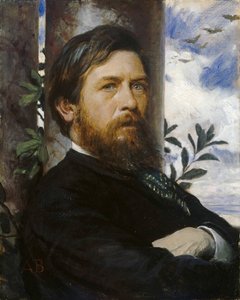
Arnold Böcklin
1827 - 1901 , Szwajcaria
Najważniejsze informacje
- Artistic Movement Or Style: Symbolizm
- Artists Or Movements Influenced By This Artist:
- Hans Thoma
- Prerafaeliści
- Artists Who Influenced This Artist:
- Schirmer
- Feuerbach
- Date Of Birth: 16 października 1827
- Date Of Death: 16 stycznia 1901
- Full Name: Arnold Böcklin
- Nationality: Szwajcarski
- Notable Artworks:
- Wyspa umarłych
- Nymph i Satyr
- Sappho
- Portret samego siebie
- Place Of Birth: Bazylea, Szwajcaria
Zobacz także powiązane artykuły

Trwała Spuścizna Malarstwa Olejnego: Technika, Historia i Estetyczny Wpływ
Poznaj historię i technikę malarstwa olejnego! Eksperckie artykuły o konserwacji, renowacji oraz współczesnych zastosowaniach. Dowiedz się więcej o mistrzach i trwałości obrazów olejnych.

Olej na desce: Historia techniki, walory estetyczne i trwały urok malarstwa renesansowego i barokowego
Poznaj historię i technikę malarstwa olejnego na desce! Odkryj walory estetyczne renesansowych arcydzieł, metody konserwacji oraz współczesne możliwości reprodukcji z OriginalUniqueArt.com – ręcznie malowane obrazy najwyższej jakości.

Olej na płótnie: Historia, techniki i ponadczasowy urok malarskiego medium
Poznaj historię i techniki malarstwa olejowego! Od renesansowych mistrzów po współczesne zastosowania – wszystko o oleju na płótnie. Poradniki, konserwacja i inspiracje dla pasjonatów sztuki.

Trwała Spuścizna Malarstwa Olejnego: Technika, Historia i Współczesna Praktyka
Poznaj historię i techniki malarstwa olejnego. Poradniki dla artystów, informacje o konserwacji oraz możliwość zamówienia wysokiej jakości reprodukcji obrazów. Ekspercka wiedza i gwarancja trwałości dzieł sztuki.

The Enduring Power of Painting: A Historical & Contemporary Exploration of Form and Emotion
Explore the rich history & enduring techniques of oil painting with OriginalUniqueArt. Discover masterpieces, learn about art collecting, and find authentic handmade reproductions crafted by skilled artists.
