
 Podgląd w skali 1:1
 Wyślij jako kartkę
 Udostępnij
 Szczegóły dzieła
 Przewodnik

 Pobierz obraz
 Podobne obiekty
 RTG
RTG Pokaz slajdów
 Pytania i odpowiedzi
 Statystyki
Toys


 Rozwiń treść
Dzieło sztuki prezentowane na tej stronie podlega ochronie prawem autorskim, co oznacza, że nie mamy prawa do tworzenia ani sprzedaży jego identycznej reprodukcji. Ochrona ta jest egzekwowana na mocy umów międzynarodowych, takich jak Konwencja berneńska oraz przez przepisy prawa krajowego, w tym te określone w Prawo autorskie USA – Tytuł 17.
Metoda ta jest w pełni zgodna z przepisami prawa autorskiego, ponieważ nie polega na kopiowaniu ani powielaniu chronionego dzieła. Stanowi ona kreatywną reinterpretację – nowy obraz, który czerpie inspirację z oryginału, ale nie jest z nim tożsamy.
Giclée / Wydruk artystyczny
Wydruki giclée lub płótna o jakości muzealnej, szybka realizacja i szeroki wybór opcji wykończenia. ( Zamów ręcznie malowaną reprodukcję Przejdź do wersji cyfrowej)




P118B zł10

P118H zł10

P118W zł10

P438Z zł10

P508JH zł12

P508YH zł12

P805H zł10

P805Z zł10

P919BZ zł10

P919G zł10

P919XJ zł10

P959ZH zł10

P968JZ zł12

W106C zł8

W218G zł10

W218JH zł8

W218Y zł10

W307PJ zł10

W316G zł10

W316PJ zł8

W316Y zł10

W398PJ zł8

W4111J zł10

W500HY zł15

W500JH zł15

W692G zł12

W849H zł8

W940BG zł15

W953PJ zł8




Wybierz spośród naszych standardowych rozmiarów, które zachowują oryginalne proporcje dzieła sztuki.

Wpisz wymaganą szerokość i wysokość, aby dopasować grafikę do ramy lub ściany. Wydruk można jedynie przyciąć, nigdy nie powiększając go poza oryginalny obraz, dlatego format o innych proporcjach spowoduje utratę części kompozycji. Przed rozpoczęciem druku prześlemy Ci cyfrowy podgląd do zatwierdzenia. Obraz wyświetlany na tej stronie nie pokazuje rzeczywistego przycięcia — jedynie podgląd oddaje ten efekt.
Dostawa na cały świat () w ciągu 2 tygodni zamiast standardowych 4/5 tygodni. (3 Listopad)

Bezpłatna ekspresowa wysyłka na cały świat

Wysokiej jakości płótno lniane

Pełne ubezpieczenie przesyłki

Gwarancja zwrotu należności celnych i podatków importowych

Gwarancja wiernego odwzorowania kolorów

100-dniowa polityka zwrotów (tylko w przypadku wad)

Gwarancja 100% zwrotu pieniędzy

Zniżka przy zakupie wielu sztuk
 Opcja ze szkłem jest dostępna wyłącznie w rozmiarach poniżej 110 cm

Toys
Giclée / Wydruk artystyczny
Wymiary reprodukcji
-


Cena całkowita
zł 317
Andreas Gursky’s “Toys”: A Monument to Industrial Scale and Global Branding
The photograph captures Andreas Gursky's painting "Toys," displayed in an art gallery setting, presenting a striking visual meditation on consumer culture and the pervasive influence of corporate logos within our contemporary environment. More than just a depiction of an artwork, it’s an exploration of how Gursky utilizes meticulous composition and photographic technique to convey profound ideas about globalization and the homogenization of experience. The painting itself is dominated by a colossal industrial building—a testament to architectural grandeur—emblazoned with the logos of Toyota and Toys ‘R Us. This deliberate juxtaposition immediately establishes a dialogue between manufacturing prowess and playful consumerism, hinting at the complex relationship between production and consumption that characterizes our modern world. The geometric precision of the structure underscores Gursky’s stylistic commitment to Bernd and Hilla Becher's influential approach: documenting industrial landscapes with unwavering objectivity and emphasizing repetitive patterns. Gursky’s photographic process—a slow shutter speed—transforms the building into an ethereal expanse, blurring the human presence within its vastness. This technique isn’t merely aesthetic; it serves as a crucial element in conveying Gursky's overarching concern for capturing the essence of his subject matter – the scale and order inherent in industrial spaces. The resulting image feels strangely desolate, inviting contemplation on the impact of these monumental structures on our daily lives and fostering a sense of awe alongside a subtle critique of unchecked commercial expansion. The gallery space surrounding “Toys” is deliberately minimized, furthering this feeling of isolation and elevating the artwork itself to prominence. This minimalist framing reinforces Gursky’s stylistic ethos—a dedication to stripping away extraneous detail to reveal the core principles governing his chosen subject. The photograph's sharp focus ensures that every element contributes to the overall impression, highlighting the artist’s meticulous attention to visual precision. Ultimately, “Toys” embodies Gursky’s signature style: large-scale photography characterized by detailed observation and a masterful grasp of photographic technique. It speaks to themes of standardization, economic dominance, and the subtle erosion of individuality within a globally interconnected society. The painting's stark monochrome palette amplifies its impact, emphasizing geometric forms and conveying an emotional resonance that transcends mere visual representation—a quiet contemplation on the monumental scale of industrial progress and its inescapable imprint upon our cultural landscape.Pytania i odpowiedzi
Czy istnieje karta informacyjna o „Toys” – Andreas Gursky przeznaczona dla studentów?
Przewodnik po "Toys" to strona Karta informacyjna dla uczniów dzieła sztuki – nadrukowalna karta informacyjna zawierająca opis utworu, informacje o autorstwie oraz tabelę danych (artysta, daty, technika, wymiary oryginału, kolekcja).
Jak nasycone są kolory w „Toys” – Andreas Gursky?
„Toys” – Andreas Gursky charakteryzuje się Monochromatic intensywnością kolorów.
Jaki jest dominujący kolor w „Toys” – Andreas Gursky?
Dominującym kolorem dzieła „Toys” – Andreas Gursky jest Rosy Brown (#a5a198).
Biografia artysty
A Vision of the Global Landscape: The Life and Art of Andreas Gursky
Born in Leipzig, East Germany, in 1955, Andreas Gursky’s artistic journey is inextricably linked to the shifting political landscape of post-war Europe. His family's relocation to West Germany in 1957, settling first in Essen and then Düsseldorf, proved formative, not only geographically but also professionally. Both his father, Willy Gursky, and grandfather, Hans Gursky, were photographers, instilling within him a deep understanding of the medium from an early age. This familial legacy provided a foundation upon which he would build a career that redefined contemporary photography. Gursky’s initial studies at Folkwang University of the Arts in Essen (1978-1981) exposed him to a more subjective approach, influenced by photographers like Otto Steinert and Michael Schmidt. However, it was his subsequent enrollment at the Kunstakademie Düsseldorf (1981-1987), under the tutelage of Bernd and Hilla Becher, that truly shaped his artistic trajectory. The Bechers’ meticulous, objective documentation of industrial architecture – their systematic cataloging of water towers, blast furnaces, and gas tanks – instilled in Gursky a rigorous approach to image-making, emphasizing clarity, precision, and an almost anthropological detachment.From Industrial Documentation to Global Perspectives
Gursky’s early work reflected the influence of his mentors, with series like *Pförtnerbilder* (1981–85) focusing on security personnel in office buildings – a subtle exploration of power dynamics and surveillance within the modern workplace. He also turned his lens to the industrial heartland of the Ruhr Valley, documenting the interplay between nature and industry. However, around 1988, Gursky began experimenting with larger photographic formats, a pivotal shift that would become a defining characteristic of his style. This coincided with the burgeoning digital revolution, and in the 1990s, he embraced digital manipulation techniques, combining images and perspectives to create highly detailed, often abstract compositions. This wasn’t simply about altering reality; it was about revealing underlying structures and patterns that are normally invisible to the naked eye. Influenced by British landscape photographer John Davies' high vantage point images, Gursky began to elevate his perspective, offering viewers a panoramic view of contemporary life. He also acknowledged a lesser influence from American photographer Joel Sternfeld, whose work contributed to his developing aesthetic sensibility. This combination of technical innovation and conceptual rigor allowed him to move beyond mere documentation towards a more profound exploration of globalization, consumerism, and the relationship between individuals and large-scale systems.Iconic Images and Recurring Themes
Andreas Gursky’s work is instantly recognizable for its scale, detail, and often unsettling beauty. Images like *99 Cent* (1999), a vibrant depiction of the interior of a 99-cent store, are not simply records of consumer culture; they are meticulously constructed compositions that transform everyday objects into fields of color and pattern. *Rhein II* (1999), perhaps his most famous work, exemplifies his mastery of digital manipulation. The image of the Rhine River was extensively altered to create abstract bands of color, blurring the line between reality and artifice. This photograph not only achieved a record-breaking auction price – over $4 million – but also sparked debate about the nature of photography in the digital age. *Sha Tin* (2004), showcasing densely populated housing in Hong Kong, is another powerful example of his ability to capture the overwhelming scale and complexity of modern urban life. Recurring themes throughout Gursky’s oeuvre include the anonymity of contemporary spaces – shopping malls, factories, office buildings – and the feeling of being overwhelmed by information and choice. His *Ocean I-VI* (2009-2010) series pushed the boundaries of photographic representation even further, utilizing high-definition satellite photographs augmented with internet sources to create vast, almost abstract depictions of the world’s oceans.Legacy and Impact on Contemporary Art
Andreas Gursky has received numerous accolades throughout his career, including the Förderpreis des Landes Nordrhein-Westfalen für junge Künstler (1988), the Citibank Private Bank Photography Prize (1998), and the Infinity Award for Art from the International Center of Photography (2001). However, his true legacy lies in his profound impact on contemporary photography. He is widely considered one of the most important photographers of his generation, significantly expanding the possibilities of the medium through his large-scale prints and innovative use of digital manipulation. His work has influenced a wide range of artists working with photography and other media, and he is often associated with the “Düsseldorf School” of photography, alongside Thomas Ruff and Thomas Struth. Gursky’s photographs command high prices in the art market, reflecting their critical acclaim and cultural significance. More importantly, his work continues to be exhibited internationally and remains a subject of scholarly study, solidifying his place as a pivotal figure in contemporary art history – an artist who has not only documented our world but also challenged us to see it in new and unexpected ways. His ability to transform the mundane into the monumental, and the real into the abstract, ensures that his work will continue to resonate with audiences for generations to come.
Andreas Gursky
1955 - , Germany
Krótka nota
- Full Name: Andreas Gursky
- Nationality: German
- Date Of Birth: 1955
- Place Of Birth: Leipzig, Germany
- Notable Artworks:
- 99 Cent
- Rhein II
- Sha Tin
- Ocean I-VI
- Toys
- Artistic Movement Or Style: Düsseldorf School
- Artists Who Influenced This Artist:
- Bernd Becher
- Hilla Becher
- John Davies
- Joel Sternfeld
- Artists Or Movements Influenced By This Artist:
- Contemporary artists
- Photography
Powiązane artykuły

Romantyczny Krajobraz w Malarstwie: 10 Arcydzieł, Które Zdefiniowały Epokę | OriginalUniqueArt.com
Odkryj 10 arcydzieł romantyzmu w malarstwie! Poznaj historie Caspara Davida Friedricha, Turnera i innych mistrzów. Inspiracje wnętrzarskie & reprodukcje obrazów najwyższej jakości na OriginalUniqueArt.com. Eksploruj kolekcję online!

Timeless Contrast: A Professional Guide to Black and White Photography for Large-Scale Hotel Decor
A professional guide for hotel designers on utilizing black and white photography for large-scale decor. Learn to master scale, texture, and monochrome contrast to create impactful, high-end hospitality environments through efficient, bulk art procurement solutions.

Evocations of Place: A Historical Journey Through Landscape Art
Explore the rich history of landscape art with OriginalUniqueArt. Discover renowned artists, movements like Impressionism & Romanticism, and expert guidance for collecting timeless pieces. Find your perfect serene escape today!
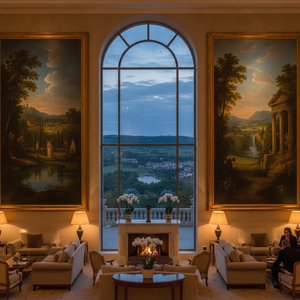
Curating Atmosphere: A Professional Guide to Selecting Romantic Landscape Paintings for Large-Scale Hospitality Interiors
A professional guide for hotel designers on selecting romantic landscape paintings for large-scale interiors. Discover expert strategies for sourcing high-quality oil reproductions, managing bulk orders, and integrating museum-grade art into hospitality projects with ease.

Impressionist Landscapes for Large-Scale Hospitality Decor: A Professional Guide to Light, Color, and Texture
A professional guide for hotel designers and procurement managers on selecting Impressionist landscapes. Learn to leverage light, color, and texture through high-quality, hand-painted oil reproductions and large-scale custom solutions for premium hospitality environments.