 Przełącz na wydania drukowane
 Rozwiń treść







































 W przypadku dzieł sztuki lub reprodukcji, których którykolwiek z boków przekracza 105 cm (około 41 cali), rama zostanie wysłana w formie zestawu do samodzielnego montażu. Metoda ta zapewnia bezpieczną dostawę i zapobiega uszkodzeniom podczas transportu.


Ambrosius van Swol: The Silent Sculptor of Utrecht – A Baroque Masterpiece Revisited
Ambrosius van Swol (c. 1640 – 1680) remains a figure shrouded in relative obscurity compared to his contemporaries—artists who graced the canvases of Rembrandt and Vermeer—yet his contribution to Dutch Baroque sculpture deserves recognition as a testament to artistic innovation within a period defined by grandeur and dramatic expression. Born in Utrecht, Netherlands, Van Swol’s life details are scarce, leaving much to speculation about his formative years and early artistic inclinations. However, surviving documentation confirms he established himself as a sculptor and frame maker around 1643, marking the beginning of a prolific career that spanned nearly four decades.
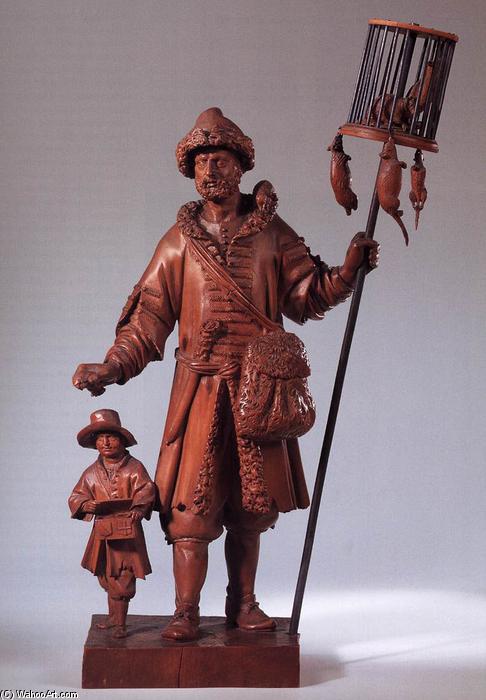
Early Career & Patronage: Van Swol’s initial commissions primarily focused on crafting ornate frames for paintings—a crucial element in the visual culture of Utrecht during his time. These frames weren't merely decorative; they were meticulously designed to enhance the luminosity and color palette of artworks, reflecting a sophisticated understanding of optics and artistic aesthetics. Evidence suggests he worked under the patronage of influential families like the Van Loon clan, whose opulent estates served as hubs for artistic activity. Notable Sculptures: While his frame work undoubtedly provided a steady income, Van Swol’s true artistry shone through in his sculptures—particularly “The Rat-Catcher,” currently housed at Museum Van Loon. This remarkable piece exemplifies the Baroque style's penchant for dramatic realism and emotional intensity. Executed around 1660, it depicts a rat catcher engaged in capturing a rodent with considerable skill and determination.
Style & Technique: Ambrosius van Swol’s artistic vision aligns closely with Albert Vinckenbrinck, a prominent Utrecht sculptor who championed naturalism and expressive dynamism. Like Vinckenbrinck, Van Swol prioritized conveying emotion through form—capturing the physicality of movement and gesture to imbue his sculptures with palpable vitality. His works are characterized by smooth surfaces, polished marble or alabaster, and subtle drapery folds that contribute to an overall sense of elegance and sophistication. The Rat-Catcher’s meticulous anatomical detail—particularly the musculature of the rat catcher’s arms—demonstrates Van Swol’s mastery of sculptural technique and his commitment to portraying human figures with unparalleled accuracy.
Historical Context & Symbolism: The Baroque era in Utrecht was marked by a fervent embrace of theatricality and emotional fervor, mirroring broader trends across Europe. Artists sought to evoke awe and wonder through grand compositions and dramatic poses—a stylistic impulse vividly realized in “The Rat-Catcher.” The depiction of the rat catcher embodies themes of vigilance, perseverance, and triumph over adversity – virtues valued during a time of social upheaval and religious reformation. Furthermore, the inclusion of the cage containing birds symbolizes hope and aspiration, reflecting the humanist ideals prevalent within Utrecht’s artistic circles.
Emotional Impact & Legacy: Ambrosius van Swol's enduring legacy rests on his ability to capture the essence of human experience—transforming raw observation into emotionally resonant art. “The Rat-Catcher” continues to captivate viewers with its dynamic energy and expressive realism, serving as a poignant reminder of Utrecht’s artistic heritage. Recent scholarship has begun to illuminate Van Swol's significance as a sculptor who skillfully blended technical virtuosity with humanist ideals—a testament to the enduring power of art to inspire contemplation and convey profound truths.
Pytania i odpowiedzi
Co przedstawia "Żołnierzyk" i jaką ma atmosferę?
„Żołnierzyk” – Ambrosius Van Swol przedstawia baroque sculpture, dutch golden age, rat catcher scene, human anatomy, sculptural realism, renaissance art style, classical sculpture, wprowadzając Elegancki styl nastrój. Tematyka i atmosfera wspólnie definiują to dzieło.
Jaki kolor najbardziej dominuje w "Żołnierzyk"?
Dominującym kolorem dzieła „Żołnierzyk” – Ambrosius Van Swol jest Espresso (#3f1e20).
Jak mogę podejrzeć reprodukcję dzieła „Żołnierzyk” – Ambrosius Van Swol?
Strona Podgląd w pomieszczeniu dzieła „Żołnierzyk” pozwala na podgląd obrazu przed złożeniem zamówienia.
 Wyślij jako kartkę
 Udostępnij
 Szczegóły dzieła
 Przewodnik

 Pobierz obraz
 Podobne obiekty
 Pokaz slajdów
 Pytania i odpowiedzi
 Statystyki






