

 Zobacz w skali 1:1
 Wyślij
 Udostępnij
 Szczegóły
 Przewodnik

 Pobierz plik obrazu
 Podobne obiekty
 RTG
RTG Pokaz slajdów
 Statystyki
Black Sun


 Czytaj więcej
Ręcznie malowana reprodukcja olejowa
Ręcznie malowany obraz olejny na płótnie, wykonany na zamówienie przez naszych artystów w wybranym przez Ciebie wymiarze i oprawie. ( Przełącz na wersję drukowaną Przełącz na wersję cyfrową)




P118B zł10

P118H zł10

P118W zł10

P438Z zł10

P508JH zł12

P508YH zł12

P805H zł10

P805Z zł10

P919BZ zł10

P919G zł10

P919XJ zł10

P959ZH zł10

P968JZ zł12

W106C zł8

W218G zł10

W218JH zł8

W218Y zł10

W307PJ zł10

W316G zł10

W316PJ zł8

W316Y zł10

W398PJ zł8

W4111J zł10

W500HY zł15

W500JH zł15

W692G zł12

W849H zł8

W940BG zł15

W953PJ zł8




Wybierz spośród naszych standardowych rozmiarów, które zachowują oryginalne proporcje dzieła sztuki.

Możesz wprowadzić własne wymiary, aby dopasować obraz do konkretnej ramy lub przestrzeni. Jeśli wybrany rozmiar nie będzie odpowiadał proporcjom oryginału, przytniecie dzieło sztuki lub rozszerzymy je o dodatkowe elementy, ręcznie domalowane przez artystę. Przed rozpoczęciem produkcji wyślemy projekt cyfrowy do Twojej akceptacji.
Należy pamiętać, że podgląd na ekranie nie odzwierciedla rzeczywistego przycinania ani rozszerzania obrazu. Tylko projekt dokładnie pokaże ostateczną kompozycję.
Choć oferujemy możliwość zamówienia niestandardowych rozmiarów, zalecamy wybór wymiaru z gotowej listy, aby zachować oryginalne proporcje dzieła.
Po złożeniu zamówienia zespół OriginalUniqueArt.com skontaktuje się z klientem drogą mailową w celu uzyskania instrukcji i prześle wizualizację projektu
Dostawa na całym świecie () w ciągu 3–4 tygodni zamiast standardowych 5 tygodni. (30 Wrzesień). Bez kompromisów w kwestii jakości.

Bezpłatna ekspresowa wysyłka na cały świat

Wysokiej jakości płótno lniane

Pełne ubezpieczenie transportowe

Gwarancja zwrotu należności celnych i podatków importowych

Gwarancja idealnego odwzorowania barw

100-dniowy okres na zwrot dzieła w przypadku wykrycia wad produkcyjnych

Gwarancja 100% zwrotu pieniędzy

Oferta przy zakupie wielu sztuk
 Opcja ze szkłem jest dostępna wyłącznie w rozmiarach poniżej 110 cm

Black Sun
Technika wykonania
Rozmiar reprodukcji
-


Suma do zapłaty
zł 1119
Alexander Milne Calder’s “Black Sun”: A Dance of Darkness and Light
Alexander Milne Calder's "Black Sun," painted in 1953, isn’t merely a depiction of abstract forms; it’s an invitation to contemplate the interplay between chaos and order, darkness and light. Born in Aberdeen, Scotland, and later establishing himself as a pivotal figure in American sculpture alongside his son Alexander Stirling Calder and grandson Alexander ‘Sandy’ Calder, Milne Calder possessed a singular vision – one that sought to capture dynamic movement and inherent instability within static forms. This piece exemplifies that philosophy perfectly, presenting a swirling vortex of black acrylic paint against a stark white canvas, creating an immediate sense of both tension and serenity.
The artwork's core is defined by its curvilinear shapes: elongated ribbons and sweeping curves dominate the composition, reminiscent of waves in perpetual motion or the currents of a turbulent stream. These forms are interwoven with sharp, geometric elements – triangles and circles – that introduce a counterpoint of structure to the fluidity. This juxtaposition immediately establishes a dynamic tension; the organic curves seem poised to collide with the rigid angles, suggesting an ongoing negotiation between opposing forces. The thick application of paint contributes significantly to this effect, lending a tactile quality to the forms and emphasizing their weight and presence within the space.
A Symbol Rooted in Mystery
The “Black Sun” motif itself carries a complex and layered history, extending far beyond Calder’s artistic intentions. Initially conceived as a symbol by SS officer Wilhelm Landig during the Nazi era, it was intended to replace the swastika – a potent emblem of Aryan supremacy. The Wewelsburg mosaic, where this design first appeared, became a clandestine center for occult practices and esoteric beliefs within the Nazi regime. Calder, however, remained largely unaware of this symbolic context during the creation of his painting. The symbol’s association with the occult has since been embraced by neo-Nazis and far-right groups, adding another layer of intrigue to its visual language.
Interestingly, the “Black Sun” also found resonance within esoteric traditions, particularly in alchemy and Hermeticism. It represents a solar deity associated with transformation, rebirth, and the cyclical nature of time. This connection speaks to Calder’s broader interest in exploring universal themes through his art – themes that transcend specific historical contexts. The painting, therefore, can be interpreted as a meditation on these enduring concepts, inviting viewers to consider their own relationship to cycles of destruction and renewal.
Technique and Emotional Resonance
Calder’s technique is characterized by its directness and immediacy. He employed acrylic paint applied directly onto the canvas with broad brushstrokes and, potentially, other tools like palette knives, creating a textured surface that enhances the sense of movement. The lack of traditional perspective—depth is implied through overlapping forms rather than linear recession—further contributes to the artwork’s dynamic quality. There's no attempt at realistic representation; instead, Calder focuses on capturing the *feeling* of motion and energy.
“Black Sun” evokes a powerful emotional response. The stark contrast between black and white creates a dramatic visual impact, while the swirling forms generate a sense of unease and dynamism. Yet, there’s also an underlying feeling of balance and harmony—a suggestion that even within chaos, order can be found. It's a piece that demands contemplation, inviting viewers to lose themselves in its intricate patterns and ponder the mysteries it holds. The painting’s enduring appeal lies in its ability to simultaneously fascinate and unsettle, prompting us to confront our own perceptions of beauty, darkness, and the cyclical nature of existence.
A Legacy of Motion and Form
Alexander Milne Calder's legacy extends far beyond this single masterpiece. His pioneering work with mobiles—kinetic sculptures that respond to air currents—revolutionized sculpture and continues to inspire artists today. His son, Alexander Stirling Calder, further developed these concepts, while his grandson, Alexander ‘Sandy’ Calder, created monumental public art installations around the world. “Black Sun” stands as a testament to their collective vision – a celebration of movement, form, and the enduring power of abstract expression.
Biografia artysty
Introduction to Alexander Milne Calder
Alexander Milne Calder (MILL-nee) was a Scottish American sculptor born in Aberdeen, Scotland, on August 23, 1846. He is best known for his architectural sculpture of Philadelphia City Hall and both his son, Alexander Stirling Calder, and grandson, Alexander ‘sandy’ Calder, became significant sculptors in the 20th century. His artistic journey began with a formative influence from his father, John Rhind, a sculptor who instilled in him an early appreciation for stone carving during his childhood years. Calder attended the Royal Academy in Edinburgh where he honed his skills and studied alongside fellow artists, shaping his understanding of classical sculpture traditions. He subsequently moved to London, immersing himself in the vibrant artistic milieu of Victorian England, and undertook commissions that showcased his versatility and technical prowess.Early Life and Education
Calder’s upbringing was marked by a profound connection to art from a young age. His father, John Rhind, nurtured his talent for sculpting stone—a craft passed down through generations—providing him with invaluable experience in mastering the medium. Calder pursued formal artistic training at the Royal Academy of Edinburgh, immersing himself in the study of classical sculpture and gaining insights into influential artistic movements of the time. This early education laid the groundwork for his future endeavors as a sculptor and cemented his dedication to artistic excellence. He traveled extensively throughout Europe, absorbing diverse cultural influences that enriched his creative vision.Career Highlights
Calder’s professional life unfolded with remarkable achievements, most notably his monumental contribution to Philadelphia City Hall. Recognizing the need for innovative sculptural designs, he embarked on a transformative project—a commission that demanded more than 250 pieces of marble and bronze over a span of two decades. This ambitious undertaking showcased Calder's unparalleled skill in crafting large-scale architectural sculptures and solidified his reputation as one of Scotland’s foremost sculptors. Furthermore, Calder captivated audiences with his creation of William Penn, a colossal bronze statue that served as the centerpiece of Philadelphia City Hall’s tower—a testament to his artistic ambition and technical mastery. His work extended beyond monumental sculpture; he produced numerous smaller pieces, exploring diverse materials and techniques while maintaining a consistent commitment to artistic innovation.Notable Sculptures and Artistic Style
Calder's sculptural style is characterized by its exploration of kinetic art—the incorporation of movement into static sculptures. He pioneered the technique of “mobiles,” delicate structures composed of suspended metal rods and balanced weights that oscillate rhythmically with air currents, capturing the essence of chance and spontaneity. These mobiles exemplify Calder’s fascination with natural phenomena and his desire to translate organic rhythms into artistic form. His monumental sculptures, such as *Man Cub* and *Indian Figure*, stand as enduring symbols of sculptural artistry—reflecting Calder's profound understanding of form and balance. Calder’s distinctive approach to sculpture continues to inspire artists today, cementing his legacy as a visionary innovator who reshaped the landscape of modern art.Legacy and Influence
Alexander Stirling Calder and Alexander ‘sandy’ Calder followed in their father’s footsteps, establishing themselves as prominent sculptors—carrying forward Calder's artistic vision and furthering his exploration of kinetic sculpture. Their contributions to the art world underscore the enduring impact of Calder’s pioneering spirit and demonstrate the transmission of artistic heritage across generations. Calder’s sculptures reside in museums worldwide—a testament to their universal appeal and lasting significance—inspiring artists and audiences alike with their beauty, innovation, and contemplation of movement and balance. His legacy continues to resonate within the art community—affirming Calder's position as a pivotal figure who transformed sculptural practice and captivated viewers with his groundbreaking aesthetic.
Alexander Milne Calder
1898 - 1976 , Szkocja
Najważniejsze informacje
- Artistic Movement Or Style: Architectural sculpture
- Artists Who Influenced This Artist: ['John Rhind']
- Date Of Birth: August 23, 1846
- Date Of Death: June 14, 1923
- Full Name: Alexander Milne Calder
- Nationality: Scottish-American
- Notable Artworks:
- Philadelphia City Hall
- William Penn statue
- Place Of Birth: Aberdeen, Scotland
Zobacz także powiązane artykuły
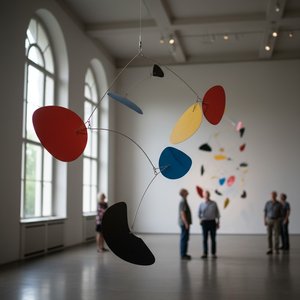
Alexander Calder: Kinetic Sculpture, Mobile Art & the Poetics of Chance
Explore the revolutionary world of Alexander Calder's kinetic sculptures & mobiles. Discover insights for collectors, acquisition advice, and the enduring legacy of this modern master. Expert analysis & art valuation.

Neo-Abstract Art: The High-Impact Evolution of Modern Visual Energy and Geometric Sophistication
Discover the power of Neo-Abstract art. Explore how bold geometric forms and high-impact visual energy are redefining modern design. Learn to curate sophisticated, high-energy spaces with the latest trends in contemporary abstraction and structural color.

25 Arcydzieł Kandinskiego: Kolor, Duchowość i Abstrakcja w Twoim Domu | OriginalUniqueArt.com
Odkryj 25 arcydzieł Wassily Kandinskiego – pioniera abstrakcji i ekspresjonizmu! Poznaj historie, techniki i emocje kryjące się za jego kolorowymi kompozycjami. Reprodukcje obrazów najwyższej jakości na OriginalUniqueArt.com. Eksploruj pełną kolekcję online!

Poza Formą i Kolorem: Ewolucja Abstrakcji Geometrycznej w Sztuce XX i XXI Wieku
Odkryj fascynującą historię abstrakcji geometrycznej w sztuce XX i XXI wieku! Analiza kluczowych nurtów, artystów i technik. Ekspercka wiedza dla kolekcjonerów na OriginalUniqueArt.com.

Geometria Sztuki: 10 Arcydzieł Abstrakcji Geometrycznej | OriginalUniqueArt.com
Odkryj 10 arcydzieł abstrakcji geometrycznej! Poznaj historię Mondriana, Kandinskiego i Maleвича. Inspiracje wnętrzarskie z malarstwem abstrakcyjnym – reprodukcje najwyższej jakości na OriginalUniqueArt.com. Eksploruj kolekcję online!
