Wersja olejowa
 Wszystko o Mask







































 W przypadku dzieł sztuki lub reprodukcji, których którykolwiek z boków przekracza 105 cm (około 41 cali), rama zostanie wysłana w formie zestawu do samodzielnego montażu. Metoda ta zapewnia bezpieczną dostawę i zapobiega uszkodzeniom podczas transportu.


Composition and Visual Elements of the Work
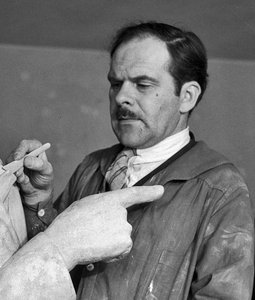
In this black and white photograph of Mask by Alexander Archipenko, the viewer is presented with a direct, frontal perspective of a sculpted bust. The composition is straightforward, stripping away any unnecessary background to focus entirely on the human head. This singular focus directs all attention to the anatomical details of the subject. The face is rendered with a quiet solemnity, characterized by closed eyes and a subtle mouth that suggests a state of deep contemplation. The lighting is even and diffused, which allows the viewer to observe the fine textures of the skin without the distraction of harsh contrasts.
The sculpture rests upon a simple wooden block base, providing a grounded, unadorned foundation for the work. A soft shadow is cast beneath the bust, offering a subtle sense of depth and weight to the piece. Through this arrangement, Alexander Archipenko achieves a sense of stillness. The interplay of light and shadow emphasizes the physical presence of the head, making the details of the facial features feel immediate and tangible. The monochrome palette further emphasizes the structural form and the tactile quality of the material used for the sculpture.
Technique and Materials Used in the Sculpture
The sculpture is rendered in stone, likely marble or a material of similar composition. This choice of medium allows for the fine, textured detail seen in the skin and the subtle, closed expression of the facial features. The monochrome nature of the piece emphasizes the interplay of light across these carved surfaces, highlighting the anatomical precision of the bust.
The work is presented upon a simple wooden block base. This base is crafted from wood, providing a stark, organic contrast to the smooth, cool surface of the stone. The composition remains focused and direct, resting quietly on this functional support.
The visual record of this piece is captured through photography. This technique emphasizes the even, diffused lighting that defines the contours of the head and the texture of the wooden pedestal. The resulting image maintains a sense of solemnity through its controlled, monochromatic palette.
Related Works by Alexander Archipenko
To understand the evolution of this artist's approach to the human form, one might look toward his earlier explorations of volume and space. In 1912, he produced Family Life, a work that began his engagement with the fragmentation of the figure. This period also saw the creation of Walking Woman in 1912, a piece noted for its use of voids to suggest movement. These early experiments established a language of intersecting planes that would define much of his output during the decade.
As his style moved into the following years, the energy of his subjects became more concentrated. His 1913 work, Boxing Match, utilized cubic and ovoid forms to convey a sense of physical force. By 1914, he had produced Torso, continuing his investigation into the sculptural essence of the body. Other pieces in the catalog, such as Untitled (154), further illustrate the breadth of his formal inquiries during this formative era of modernism.
Pytania i odpowiedzi
Czy Mask jest dziełem namalowanym ręcznie, czy wydrukiem?
Malowane ręcznie: wykwalifikowany artysta wykonuje olejną kopię Mask na płótnie lnianym.
Jaki rozmiar wybrać dla Mask?
Dostępne rozmiary obejmują zakres od 37.4 x 26.7 cm (zł894) do 249.1 x 178.0 cm (zł7514); tabela na tej stronie przedstawia główne warianty oraz ich ceny.
Ile trwa dostawa?
Czas dostawy wynosi od 4 do 5 tygodni, przy czym oferujemy bezpłatną ekspresową wysyłkę na cały świat; na tej stronie dostępna jest również opcja pilnej produkcji. Możesz dokonać zwrotu w ciągu 100 dni z pełnym zwrotem kosztów, bez żadnych dodatkowych warunków.
Jakiej techniki użył/a Alexander Archipenko w pracy Mask?
Photography
 Wyślij jako kartkę
 Udostępnij
 Szczegóły dzieła
 Karta informacyjna


 Pobierz obraz
 Podobne obiekty
 Pokaz slajdów
 Pytania i odpowiedzi

 Statystyki