Podgląd w skali 1:1
 Wyślij jako kartkę
 Udostępnij
 Szczegóły dzieła
 Przewodnik

 Pobierz obraz
 Podobne obiekty
 RTG
RTG Pokaz slajdów
 Pytania i odpowiedzi
 Statystyki
Ugolino Martelli

- 102.0 x 85.0 cm


 Rozwiń treść
Giclée / Wydruk artystyczny
Wydruki giclée lub płótna o jakości muzealnej, szybka realizacja i szeroki wybór opcji wykończenia. ( Zamów ręcznie malowaną reprodukcję Przejdź do wersji cyfrowej)




P118B zł10

P118H zł10

P118W zł10

P438Z zł10

P508JH zł12

P508YH zł12

P805H zł10

P805Z zł10

P919BZ zł10

P919G zł10

P919XJ zł10

P959ZH zł10

P968JZ zł12

W106C zł8

W218G zł10

W218JH zł8

W218Y zł10

W307PJ zł10

W316G zł10

W316PJ zł8

W316Y zł10

W398PJ zł8

W4111J zł10

W500HY zł15

W500JH zł15

W692G zł12

W849H zł8

W940BG zł15

W953PJ zł8




Wybierz spośród naszych standardowych rozmiarów, które zachowują oryginalne proporcje dzieła sztuki.

Wpisz wymaganą szerokość i wysokość, aby dopasować grafikę do ramy lub ściany. Wydruk można jedynie przyciąć, nigdy nie powiększając go poza oryginalny obraz, dlatego format o innych proporcjach spowoduje utratę części kompozycji. Przed rozpoczęciem druku prześlemy Ci cyfrowy podgląd do zatwierdzenia. Obraz wyświetlany na tej stronie nie pokazuje rzeczywistego przycięcia — jedynie podgląd oddaje ten efekt.
Dostawa na cały świat () w ciągu 2 tygodni zamiast standardowych 4/5 tygodni. (5 Listopad)

Bezpłatna ekspresowa wysyłka na cały świat

Wysokiej jakości płótno lniane

Pełne ubezpieczenie przesyłki

Gwarancja zwrotu należności celnych i podatków importowych

Gwarancja wiernego odwzorowania kolorów

100-dniowa polityka zwrotów (tylko w przypadku wad)

Gwarancja 100% zwrotu pieniędzy

Zniżka przy zakupie wielu sztuk
 Opcja ze szkłem jest dostępna wyłącznie w rozmiarach poniżej 110 cm

Ugolino Martelli
Giclée / Wydruk artystyczny
Wymiary reprodukcji
-


Cena całkowita
zł 315
A Portrait of Quiet Dignity: Agnolo Bronzino’s Ugolino Martelli
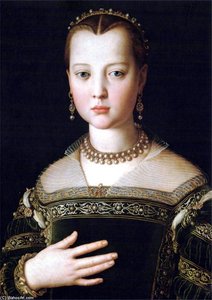
The painting “Portrait of Ugolino Martelli,” executed by Agnolo Bronzino in 1535, stands as a testament to the Mannerist aesthetic—a deliberate rejection of High Renaissance ideals favoring restraint, psychological complexity, and meticulous observation. More than just a likeness of Ugolino Martelli, Marchese di Montalto, this artwork embodies a profound exploration of human character within a carefully constructed visual framework. It’s a piece that whispers rather than shouts, inviting contemplation on themes of intellectuality, status, and the subtle interplay between appearance and inner life—qualities particularly valued during Bronzino's time.- Subject Matter: The portrait depicts Ugolino Martelli, a prominent noble figure of Florence, seated calmly beside a statue. This deliberate positioning isn’t merely decorative; it underscores Martelli’s elevated social standing and subtly suggests an association with classical ideals of virtue and contemplation.
- Style & Technique: Bronzino's signature Mannerist style distinguishes itself from its predecessor through flattened perspectives, stylized drapery, and a disconcerting lack of illusionistic depth. Unlike the luminous realism championed by Leonardo da Vinci or Michelangelo, Bronzino prioritizes precise modeling and subtle shading to convey an impression of stillness and polished elegance. The artist’s masterful use of oil paint allows for incredible detail—notice the intricate folds of Martelli's robe and the meticulous rendering of the statue’s surface.
Historical Context: Florence Under Medici Rule
Florence in 1535 was at the zenith of Medici patronage, a period marked by political stability and artistic flourishing. Cosimo I de' Medici’s reign fostered an environment where artists like Bronzino thrived—commissioned to decorate palaces and commemorate noble families, they catered to the tastes of a discerning elite who appreciated sophistication and intellectual refinement. The portrait reflects this cultural climate, aligning with the Mannerist preoccupation with portraying individuals as embodiments of moral virtue and aristocratic dignity. It’s a visual record of Florence's power and prestige during its golden age.- Symbolism: The statue flanking Martelli is laden with symbolic significance—likely representing Apollo or Minerva, deities associated with intellect and artistic inspiration. This deliberate inclusion reinforces the notion that Martelli possesses cultivated mind and embodies noble ideals.
- Emotional Impact: Despite its apparent calmness, “Portrait of Ugolino Martelli” evokes a sense of contemplative seriousness. Bronzino’s gaze is averted from the viewer, creating an intimacy that invites us to consider Martelli's inner thoughts—a characteristic Mannerist technique designed to heighten psychological realism and convey profound emotion through subtle visual cues.
Legacy & Reproduction Considerations
Bronzino’s influence extended far beyond his own lifetime, shaping the artistic sensibilities of subsequent generations. His meticulous attention to detail and masterful command of technique continue to inspire artists today. OriginalUniqueArt offers exceptionally detailed reproductions of “Portrait of Ugolino Martelli,” utilizing archival pigments and printing processes to faithfully capture the nuances of Bronzino’s original artwork. These reproductions provide a stunning opportunity to experience the beauty and intellectual depth of this iconic Mannerist masterpiece in your own home or studio—a timeless testament to Florentine artistry and humanist ideals.Pytania i odpowiedzi
Jaki nastrój oddaje dzieło "Ugolino Martelli" należące do nurtu Mannerist Style?
"Ugolino Martelli" emanuje Reflective emocjonalnym ładunkiem, wpisując się w nurt Mannerist Style.
Do czego sugerowane jest wykorzystanie „Ugolino Martelli” – Agnolo Bronzino?
Sugerowanym zastosowaniem dla „Ugolino Martelli” – Agnolo Bronzino jest Statement, choć może on służyć również do innych celów.
Czy "Ugolino Martelli" charakteryzuje się silnym kontrastem światłocienia?
Kontrast jasności w dziele "Ugolino Martelli" wynosi Gentle. Kontrast określa stopień zróżnicowania między obszarami jasnymi a ciemnymi.
Biografia artysty
Agnolo Bronzino – Florentine Mannerist Master & Court Painter to the Medici
Agnolo di Cosimo, known to history as Bronzino, emerged from the vibrant artistic landscape of Renaissance Florence in 1503, a period already brimming with genius. Born the son of a butcher, his path diverged sharply from familial trade, guided instead by an innate talent that would see him become one of the most sought-after portraitists of his era and a defining figure of Mannerism. His early training began with Raffaellino del Garbo, but it was under the tutelage of Jacopo da Pontormo that Bronzino’s artistic sensibilities truly took shape. While absorbing Pontormo's innovative style—characterized by expressive emotion and dynamic composition—he ultimately forged his own distinct voice—one characterized by a cool composure and refined detail markedly different from his teacher’s often emotionally charged works. This early period was also influenced by studies with Andrea del Sarto, exposing him to the legacies of Michelangelo and Leonardo da Vinci, foundational influences that would subtly permeate his mature style. The young Bronzino quickly demonstrated an aptitude for capturing not just physical likeness but a certain psychological depth, even in his earliest commissions.Early Influences & Artistic Formation
Bronzino’s formative years were marked by exposure to the artistic currents of Florence under Pontormo and Sarto. Pontormo's dramatic use of color and distorted perspective—particularly evident in *Joseph with Jacob in Egypt*—challenged conventional aesthetic norms, pushing boundaries of representation and fostering a spirit of experimentation. Bronzino absorbed these lessons diligently, adapting Pontormo’s expressive style to create his own brilliant, precisely linear style—a stylistic hallmark that would distinguish him from his teacher's emotionally turbulent canvases. Simultaneously, Sarto instilled in him an understanding of classical ideals and anatomical accuracy, grounding his artistic vision in the humanist tradition. These influences combined to shape Bronzino’s aesthetic sensibilities, preparing him for a career dedicated to mastering both technique and psychological insight. His early portraits already hinted at the refined elegance that would become synonymous with his name—a deliberate restraint that served as counterpoint to the fervor of other Florentine artists of the time.Ascension at the Medici Court
Bronzino’s fortunes dramatically shifted when he secured patronage from Cosimo I de’ Medici, Duke of Tuscany. This relationship solidified after Bronzino contributed to the lavish decorations celebrating Cosimo’s wedding to Eleonora di Toledo in 1539—a project that showcased his artistic prowess and cemented his position as the official court painter for much of his life. It was a role he fulfilled with unwavering dedication and remarkable skill, crafting images of royalty that projected power, prestige, and dynastic ambition. Cosimo and Eleonora themselves became frequent subjects, immortalized in paintings that exude an aristocratic aloofness and polished elegance—works designed not merely to depict physical resemblance but to embody enduring symbols of Medici authority. The meticulous detail and refined technique evident in these portraits established Bronzino as the preeminent artist of Florence’s court, shaping the visual language of power for generations to come. He skillfully navigated the complexities of royal commissions, producing masterpieces that reflected both artistic innovation and political considerations.The Mannerist Style & Artistic Innovation
Bronzino's distinctive style—characterized by elongated figures, stylized poses, and a cool detachment—represented a decisive break from the High Renaissance’s emphasis on naturalism and harmonious balance. He embraced Mannerism as a deliberate aesthetic choice, rejecting the conventions of his predecessors in favor of a more cerebral and intellectually stimulating approach. His figures are rarely caught in moments of spontaneous action; instead, they appear carefully posed, almost sculptural in their stillness—a stylistic hallmark that distinguishes him from artists like Pontormo who prioritized emotional expression. This meticulous attention to detail—the textures of fabrics, the gleam of jewels, the subtle nuances of emotion—was rendered with an almost enamel-like precision—a technique perfected by Bronzino and admired throughout Europe. His masterful use of color—often muted and subtly blended—further enhanced his artistic vision, creating images that conveyed a sense of serene contemplation rather than turbulent passion.- Notable Works: *Venus, Cupid, Folly & Time*, Portraits of Cosimo I de’ Medici and Eleonora di Toledo
Legacy & Enduring Influence
Bronzino's legacy extends far beyond his prolific output as a painter—he was a pivotal figure in the Florentine artistic community. He served as a founding member of the Accademia delle Arti del Disegno in 1563, an institution dedicated to promoting the study of art and fostering artistic excellence—a testament to his commitment to intellectual inquiry and artistic innovation. His influence permeated European court portraiture for decades after his death in 1572, shaping aesthetic standards and establishing a precedent for stylistic control and psychological subtlety. Scholars now recognize Bronzino’s profound contribution to Mannerist art—his ability to capture not just likeness but also the essence of power and status ensuring his enduring place in art history. His meticulous technique and refined style continue to inspire artists today, demonstrating that beauty can reside in restraint and intellectual complexity.
Agnolo Bronzino
1503 - 1572 , Włochy
Krótka nota
- Artistic Movement Or Style: Mannerizm
- Artists Who Influenced This Artist:
- Jacopo da Pontormo
- Michelangelo
- Leonardo da Vinci
- Date Of Birth: 17 listopada 1503
- Date Of Death: 23 listopada 1572
- Full Name: Agnolo di Cosimo
- Nationality: Włoski
- Notable Artworks:
- Wenus, Kuzdej i Czas
- Portret Guidobaldo della Rovere
- Place Of Birth: Florencja, Italia
Powiązane artykuły

10 Legendarnych Brązów, Które Zrewolucjonizowały Sztukę | OriginalUniqueArt
Odkryj 10 legendarnych rzeźb brązowych, które zrewolucjonizowały sztukę! Poznaj historie Rodina, Donatello i innych mistrzów. Inspiracje wnętrzarskie & reprodukcje najwyższej jakości na OriginalUniqueArt.com.

Trwałe Formy: Ewolucja Technik i Tematów w Rzeźbie Przez Wieki – Od Antyku do Renesansu
Poznaj fascynującą historię rzeźby od antyku do renesansu! Odkryj techniki, wybitnych artystów i wpływ na współczesną sztukę. Ekspercka analiza dla kolekcjonerów i miłośników.

10 Legendarnych Brązów Rzeźbiarskich, Które Zmieniły Sztukę | OriginalUniqueArt
Odkryj 10 legendarnych rzeźb brązowych od Rodina, Degasa i innych mistrzów! Poznaj historię powstania arcydzieł sztuki i inspiruj się do dekoracji wnętrz. Reprodukcje najwyższej jakości na OriginalUniqueArt.com – zobacz kolekcję!

Trwała Forma: Rzeźba w Historii – Technika i Rezonans Emocjonalny
Poznaj historię rzeźby od antyku do współczesności! Ekspercka analiza technik, stylów i emocjonalnego wpływu arcydzieł. Inspiracje dla kolekcjonerów i miłośników sztuki.
Dziedzictwo Brązu: Historia, Techniki i Współczesne Interpretacje Rzeźby
Poznaj historię i techniki rzeźby z brązu – od antycznych arcydzieł po współczesne interpretacje. Przewodnik dla kolekcjonerów i inwestorów sztuki. Ekspercka analiza wartości dzieł.