

 Zobacz w skali 1:1
 Wyślij
 Udostępnij
 Szczegóły
 Przewodnik

 Pobierz plik obrazu
 Podobne obiekty
 RTG
RTG Pokaz slajdów
 Statystyki
The Disturbance


 Czytaj więcej
Giclée / Wydruk artystyczny
Wydruki giclée lub płótna o jakości muzealnej, szybka realizacja i szeroki wybór opcji wykończenia. ( Kup ręcznie malowany obraz Przełącz na wersję cyfrową)




P118B zł10

P118H zł10

P118W zł10

P438Z zł10

P508JH zł12

P508YH zł12

P805H zł10

P805Z zł10

P919BZ zł10

P919G zł10

P919XJ zł10

P959ZH zł10

P968JZ zł12

W106C zł8

W218G zł10

W218JH zł8

W218Y zł10

W307PJ zł10

W316G zł10

W316PJ zł8

W316Y zł10

W398PJ zł8

W4111J zł10

W500HY zł15

W500JH zł15

W692G zł12

W849H zł8

W940BG zł15

W953PJ zł8




Wybierz spośród naszych standardowych rozmiarów, które zachowują oryginalne proporcje dzieła sztuki.

Możesz wprowadzić własne wymiary, aby dopasować dzieło do konkretnej ramy lub przestrzeni. Jeśli wybrany rozmiar nie będzie odpowiadał proporcjom oryginalnego obrazu, przytniecie dzieło lub rozszerzymy obraz za pomocą odbicia lustrzanego lub jednolitego wypełnienia krawędzi. Przed rozpoczęciem produkcji prześlemy cyfrową wizualizację do Twojej akceptacji.
Prosimy pamiętać, że podgląd na ekranie nie odzwierciedla faktycznego przycinania ani rozszerzania. Tylko wizualizacja dokładnie pokaże końcową kompozycję.
Mimo dostępności niestandardowych rozmiarów, zalecamy wybór wymiaru z listy zdefiniowanej, aby zachować oryginalne proporcje.
Dostawa na cały świat () w ciągu 2 tygodni zamiast standardowych 4/5 tygodni. (13 Październik)

Bezpłatna ekspresowa wysyłka na cały świat

Wysokiej jakości płótno lniane

Pełne ubezpieczenie transportowe

Gwarancja zwrotu należności celnych i podatków importowych

Gwarancja idealnego odwzorowania barw

100-dniowy okres na zwrot dzieła w przypadku wykrycia wad produkcyjnych

Gwarancja 100% zwrotu pieniędzy

Oferta przy zakupie wielu sztuk
 Opcja ze szkłem jest dostępna wyłącznie w rozmiarach poniżej 110 cm

The Disturbance
Giclée / Wydruk artystyczny
Rozmiar reprodukcji
-


Suma do zapłaty
zł 298
A Snapshot of Prussian Life: The Intimate Drama of "The Disturbance"
Adolph von Menzel’s “The Disturbance,” painted in 1846, isn't merely a portrait; it’s a meticulously observed slice of bourgeois life rendered with the precision and psychological depth characteristic of the German Realist movement. This intimate scene, housed within the State Art Gallery of Karlsruhe, captures a fleeting moment of domestic tension – a subtle discordance simmering beneath the veneer of polite society. The painting depicts two women seated in a dimly lit parlor, one at a piano while the other stands nearby, seemingly observing or perhaps even subtly challenging her companion’s focus. The room itself is richly detailed: a vase sits on a side table, suggesting an attempt to maintain order and elegance amidst the underlying unease, while a clock hangs above the piano, a silent reminder of the passage of time and the pressures of societal expectations.
Menzel's Masterclass in Detail and Observation
Menzel’s genius lay not just in his technical skill – though undeniably masterful – but in his ability to distill complex human emotions into deceptively simple compositions. He was a student of observation, spending countless hours sketching everyday scenes, from bustling marketplaces to quiet moments within private homes. This dedication is evident in the incredibly detailed rendering of the women’s clothing, the textures of the furniture, and even the subtle shadows that play across their faces. The artist's use of light and shadow creates a sense of depth and realism, drawing the viewer into this intimate tableau. Notably, Menzel employed a technique known as *pointillé*, using tiny dots of paint to build up texture and create an illusion of shimmering surface detail – a hallmark of his mature style.
A Window into 19th-Century Prussia
“The Disturbance” offers a fascinating glimpse into the social dynamics of mid-19th century Prussia. Menzel, deeply sympathetic to the Prussian monarchy and its values, frequently depicted scenes from Frederick the Great’s reign, but also sought to capture the complexities of everyday life within the kingdom. This painting reflects the growing interest in documenting the realities of bourgeois society – a shift away from idealized historical narratives towards a more nuanced portrayal of contemporary life. The scene speaks to the constraints placed upon women during this era, suggesting a subtle power dynamic and perhaps even a hint of suppressed rebellion. The quiet tension between the two figures hints at unspoken desires or unresolved conflicts, reflecting the anxieties and uncertainties of a rapidly changing society.
Symbolism and Emotional Resonance
While seemingly straightforward, “The Disturbance” is rich in symbolic meaning. The piano, often associated with domestic harmony and refinement, becomes a focal point of discord. The woman at the instrument represents perhaps a desire for creative expression or social engagement, while her companion’s stance suggests a degree of detachment or disapproval. The muted color palette – dominated by browns, grays, and creams – reinforces the atmosphere of quiet tension and unspoken emotions. Menzel masterfully uses these visual cues to evoke a sense of melancholy and introspection, inviting viewers to contemplate the hidden currents beneath the surface of everyday life. The painting’s enduring power lies in its ability to capture a universal human experience: the subtle complexities of relationships and the ever-present undercurrent of unspoken feelings.
Reproductions & Beyond
A faithful reproduction of “The Disturbance” brings this captivating scene into any space, offering a touch of understated elegance and intellectual depth. Available in various sizes, from compact 5x90cm prints to larger formats suitable for statement walls, these reproductions capture Menzel’s meticulous detail and evocative atmosphere. Consider framing options that complement the painting's muted tones – a simple black frame will highlight the artwork's inherent drama, while a warmer wood tone can add a touch of rustic charm. “The Disturbance” is more than just a beautiful image; it’s an invitation to engage with the complexities of human emotion and the enduring legacy of one of Germany’s greatest artists.
Pytania i odpowiedzi
Czy „The Disturbance” autorstwa Adolph Menzel to dzieło o jasnej czy ciemnej kolorystyce?
Jasność dzieła „The Disturbance” autorstwa Adolph Menzel wynosi deep_shadow, przy luminancji na poziomie Dark.
Jak kolory w dziele "The Disturbance" współgrają ze sobą?
Kolory dzieła „The Disturbance” autorstwa Adolph Menzel wykazują Unified Palette harmonię. Harmonia opisuje wzajemne relacje między kolorami.
Jakie są proporcje oraz wymiary dzieła „The Disturbance” autorstwa Adolph Menzel?
Format dzieła "The Disturbance" to Portrait, a wymiary oryginału to 5 x 90 cm. Obie te informacje są przydatne przy planowaniu reprodukcji.
Jaki ładunek emocjonalny niesie ze sobą „The Disturbance” autorstwa Adolph Menzel?
Emocjonalny ton przypisany do „The Disturbance” autorstwa Adolph Menzel to Reflective. Podsumowuje on uczucia, jakie wyraża to dzieło.
Kiedy i z jakich materiałów wykonano "The Disturbance"?
"The Disturbance" powstało w 1846 roku przy użyciu techniki Acrylic On Canvas. Materiał i data opisują, w jaki sposób oraz kiedy wykonano oryginał.
W jaki sposób mogę kupić wydruk „The Disturbance” autorstwa Adolph Menzel?
„The Disturbance” jest dostępny jako szlachetna odbitka na płótnie bawełnianym lub archiwalnym papierze płótnopodobnym. Zamówienia można składać na ta strona, w wybranym przez Ciebie rozmiarze.
Czy „The Disturbance” autorstwa Adolph Menzel to portret, pejzaż czy kompozycja kwadratowa?
„The Disturbance” autorstwa Adolph Menzel to kompozycja w formacie Portrait. Warto sprawdzić proporcje przed wyborem rozmiaru wydruku.
Jaki rozmiasto wydruku "The Disturbance" będzie odpowiedni do mojego pokoju?
Zalecane zestawienie dla „The Disturbance” autorstwa Adolph Menzel: wydruk w formacie Medium do Living Room.
Biografia artysty
A Life Etched in Realism: The World of Adolph von Menzel
Adolph Friedrich Erdmann von Menzel, a name synonymous with German Realism, was more than just a painter; he was a visual chronicler of 19th-century life. Born on December 8, 1815, in Breslau (now Wrocław, Poland), his journey began not amidst the hallowed halls of artistic academies, but within the practical world of his father’s lithographic workshop. This early immersion in reproduction and detail would profoundly shape his aesthetic sensibilities. Though initially intended for a professorial path by his father, young Adolph's passion for art proved undeniable, leading to brief studies at the Berlin Academy of Art in 1833 before embracing a largely self-taught approach. He quickly distinguished himself through meticulous draftsmanship and an uncanny ability to capture the essence of everyday scenes, initially through lithography, but soon expanding into painting and etching—media he would master with unparalleled skill. Menzel’s life was one dedicated to observation, to translating the world around him onto canvas and paper with a precision that bordered on photographic realism, yet always imbued with a subtle emotional depth.Early Years and Artistic Beginnings
Menzel's early years were marked by a unique blend of practicality and artistic inclination. His father, a skilled lithographer, established a successful workshop in Breslau, providing Adolph with invaluable experience in the techniques of reproduction and printmaking. This hands-on training instilled in him a deep appreciation for detail and precision—qualities that would become hallmarks of his later work. Despite his father’s initial aspirations for him to pursue a career in academia, young Adolph's passion for art quickly overshadowed all other considerations. He enrolled briefly at the Berlin Academy of Art in 1833, but found the formal training restrictive and ultimately opted for a largely self-taught path. This decision allowed him to develop his own unique style, characterized by its meticulous draftsmanship and unflinching realism. His early works primarily focused on lithography, producing stunningly detailed reproductions of historical events and contemporary scenes. These prints demonstrated an exceptional command of technique and a keen eye for observation—qualities that would serve as the foundation for his later paintings.Historical Grandeur and Patriotic Imagery
Menzel’s career gained significant momentum through his illustrations for historical works, particularly those depicting the reign of Frederick the Great. Commissioned to create large-scale compositions for historical narratives, he meticulously researched each scene, striving for an unparalleled level of accuracy and detail. These paintings resonated deeply with a burgeoning national pride in Prussia during a period of significant political and social change. The dramatic lighting, dynamic composition, and carefully rendered costumes conveyed a sense of grandeur and power—elements that appealed to the public’s desire for patriotic imagery. Works like *The Battle of Jena-Auerstedt* exemplify this early success, capturing the intensity and chaos of battle with remarkable realism. However, Menzel's artistic vision extended beyond mere historical recreation; he sought to imbue his paintings with a sense of drama and emotion, creating works that were both visually stunning and intellectually stimulating.Shifting Focus: Genre Scenes and Modern Life
As the 19th century progressed, Menzel’s artistic focus began to shift away from grand historical narratives towards more intimate and contemporary subjects. He increasingly turned his attention to genre scenes—depictions of everyday life in Berlin—and studies of modern industrial labor. This transition marked a significant departure from the conventions of academic painting and signaled Menzel's commitment to capturing the realities of the modern world. His masterpiece, *The Iron Rolling Mill*, completed between 1872 and 1875, stands as a testament to this shift in focus. The monumental canvas depicts the grueling labor of ironworkers, capturing their physical strength, exhaustion, and camaraderie with unflinching honesty. This work was not romanticized; it was raw, visceral, and profoundly modern in its approach—a stark contrast to the idealized depictions of industry prevalent at the time. Alongside *The Iron Rolling Mill*, Menzel produced a wealth of other genre paintings that offered insightful glimpses into the lives of ordinary Berliners.Influences and Artistic Style
Menzel’s artistic style was shaped by a complex interplay of influences. While largely self-taught, he deeply admired the Dutch Masters—artists like Rembrandt and Vermeer—for their mastery of light and shadow, their ability to capture the essence of human emotion, and their commitment to realism. He also drew inspiration from the works of other German artists, including Caspar David Friedrich, though Menzel’s approach differed in its emphasis on observation and detail. His meticulous draftsmanship is evident in every work, characterized by a remarkable level of precision and attention to detail. Furthermore, his skill with etching—a medium he mastered throughout his career—allowed him to create incredibly detailed drawings that served as studies for his paintings. Menzel’s artistic development was not linear; he continually experimented with technique and subject matter, adapting his style to suit the demands of each project.Legacy and Historical Significance
Adolph von Menzel's impact on German art is undeniable. He bridged the gap between traditional historical painting and modern realism, paving the way for future generations of artists to explore new subjects and techniques. His posthumous reputation rests not only on his paintings but also on his extensive graphic work—drawings and etchings that reveal a remarkable sensitivity and observational skill. He was knighted by Kaiser Wilhelm II in 1898, becoming Adolph von Menzel, a recognition of his immense contribution to the cultural landscape of Germany. His works are now celebrated in museums across the country, including the Museum Georg Schäfer and the Städtische Galerie im Lenbachhaus. Menzel’s art serves as a powerful reminder of the beauty and complexity inherent in everyday life, and his dedication to capturing reality with honesty and precision ensures his enduring place as one of the most important German artists of the 19th century. His legacy continues to inspire artists and viewers alike, offering insights into a pivotal period of social and industrial transformation.
Adolph Menzel
1815 - 1905 , Polska
Najważniejsze informacje
- Artistic Movement Or Style: Realizm
- Artists Or Movements Influenced By This Artist: ['Edgar Degas']
- Artists Who Influenced This Artist: ['Holenderscy mistrzowie']
- Date Of Birth: 8 grudnia 1815
- Date Of Death: 9 lutego 1905
- Full Name: Adolph Friedrich Erdmann von Menzel
- Nationality: Niemiec
- Notable Artworks:
- Kowalnia żelaza
- Rynek w Weronie
- Portret
- Place Of Birth: Wrocław, Polska
Zobacz także powiązane artykuły

Trwała Spuścizna Formalnego Portretu: Władza, Tożsamość i Artystyczna Eksploracja
Odkryj fascynującą historię portretu formalnego – od antycznych korzeni po renesansowe arcydzieła. Analiza wpływu władzy, tożsamości i technik artystycznych na rozwój tego wyjątkowego gatunku sztuki.
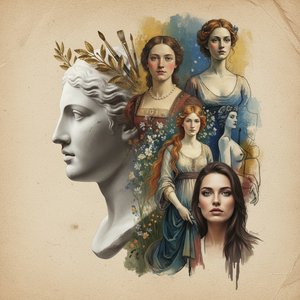
Muza Przez Wieki: Kobieta jako Temat i Symbol w Historii Sztuki – Inspiracje i Ewolucja Obrazu
Poznaj fascynującą historię kobiecości w sztuce! Analizujemy wpływ mitologii, feminizmu i współczesnych artystek na ewolucję obrazu kobiety – od symbolu do bohaterki. Ekspercka analiza i inspiracje.

Adolph von Menzel: Realism, Prussian Society & the Painterly Chronicle of a Changing Era
Explore the life & work of Adolph von Menzel, a leading German Realist painter. Discover his detailed depictions of Prussian society, innovative techniques, and lasting influence on art history. Hand-painted reproductions available at OriginalUniqueArt.
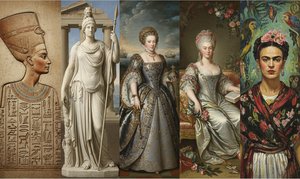
Portrayals of Power & Perception: A Historical Survey of Women in Art
Explore the rich history of women in art – from iconic muses to groundbreaking artists. Discover feminist movements & reclaim female narratives with OriginalUniqueArt. Expert insights for discerning collectors.

Muza Przez Wieki: Kobieta jako Przedmiot i Symbol w Historii Sztuki – Analiza i Interpretacje
Odkryj fascynującą historię kobiecości w sztuce! Analizujemy archetypy, portrety i ewolucję reprezentacji kobiet od antyku po współczesność. Ekspercka analiza i interpretacje.


