

 Se i rommet
 Del som digitalt kort
 Del
Del
 Detaljer
 Studentguide

 Last ned
 Liknende objekter
 Røntgen
 Lysbildefremvisning
 Besøksstatistikk
Ryderløse Hesteraser
 Akryl på lerret
- Veggkunst
- Romantic Painting
 1817
1817 45.0 x 60.0 cm
 Louvre
 Les mer
Håndlaget oljereproduksjon
Håndmalt olje på lerret i din valgte størrelse og ramme, laget på bestilling av våre kunstnere. ( Bytt til trykkversjon Gå til digitalt bilde)




P118B Nkr10

P118H Nkr10

P118W Nkr10

P438Z Nkr10

P508JH Nkr12

P508YH Nkr12

P805H Nkr10

P805Z Nkr10

P919BZ Nkr10

P919G Nkr10

P919XJ Nkr10

P959ZH Nkr10

P968JZ Nkr12

W106C Nkr8

W218G Nkr10

W218JH Nkr8

W218Y Nkr10

W307PJ Nkr10

W316G Nkr10

W316PJ Nkr8

W316Y Nkr10

W398PJ Nkr8

W4111J Nkr10

W500HY Nkr15

W500JH Nkr15

W692G Nkr12

W849H Nkr8

W940BG Nkr15

W953PJ Nkr8




Velg mellom våre forhåndsdefinerte størrelser som bevarer kunstverkets opprinnelige proporsjoner.

Skriv inn bredden og høyden du trenger, slik at den passer til din ramme eller vegg. Dette er håndmalt, så for en størrelse med en annen form kan kunstneren male litt mer rundt bildet, eller beskjære det noe — du velger selv. Vi sender deg en digital mockup for godkjenning før maleriet påbegynnes. Bildet som vises på denne siden viser ikke det faktiske resultatet — kun mockuppen gjør det.
Etter bestilling vil OriginalUniqueArt.com-teamet sende e-post til kunden for instruksjoner og sende et utkast (mockup) som forhåndsvisning.
Verdensomspennende levering () på 3–4 uker i stedet for standard 5 uker. (23 October). Ingen kompromisser med kvaliteten.

Gratis ekspressfrakt over hele verden

Lerretsduk av høykvalitets lin

Full transportforsikring

Garanti for refusjon av toll og importavgifter

Garantert fargeekthet

100 dagers returrett ved fabrikasjonsfeil

100% pengene tilbake-garanti

Mengderabatt
 Glassalternativet er kun tilgjengelig i størrelser under 110 cm

Ryderløse Hesteraser
Reproduksjonsmetode
Format på reproduksjon
-


Totalpris
Nkr 2851
Jean-Louis André Théodore Géricault: Et Sønnens Ånd i Romantikken
Jean-Louis André Théodore Géricault (1791–1824) var en fransk maler og grafiker, hvis mest kjente verk er «Raftet av Medusa» (1818–19). Selv om han døde ung, var han en pioner innen romantikken – en kunstretning som vektlegger følelser og individuell erfaring fremfor estetiske regler. Han ble født i Rouen, Frankrike, midt i revolusjonens vibrerende energi og Napoleons ambisjonære grep om makten, noe som formet hans kunstneriske utvikling på dyptgående vis.
- Opplæring og Inspirasjon: Géricaults tidlige kunstneriske trening ble gitt av Carle Vernet, en mester innen engelsk sportsmaleri, hvor han fikk et skarpt øye for anatomi og bevegelse – spesielt når det gjaldt hester. Dette førte til at han utviklet en unik stil som kombinerte klassisk komposisjon med dynamiske linjer og farger. Hans studier hos Pierre-Narcisse Guérin ytterligere styrket hans forståelse av klassisk kunsthistorie og estetikk.
- «Raftet av Medusa»: Et Symbol på Lidelse og Kamp: Géricaults magnum opus, «Raftet av Medusa», er ikke bare et teknisk imponerende verk, men også en kraftfull allegori for menneskelig styrke og nederlag. Maleriet skildrer katastrofen ved Medusas skipsvrak etter et dramatisk sølvfartøystyveri, hvor besetningen ble overlatt til å dø av sult og sykdom. Dette bildet er blitt tolket som en kritikk av Napoleons regime og en universell refleksjon over menneskelig eksistens.
- Teknikk og Stil: Géricaults bruk av teknikker som impresjonisme og ekspressive farger var banebrytende for sin tid. Han eksperimenterte med ulike komposisjonsteknikker, inkludert perspektiv og lyssetting, for å skape en følelse av atmosfære og dynamikk som gjenspeiler den rå følelsen av tragedie og menneskelig lidelse.
- Historisk Kontekst: Géricaults kunst ble produsert i en periode med sosial uro og politiske omveltninger, noe som reflekteres i hans verk. Han var engasjert i romantikkens ideer om følelser og individuell erfaring, og han ønsket å uttrykke menneskelige følelser på en autentisk og ærlig måte.
«Raftet av Medusa» er mer enn bare et kunstverk; det er et vitnesbyrd om Géricaults visjonære talent og hans evne til å fange essensen av menneskelig erfaring. Maleriet forteller historien om en tragedie som fikk stor oppmerksomhet i offentligheten, og det har fortsatt å inspirere kunstnere og publikum over hele verden.
Spørsmål og svar
Hva er den fargemessige identiteten til "Ryderløse Hesteraser" av Théodore Géricault?
"Ryderløse Hesteraser" av Théodore Géricault bruker en Jordnær-palett, med Espresso (#493930) som den dominerende fargen.
Hvor mettet er fargepaletten i "Ryderløse Hesteraser"?
Fargene i "Ryderløse Hesteraser" av Théodore Géricault har en Dempet metning. Metning beskriver hvor levende eller dempede fargene er.
Hva er formatet og størrelsen på "Ryderløse Hesteraser"?
"Ryderløse Hesteraser" av Théodore Géricault er en Landskap komposisjon som måler 45 x 60 cm i originalformat.
Kunstnerbiografi
A Life Forged in Romantic Fire
Jean-Louis André Théodore Géricault, a name that echoes through the annals of French art history, was born into a world poised on the precipice of profound change. Emerging from Rouen in 1791, his early years unfolded amidst the reverberations of revolution and the burgeoning ambitions of Napoleon. Though inheriting a comfortable existence through his family’s legal and business endeavors – including a thriving tobacco enterprise – Géricault's destiny wasn’t etched in law or commerce, but rather within the vibrant realm of artistic expression. His initial training under Carle Vernet, a master of English sporting art, instilled in him a keen eye for anatomy and movement, particularly evident in his depictions of horses—a fascination that would define much of his work. However, it was his subsequent studies with Pierre-Narcisse Guérin that provided the bedrock for his artistic vision, grounding him in the principles of classical composition while simultaneously fueling his restless spirit to seek knowledge independently within the hallowed halls of the Louvre.The Louvre as Academy: A Dialogue with Masters
From 1810 to 1815, the Louvre transformed into Géricault’s true academy—a sanctuary where he immersed himself in the works of the Old Masters. Rubens, Titian, Velázquez, and Rembrandt became his mentors, not merely through imitation but through a profound engagement with their artistic philosophies. This period wasn't about slavish copying; it was an intense dialogue, an attempt to internalize the very essence of these masters’ approaches to light, shadow, and the human form. He spent countless hours studying their brushstrokes, analyzing their compositions, and grappling with their emotional intensity. This self-directed education fostered a unique artistic voice—a bold departure from the prevailing Neoclassical conventions that emphasized restraint and idealized beauty. His early works, such as *The Charging Chasseur* (1812), already hinted at this emerging sensibility, showcasing a remarkable dynamism of execution and a fascination with movement reminiscent of Rubens’ energetic canvases. He continued to explore equestrian themes, honing his skills in capturing the power and grace of horses—a subject that would remain a recurring motif throughout his career, often imbued with a sense of dramatic tension and impending conflict.The Raft of the Medusa: A Monument to Human Suffering
Géricault’s name is inextricably linked with *The Raft of the Medusa* (1818-1819), a monumental canvas that transcends mere historical depiction and becomes a searing indictment of human fallibility and societal injustice. Inspired by the harrowing true story of the shipwreck of the French frigate Méduse in 1816, where negligence and incompetence led to unimaginable suffering for its passengers, the painting is a visceral portrayal of desperation, hope, and despair. Géricault undertook meticulous research—interviewing survivors, studying corpses at hospitals, and even constructing a scale model of the raft itself to ensure accuracy—a testament to his commitment to realism and emotional truth. The resulting work isn’t simply a depiction of tragedy; it's an immersive experience that confronts viewers with the raw reality of human suffering. The composition, built around two pyramidal structures – one representing despair and death, the other embodying hope and potential rescue – creates a dynamic tension that draws the eye across the canvas, mirroring the struggle for survival amidst overwhelming odds. *The Raft of the Medusa* was controversial upon its exhibition at the Salon of 1819, sparking political debate and solidifying Géricault’s reputation as a daring and unconventional artist. The painting's impact extended beyond the art world, becoming a symbol of governmental incompetence and human resilience in the face of unimaginable hardship.Beyond Tragedy: Military Themes and Artistic Legacy
While *The Raft of the Medusa* remains his most celebrated achievement, Géricault’s artistic output extended far beyond this singular masterpiece. He continually returned to military themes—evident in works like *Wounded Cuirassier* (1814) and *The Derby of Epsom* (1821)—demonstrating a fascination with drama and expressive force. These paintings reveal his continued exploration of human emotion under duress, often focusing on the physical and psychological toll of conflict. He also ventured into portraiture and lithography, further expanding his artistic repertoire and solidifying his position as a leading figure in the burgeoning Romantic movement. Sadly, Géricault’s life was tragically cut short by illness at the age of 32 in 1824, following years of suffering from riding accidents and a chronic tubercular infection. His premature death robbed the art world of a prodigious talent, but his influence on subsequent generations of artists—particularly Eugène Delacroix—was profound. He is remembered as a pioneer of Romanticism, an artist who dared to confront difficult truths and imbue his work with a powerful emotional resonance that continues to captivate audiences today. His bronze figure reclines, brush in hand, on his tomb at Père Lachaise Cemetery in Paris, above a low-relief panel depicting the harrowing scene from *The Raft of the Medusa*—a fitting tribute to an artist who dedicated his life to capturing the complexities and contradictions of the human condition.Key Characteristics & Influences
- Romanticism: Géricault is considered one of the first French Romantic painters, moving away from Neoclassical ideals towards emotional intensity and dramatic expression.
- Dramatic Composition: His paintings are known for their dynamic compositions, often utilizing diagonal lines and contrasting light and shadow to create a sense of movement and tension.
- Realism & Research: Géricault was committed to realism, conducting extensive research—including studying corpses and interviewing survivors—to ensure the accuracy and emotional impact of his work.
- Influence of Old Masters: He drew inspiration from Baroque masters like Rubens, Titian, and Velázquez, adopting their techniques for dramatic lighting and expressive brushwork.
- Focus on Human Suffering: His art often depicts scenes of tragedy, despair, and the darker aspects of human experience, reflecting a Romantic fascination with intense emotions.

Théodore Géricault
1791 - 1824 , Frankrike
Kort om kunstneren
- Artistic Movement Or Style: Romantikk
- Artists Or Movements Influenced By This Artist:
- Rubens
- Titian
- Artists Who Influenced This Artist:
- Carle Vernet
- Guérin
- Date Of Birth: 26 september 1791
- Date Of Death: 26 januar 1824
- Full Name: Jean-Louis André Théodore Géricault
- Nationality: Fransk
- Notable Artworks:
- Raftet av Medusa
- Wounded Cuirassier
- Derby Epsom
- Place Of Birth: Rouen, Frankrike
Relaterte artikler

Émile Jean Horace Vernet: Romantic Realism & Depicting 19th-Century Life
Explore the life & art of Émile Jean Horace Vernet, a master of Romantic Realism. Discover his captivating battle scenes, portraits, and Orientalist works – a window into 19th-century France. Learn about his techniques & enduring legacy.
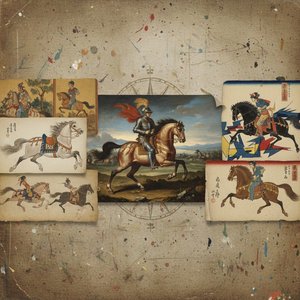
The Noble Steed on Canvas: A Historical & Artistic Exploration of Horse Painting Across Cultures
Explore the rich history of horse painting! Discover masterpieces from Stubbs to Munnings & learn about symbolism, techniques & artists. Find museum-quality reproductions at OriginalUniqueArt.

1800-tallets Mesterverk: 10 Kunstverk som Definerer Epoken – OriginalUniqueArt.no
Opplev 1800-tallets kunst gjennom 10 ikoniske mesterverk! Fra romantikk til impresjonisme – lær om Munch, Van Gogh og Monet. Finn museumskvalitets reproduksjoner & interiørinspirasjon på OriginalUniqueArt.com. Utforsk samlingen online!

The Equine Muse: A Historical & Artistic Exploration of Horses in Painting
Explore the captivating history of horses in painting! Discover Renaissance masterpieces, Baroque grandeur & expert insights for collecting equestrian art. Learn about symbolism, techniques & lasting value with OriginalUniqueArt.

Romantic Realism's Finest: 10 Masterpieces for Your Home | OriginalUniqueArt
Explore 10 defining masterpieces of Romantic Realism! Discover Courbet, Millet & Daumier's powerful paintings—capturing emotion and social realities. Find museum-quality reproductions for your home at OriginalUniqueArt.com.


