Renaissance
St. Jerome (Sandro Botticelli)
Sandro Botticelli (1445–1510) har laget St. Jerome. Det tilhører Renaissance-bevegelsen. Den er laget i Oil On Panel. Verket er bevart ved Eremitasjen i St. Petersburg, Russland.
- Oil On Panel
- Eremitasjen, St. Petersburg

 Forhåndsvisning

 Håndmalt oljemaleri
 Send
 Del
 Faktablad


 Last ned bilde
 Liknende objekter
 Røntgenundersøkelse
 Lysbildefremvisning
 Spørsmål og svar

 Statistikk
St. Jerome, kort fortalt
- Tittel
- St. Jerome
- Kunstner
- Sandro Botticelli (1445–1510)
- Kunstner født i
- Firenze, Italia
- Medium
- Oil On Panel
- Hvor det kan ses
- Eremitasjen, St. Petersburg, Russland
- Bevegelse
- Renaissance
- Periode
- Renaissance
- Motiv
- religious lamentation, medieval grief scene, renaissance figures, classical composition, memento mori theme, oil painting technique
Hva forestiller St. Jerome?
A Moment of Profound Grief: Exploring Botticelli’s *St. Jerome*
Sandro Botticelli's *St. Jerome*, a poignant depiction of sorrow and contemplation, offers a captivating glimpse into the artistic sensibilities of the Early Renaissance. While often overshadowed by his more celebrated mythological works like *The Birth of Venus*, this painting reveals Botticelli’s mastery of religious iconography and emotional depth.
Subject & Narrative
- A Scene of Lamentation: Though initially identified as the Lamentation, recent scholarship suggests this work depicts St. Jerome in his final moments, receiving communion before death. The central figure, surrounded by mourners, is likely not Joseph of Arimathea but figures expressing grief over the saint’s impending passing.
- St. Jerome – A Scholar and Ascetic: Saint Jerome (c. 347–420 AD) was a prominent theologian and translator of the Bible into Latin (the Vulgate). His life, marked by both scholarly pursuits and periods of intense asceticism, makes him a compelling subject for artistic representation.
- Setting the Stage: The rocky, cave-like setting evokes a sense of seclusion and spiritual retreat. This isolated location emphasizes the solemnity of the occasion and invites contemplation on mortality.
Artistic Style & Technique
- Renaissance Linearity: Botticelli’s style is characterized by elegant, flowing lines that define forms with precision. This linearity bridges the gap between the late Gothic and Early Renaissance aesthetics.
- Oil on Panel – A Flourishing Medium: Executed in oil on panel, the technique allows for subtle gradations of color and a smooth application of paint, enhancing the realism of the figures and drapery.
- Subdued Palette & Dramatic Lighting: The painting employs a subdued color palette, dominated by earth tones and muted hues. This is contrasted with dramatic lighting that highlights the central figure and casts shadows, intensifying the emotional impact.
- Perspective & Composition: While perspective isn’t fully developed as in later Renaissance works, Botticelli utilizes layering and overlapping forms to create a sense of depth within the confined space. The composition draws the viewer's eye towards St. Jerome through strategic arrangement and contrast.
Symbolism & Iconography
- Mortality & Remembrance: Symbolic elements, such as a skull (a *memento mori*), serve as reminders of human mortality and the transient nature of life.
- Religious Devotion: The act of receiving communion underscores St. Jerome’s unwavering faith and devotion to God in his final moments.
- The Mourners: The surrounding figures represent the grief and sorrow felt by those witnessing the saint's passing, emphasizing the human cost of spiritual dedication.
Historical Context & Legacy
- Florentine Renaissance: Created during the vibrant artistic climate of Florence in the late 15th century, *St. Jerome* reflects the humanist ideals and religious fervor of the period.
- Botticelli’s Diverse Oeuvre: While renowned for his mythological paintings, Botticelli also produced numerous religious works, demonstrating his versatility as an artist.
- Rediscovery & Appreciation: Like many Renaissance masters, Botticelli's work experienced a period of relative obscurity before being rediscovered and celebrated by the Pre-Raphaelites in the 19th century.
Emotional Impact & Interpretation
St. Jerome* evokes feelings of profound sadness, reverence, and contemplation. The painting invites viewers to reflect on themes of mortality, faith, and the human condition. Its quiet intensity and masterful execution make it a compelling work of art that continues to resonate with audiences today.
Hvilket museum har St. Jerome?
Eremitasjen
St. Petersburg, Russland
Eremitasjens opprinnelse og historie Eremitasjen har sine røtter helt tilbake til 1764, da museets fundament ble lagt gjennom anskaffelsen av en samling på 225 malerier fra kjøpmannen Johann Ernst Gotzkowsky i Berlin. Det var Katarina den store som satte i gang denne samleprosessen, og hennes visjon etablerte museets tilstedeværelse i St. Petersburg, Russland.


Høyoppløselige bilder av St. Jerome
Fritlig eiendom: kunstneren døde i 1510.
Sandro Botticelli, St. Jerome, Eremitasjen. Felleseie
Spørsmål om St. Jerome, besvart
Hvor kan "St. Jerome" av Sandro Botticelli sees utstilt i dag?
Originalen av "St. Jerome" av Sandro Botticelli oppbevares i Eremitasjen, St. Petersburg, Russland. En reproduksjon gjør det mulig å stille ut verket i eget hjem.
Hvilken teknikk er brukt i "St. Jerome" av Sandro Botticelli?
Sandro Botticelli brukte Oil On Panel-teknikken i "St. Jerome". Teknikken definerer det materielle uttrykket til det originale verket.
Hva forestiller "St. Jerome" av Sandro Botticelli?
Temaene i "St. Jerome" av Sandro Botticelli inkluderer religious lamentation, medieval grief scene, renaissance figures, classical composition, memento mori theme, oil painting technique, symbolic imagery. Sammen oppsummerer de verkets motiv.
Er "St. Jerome" fri for opphavsrett?
Når det gjelder opphavsrett, er "St. Jerome" fritt tilgjengelig – opphavsretten har utløpt.
Hvilken kunstner kan "St. Jerome" tilskrives?
Kunstneren bak "St. Jerome" er Sandro Botticelli. Verket er katalogisert under Sandro Botticelli sitt navn.
Hvilken kunstretning tilhører "St. Jerome" av Sandro Botticelli?
"St. Jerome" av Sandro Botticelli tilhører Renaissance-retningen. Denne retningen gir det stilistiske kontekstet til verket.
Hvilken fase av Sandro Botticelli sin kunstneriske utvikling representerer "St. Jerome"?
I Sandro Botticelli sin karriere tilhører "St. Jerome" Mature Renaissance. Denne perioden gjør det mulig å sammenligne verket med kunstnerens øvrige arbeider.
Hvorfor er den opphavsrettslige statusen til "St. Jerome" slik den er?
"St. Jerome" av Sandro Botticelli er fritt tilgjengelig – opphavsretten har utløpt. Opphavsretten beregnes fra kunstnerens dødsår, og Sandro Botticelli døde i 1510.
Oppbevares "St. Jerome" i kunstnerens hjemland?
Nei – kunstverket oppbevares i utlandet. Sandro Botticelli ble født i Italia, og originalen av "St. Jerome" oppbevares i et museum i Russland.
Om kunstneren, Sandro Botticelli
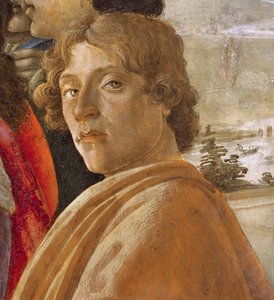
1445–1510, Italia
Sandro Botticelli
Livet til Sandro Botticelli Sandro Botticelli levde sitt liv i de trange, travle gatene i Firenze, Italia. Født som Alessandro di Mariano di Vanni Filipepi rundt 1445, var han sønn av en garver. Familien hans holdt til i nabolaget Ognissanti, et sted han forble tett knyttet til gjennom alle sine år. Han ble til slutt kjent under navnet Botticelli, et kallenavn hentet fra ordet botticello, som refererer til en liten vinfat eller tønne.
Også av Sandro Botticelli
 Venus' fødsel1485
 Primavera1482
 Venus og Mars1483
 Adorarer av Magierne
Essays om St. Jerome
 25 Masterpieces by Sandro Botticelli: The Ultimate Guide to Renaissance BeautyJourney through the ethereal beauty of Sandro Botticelli's greatest works. From The Birth of Venus to his mythic Renaissance masterpieces, …
 The Scholar and the Hermit: Examining the Iconography of Saint Jerome in Renaissance and Baroque ArtExplore the profound iconography of Saint Jerome through Renaissance and Baroque masters. Discover the secrets of sacred art history now.
 Master of Shadow: The Top 25 Essential Artworks by Jusepe de RiberaExplore 25 iconic works by Jusepe de Ribera. Master the drama of Baroque tenebrism. Discover all masterpieces on OriginalUniqueArt.com.