Bytt til trykk
 Vis hele teksten







































 For kunstverk eller reproduksjoner som er større enn 105 cm (ca. 41 tommer) på noen side, vil rammen bli sendt som et sett som må monteres. Denne metoden sikrer trygg levering og forhindrer skader under transport.


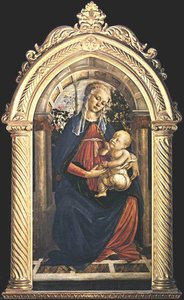
A Moment of Reverence: Sandro Botticelli’s “Adoration of the Magi”
Sandro Botticelli's "Adoration of the Magi" isn't merely a painting; it’s a portal to the heart of the Early Renaissance, a time when faith and artistry intertwined in breathtaking ways. Completed around 1475 for Gaspare di Zanobi del Lama’s chapel in Santa Maria Novella, Florence, this monumental work transports us to a pivotal moment – the presentation of gifts by the Magi to the infant Jesus. It's a scene brimming with energy, yet profoundly serene, capturing the essence of reverence and the promise of divine grace.
At first glance, the composition is remarkably dynamic. The Virgin Mary, radiating tenderness, cradles the Christ Child, while kneeling before them are the Magi – figures representing the diverse corners of the known world. These aren’t just wealthy travelers; they symbolize humanity's yearning for connection with the divine. The gifts themselves—gold, frankincense, and myrrh—hold layers of symbolic meaning: gold signifying royalty and divinity, frankincense representing purification and prayer, and myrrh symbolizing sacrifice and immortality. Surrounding this central tableau are attendants, onlookers, and perhaps even shepherds, all drawn into this sacred encounter, creating a vibrant tapestry of human experience.
The Language of Renaissance Art
Botticelli’s mastery lies in his ability to seamlessly blend the stylistic conventions of the Early Renaissance with an intensely personal vision. The painting is characterized by graceful lines, delicate modeling – a subtle sculpting effect achieved through layering paint—and a refined sense of composition. Notice how Botticelli expertly uses overlapping figures to create depth and a feeling of spatial complexity, while the architectural elements, particularly the dilapidated structure behind the scene, subtly emphasize humility and foreshadow Christ’s future sacrifice. The artist likely employed tempera on panel, a technique known for its smooth surfaces and luminous quality, meticulously building up color through countless layers of pigment mixed with egg yolk.
Historical Context & Patronage: A Reflection of Florence
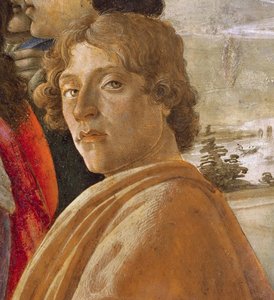
The “Adoration of the Magi” is deeply rooted in the artistic and social landscape of Renaissance Florence. Commissioned for a chapel within Santa Maria Novella, it reflects the patronage of powerful families like the Medici, who were instrumental in fostering an environment of artistic innovation. Interestingly, Botticelli incorporated contemporary figures into the scene – potentially portraits of patrons or influential individuals—a practice common at the time that blurred the lines between the biblical narrative and the present day. This deliberate inclusion speaks to a desire to connect with the audience through recognizable faces and symbols.
Symbolism & Emotional Resonance
Beyond its formal elements, the painting resonates deeply on an emotional level. The scene evokes a sense of wonder, humility, and profound reverence. The Virgin Mary’s gentle gaze, the Magi's earnest devotion, and the infant Jesus’ serene presence all contribute to this powerful atmosphere. Botticelli masterfully uses light and shadow to draw our attention to key figures, creating a dramatic focal point that anchors the composition. The overall impression is one of opulence and grandeur, reflecting the importance of religious commissions during this era – yet beneath the surface lies a quiet contemplation on faith, humanity, and the promise of salvation.
Botticelli’s “Adoration of the Magi” remains a timeless masterpiece, inviting us to contemplate its rich symbolism and artistic brilliance. A hand-painted reproduction captures not only the visual beauty of this iconic work but also the spirit of the Renaissance itself – a testament to human creativity, faith, and the enduring power of art.
Spørsmål og svar
Hvilket rom passer best til fargene i "Adorarer av Magierne" av Sandro Botticelli?
Med sin Jordnær estetikk palett anbefales "Adorarer av Magierne" av Sandro Botticelli for et Stue og oppholdsrom. Fargene er en av grunnene til denne anbefalingen.
Er fargene i "Adorarer av Magierne" av Sandro Botticelli livlige eller dempede?
"Adorarer av Magierne" av Sandro Botticelli er gjengitt med en Moderat myk metning metning og en Harmonisk balansert intensitet.
Hvilken fargetone dominerer i "Adorarer av Magierne"?
Den dominerende fargen i "Adorarer av Magierne" av Sandro Botticelli er Dominerende fargeskala i gull og honning. Denne fargen utgjør den underliggende tonen i paletten.
 Forhåndsvisning
 Send
Send Del
Del
 Vis detaljer
 Utskriftsvennlig guide

 Last ned bilde
 Liknende objekter
 Røntgenundersøkelse
 Lysbildefremvisning
 Spørsmål og svar
 Statistikk
 Topp 100