Se i rommet
 Del som digitalt kort
 Del
Del
 Detaljer
 Studentguide

 Last ned
 Liknende objekter
 Røntgen
 Lysbildefremvisning
 Besøksstatistikk
La lutte bretonne


 Les mer
Giclée / Kunsttrykk
Giclée- eller lerretsprint av museumskvalitet med rask produksjon og fleksible valgmuligheter for etterbehandling. ( Bestill håndmalt reproduksjon Gå til digitalt bilde)




P118B Nkr10

P118H Nkr10

P118W Nkr10

P438Z Nkr10

P508JH Nkr12

P508YH Nkr12

P805H Nkr10

P805Z Nkr10

P919BZ Nkr10

P919G Nkr10

P919XJ Nkr10

P959ZH Nkr10

P968JZ Nkr12

W106C Nkr8

W218G Nkr10

W218JH Nkr8

W218Y Nkr10

W307PJ Nkr10

W316G Nkr10

W316PJ Nkr8

W316Y Nkr10

W398PJ Nkr8

W4111J Nkr10

W500HY Nkr15

W500JH Nkr15

W692G Nkr12

W849H Nkr8

W940BG Nkr15

W953PJ Nkr8




Velg mellom våre forhåndsdefinerte størrelser som bevarer kunstverkets opprinnelige proporsjoner.

Skriv inn bredden og høyden du trenger, slik at den passer til din ramme eller vegg. Et trykk kan kun beskjæres, aldri gjøres større enn bildet, så et format med en annen form vil miste en del av motivet. Vi sender deg en digital mockup for godkjenning før vi trykker noe som helst. Bildet som vises på denne siden viser ikke den faktiske beskjæringen — det er kun mockuppen som gjør det.
Verdensomspennende levering () på 2 uker i stedet for standard 4/5 uker. (28 October)

Gratis ekspressfrakt over hele verden

Lerretsduk av høykvalitets lin

Full transportforsikring

Garanti for refusjon av toll og importavgifter

Garantert fargeekthet

100 dagers returrett ved fabrikasjonsfeil

100% pengene tilbake-garanti

Mengderabatt
 Glassalternativet er kun tilgjengelig i størrelser under 110 cm

La lutte bretonne
Giclée / Kunsttrykk
Format på reproduksjon
-


Totalpris
Nkr 762
A Primal Encounter in Breton Color
In the vibrant tapestry of late nineteenth-century French art, few works capture the raw, unbridled energy of folk tradition quite like Paul Sérusier's La Lutte bretonne. Completed in 1890, this masterpiece serves as a profound window into the soul of Brittany, moving far beyond a mere depiction of a wrestling match to become an evocative exploration of human struggle and cultural identity. The scene unfolds with an immediate, visceral intensity, placing the viewer directly within a circle of onlookers gathered to witness a physical altercation between two men. As they grapple in the center of the frame, the surrounding crowd—composed largely of women adorned in the iconic, intricate white coifs of Breton tradition—stands as a silent, watchful collective, their presence grounding the chaotic movement of the fighters in a sense of communal ritual.
The painting is a triumph of Cloisonnism, a bold stylistic departure from the soft, atmospheric nuances of traditional Impressionism. Heavily influenced by the mentorship of Paul Gauguin, Sérusier utilized thick, dark outlines to encase patches of saturated color, much like the leaded glass of a cathedral window. This technique strips away unnecessary anatomical detail in favor of a powerful, flattened graphic impact. The artist’s palette is particularly striking; he employs energetic bursts of reds and yellows that seem to pulse against the canvas, mirroring the heat and exertion of the wrestling match itself. For the discerning collector or interior designer, this use of pigment offers a dynamic focal point, capable of injecting a sense of rhythmic vitality and warmth into any sophisticated space.
Symbolism and the Spirit of the Nabis
Beyond its surface-level action, La Lutte bretonne is steeped in the symbolic preoccupations of the Nabis movement. During this era, artists sought to reject the polished, artificial perfection of the Parisian salons, turning instead toward what they perceived as the "primitive" and authentic beauty of rural life. The wrestling match serves as a potent metaphor for opposing forces—the tension between strength and vulnerability, or perhaps the struggle of tradition against the encroaching modernity of the Belle Époque. Every brushstroke is an intentional step away from realism and toward Synthetism, where the goal is to synthesize the external observation of nature with the internal emotional response of the artist.
To possess a reproduction of this work is to invite a piece of art history into one's home that celebrates the beauty of the unadorned and the profound depth of folk heritage. The painting does not merely decorate a wall; it commands attention through its structural boldness and its ability to evoke a sense of timelessness. Whether placed in a contemporary gallery setting or a classic study, Sérusier’s work continues to resonate with anyone moved by the intersection of raw human emotion and the deliberate, masterful application of color and form.
Spørsmål og svar
Er fargene i "La lutte bretonne" av Paul Sérusier livlige eller dempede?
"La lutte bretonne" av Paul Sérusier er gjengitt med en Clear Color Presence metning og en Vivid intensitet.
Finnes det en lysbildefremvisning for "La lutte bretonne" av Paul Sérusier?
Diaporamaet av "La lutte bretonne" kan ses på verkets Lysbildefremvisning-side.
Er "La lutte bretonne" typisk for det Paul Sérusier vanligvis skapte?
Blant Paul Sérusier sine dokumenterte temaer – impressionist style, gauguin’s guidance, brittany folklore, wrestling rituals, symbolic expression, japanese prints, nabis pioneer, avant-garde vision – retter "La lutte bretonne" sitt eget fokus mot breton wrestling, traditional art, symbolism, rural scene, fighting figures, japanese influence, naive painting, pont-aven school.
Kunstnerbiografi
Early Life and Artistic Foundations
Paul Sérusier, born on November 9th, 1864, in the heart of Paris, was a painter whose journey toward abstract art began within the vibrant artistic circles of late 19th-century France. His upbringing, rooted in a prosperous middle-class family with Flemish heritage, provided him with both stability and exposure to cultural refinement. Unlike his father’s aspirations for a business career, young Paul harbored an unwavering passion for painting, a desire that led him to enroll at the Académie Julian in 1885. This institution, known for its progressive approach to art education, offered a space where he could hone his skills and encounter fellow artists who would profoundly influence his artistic development. Crucially, it was during this period that Sérusier encountered Maurice Denis, a kindred spirit who would later become a key figure in the revival of religious imagery within French painting. The Académie Julian’s environment fostered experimentation and challenged traditional academic styles, laying the groundwork for Sérusier's future explorations into new forms of expression.The Pont-Aven Years: Cloisonnism and Gauguin’s Influence
Sérusier’s artistic trajectory took a decisive turn in the summer of 1888 when he traveled to Pont-Aven, a small coastal village in Brittany. This location held particular significance as it served as a gathering place for a group of artists—including Paul Gauguin, Émile Bernard, and others—who were seeking inspiration from the region’s rugged landscapes and timeless traditions. Under the watchful eye of Gauguin, Sérusier embarked on a period of intense artistic experimentation, culminating in the creation of *Bois d’Amour* (The Lovers' Wood), often referred to as “The Talisman.” This painting stands as a pivotal work in Sérusier’s career, embodying the principles of cloisonnism—a technique characterized by bold, flat forms delineated by dark contours. Gauguin encouraged Sérusier to move beyond traditional representation and embrace a more symbolic approach, emphasizing color and form over precise detail. The influence of this period is undeniable; *Bois d’Amour* represents a radical departure from academic painting, foreshadowing the development of abstract art and establishing Sérusier as a pioneer in this nascent movement.The Nabis: A Collective Pursuit of Synthesis
Following his time at Pont-Aven, Sérusier became a founding member of the *Nabis*, a small but influential group of artists who sought to synthesize diverse artistic influences—including Post-Impressionism, Symbolism, and Japanese art. The name “Nabis” derives from the Hebrew word for “prophet,” reflecting the group’s ambition to create works that possessed spiritual depth and conveyed profound emotions. Alongside figures such as Paul Gauguin, Pierre Bonnard, Édouard Vuillard, and Maurice Denis, Sérusier explored themes of color, pattern, and decorative design, often employing a flattened perspective and simplified forms. The Nabis aimed to move beyond mere imitation of nature, instead focusing on capturing the essence of their subjects through evocative color palettes and symbolic imagery. Their work was characterized by a quiet intensity and a subtle sense of mystery, inviting viewers to engage with the paintings on an emotional level.Notable Works and Lasting Legacy
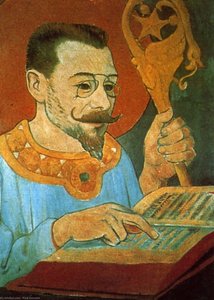
Throughout his career, Sérusier produced a body of work that is both visually striking and intellectually stimulating. Key works include *L’aversé* (The Shower), exhibited at the Musée d'Orsay in Paris, which showcases his masterful use of color and composition; *Portrait of Paul Ranson*, also held within the Musée d'Orsay, demonstrating his ability to capture personality through subtle gestures and expressions; and *Le Serpent Étranglement* (The Snake Eaters), a powerful depiction of a Breton legend housed at the National Museum in Warsaw. Beyond these individual pieces, Sérusier’s legacy lies in his pioneering role as a precursor to abstract art and his influence on subsequent generations of artists. His exploration of cloisonnism, his embrace of color and pattern, and his willingness to challenge conventional artistic norms paved the way for the development of modern art movements such as Synthetism and Cubism. Sérusier’s later years were dedicated to teaching at the École Ranson, where he imparted his knowledge and inspired a new cohort of artists. He passed away on October 7th, 1927, in Morlaix, leaving behind a rich artistic legacy that continues to resonate with art lovers today.Artistic Influences and Connections
Paul Sérusier’s artistic development was profoundly shaped by a confluence of influences. The teachings of Paul Gauguin at Pont-Aven were particularly transformative, encouraging him to prioritize color and form over traditional representation. Furthermore, his exposure to Japanese prints—which were gaining popularity in Europe during this period—inspired him to experiment with flattened perspectives and simplified compositions. Sérusier’s work also reflects the broader artistic currents of the late 19th century, including Post-Impressionism, Symbolism, and the Arts and Crafts movement. His connection to Maurice Denis was especially significant; Denis's emphasis on religious imagery and his belief in the power of color and line profoundly influenced Sérusier’s approach to painting. The Nabis group itself served as a crucible for artistic exchange, fostering experimentation and pushing the boundaries of contemporary art.
Paul Sérusier
1864 - 1927 , Frankrike
Kort om kunstneren
- Artistic Movement Or Style: Post-Impressionisme
- Artists Or Movements Influenced By This Artist: ['Les Nabis']
- Artists Who Influenced This Artist:
- Paul Gauguin
- Maurice Denis
- Date Of Birth: 9. november 1864
- Date Of Death: 7. oktober 1927
- Full Name: Louis-Paul-Henri Sérusier
- Nationality: Fransk
- Notable Artworks:
- L'averse (1893)
- Portrett av Paul Ranson (1890)
- Melancholy (1890)
- Slangeeterne (1894)
- Place Of Birth: Paris, Frankrike
Relaterte artikler

Paul Klees 25 Mesterverk: En Reise i Farge og Form | OriginalUniqueArt.no
Utforsk Paul Klees 25 mest ikoniske malerier! Fordyp deg i hans abstrakte verden, fargerike ekspresjonisme og unike stil. Finn inspirasjon til interiørdesign & kjøp museumskvalitets reproduksjoner på OriginalUniqueArt.com. Oppdag mesterverkene nå!
Paul Sérusier: Pioneering Synthetism & The Nabis’ Symbolic Revolution
Discover Paul Sérusier's pivotal role in the Nabis movement & the birth of Synthetism. Explore 'The Talisman,' his influence on modern art, and a deeper understanding of this symbolic revolution. Expert analysis & insights.
Roger de la Fresnaye: Cubism, Tradition & the Search for Order in Early 20th-Century French Painting
Explore the captivating world of Roger de la Fresnaye, a pivotal French Cubist painter. Discover his unique blend of tradition & modernity, influences, and lasting legacy with OriginalUniqueArt.
La Biennale di Venezia: Topp 25 Kunstverk for Din Inspirasjon – Malerier & Dekorasjon
Oppdag de 25 mest ikoniske kunstverkene fra La Biennale di Venezia! Lær historien bak berømte malerier, italiensk samtidskunst og klassiske stiler. Finn inspirasjon til interiørdesign & kjøp museumskvalitets reproduksjoner på OriginalUniqueArt.com.

Paul Cézannes 25 Mesterverk: En Kunstnerisk Reise for Ditt Hjem
Utforsk Paul Cézannes 25 mest ikoniske malerier! Oppdag historien bak impresjonismens mesterverk, fra stilleben til landskap. Finn kunsttrykk av høy kvalitet og interiørinspirasjon på OriginalUniqueArt.com.