Text size

() ·

A painting made for you, by hand

La lutte bretonne

Håndlaget oljereproduksjon

Håndmalt olje på lerret i din valgte størrelse og ramme, laget på bestilling av våre kunstnere. ( Bytt til trykk Bytt til digitalt bilde)

Beskrivelse av objektet

Paul Sérusier (1864-1927) emerged as a key figure in the Symbolist movement, profoundly impacting the development of Synthetism and cloisonnism. His collaboration with Gauguin at Pont-Aven solidified his reputation as an innovator, establishing him as one of France’s foremost artists.

Om kunstneren

Paul Sérusier (1864-1927) var en fransk maler som banet vei for abstrakt kunst og inspirerte Nabis-bevegelsen. Kjent for sin cloisonnism-stil og verk som "The Talisman", var han en pioner innen moderne kunst.

from ·

Chapter 1

How large should it be?

Slide to change the size; the picture on the left shows the frame at its real width. The proportions of the original are kept.

Standardformat
skreddersydd
CM
INCH

Velg mellom våre forhåndsdefinerte størrelser som bevarer kunstverkets opprinnelige proporsjoner.

bredde
høyde

Skriv inn ønsket bredde og høyde for å tilpasse bildet til din ramme eller vegg. Siden dette er håndmalt, kan kunstneren male litt mer rundt motivet eller beskjære det noe dersom du velger et annet format — valget er ditt. Vi sender deg en digital mockup til godkjenning før maleriet påbegynnes. Bildet som vises på denne siden representerer ikke det faktiske resultatet — kun mockuppen viser det endelige uttrykket.

Chapter 2

How should it arrive?

Choose the edges of the stretched canvas

Choose your frame

Corner sample of the WhiteWrap canvas edge finish, stretched on massivt tre bars
White Nkr1
Corner sample of the BlurSideWrap canvas edge finish, stretched on massivt tre bars
Blurside Nkr1
Corner sample of the ExtendedWrap canvas edge finish, stretched on massivt tre bars
Extended Nkr1
Corner sample of the P118B picture frame: støpt polystyren, 5 cm wide and 3 cm thick
P118B Nkr10
Corner sample of the P118H picture frame: støpt polystyren, 5 cm wide and 3 cm thick
P118H Nkr10
Corner sample of the P118W picture frame: støpt polystyren, 5 cm wide and 3 cm thick
P118W Nkr10
Corner sample of the P438Z picture frame: støpt polystyren, 5.5 cm wide and 3.5 cm thick
P438Z Nkr10
Corner sample of the P508JH picture frame: støpt polystyren, 7 cm wide and 3.5 cm thick
P508JH Nkr12
Corner sample of the P508YH picture frame: støpt polystyren, 7 cm wide and 3.5 cm thick
P508YH Nkr12
Corner sample of the P805H picture frame: støpt polystyren, 5 cm wide and 3.5 cm thick
P805H Nkr10
Corner sample of the P805Z picture frame: støpt polystyren, 5 cm wide and 3.5 cm thick
P805Z Nkr10
Corner sample of the P919BZ picture frame: støpt polystyren, 7 cm wide and 3.5 cm thick
P919BZ Nkr10
Corner sample of the P919G picture frame: støpt polystyren, 7 cm wide and 3.5 cm thick
P919G Nkr10
Corner sample of the P919XJ picture frame: støpt polystyren, 7 cm wide and 3.5 cm thick
P919XJ Nkr10
Corner sample of the P959ZH picture frame: støpt polystyren, 5 cm wide and 3 cm thick
P959ZH Nkr10
Corner sample of the P968JZ picture frame: støpt polystyren, 6 cm wide and 4 cm thick
P968JZ Nkr12
Corner sample of the W106C picture frame: massivt tre, 5 cm wide and 3 cm thick
W106C Nkr8
Corner sample of the W218G picture frame: massivt tre, 5 cm wide and 3 cm thick
W218G Nkr10
Corner sample of the W218JH picture frame: massivt tre, 5 cm wide and 3 cm thick
W218JH Nkr8
Corner sample of the W218Y picture frame: massivt tre, 5 cm wide and 3 cm thick
W218Y Nkr10
Corner sample of the W307PJ picture frame: massivt tre, 6 cm wide and 3 cm thick
W307PJ Nkr10
Corner sample of the W316G picture frame: massivt tre, 6 cm wide and 3 cm thick
W316G Nkr10
Corner sample of the W316PJ picture frame: massivt tre, 6 cm wide and 3 cm thick
W316PJ Nkr8
Corner sample of the W316Y picture frame: massivt tre, 6 cm wide and 3 cm thick
W316Y Nkr10
Corner sample of the W398PJ picture frame: massivt tre, 5 cm wide and 3 cm thick
W398PJ Nkr8
Corner sample of the W4111J picture frame: massivt tre, 6.5 cm wide and 3.5 cm thick
W4111J Nkr10
Corner sample of the W500HY picture frame: massivt tre, 7 cm wide and 5 cm thick
W500HY Nkr15
Corner sample of the W500JH picture frame: massivt tre, 7 cm wide and 5 cm thick
W500JH Nkr15
Corner sample of the W692G picture frame: massivt tre, 8 cm wide and 4 cm thick
W692G Nkr12
Corner sample of the W849H picture frame: massivt tre, 5 cm wide and 3 cm thick
W849H Nkr8
Corner sample of the W940BG picture frame: massivt tre, 7.5 cm wide and 4.5 cm thick
W940BG Nkr15
Corner sample of the W953PJ picture frame: massivt tre, 6 cm wide and 3.5 cm thick
W953PJ Nkr8
Corner sample of the H24-GOLD picture frame: utskåret tre med gesso, 10 cm wide and 6 cm thick
H24-GOLD Nkr30
Corner sample of the H24-SILVER picture frame: utskåret tre med gesso, 10 cm wide and 6 cm thick
H24-SILVER Nkr30
Corner sample of the H36-GOLD picture frame: utskåret tre med gesso, 15 cm wide and 6.5 cm thick
H36-GOLD Nkr45
Corner sample of the H36-SILVER picture frame: utskåret tre med gesso, 15 cm wide and 6.5 cm thick
H36-SILVER Nkr45

Moulding: . Overall size with the frame: .

Chapter 3

Who paints it, and should anything change?

Examples of what can be changed: Replace face with customer photo; Add pet (e.g., replace cat with dog); Include hidden message in background; Change background landscape or elements.
After order, OriginalUniqueArt.com team will email client for instructions and provide a mockup preview

Verdensomspennende levering () på 3–4 uker i stedet for standard 5 uker. (1 November). Ingen kompromisser med kvaliteten.

Chapter 4

The finishing touches

A nameplate, as in a museum?

Detaljer om gravert bronseplate

This elegant plaque features the artist's name and the title of the artwork, finely engraved for a timeless presentation.

It is made from bronze with a refined, elegant finish. The text is precisely laser-engraved for a sharp and permanent result. Measuring 9x2 cm, the plaque is compact yet easy to read. It's built to be durable and scratch-resistant, offering a professional, museum-quality look. Mounting is simple thanks to the included adhesive backing.

Detaljer om gjennomsiktig akrylplate

The plaque includes essential engraved details such as the artist's name, the title of the artwork, the date it was created, the type of media used-like oil on canvas or watercolor-a brief description of the piece, and a QR code that links to the complete artwork information.

It is crafted from clear acrylic, offering a sleek, modern appearance. The text is UV-engraved in black to ensure strong visual contrast. With a size of 10x15 cm, it ensures optimal readability. It comes equipped with two metal hooks for secure wall mounting. The plaque is designed to be weather-resistant, making it suitable for various environments, and it includes interactive features that work seamlessly with smartphone scanning.

Detaljer om plakett i svart akryl

This elegant plaque includes engraved information such as the artist's name, the title of the artwork, the date it was created, the type of media used (like oil on canvas or watercolor), a short description of the artwork, and a QR code for quick access to more information.

The plaque itself is made from refined black acrylic with a premium finish. The text is laser-engraved in white for high contrast and readability. Its size is 10x15 cm, designed to be easy to read. It comes with two metal hooks for professional mounting. The design is sleek and fits any interior style. It is also weather-resistant and durable, with built-in digital integration for mobile compatibility.

A protective varnish?

When do you need it?

Chapter 5

Your painting, as you ordered it

La lutte bretonne

Trykkmetode

Størrelse på reproduksjon

-

Utvalgte mesterkunstnere

Mer detaljrikdom, finesse og ekstra produksjonstid

-

Innramming av reproduksjon

-

-

For kunstverk eller reproduksjoner som er større enn 105 cm (ca. 41 tommer) på noen side, vil rammen bli sendt som et sett som må monteres. Denne metoden sikrer trygg levering og forhindrer skader under transport.

Krever profesjonell montering – dette er ikke et DIY-produkt.
Settet må monteres og lerretet strammes av en erfaren profesjonell rammelegger, ved bruk av trelim (følger ikke med), en lerretstang og klemmer for å holde rammelisten vinkelrett mens limet tørker. Feilaktig montering eller ujevn stramming av lerretet kan påføre kunstverket permanente skader og er ikke dekket av vår garanti.

  • Alle massive trelister er inkludert, presist tilpasset i størrelse.

  • Monteres med de medfølgende skruene, samt trelim til hjørnene, som ikke er inkludert og må anskaffes av din rammehandler.

  • Profesjonelt verktøy er nødvendig og er ikke inkludert: en lerretstang (strammer) og klemmer for å holde rammene vinkelrette mens limet tørker.

Viktig:
Hjørnene krever trelim, listene må holdes på plass med tvinger til limet er helt tørt, og stramming av lerretet på den ferdige rammen krever en lerretstang. Ingen av disse produktene er inkludert i settet. Vennligst sørg for tilgang til en erfaren profesjonell rammehandler før du bestiller denne størrelsen.

Navneskilt

-

-

Beskyttende ferniss

Blank lakk (forsterker farger, beskytter mot lys og fuktighet)

-

Tilpass mitt kunstverk

Eksempler på hva som kan endres: Erstatt ansikt med bilde av kunden; Legg til kjæledyr (f.eks. bytt ut katt med hund); Inkluder en skjult melding i bakgrunnen; Endre bakgrunnslandskap eller elementer.

-

Ekspresslevering

Verdensomspennende levering () på 3–4 uker i stedet for standard 5 uker. (1 November). Ingen kompromisser med kvaliteten.

-

Ekspresslevering

Verdensomspennende levering til innen 5 uker. (8 November).

Inkludert frakt

Totalpris for valgte alternativer

Nkr 2887

Totalpris Nkr 2887

Glassalternativet er kun tilgjengelig i størrelser under 110 cm

Included with every order

  • Gratis ekspressfrakt over hele verden
  • Lerretsduk av lin av høy kvalitet
  • Full transportforsikring
  • Garanti for refusjon av toll og importavgifter
  • Garantert fargegjengivelse
  • 100 dagers returrett ved fabrikasjonsfeil
  • 100% pengene tilbake-garanti
  • Rabatt ved flere kjøp

A Primal Encounter in Breton Color

In the vibrant tapestry of late nineteenth-century French art, few works capture the raw, unbridled energy of folk tradition quite like Paul Sérusier's La Lutte bretonne. Completed in 1890, this masterpiece serves as a profound window into the soul of Brittany, moving far beyond a mere depiction of a wrestling match to become an evocative exploration of human struggle and cultural identity. The scene unfolds with an immediate, visceral intensity, placing the viewer directly within a circle of onlookers gathered to witness a physical altercation between two men. As they grapple in the center of the frame, the surrounding crowd—composed largely of women adorned in the iconic, intricate white coifs of Breton tradition—stands as a silent, watchful collective, their presence grounding the chaotic movement of the fighters in a sense of communal ritual.

The painting is a triumph of Cloisonnism, a bold stylistic departure from the soft, atmospheric nuances of traditional Impressionism. Heavily influenced by the mentorship of Paul Gauguin, Sérusier utilized thick, dark outlines to encase patches of saturated color, much like the leaded glass of a cathedral window. This technique strips away unnecessary anatomical detail in favor of a powerful, flattened graphic impact. The artist’s palette is particularly striking; he employs energetic bursts of reds and yellows that seem to pulse against the canvas, mirroring the heat and exertion of the wrestling match itself. For the discerning collector or interior designer, this use of pigment offers a dynamic focal point, capable of injecting a sense of rhythmic vitality and warmth into any sophisticated space.

Symbolism and the Spirit of the Nabis

Beyond its surface-level action, La Lutte bretonne is steeped in the symbolic preoccupations of the Nabis movement. During this era, artists sought to reject the polished, artificial perfection of the Parisian salons, turning instead toward what they perceived as the "primitive" and authentic beauty of rural life. The wrestling match serves as a potent metaphor for opposing forces—the tension between strength and vulnerability, or perhaps the struggle of tradition against the encroaching modernity of the Belle Époque. Every brushstroke is an intentional step away from realism and toward Synthetism, where the goal is to synthesize the external observation of nature with the internal emotional response of the artist.

To possess a reproduction of this work is to invite a piece of art history into one's home that celebrates the beauty of the unadorned and the profound depth of folk heritage. The painting does not merely decorate a wall; it commands attention through its structural boldness and its ability to evoke a sense of timelessness. Whether placed in a contemporary gallery setting or a classic study, Sérusier’s work continues to resonate with anyone moved by the intersection of raw human emotion and the deliberate, masterful application of color and form.

Spørsmål og svar

Hvilket rom anbefales "La lutte bretonne" av Paul Sérusier for?

En reproduksjon av "La lutte bretonne" passer godt i et Living Room.

Hva er dateringen til "La lutte bretonne" av Paul Sérusier?

"La lutte bretonne" av Paul Sérusier ble skapt i 1890.

Hvilken fase av Paul Sérusier sin karriere tilhører "La lutte bretonne", basert på datoen?

Dateringen fra 1890 plasserer "La lutte bretonne" i Mature Period av Paul Sérusier sin kunstneriske utvikling.

More about this painting

Forhåndsvisning Se i AR Bytt til trykk Bytt til digitalt bilde Send
Vis detaljer Utskriftsvennlig guide Legg til i favoritter Last ned bilde Liknende objekter Røntgenundersøkelse Lysbildefremvisning Q&A Statistikk

In numbers

  • 1890the year it was painted
  • 29frames to choose from
  • standard sizes, in its own proportions
  • 5weeks to paint and deliver it
Paul Sérusier

Paul Sérusier

1864 - 1927, Frankrike

Quick facts about Paul Sérusier

  • Artistic Movement Or Style: Post-Impressionisme
  • Artists Or Movements Influenced By This Artist: ['Les Nabis']
  • Artists Who Influenced This Artist:
    • Paul Gauguin
    • Maurice Denis
  • Date Of Birth: 9. november 1864
  • Date Of Death: 7. oktober 1927
  • Full Name: Louis-Paul-Henri Sérusier
  • Nationality: Fransk
  • Notable Artworks:
    • L'averse (1893)
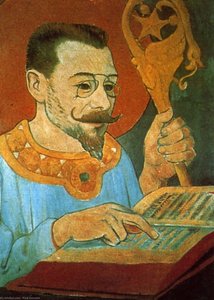
    • Portrett av Paul Ranson (1890)
    • Melancholy (1890)
    • Slangeeterne (1894)
  • Place Of Birth: Paris, Frankrike

Om kunstneren

Early Life and Artistic Foundations

Paul Sérusier, born on November 9th, 1864, in the heart of Paris, was a painter whose journey toward abstract art began within the vibrant artistic circles of late 19th-century France. His upbringing, rooted in a prosperous middle-class family with Flemish heritage, provided him with both stability and exposure to cultural refinement. Unlike his father’s aspirations for a business career, young Paul harbored an unwavering passion for painting, a desire that led him to enroll at the Académie Julian in 1885. This institution, known for its progressive approach to art education, offered a space where he could hone his skills and encounter fellow artists who would profoundly influence his artistic development. Crucially, it was during this period that Sérusier encountered Maurice Denis, a kindred spirit who would later become a key figure in the revival of religious imagery within French painting. The Académie Julian’s environment fostered experimentation and challenged traditional academic styles, laying the groundwork for Sérusier's future explorations into new forms of expression.

The Pont-Aven Years: Cloisonnism and Gauguin’s Influence

Sérusier’s artistic trajectory took a decisive turn in the summer of 1888 when he traveled to Pont-Aven, a small coastal village in Brittany. This location held particular significance as it served as a gathering place for a group of artists—including Paul Gauguin, Émile Bernard, and others—who were seeking inspiration from the region’s rugged landscapes and timeless traditions. Under the watchful eye of Gauguin, Sérusier embarked on a period of intense artistic experimentation, culminating in the creation of *Bois d’Amour* (The Lovers' Wood), often referred to as “The Talisman.” This painting stands as a pivotal work in Sérusier’s career, embodying the principles of cloisonnism—a technique characterized by bold, flat forms delineated by dark contours. Gauguin encouraged Sérusier to move beyond traditional representation and embrace a more symbolic approach, emphasizing color and form over precise detail. The influence of this period is undeniable; *Bois d’Amour* represents a radical departure from academic painting, foreshadowing the development of abstract art and establishing Sérusier as a pioneer in this nascent movement.

The Nabis: A Collective Pursuit of Synthesis

Following his time at Pont-Aven, Sérusier became a founding member of the *Nabis*, a small but influential group of artists who sought to synthesize diverse artistic influences—including Post-Impressionism, Symbolism, and Japanese art. The name “Nabis” derives from the Hebrew word for “prophet,” reflecting the group’s ambition to create works that possessed spiritual depth and conveyed profound emotions. Alongside figures such as Paul Gauguin, Pierre Bonnard, Édouard Vuillard, and Maurice Denis, Sérusier explored themes of color, pattern, and decorative design, often employing a flattened perspective and simplified forms. The Nabis aimed to move beyond mere imitation of nature, instead focusing on capturing the essence of their subjects through evocative color palettes and symbolic imagery. Their work was characterized by a quiet intensity and a subtle sense of mystery, inviting viewers to engage with the paintings on an emotional level.

Notable Works and Lasting Legacy

Throughout his career, Sérusier produced a body of work that is both visually striking and intellectually stimulating. Key works include *L’aversé* (The Shower), exhibited at the Musée d'Orsay in Paris, which showcases his masterful use of color and composition; *Portrait of Paul Ranson*, also held within the Musée d'Orsay, demonstrating his ability to capture personality through subtle gestures and expressions; and *Le Serpent Étranglement* (The Snake Eaters), a powerful depiction of a Breton legend housed at the National Museum in Warsaw. Beyond these individual pieces, Sérusier’s legacy lies in his pioneering role as a precursor to abstract art and his influence on subsequent generations of artists. His exploration of cloisonnism, his embrace of color and pattern, and his willingness to challenge conventional artistic norms paved the way for the development of modern art movements such as Synthetism and Cubism. Sérusier’s later years were dedicated to teaching at the École Ranson, where he imparted his knowledge and inspired a new cohort of artists. He passed away on October 7th, 1927, in Morlaix, leaving behind a rich artistic legacy that continues to resonate with art lovers today.

Artistic Influences and Connections

Paul Sérusier’s artistic development was profoundly shaped by a confluence of influences. The teachings of Paul Gauguin at Pont-Aven were particularly transformative, encouraging him to prioritize color and form over traditional representation. Furthermore, his exposure to Japanese prints—which were gaining popularity in Europe during this period—inspired him to experiment with flattened perspectives and simplified compositions. Sérusier’s work also reflects the broader artistic currents of the late 19th century, including Post-Impressionism, Symbolism, and the Arts and Crafts movement. His connection to Maurice Denis was especially significant; Denis's emphasis on religious imagery and his belief in the power of color and line profoundly influenced Sérusier’s approach to painting. The Nabis group itself served as a crucible for artistic exchange, fostering experimentation and pushing the boundaries of contemporary art.

Kort om verket

  • Location: Musée d'Orsay
  • Subject or theme: Breton wrestling
  • Year: 1890
  • Artist: Paul Sérusier
  • Movement: Nabis

Kunnequiz om kunst

Det er kun ett riktig svar på hvert spørsmål.

Spørsmål 1:
What artistic movement is Paul Sérusier primarily associated with?
Spørsmål 2:
The painting depicts a scene of wrestling. Where did Sérusier find inspiration for this subject?
Spørsmål 3:
What technique is prominently featured in 'La Lutte bretonne', as exemplified by Sérusier's masterpiece?
Spørsmål 4:
Who mentored Paul Sérusier during his artistic development, influencing his style and approach to painting?
Spørsmål 5:
What was the significance of Pont-Aven for Sérusier and the Nabis artists?