Bytt til trykk
 Vis hele teksten







































 For kunstverk eller reproduksjoner som er større enn 105 cm (ca. 41 tommer) på noen side, vil rammen bli sendt som et sett som må monteres. Denne metoden sikrer trygg levering og forhindrer skader under transport.


A Fragmented Portrait of Sensuality: Decoding Picasso’s ‘Seated Nude’
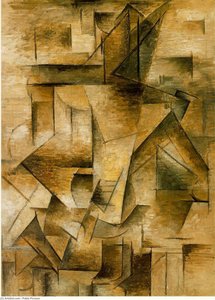
Pablo Picasso's “Seated Nude,” painted in 1908, stands as a pivotal moment in the genesis of Cubism and an enduring testament to the artist’s masterful exploration of form and emotion. More than just a depiction of the human figure—though undeniably captivating—it embodies a radical reimagining of artistic representation that continues to resonate with audiences today. This oil on canvas masterpiece isn't merely observed; it demands engagement, prompting viewers to actively participate in reconstructing the image through their own perceptions.The Genesis of Cubism: Breaking Down Reality
Picasso’s “Seated Nude” firmly establishes him as a pioneer of Cubism, alongside Georges Braque. Rejecting the conventions of traditional perspective and chiaroscuro—the dramatic interplay of light and shadow—Cubism sought to capture multiple viewpoints simultaneously. Picasso achieves this ambitious goal by fracturing the nude figure into geometric planes and angular shapes, mirroring the fragmented reality he wished to convey. Unlike Impressionists who aimed to depict fleeting impressions of light and color, Cubist artists prioritized intellectual analysis over sensory experience, striving for a more profound understanding of the subject matter. The deliberate distortion of anatomical proportions underscores this conceptual shift—the body is presented not as an idealized form but as a complex interplay of intersecting planes.A Study in Color and Texture
The vibrant red and orange hues dominating “Seated Nude” contribute significantly to its emotional impact. These bold colors aren’t merely decorative; they serve as conduits for conveying mood and dynamism. Picasso skillfully utilizes texture—evident in the brushstrokes—to simulate the materiality of the skin, creating a palpable sense of presence. The artist's meticulous attention to detail—particularly in rendering the folds of drapery—further enhances the illusionistic quality of the painting, despite its abstract nature. This textural richness invites contemplation and encourages viewers to consider the surface as much as the underlying form.Context Within Picasso’s Oeuvre: Echoes of ‘Nude and Bather’
“Seated Nude” shouldn't be viewed in isolation but rather within the broader context of Picasso’s artistic development during this formative period. Works like “Nude and Bather,” created concurrently, demonstrate similar stylistic innovations—the fragmentation of form and the exploration of multiple perspectives—solidifying Picasso’s commitment to Cubist principles. These paintings represent a decisive break from academic tradition, signaling a new direction for Western art that prioritized intellectual rigor alongside aesthetic beauty. Comparing "Seated Nude" with Picasso's later masterpieces reveals an evolution in his expressive vocabulary while retaining core stylistic elements.Symbolism and Emotional Resonance: Beyond Representation
Despite its apparent simplicity—a single nude figure seated on the ground—“Seated Nude” is laden with symbolic significance. The posture itself conveys vulnerability and contemplation, inviting viewers to consider themes of stillness amidst movement. Picasso’s masterful manipulation of color and form transcends mere visual representation, tapping into deeper psychological currents. The painting speaks to questions of identity, perception, and the relationship between artist and subject—themes that continue to fascinate scholars and art enthusiasts alike. It's a piece that lingers in the mind long after viewing, prompting reflection on its enduring power.Spørsmål og svar
Hvem anbefales "Seated nude" av Pablo Picasso som gave til?
Som gave anbefales "Seated nude" av Pablo Picasso til Birthday. Den passer også godt til andre anledninger.
Hvilken teknikk er brukt i "Seated nude" av Pablo Picasso?
"Seated nude" av Pablo Picasso er utført i Oil On Canvas. Reproduksjonene har som mål å gjengi utseendet til denne teknikken.
Hvor mange ser på "Seated nude"?
Siden Besøksstatistikk for "Seated nude" av Pablo Picasso presenterer offentlig besøksstatistikk: månedlige besøk for dette kunstverket, en sammenligning med kunstnerens mest viste verk, og hvor de besøkende kommer fra.
 Forhåndsvisning
 Send
Send Del
Del
 Vis detaljer
 Utskriftsvennlig guide

 Last ned bilde
 Liknende objekter
 Røntgenundersøkelse
 Lysbildefremvisning
 Q&A
Q&A Statistikk