Analytical Cubism · 1910
Gitarrspiller (Pablo Picasso, 1910)
Pablo Picasso (1881–1973) har laget Gitarrspiller. Den er fra 1910. Det tilhører Analytical Cubism-bevegelsen. Den er laget i Olje på lerret. Mål: 100 × 73 cm
- 1910
- Olje på lerret
- 100 × 73 cm

 Forhåndsvisning

 Håndmalt oljemaleri
 Send
 Del
 Faktablad


 Last ned bilde
 Liknende objekter
 Røntgenundersøkelse
 Lysbildefremvisning
 Spørsmål og svar

 Statistikk
Gitarrspiller, kort fortalt
- Tittel
- Gitarrspiller
- Kunstner
- Pablo Picasso (1881–1973)
- Kunstner født i
- Málaga, Spania
- Dato
- 1910
- Medium
- Olje på lerret
- Dimensjoner
- 100 × 73 cm
- Bevegelse
- Analytical Cubism
- Periode
- Moderne tid
- Motiv
- cubism, guitar, picasso, geometric, abstraction, fragmentation
Hva forestiller Gitarrspiller?
Pablo Picasso’s “Guitar Player”: A Fragmented Symphony of Modernity
Pablo Picasso's "Guitar Player," painted in 1910 during the heart of his Analytical Cubist period, is far more than a simple depiction of a musician. It’s a profound exploration of perception, a challenge to traditional representation, and a window into the anxieties and innovations of early 20th-century Europe. This artwork, housed within a modest yet impactful 100 x 73 cm canvas, immediately captivates with its deliberate fragmentation – a visual echo of the fractured realities experienced in a rapidly changing world. The piece isn’t about recreating a recognizable guitar player; it's about distilling the essence of music itself, the feeling and rhythm conveyed through sound, into a series of interlocking geometric forms.
A Deconstruction of Form: Analytical Cubism Unveiled
The core of “Guitar Player” lies in Picasso’s masterful application of Analytical Cubism. Instead of striving for realistic perspective, he dismantles the subject – the guitar, the musician, even the table itself – into a complex network of overlapping triangles and rectangles. These shapes aren't simply arranged; they actively engage with each other, creating an illusion of depth and movement despite the complete absence of traditional spatial relationships. Notice how the lines seem to push in on themselves, forcing the viewer’s eye to navigate a multi-dimensional space constructed entirely from flat planes. The muted color palette – primarily earthy browns, beiges, and subtle greenish-grays – further emphasizes this sense of fragmentation, drawing attention to the interplay of light and shadow within these geometric forms. The visible brushstrokes contribute to a textured surface, hinting at the physicality of the painting’s creation and adding another layer of complexity.
Technique and Innovation: Layering Reality
Picasso's technique in “Guitar Player” is remarkably innovative for its time. He employed a layering approach, building up the composition through multiple applications of paint, creating a sense of depth and volume within the seemingly flat surfaces. The sharp, angular lines defining each shape are meticulously rendered, while the overall effect remains deliberately abstract. The artist’s use of visible brushstrokes isn't haphazard; they contribute to the dynamism of the piece, suggesting an ongoing process of construction and deconstruction. It’s a testament to Picasso’s willingness to experiment with new approaches to painting, pushing beyond the limitations of traditional representation and forging a completely new visual language.
Historical Context and the Breakdown of Perception
"Guitar Player" emerged during a period of intense artistic upheaval – the birth of Cubism. This movement represented a radical departure from the established conventions of art, rejecting single viewpoints in favor of presenting multiple perspectives simultaneously. Picasso’s work reflects the broader cultural anxieties of the early 20th century, a time marked by rapid industrialization, urbanization, and social change. The fragmented forms can be interpreted as symbolizing the breakdown of traditional perceptions – the way we understand space, time, and reality itself. The guitar, an instrument deeply connected to emotion and personal expression, becomes a potent symbol of this fractured experience, mirroring the complexities of modern life. It’s not merely a musical object; it's a representation of a fragmented consciousness.
Emotional Resonance: A Silent Melody
Despite its abstract nature, “Guitar Player” possesses a powerful emotional resonance. The muted colors and deliberate fragmentation evoke a sense of melancholy and introspection – perhaps reflecting the artist’s own personal experiences or capturing the mood of a generation grappling with uncertainty. The image invites contemplation, encouraging viewers to engage with the artwork on an intuitive level, searching for their own interpretations within its geometric landscape. It's a piece that speaks not through explicit narrative but through the subtle language of form and color, creating a silent melody that lingers in the mind long after viewing.
Høyoppløselige bilder av Gitarrspiller

Beskyttet av opphavsrett: bildet er kun vist som referanse.
Andre størrelser, beskjæringer og sitering →Pablo Picasso, Gitarrspiller (1910).
Spørsmål om Gitarrspiller, besvart
I hvilket år ble "Gitarrspiller" av Pablo Picasso skapt?
"Gitarrspiller" dateres til 1910. Denne datoen plasserer verket innenfor Pablo Picasso sin karriere og sin epoke.
Hvilken teknikk er "Gitarrspiller" laget med?
"Gitarrspiller" er utført i Olje på lerret.
Hva er målene på det originale verket "Gitarrspiller"?
"Gitarrspiller" måler 100 x 73 cm i sin originale form. Originalmålene er en nyttig referanse når du skal velge størrelse på en reproduksjon.
Hva forestiller "Gitarrspiller" av Pablo Picasso?
Temaene i "Gitarrspiller" av Pablo Picasso inkluderer cubism, guitar, picasso, geometric, abstraction, fragmentation, earthy tones. Sammen oppsummerer de verkets motiv.
Er bildet av "Gitarrspiller" av Pablo Picasso i det frie domene?
Når det gjelder opphavsrett, er "Gitarrspiller" fortsatt beskyttet av opphavsretten.
Hvem er kunstneren bak "Gitarrspiller"?
"Gitarrspiller" tilskrives Pablo Picasso.
Hvilken stilart tilhører "Gitarrspiller"?
"Gitarrspiller" av Pablo Picasso tilhører Analytical Cubism-retningen. Denne retningen gir det stilistiske kontekstet til verket.
Hvilken fase av Pablo Picasso sin kunstneriske utvikling representerer "Gitarrspiller"?
"Gitarrspiller" representerer Pablo Picasso sin Analytical Cubism.
Hvor gammel var Pablo Picasso da "Gitarrspiller" ble skapt i 1910?
Pablo Picasso laget "Gitarrspiller" i en alder av 29. Kunstneren ble født i 1881, og verket er datert 1910.
Om kunstneren, Pablo Picasso

1881–1973, Spania
Pablo Picasso
Tidlig liv, familie og opplæring I den spanske byen Málaga trådte en gutt ved navn Pablo Picasso inn i verden den 25. oktober 1881. Han ble født av María Picasso y López og José Ruiz Blasco, en mann som forsto penselens tyngde og lerretets disiplin. Fra sine aller første år viste barnet en rastløs dragning mot tegning, et talent som virket å manifestere seg allerede i hans aller første forsøk på tale.
Også av Pablo Picasso
 Guernica1937
 Jentene fra Avignon1907
 Gråtende kvinne1937
 Den Gamle Gitaren
Essays om Gitarrspiller
 The Subdued Palette: Exploring Emotional Resonance & Aesthetic Impact in Muted ArtworksExplore the power of muted colors in art! Discover the history, psychology & techniques behind serene palettes. Find inspiration & expert a…
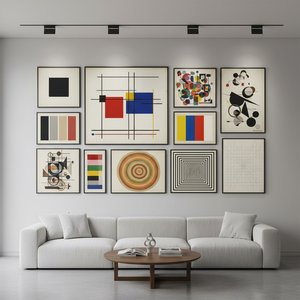 Geometrisk Abstraksjon: Topp 10 Mesterverk for Kunstelskere – OriginalUniqueArt.comUtforsk de 10 mest innflytelsesrike verkene innen geometrisk abstraksjon! Oppdag historiene bak Mondrian, Kandinsky og Malevich. Finn inspi…
 Deconstructing Reality: Cubism's Revolutionary Impact on 20th-Century ArtExplore the revolutionary world of Cubism with OriginalUniqueArt. Discover Picasso & Braque's groundbreaking techniques, its philosophical …