
 Forhåndsvisning
 Send
Send Del
Del
 Vis detaljer
 Utskriftsvennlig guide

 Last ned bilde
 Liknende objekter
 Røntgenundersøkelse
 Lysbildefremvisning
 Spørsmål og svar
 Statistikk
The Bride Stripped Bare by her Bachelors


 Vis hele teksten
Få en utskriftsklar fil som går langt utover forhåndsvisningen på nett. Hvert digitale bilde vi selger er hentet fra en høyoppløselig master i vår database – vanligvis mellom 5 000 og 15 000 piksler bred – slik at du kan trykke stort, beskjære tett eller gjenskape fine detaljer med full trygghet.
Ingen filer forlater studioet vårt uten å bli bearbeidet. En digital ekspert kontrollerer fargene mot det originale maleriet og korrigerer dem ved behov, for deretter å forbedre klarhet og detaljrikdom med profesjonelle retusjeringsverktøy — alltid tro mot kunstnerens penselstrøk og stil. Resultatet er et bilde som fremstår som selve maleriet, ikke som en skann med filter.
Du godkjenner før ferdigstilling: vår ekspert sender bildet på e-post til din vurdering innen 72 timer. Ikke fornøyd? Be om forbedringer eller korrigeringer, eller be om refusjon dersom kvaliteten ikke svarer til forventningene.
Dette er kvaliteten forlag, designstudioer, gallerier og trykkerier stoler på.
Digitalt bilde
Last ned en høyoppløselig fil til personlig bruk, utskrift og kreative prosjekter. ( Bytt til trykk Kjøp håndmalt maleri)
Inkludert i alle bestillinger av digitale bilder
Ekspert på digital levering, garantert
Når du velger OriginalUniqueArt.com, får du ikke bare et bilde – du mottar et profesjonelt etterbehandlet digitalt kunstverk, skapt med presisjon og med en garantert tilfredshetsgaranti. Her er alt som automatisk følger med din bestilling:

Rask levering på e-post
Din høyoppløselige digitale bildefil sendes til din e-post innen 72 timer etter bestilling – klar til umiddelbar bruk.

KI-forbedret digital fil
Ditt kunstverk blir profesjonelt optimalisert ved hjelp av avanserte AI-verktøy og manuell redigering, noe som sikrer maksimal detaljrikdom, klarhet og fargegjengivelse.

Gratis livslang nyutlevering
Har du ved et uhell slettet eller mistet filen din? Ingen bekymring – vi sender den på nytt når som helst, helt gratis.

Ingen importavgifter – noen gang
Nyt ditt kunstverk umiddelbart uten toll, avgifter eller leveringskostnader – digitale nedlastinger er alltid avgiftsfrie.

Garantert fargenøyaktighet
Vi sikrer at det digitale bildet gjenspeiler de originale fargene så nøyaktig som mulig ved hjelp av profesjonelle verktøy og fargehåndtering.

100 dagers fornøydhetsgaranti
Hvis du ikke er fornøyd med ditt digitale bilde, vil vi revidere det eller refundere 100% innen 100 dager – uten spørsmål.

100% Penggaranti
Ikke fornøyd? Få full refusjon innen 100 dager etter at du har mottatt din digitale fil – uten spørsmål.

Rabatt ved storkjøp
Kjøp 3 bilder, spar 10% - Kjøp 5, spar 15% - Kjøp 10+, spar 20%. Ideelt for kreative prosjekter, gallerier og byråer.
A Monument of Conceptual Art: Exploring Marcel Duchamp’s “The Bride Stripped Bare by Her Bachelors”
Marcel Duchamp's "The Bride Stripped Bare by Her Bachelors, Even (The Large Glass)" stands as an unparalleled achievement in the history of art—not for its visual beauty alone, but for its audacious challenge to artistic conventions and its profound exploration of existential themes. Created between 1915 and 1923 during the turbulent years of Dadaism, this monumental assemblage transcends traditional representation, prioritizing intellectual provocation over aesthetic pleasure.
- The Genesis of Conceptual Art: Duchamp’s decision to submit a urinal—simply titled “Fontaine”—to the Salon d'automne in Paris in 1917 irrevocably altered the landscape of artistic discourse. This act, considered scandalous by many contemporaries, signaled a decisive break from the prevailing obsession with illusionistic painting and sculpture, establishing conceptual art as a distinct genre focused on ideas rather than visual form.
- Mechanistic Cubism’s Influence: Duchamp's artistic vision was deeply rooted in Mechanistic Cubism, championed by artists like Pablo Picasso and Georges Braque. This movement sought to dissect objects into geometric fragments, mirroring the workings of machinery—a reflection of the anxieties surrounding industrialization and technological advancement prevalent at the time. The Large Glass embodies this aesthetic through its meticulous layering of materials and forms, creating a complex interplay of textures and perspectives.
Decoding Symbolism: Desire, Reality, and the Machine
“The Bride Stripped Bare by Her Bachelors” is rife with symbolic imagery that delves into the complexities of human relationships and the elusive nature of desire. The central figure—often interpreted as a representation of femininity—is juxtaposed against a machine-insect hybrid, symbolizing the tension between organic vulnerability and mechanical determinism. This duality encapsulates Duchamp’s broader critique of societal norms and his questioning of accepted truths.
- The Urinal Motif: The inclusion of the urinal itself serves as a deliberate disruption of artistic tradition—a statement that questioned what constituted art and challenged viewers to reconsider their preconceptions. It embodies Duchamp’s belief that art could be found in everyday objects when viewed through an intellectual lens.
- Geometric Precision & Industrial Materials: The meticulous arrangement of geometric shapes—circles, squares, triangles—and the incorporation of industrial materials like lead foil and wire underscore the influence of Mechanistic Cubism. These elements contribute to a sense of unease and disorientation, mirroring the anxieties of the era concerning rapid technological change.
A Legacy of Innovation: Why “The Large Glass” Remains Relevant Today
"The Bride Stripped Bare by Her Bachelors" continues to resonate with audiences today because it speaks to fundamental questions about art’s role in society and its capacity to provoke thought. Duchamp's refusal to adhere to conventional artistic standards paved the way for subsequent generations of artists who embraced conceptual approaches—artists who prioritize ideas over visual spectacle.
- Influence on Contemporary Art: Artists across disciplines—from performance art to installation art—have drawn inspiration from Duchamp’s groundbreaking work, recognizing its enduring power to challenge assumptions and stimulate dialogue.
- A Timeless Exploration of Consciousness: Ultimately, “The Large Glass” invites viewers to contemplate the relationship between consciousness and reality—a theme that remains profoundly relevant in our increasingly complex world.
Spørsmål og svar
Er fargene i "The Bride Stripped Bare by her Bachelors" av Marcel Duchamp mettede eller dempede?
Fargepaletten i "The Bride Stripped Bare by her Bachelors" har Muted i metning.
Er "The Bride Stripped Bare by her Bachelors" av Marcel Duchamp i det frie domene (public domain), og hvorfor?
"The Bride Stripped Bare by her Bachelors" av Marcel Duchamp er fortsatt beskyttet av opphavsretten. Opphavsretten løper fra kunstnerens dødsår, som var i 1968.
Hvor mange ser på "The Bride Stripped Bare by her Bachelors"?
En Besøksstatistikk-side eksisterer for "The Bride Stripped Bare by her Bachelors". Den viser månedlige besøkstall for kunstverket og kunstnerens øvrige verk, fordelt på land og språk.
Om kunstneren
A Revolutionary Spirit: The Life and Art of Marcel Duchamp
Marcel Duchamp, born Henri-Robert-Marcel Duchamp in 1887 in Blainville-Crevon, Normandy, was more than an artist; he was a philosophical provocateur who fundamentally altered the course of modern art. His early life, though seemingly conventional – nurtured within a family that appreciated artistic expression with both brothers pursuing successful careers as artists – hinted at the iconoclasm to come. Duchamp initially pursued formal training, mastering traditional techniques and experimenting with post-impressionist styles. However, this academic foundation served not as an end in itself, but as a springboard for questioning the very nature of art, its purpose, and its definition. He wasn’t content merely to depict the world; he sought to challenge how we perceive it, and what constitutes artistic value. This restless intellectual curiosity would become the defining characteristic of his prolific career.Early Artistic Explorations: Cubism and Impressionism
Duchamp's initial foray into art began with a grounding in traditional techniques—primarily painting—influenced by Impressionist masters like Claude Monet and Pierre-Auguste Renoir. He honed his skills diligently, capturing fleeting moments of light and color with remarkable precision. Yet, even within these aesthetically pleasing compositions, Duchamp harbored doubts about the role of representation itself. Recognizing that art could transcend mere visual imitation, he turned his attention to Cubism, spearheaded by Pablo Picasso and Georges Braque. This movement embraced fragmented forms and multiple perspectives—a radical departure from the single viewpoint demanded by Renaissance painting—and Duchamp skillfully incorporated these principles into works like *Portrait of Chess Players* (1911). The fractured planes and overlapping viewpoints mirrored his own intellectual preoccupation with dismantling established conventions.The Dadaist Rebellion: Challenging Artistic Norms
The horrors of World War I profoundly impacted Duchamp’s worldview, fueling a deep disillusionment with the values of reason and logic that underpinned Western civilization. This discontent propelled him into the embrace of Dadaism—a movement born out of utter rejection of artistic dogma and societal complacency. Dadaists like Tristan Tzara and Hugo Ball sought to dismantle traditional notions of art through absurdity, chance, and anti-rational gestures. Duchamp wholeheartedly embraced this rebellious spirit, producing provocative pieces that defied categorization and challenged viewers’ expectations. His Dadaist output included collages incorporating found objects—such as newspaper clippings and photographs—and performances designed to disrupt artistic rituals. The infamous *Fontaine* (1917)—a porcelain urinal signed “R. Mutt”—became the emblem of Dada’s radical critique of art, sparking controversy and cementing Duchamp's reputation as a revolutionary iconoclast.The Birth of Conceptual Art: Beyond Representation
Duchamp’s most enduring contribution to art history was arguably his pioneering role in establishing Conceptual Art—a movement that prioritized idea over execution. Rejecting the visual arts altogether, Conceptual Artists questioned whether an artwork could exist without tangible form. Duchamp famously declared, “The idea precedes the object,” encapsulating this fundamental shift in artistic thinking. He continued to explore this concept through various mediums, including assemblage and photography. *L.H.O.O.Q.* (1919)—a postcard reproduction of Leonardo da Vinci’s Mona Lisa overlaid with a mustache and goatee—served as a deliberate parody of art history and a commentary on the veneration of artistic genius. Duchamp's intention wasn’t to create a beautiful image; it was to provoke reflection on notions of authorship, originality, and the very definition of art itself.Legacy and Enduring Influence
Marcel Duchamp’s influence extends far beyond his own lifetime, shaping the trajectory of countless artists who followed him. His unwavering commitment to conceptual thought—the primacy of idea over form—established a paradigm that continues to resonate within contemporary artistic practice. Artists across disciplines—from sculpture to performance art to video installation—have drawn inspiration from Duchamp’s challenge to conventional aesthetic standards and his insistence on questioning accepted truths. He remains a central figure in discussions about the role of art in society, prompting us to consider whether beauty is truly paramount or if intellectual engagement—the pursuit of ideas—is equally valuable. His legacy endures as a testament to the transformative power of artistic innovation and the enduring relevance of Duchamp’s revolutionary vision.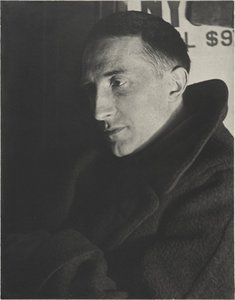
Marcel Duchamp
1887 - 1968 , Frankrike
Kort om kunstneren
- Artistic Movement Or Style:
- Kubisme
- Dadaisme
- Konseptuell kunst
- Artists Or Movements Influenced By This Artist:
- Kubisme
- Popkunst
- Minimalisme
- Date Of Birth: 28 juli 1887
- Date Of Death: 2 oktober 1968
- Full Name: Marcel Duchamp Henri-Robert-Marcel
- Nationality: Fransk-Amerikansk
- Notable Artworks:
- Fontane
- L.H.O.O.Q.
- Det Store Glas
- Boîte-en-valise
- Place Of Birth: Blainville, Frankrike