

 Se i rommet
 Del som digitalt kort
 Del
Del
 Detaljer
 Studentguide

 Last ned
 Liknende objekter
 Røntgen
 Lysbildefremvisning
 Besøksstatistikk
Last Supper
 Early Renaissance
 1403
1403 39.0 x 39.0 cm
 Baptistery of San Giovanni
 Les mer
Giclée / Kunsttrykk
Giclée- eller lerretsprint av museumskvalitet med rask produksjon og fleksible valgmuligheter for etterbehandling. ( Bestill håndmalt reproduksjon Gå til digitalt bilde)




P118B Nkr10

P118H Nkr10

P118W Nkr10

P438Z Nkr10

P508JH Nkr12

P508YH Nkr12

P805H Nkr10

P805Z Nkr10

P919BZ Nkr10

P919G Nkr10

P919XJ Nkr10

P959ZH Nkr10

P968JZ Nkr12

W106C Nkr8

W218G Nkr10

W218JH Nkr8

W218Y Nkr10

W307PJ Nkr10

W316G Nkr10

W316PJ Nkr8

W316Y Nkr10

W398PJ Nkr8

W4111J Nkr10

W500HY Nkr15

W500JH Nkr15

W692G Nkr12

W849H Nkr8

W940BG Nkr15

W953PJ Nkr8




Velg mellom våre forhåndsdefinerte størrelser som bevarer kunstverkets opprinnelige proporsjoner.

Skriv inn bredden og høyden du trenger, slik at den passer til din ramme eller vegg. Et trykk kan kun beskjæres, aldri gjøres større enn bildet, så et format med en annen form vil miste en del av motivet. Vi sender deg en digital mockup for godkjenning før vi trykker noe som helst. Bildet som vises på denne siden viser ikke den faktiske beskjæringen — det er kun mockuppen som gjør det.
Verdensomspennende levering () på 2 uker i stedet for standard 4/5 uker. (23 October)

Gratis ekspressfrakt over hele verden

Lerretsduk av høykvalitets lin

Full transportforsikring

Garanti for refusjon av toll og importavgifter

Garantert fargeekthet

100 dagers returrett ved fabrikasjonsfeil

100% pengene tilbake-garanti

Mengderabatt
 Glassalternativet er kun tilgjengelig i størrelser under 110 cm

Last Supper
Giclée / Kunsttrykk
Format på reproduksjon
-


Totalpris
Nkr 758
The Last Supper: A Florentine Masterpiece of Emotion and Perspective
Lorenzo Ghiberti’s “Last Supper,” painted between 1403 and 1424 for the north doors of the Florence Baptistery, isn't merely a depiction of a biblical event; it’s a profound exploration of human emotion, a revolutionary leap in artistic perspective, and a testament to the burgeoning spirit of the Early Renaissance. Far from a static representation, Ghiberti captures the very moment of revelation – Jesus announcing his impending betrayal – imbuing the scene with an intensity rarely seen in religious art of its time. The painting’s enduring power lies not just in its technical brilliance but also in its ability to evoke a visceral response from the viewer, drawing us into the drama unfolding within the confines of the Florentine Baptistery.
Ghiberti's mastery is immediately evident in his innovative use of linear perspective. Unlike earlier depictions which often presented the scene as a flattened tableau, Ghiberti employs a sophisticated system to create an illusion of depth and space. The vanishing point, subtly placed within Jesus’s figure, draws our eye directly to him, while the receding lines of the table and the figures themselves converge towards that central focus. This technique, groundbreaking for its time, was not only visually compelling but also demonstrated Ghiberti's deep understanding of mathematical principles – a hallmark of Renaissance humanism. The careful attention to detail in rendering each apostle’s face, their gestures, and their clothing further enhances this sense of realism and immediacy.
The Symbolism of Gesture and Expression
Beyond the technical innovations, “The Last Supper” is rich with symbolic meaning. Ghiberti doesn't simply record the event; he captures the emotional responses of each apostle to Jesus’s shocking announcement. The expressions range from disbelief and confusion to anger, denial, and sorrow – a carefully orchestrated tableau of human reaction. Judas Iscariot, often depicted as isolated and shadowed, is rendered with a subtle but unmistakable air of treachery, his face partially obscured by darkness. Conversely, figures like Peter, consumed by anguish, and John, radiating concern, powerfully convey the weight of the impending tragedy. Ghiberti’s ability to translate complex theological concepts into tangible emotional states elevates the painting beyond a historical record and transforms it into a universal meditation on betrayal, faith, and human nature.
A Renaissance Vision: Bronze Doors and Artistic Legacy
“The Last Supper” was conceived as part of a larger commission for two pairs of bronze doors that adorned the Florence Baptistery. These doors, known as the “Gates of Paradise,” represented the pinnacle of Ghiberti’s career and established him as one of the leading sculptors of his generation. The bronze panels were designed to depict scenes from the Old Testament, offering a visual narrative of salvation and redemption. The choice of bronze itself was significant; it symbolized durability, permanence, and divine authority – qualities highly valued by the Florentine elite. Ghiberti’s work on these doors profoundly influenced subsequent generations of artists, shaping the course of Renaissance sculpture and solidifying Florence's reputation as a center of artistic innovation.
A Timeless Masterpiece: Reproduction and Artistic Inspiration
Today, “The Last Supper” remains one of the most celebrated works of art in history. Its influence can be seen in countless paintings, sculptures, and other artworks across centuries. Reproductions, such as this meticulously crafted hand-painted version, offer a remarkable opportunity to experience the power and beauty of Ghiberti’s masterpiece firsthand. The careful attention to detail, the masterful use of perspective, and the profound emotional depth of the scene are all faithfully recreated, allowing viewers to connect with this iconic work on a deeply personal level. Whether displayed in a grand salon or a smaller study, a reproduction of “The Last Supper” serves as a constant reminder of the enduring legacy of Lorenzo Ghiberti and the transformative power of Renaissance art.
Spørsmål og svar
Er fargene i "Last Supper" av Lorenzo Ghiberti livlige eller dempede?
Fargene i "Last Supper" av Lorenzo Ghiberti viser en Muted metning med en Monochromatic intensitet.
Hvor intense er fargene i "Last Supper" av Lorenzo Ghiberti?
Fargene i "Last Supper" av Lorenzo Ghiberti har en Monochromatic intensitet.
Hvem skapte "Last Supper" og i hvilket år?
Lorenzo Ghiberti laget "Last Supper" i 1403.
Kunstnerbiografi
A Florentine Renaissance Forged in Bronze: The Life and Legacy of Lorenzo Ghiberti
Lorenzo di Bartolo – a name that would forever be intertwined with artistic innovation as Lorenzo Ghiberti – was born near Florence, Italy, in 1378. His early life wasn’t one of grand privilege, but rather steeped in the practical artistry of goldsmithing, nurtured under the watchful eye of his stepfather, Bartolo di Michele. This foundational training, a deep understanding of metalwork and its possibilities, would become the bedrock upon which he built an extraordinary career, ultimately redefining the boundaries of sculpture. Ghiberti’s ambitions, however, stretched far beyond the confines of the workshop; formal painting lessons from Gherardo Starnina broadened his artistic horizons, laying the groundwork for a multifaceted talent that would soon captivate Florence and leave an indelible mark on Western art history. A brief period spent assisting Carlo I Malatesta in Rimini during the devastating plague of 1400 further honed his sensibilities, exposing him to diverse artistic currents and shaping his evolving vision. Little did he realize as he embarked on this journey that these formative experiences were meticulously preparing him for a competition – a contest that would catapult him into immortality.The Baptistery Doors: A Triumph of Skill and Vision
In 1401, Florence held a momentous competition: to select an artist to create new bronze doors for the city’s Baptistery – a commission considered the most prestigious in the entire region. It was a chance to immortalize a significant event in Florentine history, the rebirth of the city after the plague. Ghiberti, driven by ambition and a burgeoning talent, entered this arena alongside some of the era's brightest minds, including the formidable Filippo Brunelleschi. The challenge: to depict the *Sacrifice of Isaac* in relief – a biblical narrative rich with symbolism and theological significance. Ghiberti’s panel wasn’t merely a demonstration of technical skill; it was a revelation. His innovative approach, characterized by graceful figures, a profound understanding of perspective, and an almost palpable sense of movement, secured his victory. This triumph wasn't simply about winning a commission; it was a declaration of a new artistic sensibility – a shift away from the rigid conventions of the past towards a more dynamic and humanistic style. He began work on the North Doors immediately, a project that would consume over two decades and fundamentally transform the Baptistery into a showcase of Renaissance artistry. The scale of the undertaking was immense, requiring not only exceptional technical skill but also meticulous planning and organizational prowess.The “Gates of Paradise”: A Masterpiece Unveiled
Following the resounding success of the North Doors – which were admired for their elegance and refined detail – Ghiberti was entrusted with an even more ambitious undertaking: the creation of a second set of doors for the Baptistery’s east entrance. These doors, completed in 1452, would become his magnum opus – and earn him a nickname bestowed by none other than Michelangelo himself: the “Gates of Paradise.” Each panel depicts scenes from the Old Testament with an unprecedented level of realism, detail, and emotional depth. Ghiberti’s mastery of bronze casting and relief sculpture reached its zenith in these works. The panels aren't merely representations of biblical stories; they are immersive narratives brought to life through meticulous attention to anatomy, drapery, and spatial relationships. He pioneered the use of perspective – a revolutionary technique at the time – to create a sense of depth and realism that was truly groundbreaking. The sheer scale and complexity of the “Gates of Paradise” demanded not only exceptional artistic skill but also a sophisticated understanding of engineering and construction.Style, Influences, and Lasting Impact
Ghiberti’s artistic style represents a beautiful synthesis of Gothic elegance and the emerging principles of Renaissance humanism. While rooted in the traditions of medieval craftsmanship – his early training instilled within him a deep respect for established techniques – he embraced classical antiquity, incorporating elements of Roman art and sculpture into his work. This fusion created a unique aesthetic that was both refined and emotionally resonant. He wasn’t simply imitating the past; he was reinterpreting it through a distinctly Renaissance lens. His figures possess a remarkable sense of naturalism, capturing not just physical likeness but also subtle expressions of emotion. Ghiberti's use of light and shadow adds to the dramatic effect of his sculptures, creating a sense of depth and volume that draws the viewer in. Beyond his artistic achievements, Ghiberti left behind a valuable intellectual legacy in the form of *Commentarii*, three treatises on art history, theory, and technique – one of the earliest examples of its kind by an artist. He wasn't merely a sculptor; he was a keen observer of the world around him, constantly seeking to understand the principles that governed beauty and harmony.A Legacy Cast in Bronze
The historical significance of Lorenzo Ghiberti extends far beyond his technical brilliance. He embodied the spirit of the Early Renaissance – a period marked by intellectual curiosity, artistic innovation, and a renewed appreciation for classical learning. His work not only transformed the aesthetic landscape of Florence but also helped to define the humanist ideals that would shape Western culture for centuries to come. Ghiberti’s meticulous attention to detail, his mastery of perspective, and his ability to imbue his sculptures with emotional depth set a new standard for artistic excellence. *His legacy continues to inspire artists and art lovers alike,* reminding us of the power of human creativity and the enduring beauty of Renaissance artistry.- Major Works: North Doors & East Doors (Gates of Paradise) – Florence Baptistery, Bronze Statues for Orsanmichele.
- Key Influences: Gothic Art, Classical Antiquity, Renaissance Humanism.
- Artistic Style: Blending Gothic elegance with emerging Renaissance principles; naturalistic depictions, innovative use of perspective.
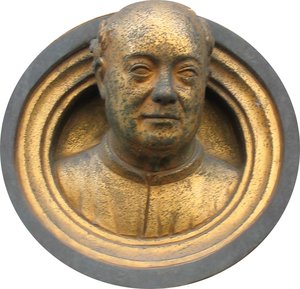
Lorenzo Ghiberti
1378 - 1455 , Italia
Kort om kunstneren
- Artistic Movement Or Style: Renaissance tidlig
- Artists Or Movements Influenced By This Artist:
- Donatello
- Masolino
- Artists Who Influenced This Artist:
- Bartolo di Michele
- Gherardo Starnina
- Date Of Birth: 1378
- Date Of Death: 1455
- Full Name: Lorenzo Ghiberti
- Nationality: Italiensk
- Notable Artworks:
- Porta del Paradiso
- Døde menn
- Abraham og Isak
- Place Of Birth: Florence, Italia
Relaterte artikler

Bronzens Mesterverk: 10 Skulpturer Som Forandret Kunsthistorien | OriginalUniqueArt
Oppdag 10 legendariske bronse skulpturer som revolusjonerte kunsthistorien! Fra Michelangelo til Rodin – lær om teknikker, historier og tidløs skjønnhet. Finn museumskvalitets reproduksjoner & interiørinspirasjon på OriginalUniqueArt.com.

Timeless Strength: The Ultimate Guide to Bronze Art and Sculpture for the Discerning Collector
Discover the enduring elegance of bronze sculpture. Our expert guide explores lost-wax casting, patina mastery, and professional tips for collecting and commissioning museum-quality bronze art to create a lasting legacy in your private collection.

The Eternal Glow of Bronze: A Guide to Sculpting with Light, Strength, and Timeless Artistry
Explore the profound beauty of bronze sculpture. From the ancient lost-wax technique to the interplay of light and patina, discover how this enduring alloy captures human emotion and history through masterful artistry and strength.
The Enduring Legacy of Bronze: History, Technique & Artistic Expression for the Collector
Explore the rich history & enduring appeal of bronze sculpture with expert insights for collectors at OriginalUniqueArt. Learn about casting techniques, iconic artists, and collecting tips.

The Enduring Legacy of Bronze: A Historical & Artistic Exploration for the Collector
Explore the rich history & enduring appeal of bronze sculpture with expert insights for collectors at OriginalUniqueArt. Learn about casting techniques, iconic artists, collecting tips & contemporary interpretations.