

 Forhåndsvisning
 Send
Send Del med andre
 Vis detaljer

 Last ned bildet
 Liknende objekter
 Røntgenundersøkelse
 Lysbildefremvisning
 Statistikk
Offering to Flora
 Oil On Canvas
- WallArt
- Baroque
 1627
1627- Early Modern
 216.0 x 140.0 cm
 Museo del Prado
 Vis hele teksten
Giclée / Kunsttrykk
Giclée- eller lerretsprint av museumskvalitet med rask produksjon og fleksible valgmuligheter for etterbehandling. ( Kjøp håndlaget maleri Bytt til digitalt bilde)




P118B $10

P118H $10

P118W $10

P438Z $10

P508JH $12

P508YH $12

P805H $10

P805Z $10

P919BZ $10

P919G $10

P919XJ $10

P959ZH $10

P968JZ $12

W106C $8

W218G $10

W218JH $8

W218Y $10

W307PJ $10

W316G $10

W316PJ $8

W316Y $10

W398PJ $8

W4111J $10

W500HY $15

W500JH $15

W692G $12

W849H $8

W940BG $15

W953PJ $8




Velg mellom våre forhåndsdefinerte størrelser som bevarer kunstverkets opprinnelige proporsjoner.

Du kan oppgi egne mål for å tilpasse en spesifikk ramme eller et bestemt område. Dersom den valgte størrelsen ikke samsvarer med det originale bildets proporsjoner, vil vi enten beskjære kunstverket eller utvide bildet med en speilet eller ensfarget kant. En digital mockup vil bli sendt til din godkjenning før produksjonen starter.
Vennligst merk at forhåndsvisningen på skjermen ikke gjenspeiler den faktiske beskjæringen eller utvidelsen. Kun mockuppen vil vise den endelige komposisjonen nøyaktig.
Selv om tilpassede størrelser er tilgjengelige, anbefaler vi å velge et mål fra den forhåndsdefinerte listen for å bevare de originale proporsjonene.
Verdensomspennende levering () på 2 uker i stedet for standard 4/5 uker. (16 September)

Gratis ekspressfrakt over hele verden

Lerretsduk av høykvalitets lin

Full forsikring under transport

Garanti for refusjon av toll og importavgifter

Garantert korrekt fargegjengivelse

100 dagers returrett (kun ved mangler)

100% pengene tilbake-garanti

Rabatt ved flere kjøp
 Glassalternativet er kun tilgjengelig i størrelser under 110 cm

Offering to Flora
Giclée / Kunsttrykk
Størrelse på reproduksjon
-


Endelig pris
$ 80
A Vision of Baroque Splendor
In the heart of seventeenth-century Madrid, amidst the opulent atmosphere of the Spanish Golden Age, Juan van der Hamen y León captured a moment of profound grace and aristocratic poise. His 1627 masterpiece, “Offering to Flora,” is far more than a mere depiction of a garden encounter; it is a theatrical window into an idealized world of nobility and serenity. The painting presents a tender, almost ritualistic interaction between a young man and a seated woman, positioned at the apex of a masterful pyramidal composition. As the viewer’s eye travels through the lush, meticulously crafted landscape, they are drawn into a scene where the boundaries between reality and myth begin to blur, offering a sense of timeless romance that continues to captivate the modern soul.
The artistry of Van der Hamen is defined by its breathtaking use of chiaroscuro. Through the dramatic interplay of light and shadow, the artist breathes life into the scene, casting deep, velvety shadows that heighten the emotional intensity of the figures' expressions. A single, focused light source illuminates the delicate textures of the woman’s skin and the vibrant petals of the flowers, creating a luminous focal point amidst the darker, more mysterious recesses of the garden. This technique does not merely illuminate; it sculpts the subjects, lending them a three-dimensional presence that feels both intimate and monumental.
Symbolism and the Language of Nature
Every element within this verdant sanctuary is laden with intentional meaning, designed to resonate with the humanist ideals of the era. The garden itself serves as a metaphor for paradise—a realm of fertility, divine grace, and intellectual beauty. Within this setting, the flora acts as a silent language of emotion: the lilies evoke purity, the roses whisper of passionate love, and the violets suggest a gentle remembrance. These botanical details are rendered with such precision that one can almost sense their fragrance, bridging the gap between the canvas and the senses.
Beyond the organic beauty, the subtle inclusion of classical elements, such as the stone statue, anchors the work in the tradition of virtue and contemplation. This marriage of the natural and the man-made reflects the sophisticated tastes of the Spanish court, where nature was often viewed through the lens of classical allegory. For the collector or interior designer, this layer of symbolism provides a rich narrative depth, making the piece an intellectual centerpiece that invites prolonged study and conversation.
A Masterpiece for the Discerning Eye
Technically, “Offering to Flora” is a triumph of oil painting. Van der Hamen’s brushwork is exceptionally smooth and polished, demonstrating a virtuoso ability to replicate the diverse textures of silk drapery, soft skin, and delicate foliage. The color palette—a sophisticated arrangement of rich reds, regal golds, and deep forest greens—amplifies the painting's inherent grandeur, ensuring it commands attention in any setting. The use of linear perspective creates a convincing sense of depth, leading the eye through receding planes of architecture and landscape toward a distant, atmospheric horizon.
Whether displayed in a grand salon or a curated private study, a high-quality reproduction of this work brings with it an aura of historical prestige and aesthetic elegance. It is an investment in atmosphere, offering a sense of calm, luxury, and cultural sophistication. For those seeking to infuse their surroundings with the dramatic beauty of the Baroque era, Van der Hamen’s vision remains an unparalleled source of inspiration, embodying a perfect harmony of technical mastery and emotional resonance.
Om kunstneren
The Architect of Stillness
In the vibrant, sun-drenched atmosphere of 17th-century Madrid, a new visual language was being forged, and at its heart stood Juan van der Hamen y León. While the era is often remembered for its grand religious epics and sweeping historical dramas, Van der Hamen achieved immortality through a much more intimate medium: the bodegón. During the 1620s, he emerged as a transformative figure, elevating the still life from simple culinary documentation to a sophisticated genre of profound symbolic depth and technical mastery. His ability to capture the quiet dignity of inanimate objects allowed him to command the attention of the Spanish crown, earning him prestigious positions as an unsalaried painter to the courts of both Philip III and Philip IV. Through his brush, the humble textures of everyday life were transformed into objects of royal contemplation.A Heritage of Precision and Versatility
The artist’s unique aesthetic was deeply rooted in a complex and rich lineage that blended Northern European precision with Spanish soul. Born in Madrid around 1596, he was the son of Jan van der Hamen, a Flemish courtier, and Dorotea Witman Gómez de León, whose noble Toledan ancestry provided him with deep Spanish roots. This fusion of Flemish meticulousness and Spanish dramatic sensibility became the hallmark of his technique. While he is most celebrated for his still lifes, Van der Hamen was a remarkably versatile talent, refusing to be confined by a single subject matter. His prolific output spanned a wide array of disciplines, including:- Religious History Paintings created for the grand churches and convents of Spain.
- Landscapes and Portraits which demonstrated his command over light, atmosphere, and human character.
The Legacy of a Brief Brilliance
Despite the tragic brevity of his life, which ended in 1631 at the age of only thirty-five, Van der Hamen’s impact on the Spanish Baroque cannot be overstated. He did not merely paint objects; he orchestrated them. In his works, one finds a breathtaking interplay of light and shadow, where the delicate translucency of glassware meets the heavy, tactile reality of earthenware and ripe fruit. His mastery of texture and composition set a standard that would influence generations of Spanish painters to come. Though his career was a fleeting moment in history, the silent, beautiful worlds he created continue to resonate, offering a window into the refined elegance and profound stillness of a golden age in Spanish art. He remains a master who taught us that even in the most motionless subject, there is a life waiting to be discovered.
juan van der hamen y leon
1596 - 1631
Kort om kunstneren
- Artistic Movement Or Style: Still life (Bodegones)
- Artists Or Movements Influenced By This Artist: Popularized Madrid still life
- Date Of Birth: 1596
- Date Of Death: 1631
- Full Name: Juan van der Hamen y León
- Nationality: Spanish
- Place Of Birth: Madrid, Spain
Relaterte artikler
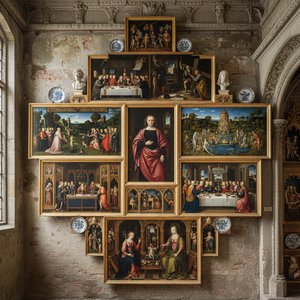
De 10 Mesterverkene Som Definerte Tidlig Nederlandsk Renessanse | Kunst & Interiør
Utforsk de 10 ikoniske mesterverkene fra tidlig nederlandsk renessanse! Jan van Eyck, Bosch & Van der Weyden – lær om historien og teknikken bak disse flotte oljemaleriene. Finn kunst til ditt hjem på OriginalUniqueArt.com.

De 10 Mesterverkene Som Definerte Tidlig Nederlandsk Maleri | Kunst og Interiør
Utforsk de 10 mest ikoniske verkene fra tidlig nederlandsk maleri! Lær om Jan van Eyck, Robert Campin og renessansens mestere. Finn kunsttrykk av høy kvalitet og interiørinspirasjon på OriginalUniqueArt.com – ditt hjem fortjener et mesterverk.

Hugo van der Goes: Devotion, Innovation & the Psychological Depth of Early Netherlandish Painting
Explore the revolutionary art of Hugo van der Goes – a master of Early Netherlandish painting renowned for his dramatic realism, psychological depth & profound influence on Renaissance artists. Discover his iconic works and lasting legacy.

Rogier van der Weyden: Emotion, Innovation & the Early Netherlandish Renaissance
Explore the revolutionary art of Rogier van der Weyden, a pivotal figure of the Early Netherlandish Renaissance. Discover his emotional realism, innovative compositions, and lasting impact on painting history.

Rembrandts Mesterverk: Topp 25 Kunstverk for Din Vegg | OriginalUniqueArt.no
Utforsk Rembrandts 25 mest ikoniske kunstverk! Oppdag historiene bak mestermalerier, portretter og bibelske scener fra den nederlandske barokken. Finn museumskvalitets reproduksjoner & interiørinspirasjon på OriginalUniqueArt.com.