Alexandre le Grand devant le tombeau d'Achille
Håndlaget oljereproduksjon
Håndmalt olje på lerret i din valgte størrelse og ramme, laget på bestilling av våre kunstnere. ( Bytt til trykk
Bytt til bilde)
P118B $10
P118H $10
P118W $10
P438Z $10
P508JH $12
P508YH $12
P805H $10
P805Z $10
P919BZ $10
P919G $10
P919XJ $10
P959ZH $10
P968JZ $12
W106C $8
W218G $10
W218JH $8
W218Y $10
W307PJ $10
W316G $10
W316PJ $8
W316Y $10
W398PJ $8
W4111J $10
W500HY $15
W500JH $15
W692G $12
W849H $8
W940BG $15
W953PJ $8
Velg mellom våre forhåndsdefinerte størrelser som bevarer kunstverkets opprinnelige proporsjoner.
Du kan angi egne mål for å tilpasse en spesifikk ramme eller plass. Dersom den valgte størrelsen ikke samsvarer med originalbildets proporsjoner, vil vi enten beskjære kunstverket eller utvide maleriet med ytterligere håndmalte elementer. En digital mockup vil bli sendt til din godkjenning før produksjonen starter.
Vennligst merk at forhåndsvisningen på skjermen ikke gjenspeiler den faktiske beskjæringen eller utvidelsen. Kun mockuppen vil vise den endelige komposisjonen nøyaktig.
Selv om tilpassede størrelser er tilgjengelige, anbefaler vi å velge et mål fra den forhåndsdefinerte listen for å bevare de originale proporsjonene.
Etter bestilling vil OriginalUniqueArt.com-teamet sende e-post til kunden for instruksjoner og sende et utkast (mockup) som forhåndsvisning.
Verdensomspennende levering () på 3–4 uker i stedet for standard 5 uker. (11 August). Ingen kompromisser med kvaliteten.
Gratis ekspressfrakt over hele verden
Lerretsduk av høykvalitets lin
Full forsikring under transport
Garanti for refusjon av toll og importavgifter
Garantert korrekt fargegjengivelse
60 dagers returrett (kun ved feil)
100% pengene tilbake-garanti
Rabatt ved flere kjøp
Alexandre le Grand devant le tombeau d'Achille
Teknikk for reproduksjon
Størrelse på reproduksjon
-
Endelig pris
$ 450
Beskrivelse av kunstverket
A Dramatic Encounter: Hubert Robert’s Meditation on Power and Decay
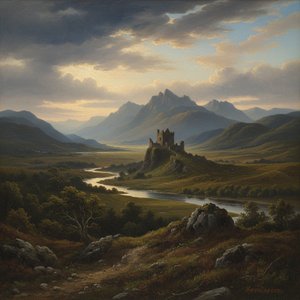
Hubert Robert’s “Alexandre le Grand devant le tombeau d’Achille” (c. 1754-1757) is not merely a depiction of a historical scene; it's a carefully constructed tableau brimming with symbolic weight, rendered in the evocative style characteristic of the late 18th century. The painting transports us to a ruined Roman landscape – a deliberate choice by Robert that immediately establishes a dialogue between grandeur and transience. Here, Alexander the Great stands before what is clearly identified as Achilles’ tomb, not in triumphant victory, but in a posture of contemplative solemnity. This isn't the heroic Alexander of classical sculpture; he appears almost weary, his gaze fixed on the fragmented remains of the past, suggesting a profound awareness of mortality and the fleeting nature of even the most formidable power.
Robert masterfully employs a flattened perspective, prioritizing atmosphere and emotional resonance over strict adherence to linear realism. The composition is deliberately complex, layering figures – soldiers, onlookers, and Alexander himself – within a carefully orchestrated architectural setting. The strong vertical lines of the columns contrast sharply with the horizontal fragmentation of the fallen structures, creating a visual tension that mirrors the painting’s thematic concerns. Notice how Robert uses diffused lighting, reminiscent of an overcast day, to soften the edges and imbue the scene with a melancholic quality. The earthy color palette – dominated by ochres, browns, and muted blues – further reinforces this sense of age and decay, while subtle touches of red in the drapery draw the eye and add a touch of dramatic intensity.

Neoclassical Roots, Romantic Longing
While firmly rooted in the Neoclassical tradition—a style emphasizing clarity, order, and rational composition—Robert’s work also reveals a strong influence from the burgeoning Romantic movement. The ruins themselves are not simply historical artifacts; they represent a powerful symbol of time's relentless passage and the inevitable decline of all things. The scene evokes a sense of nostalgia for a lost golden age, a yearning for beauty amidst decay – a hallmark of Romanticism’s fascination with emotion and the sublime. Robert wasn’t just documenting ruins; he was crafting visions, blending observation with imagination to create scenes that resonated with both a longing for the past and an anticipation of the future.
The choice of Achilles' tomb is particularly significant. Achilles, the epitome of heroic strength and martial prowess, represents an ideal of masculine virtue—a concept increasingly challenged by the Enlightenment’s emphasis on reason and individual liberty. Alexander, standing before his demise, implicitly acknowledges this shift in values. The juxtaposition of the powerful conqueror with the fallen hero suggests a subtle critique of unchecked ambition and the ultimate futility of earthly glory. Robert's skill lies not just in depicting the scene accurately but in imbuing it with layers of meaning that invite contemplation.
Technique and Materials: A Layered Masterpiece
“Alexandre le Grand devant le tombeau d’Achille” is a testament to Robert's meticulous technique. Likely executed in oil on canvas, the painting demonstrates a sophisticated understanding of color blending and layering—a hallmark of the Rococo and Neoclassical periods. The visible brushstrokes contribute to the sense of texture and immediacy, while subtle glazing techniques create depth and luminosity. The rough, aged surfaces of the ruins are contrasted with smoother areas of skin tones, further emphasizing the painting’s thematic concerns about time and decay. Robert's use of pigments mixed with oil—a standard practice at the time—allowed him to achieve a remarkable range of tonal values and subtle color variations.
The painting’s composition suggests a deliberate effort to capture not just a visual likeness but also an emotional atmosphere. Robert’s careful attention to detail, combined with his masterful use of light and shadow, creates a scene that is both visually stunning and profoundly moving. It's a work that invites the viewer to contemplate the enduring legacy of heroes, the inevitability of decay, and the complex relationship between power and mortality.
Om kunstneren
A Painter of Ruins and Visions: The World of Hubert Robert
Hubert Robert, a name inextricably linked to the evocative beauty of ruins and the romantic allure of bygone eras, stands as a singular figure in 18th-century French art. Born in Paris in 1733, his life unfolded against a backdrop of profound artistic transformation—a journey from the ornate elegance of the Rococo to the nascent spirit of Neoclassicism, culminating in the dramatic upheaval of the French Revolution and its aftermath. Robert’s genius wasn't merely in replicating decay; it resided in crafting meticulously detailed visions that resonated with both a poignant nostalgia for the past and an anticipatory gaze towards the future. His artistic odyssey began within the structured confines of formal training, initially under the tutelage of sculptor Michel-Ange Slodtz, who recognized Robert’s innate talent but wisely steered him toward painting, sensing a deeper calling—a capacity to capture light, atmosphere, and the subtle poetry inherent in form.Roman Reveries: Shaping an Artistic Identity
The defining moment in Robert's artistic development arrived with his extended sojourn to Rome between 1754 and 1765. This period wasn’t simply a vacation; it was a crucible where his artistic identity was forged. Accompanying Étienne-François de Choiseul, the young ambassador of France to the Papal court, Robert immersed himself in the city's ancient heart—a world saturated with history and architectural grandeur. For over a decade, Rome became his open-air studio, its crumbling temples, majestic arches, and overgrown gardens fueling an imagination that would forever shape his artistic vision. He didn’t merely document what he saw; he actively reimagined it, infusing the ruins with a sense of melancholic beauty—a poignant awareness of time's relentless passage. His early works, often categorized as *capricci*, reflected this approach. These fanciful compositions juxtaposed classical ruins with contemporary life, creating dreamlike scenarios that hinted at Robert’s unique ability to blend observation and imagination. Crucially, he spent considerable time working alongside Giovanni Paolo Panini, a master of topographical painting who specialized in rendering Roman ruins. While Robert initially imitated Panini's meticulous style, he quickly transcended mere replication, developing his own distinctive voice characterized by an unparalleled sensitivity to light, atmosphere, and the subtle nuances of form. His sketchbooks from this period—filled with hundreds of drawings—offer invaluable insights into his artistic process, revealing a keen eye for architectural detail and a profound understanding of landscape composition. The influence of Piranesi, another artist fascinated by Roman ruins, is also evident in Robert’s work, particularly his depictions of labyrinthine interiors and the interplay of light and shadow within ancient structures.Parisian Acclaim and Royal Patronage
Robert's return to Paris in 1765 marked a significant shift in his career trajectory. He swiftly gained recognition within the artistic establishment, securing admission to the Académie Royale de Peinture et de Sculpture with “The Port of Rome, Ornamented with Different Monuments of Architecture, Ancient and Modern.” This success propelled him into the spotlight, attracting the attention of discerning collectors and art critics alike. His subsequent exhibitions at the Salon—the official annual exhibition of the French Academy—garnered widespread acclaim, captivating audiences with his evocative depictions of ruins and picturesque landscapes. The critic Denis Diderot, a leading figure of the Enlightenment, famously praised Robert’s paintings for their ability to transport viewers to another time and place—a testament to the artist's remarkable skill in evoking atmosphere and emotion. This burgeoning popularity led to royal patronage, with commissions for decorative projects within grand palaces and gardens, as well as appointments as “Designer of the King’s Gardens” and later, “Keeper of the King’s Pictures.” He became a highly sought-after artist, not only for his easel paintings but also for his innovative designs for elaborate garden layouts—a reflection of the prevailing taste for *capriccio* painting, which appealed to collectors fascinated by history, archaeology, and the picturesque. Robert elevated this genre beyond mere decorative art, imbuing it with a unique sensibility that combined historical accuracy with imaginative vision.Revolution, Resilience, and Lasting Legacy
The French Revolution presented an unprecedented challenge for Robert, as for many artists of his time. While navigating the turbulent political climate, he demonstrated remarkable resilience, continuing to paint prolifically despite the upheaval. He even faced a brief period of imprisonment during the Reign of Terror—a harrowing experience that undoubtedly informed some of his later works. Following the Revolution, Robert was appointed curator of the newly established Muséum Central des Arts—the future Musée du Louvre—a significant recognition of his expertise and dedication to preserving France’s cultural heritage. He played a crucial role in organizing and cataloging the museum's burgeoning collection, ensuring that its artistic treasures were safeguarded for future generations. Hubert Robert died in Paris in 1808, leaving behind an extraordinary body of work—a testament to his unique vision and enduring legacy. His paintings continue to captivate viewers with their evocative beauty, blending historical accuracy with imaginative vision and solidifying his place as a pivotal figure bridging the Rococo and Neoclassical periods, and anticipating aspects of Romanticism with his fascination for history and imagination.- Key Influences: Giovanni Paolo Panini, Piranesi, the architectural landscape of Rome.
- Major Themes: Ruins, landscapes, *capriccio* paintings, historical memory, the passage of time.
- Artistic Style: Meticulous detail, atmospheric perspective, evocative lighting, blending observation with imagination.
Hubert Robert
1733 - 1808 , Frankrike
Kort om kunstneren
- Artistic Movement Or Style: Romantikk, Neoklassisisme
- Artists Or Movements Influenced By This Artist: ['Romantikk']
- Artists Who Influenced This Artist:
- Giovanni Panini
- Piranesi
- Date Of Birth: 22 mai 1733
- Date Of Death: 15 apr 1808
- Full Name: Hubert Robert
- Nationality: Fransk
- Notable Artworks:
- Port av Roma
- Galatea's flykt
- Louvrens galleri
- Place Of Birth: Paris, Frankrike


Glassalternativet er kun tilgjengelig i størrelser under 110 cm