() ·

Et maleri laget til deg, med håndverk

Crémieu

Håndlaget oljereproduksjon

Håndmalt olje på lerret i din valgte størrelse og ramme, laget på bestilling av våre kunstnere. ( Bytt til trykk Bytt til digitalt bilde)

Beskrivelse av objektet

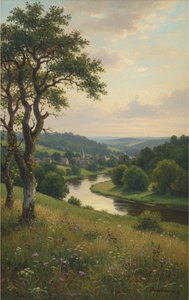
Discover Henri-Joseph Harpignies’ ‘Crémieu’ (1847) – a stunning Romantic landscape oil painting. Explore its dramatic cliffs, atmospheric perspective & textured brushstrokes. A captivating 19th-century masterpiece.

Om kunstneren

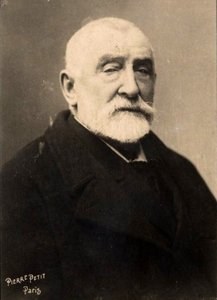
Utforsk Henri-Joseph Harpignies' rolige landskap og idylliske franske naturscener. En mester av Barbizon-skolen, gjenspeiler hans kunst fra det 19. århundre ro og naturens skjønnhet.

fra ·

Kapittel 1

Hvor stor bør den være?

Skyv for å endre størrelsen; bildet til venstre viser rammen i sin faktiske bredde. Originalens proporsjoner er bevart.

Standardformat
skreddersydd
CM
INCH

Velg mellom våre forhåndsdefinerte størrelser som bevarer kunstverkets opprinnelige proporsjoner.

bredde
høyde

Skriv inn ønsket bredde og høyde for å tilpasse bildet til din ramme eller vegg. Siden dette er håndmalt, kan kunstneren male litt mer rundt motivet eller beskjære det noe dersom du velger et annet format — valget er ditt. Vi sender deg en digital mockup til godkjenning før maleriet påbegynnes. Bildet som vises på denne siden representerer ikke det faktiske resultatet — kun mockuppen viser det endelige uttrykket.

Kapittel 2

Hvordan skal det leveres?

Velg kantutførelse på lerretet

Velg din ramme

Corner sample of the WhiteWrap canvas edge finish, stretched on massivt tre bars
Hvit kant Nkr1
Corner sample of the BlurSideWrap canvas edge finish, stretched on massivt tre bars
Uskarp kantfinish Nkr1
Corner sample of the ExtendedWrap canvas edge finish, stretched on massivt tre bars
Fortsatt motiv Nkr1
Corner sample of the P118B picture frame: støpt polystyren, 5 cm wide and 3 cm thick
P118B Nkr10
Corner sample of the P118H picture frame: støpt polystyren, 5 cm wide and 3 cm thick
P118H Nkr10
Corner sample of the P118W picture frame: støpt polystyren, 5 cm wide and 3 cm thick
P118W Nkr10
Corner sample of the P438Z picture frame: støpt polystyren, 5.5 cm wide and 3.5 cm thick
P438Z Nkr10
Corner sample of the P508JH picture frame: støpt polystyren, 7 cm wide and 3.5 cm thick
P508JH Nkr12
Corner sample of the P508YH picture frame: støpt polystyren, 7 cm wide and 3.5 cm thick
P508YH Nkr12
Corner sample of the P805H picture frame: støpt polystyren, 5 cm wide and 3.5 cm thick
P805H Nkr10
Corner sample of the P805Z picture frame: støpt polystyren, 5 cm wide and 3.5 cm thick
P805Z Nkr10
Corner sample of the P919BZ picture frame: støpt polystyren, 7 cm wide and 3.5 cm thick
P919BZ Nkr10
Corner sample of the P919G picture frame: støpt polystyren, 7 cm wide and 3.5 cm thick
P919G Nkr10
Corner sample of the P919XJ picture frame: støpt polystyren, 7 cm wide and 3.5 cm thick
P919XJ Nkr10
Corner sample of the P959ZH picture frame: støpt polystyren, 5 cm wide and 3 cm thick
P959ZH Nkr10
Corner sample of the P968JZ picture frame: støpt polystyren, 6 cm wide and 4 cm thick
P968JZ Nkr12
Corner sample of the W106C picture frame: massivt tre, 5 cm wide and 3 cm thick
W106C Nkr8
Corner sample of the W218G picture frame: massivt tre, 5 cm wide and 3 cm thick
W218G Nkr10
Corner sample of the W218JH picture frame: massivt tre, 5 cm wide and 3 cm thick
W218JH Nkr8
Corner sample of the W218Y picture frame: massivt tre, 5 cm wide and 3 cm thick
W218Y Nkr10
Corner sample of the W307PJ picture frame: massivt tre, 6 cm wide and 3 cm thick
W307PJ Nkr10
Corner sample of the W316G picture frame: massivt tre, 6 cm wide and 3 cm thick
W316G Nkr10
Corner sample of the W316PJ picture frame: massivt tre, 6 cm wide and 3 cm thick
W316PJ Nkr8
Corner sample of the W316Y picture frame: massivt tre, 6 cm wide and 3 cm thick
W316Y Nkr10
Corner sample of the W398PJ picture frame: massivt tre, 5 cm wide and 3 cm thick
W398PJ Nkr8
Corner sample of the W4111J picture frame: massivt tre, 6.5 cm wide and 3.5 cm thick
W4111J Nkr10
Corner sample of the W500HY picture frame: massivt tre, 7 cm wide and 5 cm thick
W500HY Nkr15
Corner sample of the W500JH picture frame: massivt tre, 7 cm wide and 5 cm thick
W500JH Nkr15
Corner sample of the W692G picture frame: massivt tre, 8 cm wide and 4 cm thick
W692G Nkr12
Corner sample of the W849H picture frame: massivt tre, 5 cm wide and 3 cm thick
W849H Nkr8
Corner sample of the W940BG picture frame: massivt tre, 7.5 cm wide and 4.5 cm thick
W940BG Nkr15
Corner sample of the W953PJ picture frame: massivt tre, 6 cm wide and 3.5 cm thick
W953PJ Nkr8
Corner sample of the H24-GOLD picture frame: utskåret tre med gesso, 10 cm wide and 6 cm thick
H24-GOLD Nkr30
Corner sample of the H24-SILVER picture frame: utskåret tre med gesso, 10 cm wide and 6 cm thick
H24-SILVER Nkr30
Corner sample of the H36-GOLD picture frame: utskåret tre med gesso, 15 cm wide and 6.5 cm thick
H36-GOLD Nkr45
Corner sample of the H36-SILVER picture frame: utskåret tre med gesso, 15 cm wide and 6.5 cm thick
H36-SILVER Nkr45

Profil: . Total størrelse med ramme: .

Kapittel 3

Hvem maler det, og bør noe endres?

Eksempler på hva som kan endres: Erstatt ansikt med kundens eget bilde; Legg til kjæledyr (f.eks. bytt ut katt med hund); Inkluder en skjult melding i bakgrunnen; Endre landskap eller elementer i bakgrunnen.
Etter bestilling vil OriginalUniqueArt.com-teamet sende e-post til kunden for instruksjoner og sende et utkast som forhåndsvisning

Verdensomspennende levering () på 3–4 uker i stedet for standard 5 uker. (3 November). Ingen kompromisser med kvaliteten.

Kapittel 4

De siste detaljene

En navneplate, som på et museum?

Detaljer om gravert bronseplate

This elegant plaque features the artist's name and the title of the artwork, finely engraved for a timeless presentation.

It is made from bronze with a refined, elegant finish. The text is precisely laser-engraved for a sharp and permanent result. Measuring 9x2 cm, the plaque is compact yet easy to read. It's built to be durable and scratch-resistant, offering a professional, museum-quality look. Mounting is simple thanks to the included adhesive backing.

Detaljer om gjennomsiktig akrylplate

The plaque includes essential engraved details such as the artist's name, the title of the artwork, the date it was created, the type of media used-like oil on canvas or watercolor-a brief description of the piece, and a QR code that links to the complete artwork information.

It is crafted from clear acrylic, offering a sleek, modern appearance. The text is UV-engraved in black to ensure strong visual contrast. With a size of 10x15 cm, it ensures optimal readability. It comes equipped with two metal hooks for secure wall mounting. The plaque is designed to be weather-resistant, making it suitable for various environments, and it includes interactive features that work seamlessly with smartphone scanning.

Detaljer om plakett i svart akryl

This elegant plaque includes engraved information such as the artist's name, the title of the artwork, the date it was created, the type of media used (like oil on canvas or watercolor), a short description of the artwork, and a QR code for quick access to more information.

The plaque itself is made from refined black acrylic with a premium finish. The text is laser-engraved in white for high contrast and readability. Its size is 10x15 cm, designed to be easy to read. It comes with two metal hooks for professional mounting. The design is sleek and fits any interior style. It is also weather-resistant and durable, with built-in digital integration for mobile compatibility.

En beskyttende lakk?

Når trenger du det?

Kapittel 5

Ditt maleri, slik du bestilte det

Crémieu

Trykkmetode

Størrelse på reproduksjon

-

Utvalgte mesterkunstnere

Mer detaljrikdom, finesse og ekstra produksjonstid

-

Innramming av reproduksjon

-

-

For kunstverk eller reproduksjoner som er større enn 105 cm (ca. 41 tommer) på noen side, vil rammen bli sendt som et sett som må monteres. Denne metoden sikrer trygg levering og forhindrer skader under transport.

Krever profesjonell montering – dette er ikke et DIY-produkt.
Settet må monteres og lerretet strammes av en erfaren profesjonell rammelegger, ved bruk av trelim (følger ikke med), en lerretstang og klemmer for å holde rammelisten vinkelrett mens limet tørker. Feilaktig montering eller ujevn stramming av lerretet kan påføre kunstverket permanente skader og er ikke dekket av vår garanti.

  • Alle massive trelister er inkludert, presist tilpasset i størrelse.

  • Monteres med de medfølgende skruene, samt trelim til hjørnene, som ikke er inkludert og må anskaffes av din rammehandler.

  • Profesjonelt verktøy er nødvendig og er ikke inkludert: en lerretstang (strammer) og klemmer for å holde rammene vinkelrette mens limet tørker.

Viktig:
Hjørnene krever trelim, listene må holdes på plass med tvinger til limet er helt tørt, og stramming av lerretet på den ferdige rammen krever en lerretstang. Ingen av disse produktene er inkludert i settet. Vennligst sørg for tilgang til en erfaren profesjonell rammehandler før du bestiller denne størrelsen.

Navneskilt

-

-

Beskyttende ferniss

Blank lakk (forsterker farger, beskytter mot lys og fuktighet)

-

Tilpass mitt kunstverk

Eksempler på hva som kan endres: Erstatt ansikt med bilde av kunden; Legg til kjæledyr (f.eks. bytt ut katt med hund); Inkluder en skjult melding i bakgrunnen; Endre bakgrunnslandskap eller elementer.

-

Ekspresslevering

Verdensomspennende levering () på 3–4 uker i stedet for standard 5 uker. (3 November). Ingen kompromisser med kvaliteten.

-

Ekspresslevering

Verdensomspennende levering til innen 5 uker. (10 November).

Inkludert frakt

Totalpris for valgte alternativer

Nkr 2878

Totalpris Nkr 2878

Glassalternativet er kun tilgjengelig i størrelser under 110 cm

Inkludert med hver bestilling

  • Gratis ekspressfrakt over hele verden
  • Lerretsduk av lin av høy kvalitet
  • Full transportforsikring
  • Garanti for refusjon av toll og importavgifter
  • Garantert fargegjengivelse
  • 100 dagers returrett ved fabrikasjonsfeil
  • 100% pengene tilbake-garanti
  • Rabatt ved flere kjøp

A Dramatic Vista of the French Countryside

Henri-Joseph Harpignies’ “Crémieu” (1847) is more than just a landscape painting; it's an immersive experience, a carefully constructed tableau that invites contemplation on the relationship between humanity and the vastness of nature. The scene unfolds within the foothills of the French Alps, depicting a rugged, almost primordial terrain dominated by towering cliffs and a winding path that draws the eye relentlessly into the distance. The painting immediately establishes a sense of solitude and grandeur – an emotional resonance deeply rooted in the Romantic tradition, yet subtly informed by Harpignies’ meticulous observation of light and texture.

Henri-Joseph Harpignies

The composition is masterfully executed, utilizing a strong diagonal line created by the path to guide the viewer’s gaze and establish a dynamic flow through the scene. The foreground, rendered in earthy browns and ochres, features a dirt road and scattered rocks, gradually transitioning into the imposing cliffs that form the central focus of the painting. These cliffs aren't merely geological formations; they possess an almost sculptural quality, their weathered surfaces hinting at centuries of exposure to the elements. In the distance, a subtle atmospheric perspective – a softening of colors and details as depth increases – suggests the immense scale of the landscape and evokes a feeling of both awe and vulnerability.

The Barbizon School and Luminism

Harpignies’ work firmly places him within the context of the Barbizon School, a movement that championed direct observation of nature and a rejection of academic artifice. Unlike earlier landscape painters who relied heavily on idealized representations, the Barbizon artists sought to capture the essence of the French countryside as they experienced it – with its rough textures, subtle shifts in light, and inherent imperfections. “Crémieu” exemplifies this approach, eschewing smooth brushstrokes and carefully blended colors in favor of visible marks that convey a sense of immediacy and spontaneity. Furthermore, the painting’s emphasis on atmospheric effects aligns closely with Luminism, a style characterized by its soft, diffused lighting and focus on capturing the subtle nuances of light and shadow.

Born in Valenciennes in 1819, Harpignies initially pursued a business career before dedicating himself to art. His early training under Jean Achard instilled in him a solid foundation in draughtsmanship, while his subsequent journey to Italy exposed him to the principles of the Barbizon School and fostered a deep appreciation for the Italian landscape tradition. The painting’s muted palette – dominated by browns, greens, and grays – contributes significantly to its evocative atmosphere, creating a sense of quiet contemplation and timelessness.

Symbolism and Emotional Resonance

Beyond its technical merits, “Crémieu” carries a subtle symbolic weight. The solitary path winding through the landscape can be interpreted as a metaphor for the human journey – a quest for meaning and purpose amidst the vast uncertainties of life. The towering cliffs represent both strength and vulnerability, reminding us of our own smallness in the face of nature’s power. The painting's overall mood is one of serene solitude, inviting viewers to pause and reflect on their place within the natural world.

Interestingly, the village of Crémieu itself, depicted in the painting, holds a rich history. Situated near Lyon, it served as an important trading center throughout the Middle Ages, benefiting from its strategic location along trade routes. The presence of a medieval castle and monastic settlements further adds to the painting’s historical context.

A Masterpiece for Collectors

“Crémieu” is a testament to Harpignies' skill as a landscape painter and his ability to capture the beauty and drama of the French countryside. Reproductions of this captivating artwork are available through OriginalUniqueArt, offering an opportunity to bring its evocative atmosphere into your home or office. Its timeless appeal and rich symbolism make it a valuable addition to any art collection.

Spørsmål og svar

Hvor kan jeg finne en guide til "Crémieu"?

En Faktablad for studenter-side er tilgjengelig for "Crémieu" av Henri-Joseph Harpignies: et utskrivbart faktablad om kunstverket, designet for studenter og bruk i klasserommet.

Hvilken trykkstørrelse av "Crémieu" av Henri-Joseph Harpignies passer til det anbefalte rommet?

Anbefalt kombinasjon for "Crémieu" av Henri-Joseph Harpignies: et trykk i størrelsen Medium til et Living Room.

Hvor kan jeg se en forhåndsvisning av "Crémieu"?

En forhåndsvisning av "Crémieu" av Henri-Joseph Harpignies er tilgjengelig på kunstverkets Se kunstverket i et rom-side.

Les mer om dette maleriet

Forhåndsvisning Se i AR Bytt til trykk Bytt til digitalt bilde Send
Vis detaljer Utskriftsvennlig guide Legg til i favoritter Last ned bilde Liknende objekter Røntgenundersøkelse Lysbildefremvisning Spørsmål og svar Statistikk

I tall

  • 1847året det ble malt
  • 29rammer å velge mellom
  • standardstørrelser, i sine egne proporsjoner
  • 5uker å male og levere
Henri-Joseph Harpignies

Henri-Joseph Harpignies

1819 - 1916, Frankrike

Kort om Henri-Joseph Harpignies

  • Artistic Movement Or Style: Barbizon skole
  • Artists Or Movements Influenced By This Artist: ['Barbizon skole']
  • Artists Who Influenced This Artist:
    • Jean Achard
    • Jean Baptiste Camille Corot
  • Date Of Birth: 28 juni 1819
  • Date Of Death: 28 august 1916
  • Full Name: Henri-Joseph Harpignies
  • Nationality: Fransk
  • Notable Artworks:
    • Soir sur les bords de la Loire
    • Les Corbeaux
    • Le Soir
    • Le Saut-du-Loup
    • La Loire
  • Place Of Birth: Valenciennes, Frankrike

Om kunstneren

Early Life and Training

Henri-Joseph Harpignies’ journey into the world of art began in a context far removed from the artistic circles he would later inhabit. Born on June 28, 1819, in Valenciennes, France, his initial path was dictated by familial expectations – a future as a businessman lay firmly planned for him. However, from a young age, a profound and undeniable passion for art ignited within him, a desire that ultimately superseded all other considerations. Of Belgian origin, his family’s roots were deeply intertwined with the industrial landscape of northern France, but it was in the quieter beauty of Valenciennes that his artistic sensibilities first began to blossom. His early years were marked by a traditional upbringing, yet he found solace and inspiration in observing the natural world around him. He displayed an exceptional aptitude for drawing from a remarkably young age – at just four years old, he was already sketching with enthusiasm. This innate talent led to formal training at the Collège Communal in Valenciennes, where he excelled not only in art but also in geography and music, demonstrating a well-rounded intellect. It was during these formative years that his parents, recognizing his unwavering dedication to painting, conceded to allow him to pursue his artistic ambitions, a pivotal moment that set him on the course of his life’s work. He entered the atelier of Jean Achard in Paris at the age of twenty-seven, an experience that provided him with a solid foundation in draughtsmanship – a skill he would consistently rely upon throughout his career.

The Barbizon School and Italian Influence

Following two years of intensive training under Achard, Harpignies embarked on a transformative journey to Italy in 1848. This sojourn proved to be far more than a mere vacation; it was a profound catalyst for artistic development. The landscapes of Italy – the rolling hills, dramatic coastlines, and ancient ruins – captivated his imagination and fundamentally reshaped his artistic vision. Upon his return to France in 1850, he quickly became acquainted with the leading figures of the Barbizon School, including the esteemed Jean-Baptiste-Camille Corot. The Barbizon painters’ distinctive approach—a commitment to direct observation of nature and a realistic portrayal of rural life—resonated deeply with Harpignies' sensibilities. He was particularly drawn to Corot’s ability to capture the subtle nuances of light and atmosphere, a skill he would strive to emulate in his own work. In 1860, Harpignies further solidified his artistic connection with Corot through a collaborative trip back to Italy, an experience that undoubtedly enriched their mutual understanding and influence. This period of shared exploration served as a crucial stage in the development of both artists’ individual styles. The Italian landscape became a constant source of inspiration for Harpignies throughout his career, informing his compositions and color palettes.

Artistic Development and Style

Harpignies' artistic style is characterized by its serene and idyllic depictions of the French countryside. He possessed an extraordinary ability to capture the subtle nuances of light and atmosphere, creating landscapes that evoke a profound sense of tranquility and harmony. His technique was rooted in careful observation combined with a refined understanding of composition – he meticulously studied his subjects before translating them onto canvas. While undeniably influenced by the Barbizon School’s emphasis on realism, Harpignies developed his own distinct voice, imbuing his work with a poetic sensibility that set him apart from his contemporaries. He wasn't simply replicating what he saw; he was conveying an emotional response to the beauty of nature. His paintings often feature rows of trees, winding paths, and glimpses of rural life—elements that contribute to their sense of peacefulness and timelessness. Harpignies’ masterful use of color – muted earth tones, soft blues, and delicate greens – further enhances this effect, creating a visual experience that is both calming and evocative. He was particularly adept at capturing the effects of light on water and foliage, imbuing his landscapes with a sense of luminosity and depth.

Notable Works

Harpignies’ oeuvre includes several iconic works that exemplify his artistic style and technical skill. Soir sur les bords de la Loire (Evening on the Banks of the Loire) – 1861 is perhaps his most celebrated painting, a quintessential example of his atmospheric landscapes. The scene depicts the tranquil beauty of the Loire Valley at dusk, with its shimmering water, silhouetted trees, and soft, diffused light. Les corbeaux (The Ravens) – 1865 demonstrates his skill in capturing mood and detail within a natural setting—a flock of ravens soaring across a bleak landscape. Other notable works include Le soir (Evening) – 1866, which captures the quiet beauty of twilight; La loire (The Loire) – 1882, another stunning depiction of the river’s meandering course; and Vue de Saint-Privé (View of Saint-Privé) – 1883, a charming portrayal of a typical French village.

Legacy and Influence

Henri-Joseph Harpignies' artistic legacy extends far beyond his own individual creations. He was not only a talented painter but also a dedicated teacher, imparting his knowledge and skills to numerous students, including Émile Appay (1876-1935) and James Wilson Morrice (1865-1924). His influence can be seen in the development of French landscape painting throughout the late 19th and early 20th centuries. He played a significant role in shaping the Barbizon School’s impact on subsequent generations of artists, encouraging them to embrace direct observation of nature and prioritize emotional expression in their work. Harpignies' paintings are now held in prominent museum collections across France and internationally, including the Musée des Beaux-Arts Valence, ensuring his enduring recognition as a master of landscape art. His commitment to capturing the beauty of the French countryside—and his ability to convey that beauty with such grace and sensitivity—continues to inspire artists and viewers alike.

Kort om verket

  • Artistic style: Romanticism/Luminism
  • Artist: Henri-Joseph Harpignies
  • Location: Fitzwilliam College
  • Influences:
    • Corot
    • Barbizon
  • Title: Crémieu
  • Subject or theme: Landscape, Nature

Kunnequiz om kunst

Det er kun ett riktig svar på hvert spørsmål.

Spørsmål 1:
What is the primary subject matter depicted in Henri-Joseph Harpignies’ ‘Crémieu’?
Spørsmål 2:
In what century was ‘Crémieu’ painted?
Spørsmål 3:
The painting utilizes a technique that emphasizes atmospheric perspective. What does this primarily achieve?
Spørsmål 4:
Henri-Joseph Harpignies was associated with which art movement?
Spørsmål 5:
What does the diagonal path in ‘Crémieu’ primarily serve to do?
Utforsk kunstverk organisert etter temaer, stiler og kjennetegn.