Bytt til trykk
 Vis hele teksten







































 For kunstverk eller reproduksjoner som er større enn 105 cm (ca. 41 tommer) på noen side, vil rammen bli sendt som et sett som må monteres. Denne metoden sikrer trygg levering og forhindrer skader under transport.


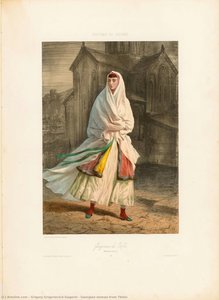
Circassian Warrior – A Window Into Georgian Art History
Grigory Gagarin’s “Circassian Warrior” stands as a remarkable testament to 19th-century Russian art and its fascination with the Caucasus region. Painted in 1855, this artwork isn't merely a depiction of a Circassian warrior; it’s an embodiment of Georgian cultural pride and artistic ambition during a pivotal moment in history. Commissioned for the Tbilisi Sioni Cathedral restoration project – spearheaded by Mikhail Vorontsov – Gagarin’s contribution aimed to revitalize the cathedral’s frescoes and capture the spirit of Georgian identity.- Subject Matter: The painting portrays a Circassian warrior, dressed in traditional attire, wielding a sword and staff with resolute determination. Accompanying figures suggest a scene of military engagement or ceremonial gathering, reflecting the socio-political landscape of the Caucasus at that time.
- Style & Technique: Gagarin employed guache on paper – a technique favored for its vibrancy and luminosity – to achieve an expressive portrayal of human form and movement. The artist’s meticulous attention to detail is evident in the rendering of textures, particularly the warrior's clothing and weaponry, demonstrating considerable artistic skill.
Historical Context: Tbilisi & Vorontsov’s Vision
The Sioni Cathedral project represented a significant undertaking by Mikhail Vorontsov, Governor-General of Georgia, who sought to elevate Georgian culture and solidify Russian influence. Gagarin's involvement underscored the importance placed on artistic patronage and cultural representation within the imperial administration. The painting reflects broader trends in Romantic art – an interest in portraying heroic figures and dramatic landscapes—influenced by artists like Eugène Delacroix and Friedrich Wilhelm Willebrandt. Duma’s observation about the theatre building’s resemblance to Pompey Theatre highlights Gagarin's awareness of classical artistic ideals, blending them with ethnographic realism.- Symbolism: The Circassian warrior symbolizes courage, resilience, and defiance against oppression – themes prevalent in Georgian folklore and history. The sword represents power and protection, while the staff signifies leadership and authority.
The Art Palace Collection & Gagarin’s Legacy
Today, “Circassian Warrior” resides within the Art Palace of Georgia—a repository of Georgian artistic heritage—and continues to inspire admiration for its masterful execution and evocative portrayal of Circassian culture. Gagarin's sketches and drawings of Caucasian people represent a crucial contribution to documenting Georgian traditions and capturing the essence of the region’s visual arts during the Romantic era. It serves as an enduring symbol of Tbilisi’s cultural revival and Gagarin’s artistic legacy—a painter who successfully blended classical influences with ethnographic observation, creating a timeless masterpiece.Emotional Impact & Reproduction Considerations
The painting's dynamic composition and expressive brushstrokes convey a palpable sense of energy and conviction. Its vibrant colors – predominantly ochre, crimson, and indigo – contribute to its dramatic atmosphere. OriginalUniqueArt offers high-quality reproductions that faithfully capture the artwork’s original beauty and detail, allowing art lovers worldwide to experience Gagarin’s vision firsthand. Consider framing it in a neutral tone to complement its rich palette and enhance its visual impact within any interior space.Spørsmål og svar
Ble "Circassian Kriger" værende i kunstnerens hjemland?
Nei – kunstverket oppbevares i utlandet. Grigory Gagarin er født i Russland, og museet som har originalen av "Circassian Kriger" ligger i Georgia.
I hvilket år ble "Circassian Kriger" av Grigory Gagarin skapt?
"Circassian Kriger" dateres til 1855. Denne datoen plasserer verket innenfor Grigory Gagarin sin karriere og sin epoke.
Hvilken stemning og følelse uttrykker "Circassian Kriger" av Grigory Gagarin?
Stemningen i "Circassian Kriger" av Grigory Gagarin kan beskrives som Dramatisk intensitet, og den emosjonelle tonen er Kraftfullt.
 Forhåndsvisning
 Send
Send Del
Del
 Vis detaljer
 Utskriftsvennlig guide

 Last ned bilde
 Liknende objekter
 Røntgenundersøkelse
 Lysbildefremvisning
 Spørsmål og svar
 Statistikk