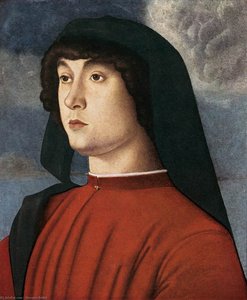
Se i rommet
 Del som digitalt kort
 Del
Del
 Detaljer
 Studentguide

 Last ned
 Liknende objekter
 Røntgen
 Lysbildefremvisning
 Besøksstatistikk
The Virgin and Child
 Oil On Panel
- WallArt
- Early Renaissance
 1480
1480- Renaissance
 90.0 x 64.0 cm
 Nasjonalgalleriet
 Les mer
Giclée / Kunsttrykk
Giclée- eller lerretsprint av museumskvalitet med rask produksjon og fleksible valgmuligheter for etterbehandling. ( Bestill håndmalt reproduksjon Gå til digitalt bilde)




P118B $10

P118H $10

P118W $10

P438Z $10

P508JH $12

P508YH $12

P805H $10

P805Z $10

P919BZ $10

P919G $10

P919XJ $10

P959ZH $10

P968JZ $12

W106C $8

W218G $10

W218JH $8

W218Y $10

W307PJ $10

W316G $10

W316PJ $8

W316Y $10

W398PJ $8

W4111J $10

W500HY $15

W500JH $15

W692G $12

W849H $8

W940BG $15

W953PJ $8




Velg mellom våre forhåndsdefinerte størrelser som bevarer kunstverkets opprinnelige proporsjoner.

Du kan oppgi egne mål for å tilpasse en spesifikk ramme eller et bestemt område. Dersom den valgte størrelsen ikke samsvarer med det originale bildets proporsjoner, vil vi enten beskjære kunstverket eller utvide bildet med en speilet eller ensfarget kant. En digital mockup vil bli sendt til din godkjenning før produksjonen starter.
Vennligst merk at forhåndsvisningen på skjermen ikke gjenspeiler den faktiske beskjæringen eller utvidelsen. Kun mockuppen vil vise den endelige komposisjonen nøyaktig.
Selv om tilpassede størrelser er tilgjengelige, anbefaler vi å velge et mål fra den forhåndsdefinerte listen for å bevare de originale proporsjonene.
Verdensomspennende levering () på 2 uker i stedet for standard 4/5 uker. (25 September)

Gratis ekspressfrakt over hele verden

Lerretsduk av høykvalitets lin

Full transportforsikring

Garanti for refusjon av toll og importavgifter

Garantert fargeekthet

100 dagers returrett ved fabrikasjonsfeil

100% pengene tilbake-garanti

Mengderabatt
 Glassalternativet er kun tilgjengelig i størrelser under 110 cm

The Virgin and Child
Giclée / Kunsttrykk
Format på reproduksjon
-


Totalpris
$ 80
A Celestial Embrace: The Soul of Venetian Renaissance
In the quiet, luminous depths of Giovanni Bellini’s "The Virgin and Child," painted around 1480, one finds more than a mere religious icon; one encounters a profound window into the spiritual heart of the Venetian Renaissance. This masterpiece serves as an intimate tableau, where the divine meets the human through a gaze of unparalleled tenderness. Bellini, a master who bridged the gap between the rigid, golden traditions of Byzantine art and the burgeoning naturalism of the 15th century, captures Mary not as a distant, untouchable deity, but as a mother deeply connected to the flesh and blood of her child. The way she cradles the young Jesus, her eyes turned upward in a moment of quiet contemplation or perhaps divine recognition, invites the viewer into a sacred, shared silence.
The emotional resonance of the work is amplified by Bellini’s revolutionary approach to light and texture. As a pioneer in the use of oil paint on panel, he moved away from the flat surfaces of his predecessors to embrace a technique that allowed for an extraordinary depth of color. Through the meticulous layering of translucent glazes, Bellini achieved a soft, ethereal glow that seems to emanate from within the figures themselves. This mastery of chiaroscuro—the delicate interplay between light and shadow—sculpts the forms of the Virgin and Child, lending them a palpable weight and warmth. For the discerning collector or interior designer, this painting offers a sense of atmospheric serenity, making it an ideal centerpiece for spaces that demand both elegance and a contemplative, soulful presence.
Symbolism and the Dawn of Humanism
Beyond its visual splendor, "The Virgin and Child" is steeped in the intellectual currents of its time. The late 15th century in Venice was an era defined by the rise of humanism, a movement that sought to harmonize classical learning with Christian devotion. In this painting, we see this harmony manifest in the naturalistic details: the soft folds of the white garment worn by the Christ child, the subtle presence of figures in the background, and even the humble placement of a cup near the center of the scene. These elements ground the divine narrative in a recognizable, earthly reality, suggesting that the sacred is present within the everyday. The light itself acts as a symbol of divine grace, illuminating the subjects with a clarity that reflects the clarity of thought championed by the scholars of the age.
For those looking to adorn a sophisticated interior, this reproduction offers much more than decoration; it provides a narrative anchor. The painting’s palette—rich, deep tones balanced by luminous highlights—complements both classical and contemporary settings, bringing a sense of historical weight and artistic prestige to any room. To possess such a work is to hold a piece of the Venetian spirit, a testament to an era when art first learned to breathe with the warmth of human emotion and the brilliance of natural light.
Kunstnerbiografi
A Venetian Master: The Life and Legacy of Giovanni Bellini
Giovanni Bellini, a name synonymous with the blossoming Renaissance in Venice, stands as a pivotal figure bridging the gap between the traditions of Byzantine art and the innovative spirit that would define the 16th century. Born around 1430 – though some sources suggest 1433 – into a family deeply entrenched in the artistic world, Bellini’s journey was one of continuous evolution, marked by a profound sensitivity to color, light, and the burgeoning humanism of his era. The precise nature of his familial relationships has been debated; for years Jacopo Bellini was considered his father, but modern scholarship increasingly points towards Jacopo being Giovanni's elder half-brother, with Gentile Bellini as his nephew rather than sibling. Regardless of these intricacies, young Giovanni grew up immersed in a workshop brimming with creativity and technical expertise, absorbing the foundations of painting from an early age. His initial training likely involved the traditional tempera techniques favored at the time, but it was his innate talent for observation and emotional expression that would set him apart.Early Influences and Artistic Development
The artistic landscape of 15th-century Venice was a unique blend of influences. The city’s position as a major trading hub exposed its artists to diverse styles and ideas, while the Byzantine heritage continued to exert a strong pull. Bellini's early works reflect this duality. Initially, his style bore the mark of his father and brother, Gentile, with compositions often characterized by meticulous detail and a somewhat restrained emotional palette. However, even in these early pieces, hints of his future brilliance began to emerge – a delicate handling of light, a growing interest in naturalistic settings, and an ability to imbue religious figures with a palpable sense of human pathos. The influence of Andrea Mantegna, his brother-in-law, is also readily apparent during this period, particularly in the clarity of line and sculptural forms. Bellini’s early commissions often involved collaborative projects, such as his contributions to the Scuola di San Marco alongside Gentile and other prominent Venetian artists. These large-scale works provided invaluable experience and allowed him to hone his skills while working alongside some of the most talented painters of the day.Revolutionizing Venetian Painting: Color, Light, and Oil
Bellini’s true revolution lay in his embrace of oil paint. While not the inventor of the technique, he was among the first Venetian artists to fully exploit its potential. Unlike tempera, which dried quickly and demanded a precise, linear approach, oil paint allowed for greater blending, richer colors, and subtle gradations of tone. This newfound freedom enabled Bellini to create paintings with an unprecedented depth and luminosity. His use of color became increasingly sophisticated, moving away from the bright, often harsh hues of earlier Venetian painting towards a more nuanced and harmonious palette. He masterfully captured the effects of light and atmosphere, imbuing his landscapes with a sense of serenity and realism that was groundbreaking for its time. This mastery of oil paint not only transformed his own work but also laid the foundation for the distinctive style that would come to define the Venetian school – a style celebrated for its sensuousness, coloristic richness, and atmospheric perspective. His paintings began to radiate an inner glow, reflecting a spiritual depth that resonated with viewers.Mature Works and Lasting Influence
As Bellini matured, his artistic vision continued to evolve. His altarpieces, such as those created for the churches of San Zaccaria and Santa Corona, demonstrate his ability to create complex compositions filled with symbolic meaning and emotional resonance. The *Transfiguration*, now housed in the Capodimonte Museum in Naples, exemplifies his mature style – a serene spirit combined with ripened artistic powers. He also served as conservator of the paintings in Doge’s Palace, further solidifying his reputation as Venice's leading artist. His influence extended far beyond his own lifetime. He became a mentor to a generation of younger painters, including Giorgione and Titian, who would carry on his legacy and push the boundaries of Venetian art even further. These pupils absorbed Bellini’s techniques and aesthetic principles, adapting them to their own individual styles and contributing to the golden age of Venetian painting. Bellini's impact can be seen in the works of countless artists who followed, solidifying his place as a true master of the Renaissance. He died in Venice in 1516, leaving behind a body of work that continues to inspire awe and admiration centuries later.A Legacy Enduring Through Time
Giovanni Bellini’s significance extends beyond his technical innovations and artistic achievements. He captured the spirit of a changing world – a world grappling with new ideas about humanity, spirituality, and the relationship between art and nature. His paintings are not merely representations of religious scenes; they are profound meditations on faith, beauty, and the human condition. His ability to imbue his figures with dignity and grace, combined with his masterful use of color and light, created a visual language that resonated deeply with his contemporaries and continues to captivate audiences today. *Bellini’s legacy is not simply one of artistic brilliance; it is a testament to the power of art to transcend time and connect us to the enduring values of human experience.* From the serene beauty of his Madonnas to the dramatic intensity of his religious scenes, Bellini's work remains a cornerstone of Western art history.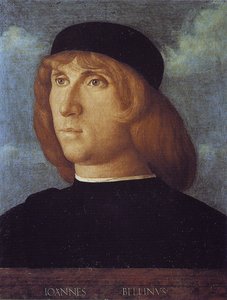
Giovanni Bellini
1433 - 1516 , Italia
Kort om kunstneren
- Artistic Movement Or Style: Skolen i Venezia
- Artists Or Movements Influenced By This Artist:
- Giorgione
- Tiziano
- Artists Who Influenced This Artist:
- Jacopo Bellini
- Gentile Bellini
- Andrea Mantegna
- Date Of Birth: c. 1430
- Date Of Death: 1516
- Full Name: Giovanni Bellini
- Nationality: Italiensk
- Notable Artworks:
- Transfigurazione
- Madonna con il Bambino
- Place Of Birth: Venezia, Italia
Relaterte artikler

Giorgione: Enigma and Innovation in Early Venetian Renaissance Painting
Explore the enigmatic world of Giorgione, a pivotal figure in the Venetian Renaissance. Discover his innovative techniques, iconic paintings like 'The Tempest', and lasting influence on art history. Learn more at OriginalUniqueArt.

Jacopo Tintorettos 25 Mesterverk: Drama, Lys og Renessanse Kunst | OriginalUniqueArt.no
Oppdag Jacopo Tintorettos 25 mest ikoniske malerier! Fordyp deg i renessansens drama, lys og farger. Eksklusive kunsttrykk & lerretstrykk på OriginalUniqueArt.no – finn din favoritt nå!

The Golden Light of Innovation: Exploring the Venetian Renaissance Art Movement (1430–1580)
Explore the Golden Age of Venetian art (1430–1580). Discover Giorgione, Titian & Tintoretto's techniques, the 'colorito' revolution, and lasting influence. Expert insights for collectors & enthusiasts.
Raphaels 25 Mesterverk: Kunsthistorie og Inspirasjon for Ditt Hjem | OriginalUniqueArt.no
Oppdag 25 ikoniske mesterverk av Raphael! Fordyp deg i renessansekunstens skjønnhet, fra Madonnaserien til Vatikanets fresker. Finn inspirasjon og museumskvalitets reproduksjoner for ditt hjem på OriginalUniqueArt.com.

Venetian Renaissance: The Mastery of Color, Light, and the Art of Colorito
Explore the luminous mastery of the Venetian Renaissance. Discover how masters like Titian and Giorgione revolutionized art through colorito, light, and atmosphere. An expert guide to the golden age of Italian painting for collectors and enthusiasts.