Text size

() ·

A painting made for you, by hand

Pesaro Altarpiece (predella)

Håndlaget oljereproduksjon

Håndmalt olje på lerret i din valgte størrelse og ramme, laget på bestilling av våre kunstnere. ( Bytt til trykk Bytt til digitalt bilde)

Beskrivelse av objektet

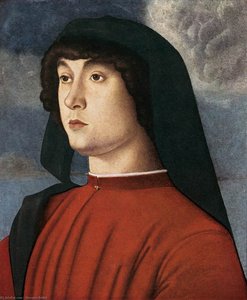
Giovanni Bellini’s Pesaro Altarpiece (1471) showcases a Roman-clad figure holding a flag amidst Venetian Renaissance innovation, utilizing groundbreaking smalt pigment for unparalleled luminosity. Discover this masterpiece and bring its devotional beauty into your space.

Om kunstneren

Giovanni Bellini (1430-1516): En revolusjonerende venetiansk maler kjent for sin blendende fargebruk, rolige Madonnaer og atmosfæriske landskap. Inspirert av Giorgione & Titian.

from ·

Chapter 1

How large should it be?

Slide to change the size; the picture on the left shows the frame at its real width. The proportions of the original are kept.

Standardformat
skreddersydd
CM
INCH

Velg mellom våre forhåndsdefinerte størrelser som bevarer kunstverkets opprinnelige proporsjoner.

bredde
høyde

Skriv inn ønsket bredde og høyde for å tilpasse bildet til din ramme eller vegg. Siden dette er håndmalt, kan kunstneren male litt mer rundt motivet eller beskjære det noe dersom du velger et annet format — valget er ditt. Vi sender deg en digital mockup til godkjenning før maleriet påbegynnes. Bildet som vises på denne siden representerer ikke det faktiske resultatet — kun mockuppen viser det endelige uttrykket.

Chapter 2

How should it arrive?

Choose the edges of the stretched canvas

Choose your frame

Corner sample of the WhiteWrap canvas edge finish, stretched on massivt tre bars
White Nkr1
Corner sample of the BlurSideWrap canvas edge finish, stretched on massivt tre bars
Blurside Nkr1
Corner sample of the ExtendedWrap canvas edge finish, stretched on massivt tre bars
Extended Nkr1
Corner sample of the P118B picture frame: støpt polystyren, 5 cm wide and 3 cm thick
P118B Nkr10
Corner sample of the P118H picture frame: støpt polystyren, 5 cm wide and 3 cm thick
P118H Nkr10
Corner sample of the P118W picture frame: støpt polystyren, 5 cm wide and 3 cm thick
P118W Nkr10
Corner sample of the P438Z picture frame: støpt polystyren, 5.5 cm wide and 3.5 cm thick
P438Z Nkr10
Corner sample of the P508JH picture frame: støpt polystyren, 7 cm wide and 3.5 cm thick
P508JH Nkr12
Corner sample of the P508YH picture frame: støpt polystyren, 7 cm wide and 3.5 cm thick
P508YH Nkr12
Corner sample of the P805H picture frame: støpt polystyren, 5 cm wide and 3.5 cm thick
P805H Nkr10
Corner sample of the P805Z picture frame: støpt polystyren, 5 cm wide and 3.5 cm thick
P805Z Nkr10
Corner sample of the P919BZ picture frame: støpt polystyren, 7 cm wide and 3.5 cm thick
P919BZ Nkr10
Corner sample of the P919G picture frame: støpt polystyren, 7 cm wide and 3.5 cm thick
P919G Nkr10
Corner sample of the P919XJ picture frame: støpt polystyren, 7 cm wide and 3.5 cm thick
P919XJ Nkr10
Corner sample of the P959ZH picture frame: støpt polystyren, 5 cm wide and 3 cm thick
P959ZH Nkr10
Corner sample of the P968JZ picture frame: støpt polystyren, 6 cm wide and 4 cm thick
P968JZ Nkr12
Corner sample of the W106C picture frame: massivt tre, 5 cm wide and 3 cm thick
W106C Nkr8
Corner sample of the W218G picture frame: massivt tre, 5 cm wide and 3 cm thick
W218G Nkr10
Corner sample of the W218JH picture frame: massivt tre, 5 cm wide and 3 cm thick
W218JH Nkr8
Corner sample of the W218Y picture frame: massivt tre, 5 cm wide and 3 cm thick
W218Y Nkr10
Corner sample of the W307PJ picture frame: massivt tre, 6 cm wide and 3 cm thick
W307PJ Nkr10
Corner sample of the W316G picture frame: massivt tre, 6 cm wide and 3 cm thick
W316G Nkr10
Corner sample of the W316PJ picture frame: massivt tre, 6 cm wide and 3 cm thick
W316PJ Nkr8
Corner sample of the W316Y picture frame: massivt tre, 6 cm wide and 3 cm thick
W316Y Nkr10
Corner sample of the W398PJ picture frame: massivt tre, 5 cm wide and 3 cm thick
W398PJ Nkr8
Corner sample of the W4111J picture frame: massivt tre, 6.5 cm wide and 3.5 cm thick
W4111J Nkr10
Corner sample of the W500HY picture frame: massivt tre, 7 cm wide and 5 cm thick
W500HY Nkr15
Corner sample of the W500JH picture frame: massivt tre, 7 cm wide and 5 cm thick
W500JH Nkr15
Corner sample of the W692G picture frame: massivt tre, 8 cm wide and 4 cm thick
W692G Nkr12
Corner sample of the W849H picture frame: massivt tre, 5 cm wide and 3 cm thick
W849H Nkr8
Corner sample of the W940BG picture frame: massivt tre, 7.5 cm wide and 4.5 cm thick
W940BG Nkr15
Corner sample of the W953PJ picture frame: massivt tre, 6 cm wide and 3.5 cm thick
W953PJ Nkr8
Corner sample of the H24-GOLD picture frame: utskåret tre med gesso, 10 cm wide and 6 cm thick
H24-GOLD Nkr30
Corner sample of the H24-SILVER picture frame: utskåret tre med gesso, 10 cm wide and 6 cm thick
H24-SILVER Nkr30
Corner sample of the H36-GOLD picture frame: utskåret tre med gesso, 15 cm wide and 6.5 cm thick
H36-GOLD Nkr45
Corner sample of the H36-SILVER picture frame: utskåret tre med gesso, 15 cm wide and 6.5 cm thick
H36-SILVER Nkr45

Moulding: . Overall size with the frame: .

Chapter 3

Who paints it, and should anything change?

Examples of what can be changed: Replace face with customer photo; Add pet (e.g., replace cat with dog); Include hidden message in background; Change background landscape or elements.
After order, OriginalUniqueArt.com team will email client for instructions and provide a mockup preview

Verdensomspennende levering () på 3–4 uker i stedet for standard 5 uker. (1 November). Ingen kompromisser med kvaliteten.

Chapter 4

The finishing touches

A nameplate, as in a museum?

Detaljer om gravert bronseplate

This elegant plaque features the artist's name and the title of the artwork, finely engraved for a timeless presentation.

It is made from bronze with a refined, elegant finish. The text is precisely laser-engraved for a sharp and permanent result. Measuring 9x2 cm, the plaque is compact yet easy to read. It's built to be durable and scratch-resistant, offering a professional, museum-quality look. Mounting is simple thanks to the included adhesive backing.

Detaljer om gjennomsiktig akrylplate

The plaque includes essential engraved details such as the artist's name, the title of the artwork, the date it was created, the type of media used-like oil on canvas or watercolor-a brief description of the piece, and a QR code that links to the complete artwork information.

It is crafted from clear acrylic, offering a sleek, modern appearance. The text is UV-engraved in black to ensure strong visual contrast. With a size of 10x15 cm, it ensures optimal readability. It comes equipped with two metal hooks for secure wall mounting. The plaque is designed to be weather-resistant, making it suitable for various environments, and it includes interactive features that work seamlessly with smartphone scanning.

Detaljer om plakett i svart akryl

This elegant plaque includes engraved information such as the artist's name, the title of the artwork, the date it was created, the type of media used (like oil on canvas or watercolor), a short description of the artwork, and a QR code for quick access to more information.

The plaque itself is made from refined black acrylic with a premium finish. The text is laser-engraved in white for high contrast and readability. Its size is 10x15 cm, designed to be easy to read. It comes with two metal hooks for professional mounting. The design is sleek and fits any interior style. It is also weather-resistant and durable, with built-in digital integration for mobile compatibility.

A protective varnish?

When do you need it?

Chapter 5

Your painting, as you ordered it

Pesaro Altarpiece (predella)

Trykkmetode

Størrelse på reproduksjon

-

Utvalgte mesterkunstnere

Mer detaljrikdom, finesse og ekstra produksjonstid

-

Innramming av reproduksjon

-

-

For kunstverk eller reproduksjoner som er større enn 105 cm (ca. 41 tommer) på noen side, vil rammen bli sendt som et sett som må monteres. Denne metoden sikrer trygg levering og forhindrer skader under transport.

Krever profesjonell montering – dette er ikke et DIY-produkt.
Settet må monteres og lerretet strammes av en erfaren profesjonell rammelegger, ved bruk av trelim (følger ikke med), en lerretstang og klemmer for å holde rammelisten vinkelrett mens limet tørker. Feilaktig montering eller ujevn stramming av lerretet kan påføre kunstverket permanente skader og er ikke dekket av vår garanti.

  • Alle massive trelister er inkludert, presist tilpasset i størrelse.

  • Monteres med de medfølgende skruene, samt trelim til hjørnene, som ikke er inkludert og må anskaffes av din rammehandler.

  • Profesjonelt verktøy er nødvendig og er ikke inkludert: en lerretstang (strammer) og klemmer for å holde rammene vinkelrette mens limet tørker.

Viktig:
Hjørnene krever trelim, listene må holdes på plass med tvinger til limet er helt tørt, og stramming av lerretet på den ferdige rammen krever en lerretstang. Ingen av disse produktene er inkludert i settet. Vennligst sørg for tilgang til en erfaren profesjonell rammehandler før du bestiller denne størrelsen.

Navneskilt

-

-

Beskyttende ferniss

Blank lakk (forsterker farger, beskytter mot lys og fuktighet)

-

Tilpass mitt kunstverk

Eksempler på hva som kan endres: Erstatt ansikt med bilde av kunden; Legg til kjæledyr (f.eks. bytt ut katt med hund); Inkluder en skjult melding i bakgrunnen; Endre bakgrunnslandskap eller elementer.

-

Ekspresslevering

Verdensomspennende levering () på 3–4 uker i stedet for standard 5 uker. (1 November). Ingen kompromisser med kvaliteten.

-

Ekspresslevering

Verdensomspennende levering til innen 5 uker. (8 November).

Inkludert frakt

Totalpris for valgte alternativer

Nkr 2887

Totalpris Nkr 2887

Glassalternativet er kun tilgjengelig i størrelser under 110 cm

Included with every order

  • Gratis ekspressfrakt over hele verden
  • Lerretsduk av lin av høy kvalitet
  • Full transportforsikring
  • Garanti for refusjon av toll og importavgifter
  • Garantert fargegjengivelse
  • 100 dagers returrett ved fabrikasjonsfeil
  • 100% pengene tilbake-garanti
  • Rabatt ved flere kjøp

Giovanni Bellini’s Pesaro Altarpiece: A Symphony of Faith and Renaissance Innovation

The Pesaro Altarpiece (predella), completed in 1471 by Giovanni Bellini, stands as a cornerstone of Venetian Early Renaissance art—a testament to the burgeoning humanist spirit and masterful artistic execution that defined the era. Housed at the Musei Civici in Pesaro, Italy, this oil painting measuring 40 x 36 cm transcends mere depiction; it embodies a profound meditation on Christian devotion and represents Bellini’s groundbreaking approach to pigment and composition.

Composition and Figures: A Central Narrative

At its core lies a commanding figure dressed in Roman attire—a deliberate allusion to classical ideals of virtue and authority—standing upon a pedestal or base. This central figure, adorned in crimson robes accented with gold embroidery, holds aloft a shield bearing the emblem of Pesaro’s Franciscan Order, immediately establishing a visual hierarchy that directs the viewer's gaze. Alongside him are several supporting figures: saints venerated within Pesaro’s ecclesiastical community—Saint Terence, Saint Francis Xavier and Saint Augustine—each rendered with meticulous detail and imbued with palpable emotion. Their postures convey reverence and contemplation, mirroring the spiritual fervor of the time. The inclusion of a chariot in the background symbolizes pilgrimage and divine grace, furthering the altarpiece's narrative dimension.

Technique: Pioneering Oil Paint and Smalt

Bellini’s genius resided not merely in his anatomical accuracy but also in his innovative use of pigment—specifically, the incorporation of smalt, a brilliant cobalt blue produced from crushed glass. This technique, relatively novel for Venetian painting at the time, distinguishes itself from its predecessors and elevates the altarpiece's luminosity to an unprecedented level. Bellini’s masterful blending of colors achieves remarkable depth and realism, capturing subtle nuances of light and shadow that would become hallmarks of Renaissance art. The artist skillfully employs glazing techniques—applying thin layers of translucent pigment over previous coats—to build up tonal variations and create a shimmering surface texture.

Historical Context: Patronage and Franciscan Devotion

Commissioned by the influential Pesaro family, staunch supporters of the Franciscan Order, the altarpiece reflects the profound religious piety characteristic of Venetian society during Bellini’s lifetime. The patronage itself underscores the importance of faith within the cultural landscape—a theme powerfully conveyed through the depiction of saints and the chariot motif. Furthermore, the altarpiece's creation coincided with a period of artistic experimentation and intellectual ferment, mirroring broader trends in Europe as humanist thought challenged medieval dogma. Its presence at San Francesco church served as a tangible expression of devotion and solidified Bellini’s legacy as one of the foremost artists of his generation.

Symbolism: Echoes of Classical Virtue and Divine Grace

The Pesaro Altarpiece is replete with symbolic imagery—the Roman attire representing moral excellence, the shield emblazoned with the Franciscan emblem signifying religious affiliation, and the chariot symbolizing spiritual journey. These elements converge to communicate a complex theological message about salvation and divine grace. Bellini’s meticulous attention to detail ensures that every aspect of the composition contributes to this overarching narrative, inviting contemplation and fostering an appreciation for the artistic mastery of the Renaissance period.

Conclusion: A Timeless Masterpiece

Giovanni Bellini's Pesaro Altarpiece remains a captivating exemplar of Early Renaissance artistry—a harmonious blend of humanist ideals and technical innovation. Its luminous palette, masterful composition, and profound symbolic depth continue to inspire admiration and resonate with viewers today. To experience the beauty and intellectual richness of this iconic artwork firsthand, consider acquiring a high-quality reproduction from OriginalUniqueArt – where you can bring a piece of Venetian history into your home.

Spørsmål og svar

Hva er de faktiske målene på "Pesaro Altarpiece (predella)" av Giovanni Bellini?

Det originale verket "Pesaro Altarpiece (predella)" av Giovanni Bellini måler 40 x 36 cm.

Hvilket rom anbefales "Pesaro Altarpiece (predella)" av Giovanni Bellini for?

Det anbefalte rommet for "Pesaro Altarpiece (predella)" av Giovanni Bellini er en Living Room. Forslaget kan selvfølgelig tilpasses ditt interiør.

Hvilken fargepalett brukes i "Pesaro Altarpiece (predella)" av Giovanni Bellini?

"Pesaro Altarpiece (predella)" av Giovanni Bellini bruker en Neutrals fargepalett. Paletten oppsummerer verkets overordnede fargekarakter.

More about this painting

Forhåndsvisning Se i AR Bytt til trykk Bytt til digitalt bilde Send
Vis detaljer Utskriftsvennlig guide Legg til i favoritter Last ned bilde Liknende objekter Røntgenundersøkelse Lysbildefremvisning Q&A Statistikk

In numbers

  • 1471the year it was painted
  • 29frames to choose from
  • standard sizes, in its own proportions
  • 5weeks to paint and deliver it
Giovanni Bellini

Giovanni Bellini

1433 - 1516, Italia

Quick facts about Giovanni Bellini

  • Artistic Movement Or Style: Skolen i Venezia
  • Artists Or Movements Influenced By This Artist:
    • Giorgione
    • Tiziano
  • Artists Who Influenced This Artist:
    • Jacopo Bellini
    • Gentile Bellini
    • Andrea Mantegna
  • Date Of Birth: c. 1430
  • Date Of Death: 1516
  • Full Name: Giovanni Bellini
  • Nationality: Italiensk
  • Notable Artworks:
    • Transfigurazione
    • Madonna con il Bambino
  • Place Of Birth: Venezia, Italia

Om kunstneren

A Venetian Master: The Life and Legacy of Giovanni Bellini

Giovanni Bellini, a name synonymous with the blossoming Renaissance in Venice, stands as a pivotal figure bridging the gap between the traditions of Byzantine art and the innovative spirit that would define the 16th century. Born around 1430 – though some sources suggest 1433 – into a family deeply entrenched in the artistic world, Bellini’s journey was one of continuous evolution, marked by a profound sensitivity to color, light, and the burgeoning humanism of his era. The precise nature of his familial relationships has been debated; for years Jacopo Bellini was considered his father, but modern scholarship increasingly points towards Jacopo being Giovanni's elder half-brother, with Gentile Bellini as his nephew rather than sibling. Regardless of these intricacies, young Giovanni grew up immersed in a workshop brimming with creativity and technical expertise, absorbing the foundations of painting from an early age. His initial training likely involved the traditional tempera techniques favored at the time, but it was his innate talent for observation and emotional expression that would set him apart.

Early Influences and Artistic Development

The artistic landscape of 15th-century Venice was a unique blend of influences. The city’s position as a major trading hub exposed its artists to diverse styles and ideas, while the Byzantine heritage continued to exert a strong pull. Bellini's early works reflect this duality. Initially, his style bore the mark of his father and brother, Gentile, with compositions often characterized by meticulous detail and a somewhat restrained emotional palette. However, even in these early pieces, hints of his future brilliance began to emerge – a delicate handling of light, a growing interest in naturalistic settings, and an ability to imbue religious figures with a palpable sense of human pathos. The influence of Andrea Mantegna, his brother-in-law, is also readily apparent during this period, particularly in the clarity of line and sculptural forms. Bellini’s early commissions often involved collaborative projects, such as his contributions to the Scuola di San Marco alongside Gentile and other prominent Venetian artists. These large-scale works provided invaluable experience and allowed him to hone his skills while working alongside some of the most talented painters of the day.

Revolutionizing Venetian Painting: Color, Light, and Oil

Bellini’s true revolution lay in his embrace of oil paint. While not the inventor of the technique, he was among the first Venetian artists to fully exploit its potential. Unlike tempera, which dried quickly and demanded a precise, linear approach, oil paint allowed for greater blending, richer colors, and subtle gradations of tone. This newfound freedom enabled Bellini to create paintings with an unprecedented depth and luminosity. His use of color became increasingly sophisticated, moving away from the bright, often harsh hues of earlier Venetian painting towards a more nuanced and harmonious palette. He masterfully captured the effects of light and atmosphere, imbuing his landscapes with a sense of serenity and realism that was groundbreaking for its time. This mastery of oil paint not only transformed his own work but also laid the foundation for the distinctive style that would come to define the Venetian school – a style celebrated for its sensuousness, coloristic richness, and atmospheric perspective. His paintings began to radiate an inner glow, reflecting a spiritual depth that resonated with viewers.

Mature Works and Lasting Influence

As Bellini matured, his artistic vision continued to evolve. His altarpieces, such as those created for the churches of San Zaccaria and Santa Corona, demonstrate his ability to create complex compositions filled with symbolic meaning and emotional resonance. The *Transfiguration*, now housed in the Capodimonte Museum in Naples, exemplifies his mature style – a serene spirit combined with ripened artistic powers. He also served as conservator of the paintings in Doge’s Palace, further solidifying his reputation as Venice's leading artist. His influence extended far beyond his own lifetime. He became a mentor to a generation of younger painters, including Giorgione and Titian, who would carry on his legacy and push the boundaries of Venetian art even further. These pupils absorbed Bellini’s techniques and aesthetic principles, adapting them to their own individual styles and contributing to the golden age of Venetian painting. Bellini's impact can be seen in the works of countless artists who followed, solidifying his place as a true master of the Renaissance. He died in Venice in 1516, leaving behind a body of work that continues to inspire awe and admiration centuries later.

A Legacy Enduring Through Time

Giovanni Bellini’s significance extends beyond his technical innovations and artistic achievements. He captured the spirit of a changing world – a world grappling with new ideas about humanity, spirituality, and the relationship between art and nature. His paintings are not merely representations of religious scenes; they are profound meditations on faith, beauty, and the human condition. His ability to imbue his figures with dignity and grace, combined with his masterful use of color and light, created a visual language that resonated deeply with his contemporaries and continues to captivate audiences today. *Bellini’s legacy is not simply one of artistic brilliance; it is a testament to the power of art to transcend time and connect us to the enduring values of human experience.* From the serene beauty of his Madonnas to the dramatic intensity of his religious scenes, Bellini's work remains a cornerstone of Western art history.

Kort om verket

  • Location: Ca' Pesaro (International Gallery of Modern Art)
  • Subject or theme: Religious painting
  • Artistic style: Realistic
  • Medium: Oil on panel
  • Title: Pesaro Altarpiece
  • Movement: Early Renaissance

Kunnequiz om kunst

Det er kun ett riktig svar på hvert spørsmål.

Spørsmål 1:
What artistic movement is Giovanni Bellini’s Pesaro Altarpiece primarily associated with?
Spørsmål 2:
Where is the Pesaro Altarpiece currently housed?
Spørsmål 3:
What technique did Bellini employ that distinguished him from many of his contemporaries?
Spørsmål 4:
The Pesaro Altarpiece depicts a scene celebrating which religious faith?
Spørsmål 5:
What is the significance of the central figure in the Pesaro Altarpiece?